👉 Register for Free. How to Diagnose Sleep Apnea Faster in Primary Care – FREE Webinar by Dr. Audrey Wells. – Friday, April 24 at 12 PM ET

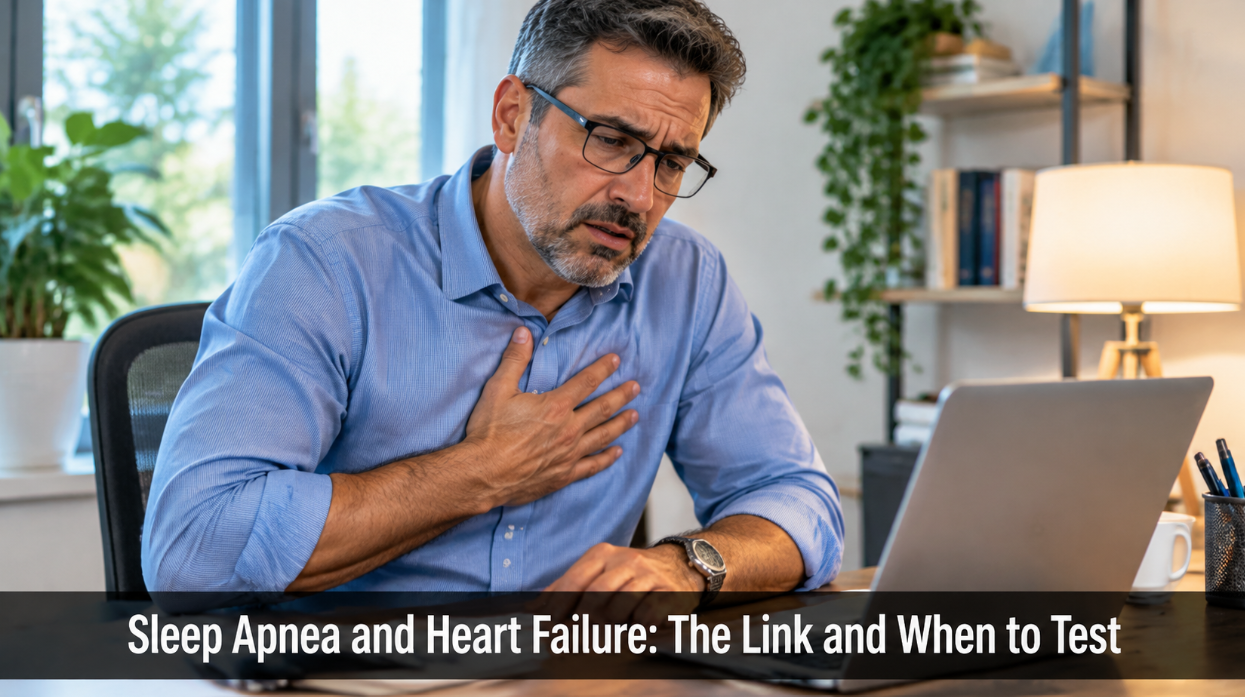
Sleep Apnea and Heart Failure: The Link and When to Test
Last updated: November 6, 2026. Medically reviewed by Dr. Avinesh Bhar, Board-Certified Sleep Physician, SLIIIP.com.
Sleep apnea and heart failure often show up in the same person, and often it comes from lack of sleep. Dr. Avinesh Bhar, a board-certified sleep physician at SLIIIP.com, points out that many people with heart failure do not feel sleepy during the day. That is why their sleep apnea can go unnoticed for years.
If you have heart failure, a sleep evaluation is worth asking about even when you do not snore or feel drowsy.
SLIIIP’s board-certified sleep physicians can do sleep evaluations for sleep apnea. Virtual consultations in all 50 states. Home sleep tests shipped to your door.
Can Sleep Apnea Cause Heart Failure?
Sleep apnea is not proven to cause heart failure on its own, but it is a recognized risk factor for it. The National Heart, Lung, and Blood Institute lists heart failure as a condition that raises the risk of central sleep apnea. It also notes that heart or kidney failure can let fluid build up in the neck and narrow the upper airway.
So the link runs in both directions: sleep apnea strains the heart, and a weak heart can make breathing at night less stable.
Each breathing pause drops the oxygen level in your blood. Your brain then sends out a burst of stress hormones to wake you just enough to breathe again.
Obstructive sleep apnea also creates strong pulls inside the chest. When you try to breathe against a closed throat, pressure in the chest drops sharply. That change puts extra load on the walls of the heart. For a heart that is already weak, this extra work each night may add up.
TAKE THE QUIZ
What Is the Difference Between Obstructive and Central Sleep Apnea in Heart Failure?
People with heart failure can have obstructive sleep apnea, central sleep apnea, or a mix of both. The difference matters because the right treatment is not the same for each type.
Obstructive sleep apnea
In obstructive sleep apnea, the throat relaxes and closes during sleep. Your chest and belly keep trying to breathe, but air cannot get through. Loud snoring, gasping, and choking at night are common signs. Extra weight, a large neck, and fluid that shifts toward the neck when you lie down are all linked to this type.
Central sleep apnea and Cheyne-Stokes breathing
In central sleep apnea, the airway stays open, but the brain briefly stops sending the signal to breathe. In heart failure, this often shows up as a pattern called Cheyne-Stokes breathing. Breathing slowly gets deeper and faster, then fades to a pause, and then the cycle starts again. A bed partner may notice this pattern even when there is no snoring at all. Central sleep apnea is more common when heart failure is more advanced.
You can read more about how the two types differ in our guide to what causes sleep apnea.
Why Is Sleep Apnea Often Missed in People With Heart Failure?
Sleep apnea is often missed in heart failure because the two conditions share many of the same symptoms.
Fatigue, poor sleep, waking short of breath, and getting up to pee at night can come from either one. It is easy for everyone to blame the heart and stop looking.
- Feeling tired all day, even after a full night in bed
- Waking up suddenly and feeling short of breath
- Needing more pillows to breathe comfortably at night
- Getting up to urinate two or more times a night
- Restless, broken sleep that never feels deep
- Morning headaches or a dry mouth on waking
Many people with heart failure and sleep apnea do not report daytime sleepiness. Researchers think the high stress hormone levels in heart failure may mask the drowsy feeling. Some people also have central sleep apnea, which often comes without loud snoring. So the two classic clues that send people to a sleep doctor may simply be missing.
What Are the Warning Signs at Night?
The warning signs of sleep apnea at night are changes in breathing that someone else often notices first. Ask your partner or family member if they have seen any of these.
- Loud snoring that stops, followed by a gasp or snort
- Breathing that grows deeper, then fades to a pause, again and again
- Choking or gasping that wakes you up
- Long silent pauses in breathing
- Restless tossing and turning
Some of these signs can also point to fluid building up in the lungs. New or worse breathlessness when lying flat should always be reported to your heart doctor right away. A sleep evaluation does not replace that check. It works alongside it.
How Is Sleep Apnea Tested When You Have Heart Failure?
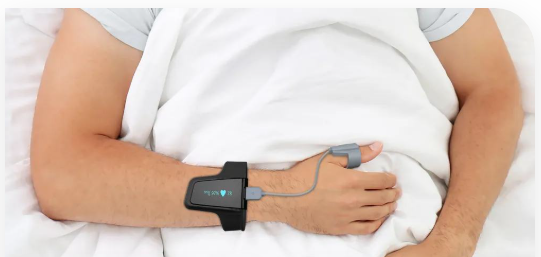
Sleep apnea is tested with a sleep study that records your breathing, oxygen level, and heart rate overnight.
There are two main options: a home sleep apnea test and an in-lab study called polysomnography.
A home test is simple and done in your own bed. It works well for many adults with a high chance of obstructive sleep apnea.
People with significant heart failure are often better served by an in-lab study, because it can sort out central from obstructive events more clearly.

A sleep physician looks at your heart history, your medicines, and your symptoms before choosing the test.
Our guide to home vs lab sleep tests explains how the two compare.
Before any sleep study, bring a list of your heart medicines and your most recent ejection fraction if you know it. Ejection fraction is the share of blood your heart pumps out with each beat. This number helps the sleep physician decide which treatments are safe for you.
What Treatments Are Used for Sleep Apnea With Heart Failure?
Treatment for sleep apnea with heart failure depends on the type of sleep apnea and on how well your heart pumps. The choice is made together with your heart team.
CPAP for obstructive sleep apnea
CPAP sends a gentle stream of air through a mask to keep the throat open. It is the first-line treatment for obstructive sleep apnea. In people with heart failure, regular CPAP use is associated with better sleep, lower nighttime blood pressure, and fewer oxygen drops. The benefit depends on using it most of the night, most nights.
Treating central sleep apnea
Central sleep apnea in heart failure is often treated first by improving the heart failure itself. Changes to heart medicines, CPAP, oxygen at night, or a nerve stimulation device may be considered. These are chosen case by case.
A safety point about ASV
Adaptive servo-ventilation, or ASV, is a special breathing machine used for some types of central sleep apnea. The American Academy of Sleep Medicine advises against ASV in one group. That group has an ejection fraction of 45% or less plus moderate or severe central sleep apnea. This advice followed concerns about a higher risk of heart-related death in that group. This is one of the clearest reasons your sleep physician needs to know your ejection fraction. Never change your machine type or settings on your own.
Can Treating Sleep Apnea Help Your Heart?
Treating sleep apnea is linked to better sleep and steadier oxygen levels, which may ease some strain on the heart. Studies on long-term heart outcomes are mixed, and treatment is not a replacement for heart failure care.
Many people do report more energy, fewer nighttime wake-ups, and better focus once their sleep apnea is managed. If you also have an irregular heartbeat, our article on sleep apnea and atrial fibrillation covers that link in detail.
A few daily habits support both conditions. Take your heart medicines as prescribed. Limit alcohol and sedatives near bedtime, since both can relax the airway. Ask your doctor whether sleeping with your head raised is right for you.
Watch: Dr. Wells explains why sleep apnea is a serious breathing disorder
SLIIIP’s board-certified sleep physicians can do sleep evaluations for sleep apnea. Virtual consultations in all 50 states. Home sleep tests shipped to your door.
Frequently Asked Questions
Is sleep apnea common in people with heart failure?
Yes. Studies of heart failure clinics have found sleep apnea in a large share of patients, and many were never diagnosed.
Can sleep apnea lead to heart failure?
Sleep apnea is a recognized risk factor for heart failure. It is linked to high blood pressure and extra strain on the heart.
Can heart failure cause sleep apnea?
Heart failure is linked to central sleep apnea. Fluid that shifts toward the neck at night may also narrow the airway.
What is Cheyne-Stokes breathing?
It is a breathing pattern that grows deeper and faster, then fades to a pause. It is common in central sleep apnea with heart failure.
Do people with heart failure always snore if they have sleep apnea?
No. Central sleep apnea often comes without loud snoring.
Why don’t I feel sleepy if I have sleep apnea?
Many people with heart failure do not report daytime sleepiness. High stress hormone levels may mask the feeling.
Is waking up short of breath a sign of sleep apnea or heart failure?
It can be either one. Report new or worse breathlessness to your heart doctor right away.
Which sleep test is best if I have heart failure?
A sleep physician decides based on your history. Many people with significant heart failure are better served by an in-lab study.
Can I use a home sleep test with heart failure?
Sometimes. It depends on how severe your heart failure is and on what the sleep physician needs to see.
Is CPAP safe with heart failure?
CPAP is the first-line treatment for obstructive sleep apnea and is widely used in heart failure. Your care team sets it up for you.
What is ASV?
ASV is a breathing machine that adjusts its support breath by breath. It is used for some types of central sleep apnea.
Is ASV safe for everyone with heart failure?
No. The AASM recommends against ASV with an ejection fraction of 45% or less and moderate or severe central sleep apnea.
What is ejection fraction?
It is the share of blood your heart pumps out with each beat. It helps guide safe sleep apnea treatment.
Will treating sleep apnea improve my heart failure?
Treatment is linked to better sleep and steadier oxygen. It does not replace heart failure care.
Does weight loss help sleep apnea with heart failure?
Weight loss may help obstructive sleep apnea in some people. Talk with your heart team before making big changes.
Can fluid pills affect sleep apnea?
Less fluid in the body may reduce fluid shifting toward the neck at night. Only change medicines with your doctor.
Should my cardiologist and sleep doctor talk to each other?
Yes. Shared care helps match the sleep treatment to your heart condition.
Does SLIIIP treat heart failure?
No. SLIIIP evaluates and treats sleep disorders and works alongside your heart team.
Can I see a sleep physician online?
Yes. SLIIIP offers virtual consultations with board-certified sleep physicians in all 50 states.
When should I get tested for sleep apnea if I have heart failure?
Ask about testing if you have night breathing changes, poor sleep, or ongoing fatigue.
SLIIIP’s board-certified sleep physicians can do sleep evaluations for sleep apnea. Virtual consultations in all 50 states. Home sleep tests shipped to your door.
Latest posts
-
Sleep Apnea and Heart Failure: The Link and When to Test
Last updated: November 6, 2026. Medically reviewed by Dr. Avinesh Bhar, Board-Certified Sleep Physician, SLIIIP.com. Sleep apnea and heart failure often show up in the same person, and often it…
-
CPAP Compliance: What the 4-Hour Rule Means for Coverage
Last updated: November 5, 2026. Medically reviewed by Dr. Avinesh Bhar, Board-Certified Sleep Physician, SLIIIP.com. CPAP compliance means using your machine often enough to meet your insurer’s rule. For Medicare,…
·
-
Sleep Study Near Me: How to Find the Right One
Last updated: November 5, 2026. Medically reviewed by Dr. Avinesh Bhar, Board-Certified Sleep Physician, SLIIIP.com. To find a sleep study near you, start with the directory of accredited sleep centers…
Get updates
Spam-free subscription, we guarantee. This is just a friendly ping when new content is out.

