👉 Register for Free. How to Diagnose Sleep Apnea Faster in Primary Care – FREE Webinar by Dr. Audrey Wells. – Friday, April 24 at 12 PM ET

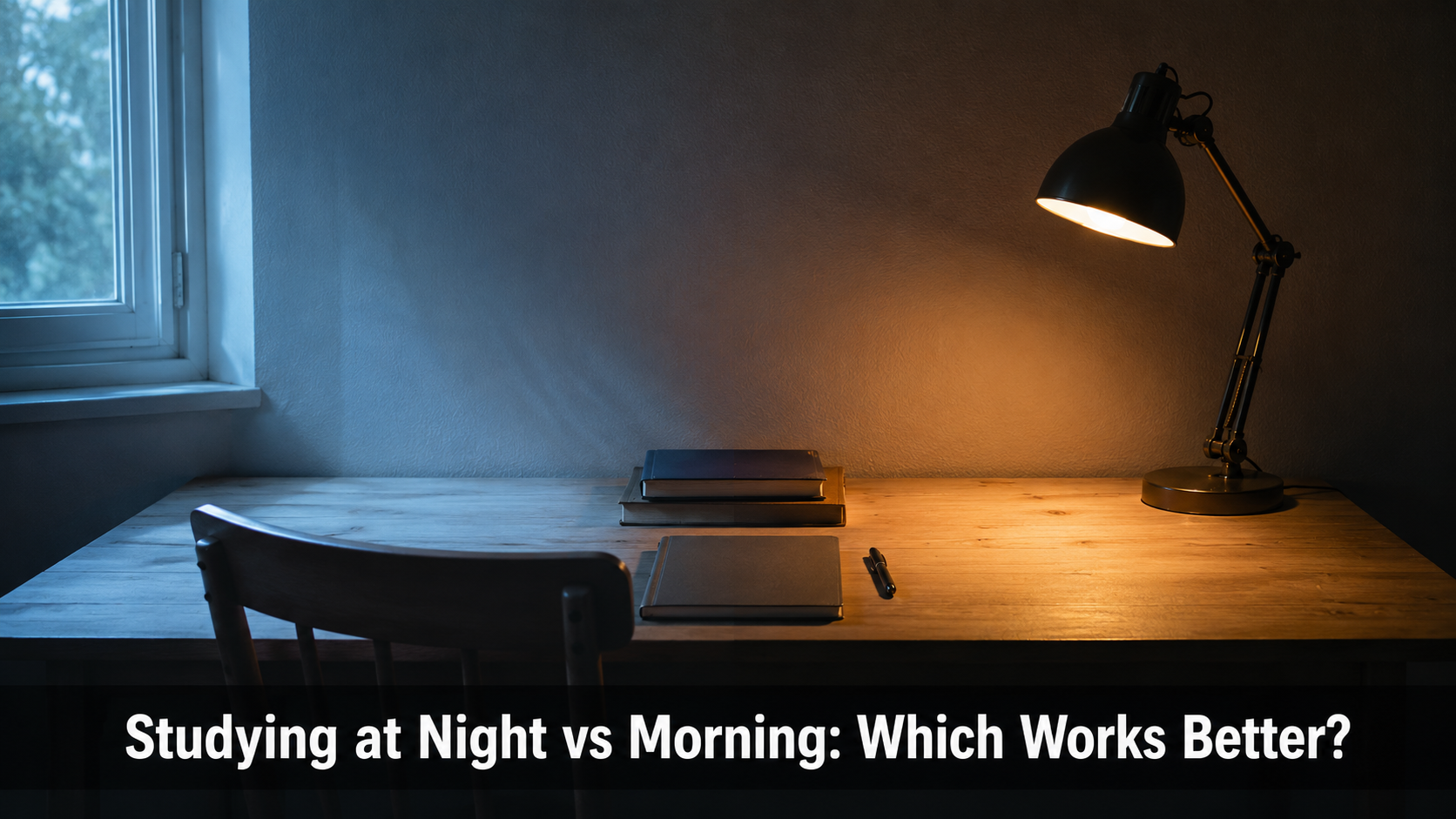
Studying at Night vs Morning: Which Works Better for You?
The debate over studying at night vs morning usually gets framed as a discipline question, but Dr. Avinesh Bhar, Board-Certified Sleep Physician at SLIIIP.com, treats it as a biology question instead. There is no single best time to study that applies to everyone, because alertness follows an internal clock that runs differently from person to person. The student who does their best work at 6:00 a.m. and the one who hits full focus at 10:00 p.m. are not showing different levels of willpower. They are running at different times.
That said, the choice is not fully open either. Whichever window you pick has to fit around a stable sleep schedule, not carve into it. A night owl who studies until 2:00 a.m. and still wakes at 7:00 a.m. for class is not working with their chronotype. They are simply short on sleep. This guide covers what the body clock does across the day, the honest case for each option, how to identify your own pattern, and the one rule that overrides personal preference.
SLIIIP’s board-certified sleep physicians can do sleep evaluations for sleep apnea. Virtual consultations in all 50 states. Home sleep tests shipped to your door.

Studying at Night vs Morning: What the Body Clock Actually Does
Your alertness is not flat across the day. It follows a curve driven by two systems working together.
The first is sleep pressure. This builds steadily from the moment you wake up. The longer you have been awake, the more it pushes toward sleep. By late evening it is high, which is why a task that felt easy at noon feels heavier at midnight.
The second is the circadian rhythm, the roughly twenty-four hour internal clock that governs body temperature, hormone release, and alertness. This one does not build steadily. It rises and falls, producing a dip in the early afternoon and a second, stronger rise in alertness in the evening for many people.
The interaction between these two systems is why a night owl can feel genuinely sharp at 10:00 p.m. despite having been awake for fifteen hours. The circadian rise is temporarily offsetting the accumulated pressure. It is a real window of alertness, not an illusion, but it is borrowed against the night.
Where your personal curve sits is called your chronotype. Late adolescence and early adulthood naturally shift most people later, which is why so many students identify as night people during college and then find themselves waking early without effort by their thirties. Our guide on circadian rhythm covers how this clock works in more detail.
CHECK YOUR SLEEP SYMPTOMS: TAKE THE 2 MINUTE QUIZ
TAKE THE QUIZ
The Case for Studying in the Morning
Morning study has some structural advantages that have nothing to do with virtue.
Sleep pressure is at its lowest. You are working with a rested brain rather than one that has already processed a full day.
Fewer interruptions. Early hours tend to be quieter. Fewer messages, fewer roommates, fewer invitations.
It fits the exam schedule. Most exams happen in the morning. Practicing hard cognitive work at the time of day you will be tested is a reasonable form of preparation.
Sleep afterward is protected. Studying early leaves the evening free to wind down, which matters because sleep is associated with consolidating what you learned that day.
Light exposure helps twice. Morning daylight supports alertness immediately and helps anchor the body clock, which makes the following night easier.
The trade-off is straightforward. If you are naturally a late type, early morning study can mean grinding through material while your body is still in sleep mode. Getting up at 5:00 a.m. to study is not productive if the first ninety minutes are spent rereading the same page. If mornings are your target but the start is rough, our morning routine guide covers the practical side.
The Case for Studying at Night
Night study has real strengths too, and dismissing it as bad discipline misses the point.
The evening circadian rise is genuine. Many students experience a clear alertness window in the late evening, and forcing that work into a groggy morning slot wastes it.
Fewer obligations compete. Classes, work shifts, and appointments are done. Long uninterrupted blocks are easier to find.
Some kinds of work benefit. Tasks involving open-ended thinking or making unusual connections are sometimes done well when the mind is slightly less rigid, which tends to happen later in the day.
Sleep follows immediately. Material studied shortly before sleep may benefit from being consolidated soon afterward.
The trade-offs are equally real. Night study reliably drifts later. A session planned to end at 11:00 p.m. becomes midnight, then 1:00 a.m. It also raises alertness right when you need it to fall, which makes falling asleep harder and often produces exactly the pre-sleep rumination students complain about.
How to Find Your Own Pattern
You do not need a lab. Two weeks of honest observation is enough.
Check your free-day sleep. On days with no alarm and no obligations, when do you naturally fall asleep and wake? That midpoint is the single best clue to your chronotype.
Track your focus, not your mood. For a week, note when hard material felt easiest. Not when you felt most motivated, which is a different thing.
Test both windows on the same material. Try a morning session and an evening session on comparable work and compare how much you actually retained the next day.
Watch for the afternoon dip. Most people have a low point in the early to mid afternoon. That slot is usually better for review, organizing notes, or practice problems than for learning something new. A short nap of around twenty minutes can help here, and our overview of the benefits of napping covers the timing.
Then match the task to the window. Put demanding new material in your peak window and administrative work in the dip. This matters more than which window you chose.
The Rule That Overrides Your Preference
Here is the part that decides the question for most students.
Whichever schedule you choose has to leave room for a full night of sleep, at a consistent time. Adults generally need seven to nine hours, and the Centers for Disease Control and Prevention sets seven or more hours as the guidance. If your study window pushes bedtime past the point where that is possible given your wake time, the window is the problem regardless of how alert you feel in it.
This is where most night study plans fall apart. The evening alertness is real, but the schedule around it is fixed by an 8:00 a.m. class. Studying in your peak window and then sleeping five hours cancels the advantage you gained, because sleep is associated with turning what you studied into durable memory.
Two practical conclusions follow.
If you are a genuine night type with a late first class, night study is a defensible choice. Keep the end time fixed and protect a consistent wake time.
If you are a night type with early mornings, the honest answer is a compromise. Shift study earlier in small steps, protect a stable sleep block, and accept a slightly less ideal window in exchange for adequate sleep. Our guide on how much core sleep you need explains why that block matters.
One note on medication: if you take a prescribed sleep aid or stimulant, do not change the dose or timing on your own to shift your study schedule. Speak with the prescribing clinician first.
Watch: The Importance of Sleep Behaviors session by Dr. Avinesh Bhar (SLIIIP) and Nick Lambe (Sleep Coach)
When the Timing Itself Is the Problem
Preferring evenings is normal. Being unable to sleep before 3:00 a.m. no matter what you do is a different situation.
Dr. Avinesh Bhar notes that students sometimes describe themselves as extreme night owls when the underlying pattern is a circadian rhythm shifted far outside the typical range. That pattern is associated with chronic difficulty waking, persistent morning grogginess, and daytime sleepiness that does not improve with more time in bed. It is recognized clinically and is discussed in our article on circadian rhythm sleep disorders.
Signs worth raising with a clinician include an inability to fall asleep before very late hours despite a consistent routine, waking unrefreshed regardless of duration, loud snoring or gasping at night, and falling asleep during class or while driving. The National Heart, Lung, and Blood Institute describes sleep deficiency as covering timing problems alongside insufficient duration and poor quality.
Nothing here is a diagnosis, and it does not replace an evaluation by a clinician familiar with your history.
At Sliiip, we accept the following insurances:

SLIIIP’s board-certified sleep physicians can do sleep evaluations for sleep apnea. Virtual consultations in all 50 states. Home sleep tests shipped to your door.
Frequently Asked Questions
Is studying at night vs morning better for retention?
Neither window is universally better, since retention depends more on getting adequate sleep afterward.
Am I more productive studying at night or in the morning?
It depends on your chronotype, which you can estimate from your natural sleep timing on free days.
Why do I focus better at night?
A circadian rise in alertness during the evening is common, particularly in late adolescence and early adulthood.
Is it bad to study late at night?
Late study becomes a problem when it pushes bedtime past what your wake time allows.
Does studying before bed help memory?
Studying shortly before sleep may benefit from consolidation soon afterward, provided the sleep actually happens.
Should I study in the morning if my exam is in the morning?
Practicing demanding work at the time of day you will be tested is a reasonable strategy.
What is a chronotype?
It describes where your internal clock sits, which shapes when you feel most alert.
Can I change whether I am a morning or night person?
Timing can be shifted gradually with light exposure and consistent schedules, within limits set by your biology.
How long does it take to become a morning person?
Shifting in fifteen to twenty minute steps, most people adjust over one to two weeks.
Why am I tired in the afternoon?
An early afternoon dip in alertness is a normal part of the daily rhythm.
Should I nap between study sessions?
A nap of about twenty minutes can restore alertness without leaving you groggy.
Does caffeine change my best study window?
Caffeine masks sleepiness temporarily rather than shifting your underlying rhythm.
Is studying at night vs morning different for creative work?
Some open-ended thinking tasks are done well later in the day, while demanding analytical work often favors a rested brain.
How much sleep do I need if I study at night?
Seven to nine hours applies regardless of when you study.
Does screen use during night study affect sleep?
Late screen exposure can delay sleep onset, so a break before bed is a reasonable habit.
What time should I stop studying?
Aim to finish thirty to forty-five minutes before you intend to sleep.
Are night owls at a disadvantage in school?
Class schedules built around early mornings can work against late types, which is a scheduling mismatch rather than a personal failing.
Should I study during my afternoon dip?
The dip suits review and organizing better than learning new material.
Does morning light really help?
Daylight shortly after waking supports alertness and helps anchor the body clock.
When should I see a sleep physician about my schedule?
If you cannot sleep before very late hours despite a consistent routine, or wake unrefreshed regardless of duration, an evaluation is reasonable.
SLIIIP’s board-certified sleep physicians can do sleep evaluations for sleep apnea. Virtual consultations in all 50 states. Home sleep tests shipped to your door.
Latest posts
-
Why Are My Naps Never Refreshing?
Last updated: October 2, 2026. Medically reviewed by Dr. Avinesh Bhar, Board-Certified Sleep Physician, SLIIIP.com. Naps that leave you groggy usually come down to how long you sleep, when you…
-
Is Sleeping Too Much a Sleep Disorder?
Last updated: October 2, 2026. Medically reviewed by Dr. Avinesh Bhar, Board-Certified Sleep Physician, SLIIIP.com. Sleeping too much is not always a sleep disorder, but it can be a sign…
-
Why Does My Insomnia Get Worse After Stopping Sleep Medication?
Last updated: October 2, 2026. Medically reviewed by Dr. Avinesh Bhar, Board-Certified Sleep Physician, SLIIIP.com. Insomnia can get worse after stopping sleep medication for three main reasons. They are rebound…
Get updates
Spam-free subscription, we guarantee. This is just a friendly ping when new content is out.

