

What Can a Sleep Test Find Besides Sleep Apnea?
Last updated: November 24, 2026. Medically reviewed by Dr. Avinesh Bhar, Board-Certified Sleep Physician, SLIIIP.com
A full lab sleep test can find much more than sleep apnea. It can help detect narcolepsy, limb movement disorders, REM sleep behavior disorder and central sleep apnea
It can also flag some breathing problems tied to heart or lung disease. Dr. Avinesh Bhar often reminds patients that a home apnea test is usually the first test to do since it’s the easiest one to start.
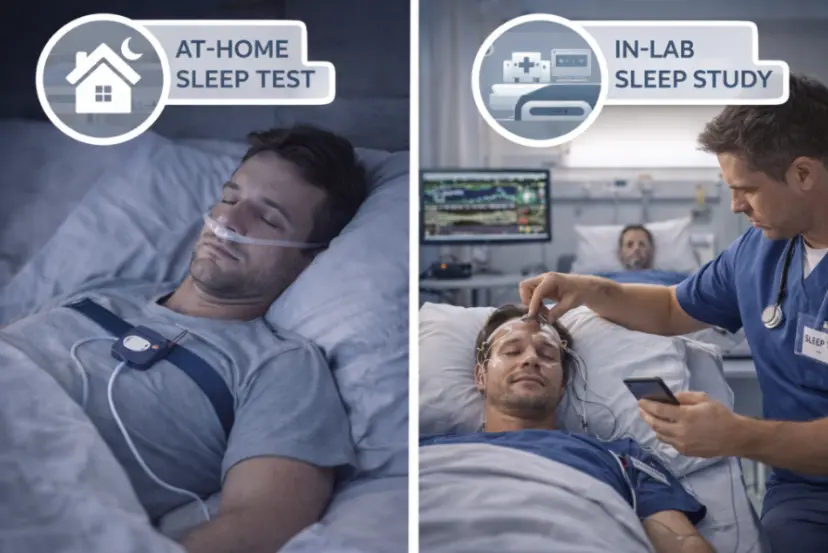
What a sleep test can find depends on which test you take. A lab study records many signals, while a home test focuses on breathing.
SLIIIP’s board-certified sleep physicians can do sleep evaluations for sleep apnea. Virtual consultations in all 50 states. Home sleep tests shipped to your door.
What Can a Sleep Test Find Besides Sleep Apnea?
An in-lab sleep study, called polysomnography, can help diagnose several disorders beyond obstructive sleep apnea. MedlinePlus lists central sleep apnea, narcolepsy, periodic limb movement disorder and REM behavior disorder among them.
Here is what each finding means:
- Central sleep apnea. The brain briefly stops sending the signal to breathe. It is linked to heart failure, stroke, opioid use and high altitude.
- Narcolepsy. REM sleep shows up too early in the night, and daytime sleepiness is severe.
- Periodic limb movement disorder. Legs or arms jerk again and again during sleep, often without the person knowing.
- REM sleep behavior disorder. A person acts out dreams because the normal muscle relaxation of REM sleep is missing.
- Sleep-related hypoventilation. Breathing is too shallow for long stretches, so carbon dioxide builds up.
- Heart rhythm changes. The heart tracing can show irregular beats during sleep that your doctor may want to follow up.
Watch: Why Am I Always Tired? Dr. Wells explains
What Does a Home Sleep Test Miss?
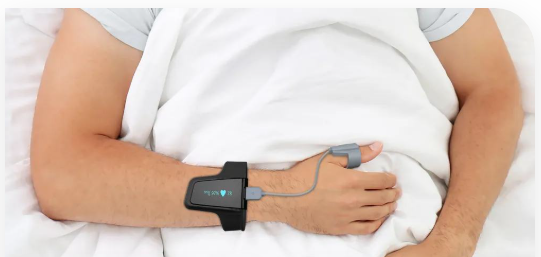
A home sleep apnea test usually does not record brain waves, so it cannot stage sleep or detect narcolepsy, limb movement disorders or dream enactment. It is designed to look for obstructive sleep apnea in adults.
Most home devices track airflow, breathing effort, oxygen level and heart rate. Some also estimate sleep time. That is enough to find many cases of obstructive sleep apnea.
It is not enough when symptoms point elsewhere.
How Is Narcolepsy Found on a Sleep Test?
Narcolepsy usually needs two tests: an overnight sleep study followed by a daytime nap test. The nap test is called the multiple sleep latency test.
According to the NINDS, the overnight study checks whether REM sleep starts too early and looks for other causes such as sleep apnea. The daytime test then measures how fast you fall asleep and whether you enter REM sleep during naps.
You can learn more in our guide on how narcolepsy is tested.
Can a Sleep Test Find Restless Legs?
Restless legs syndrome is mainly diagnosed from your symptoms, not from a sleep test. The urge to move your legs at rest, often in the evening, is the key sign.
A lab study can still help. It can show periodic limb movements, which often occur in people with restless legs. It can also show whether those movements break up your sleep.
Our article on treatment for restless leg syndrome covers next steps.
Can a Sleep Test Find Insomnia?
Insomnia is usually diagnosed from your sleep history, not a sleep study. A doctor asks how long it takes you to fall asleep, how often you wake and how you feel during the day.
A sleep test may still be ordered when insomnia does not improve with treatment. Hidden sleep apnea is common in people with insomnia. Finding it can change the plan.
A sleep diary or a wrist activity monitor may also be used. These track your sleep pattern over one or two weeks.
Can a Sleep Test Show Why You Wake Up So Often?
Yes, a lab study can often show what is behind frequent waking. It records each brief arousal and lines it up with breathing, leg movements and heart rate.
Many people wake dozens of times an hour without remembering it. These short arousals still break up deep sleep and REM sleep. The result is feeling tired even after a long night.
Common causes the study may point to include:
- Breathing events such as apneas, hypopneas or effort-related arousals.
- Leg movements that jolt the brain awake.
- Reflux or pain that disturbs sleep, which may show up as unexplained arousals.
- A body clock that is out of sync with your schedule.
Waking to urinate at night is also worth mentioning to your doctor. It is common in people with untreated sleep apnea.
Which Test Should You Ask For?
Your symptoms decide the test. Loud snoring and breathing pauses often point to a home apnea test. Severe daytime sleepiness, dream enactment or leg jerks often point to a lab study.
- Home test: suspected obstructive sleep apnea with no major heart or lung disease.
- Lab study: suspected narcolepsy, movement disorders, REM behavior disorder or central sleep apnea.
- Lab study: heart failure, lung disease, opioid use or a past home test that did not match your symptoms.
Compare both options in our guide to home vs lab sleep tests.
When to See a Doctor
See a doctor if you feel very sleepy during the day, act out dreams, kick in your sleep or stop breathing at night. Falling asleep suddenly while talking or eating also needs attention.
Dr. Avinesh Bhar recommends going back to a sleep physician when a normal home test does not match how you feel. A lab study or a daytime nap test may be the next step, and only a doctor can decide which.
Insurance and Getting Started
SLIIIP works with many major insurance plans, including Medicare, TRICARE, Aetna, Cigna, Blue Cross Blue Shield, Humana and UnitedHealthcare.

Check your coverage in a few minutes, then book a virtual visit with a board-certified sleep physician.
For cash payments, price for Initial Consultation is $150
Follow up appointments cost $125
Frequently Asked Questions
Can a sleep test find narcolepsy?
Yes. An overnight lab study plus a daytime nap test is the usual way to diagnose it.
Can a home sleep test find narcolepsy?
No. Home apnea tests do not record brain waves, so they cannot detect narcolepsy.
Can a sleep study detect restless legs?
It can show limb movements that often come with restless legs. The diagnosis itself is based on symptoms.
Can a sleep test find central sleep apnea?
A lab study can. Some home devices can suggest it, but a lab study is more reliable.
Can a sleep study show insomnia?
Insomnia is diagnosed mainly from your history. A study may be used to look for hidden causes.
What is REM sleep behavior disorder?
It is a condition where people act out dreams. A lab study with video can confirm it.
Can a sleep test find heart problems?
It records heart rate and rhythm. Unusual findings are passed on to your doctor for follow-up.
Can a sleep test find seizures at night?
Some lab studies use extra brain wave leads when seizures are suspected. Your doctor will order this if needed.
What is periodic limb movement disorder?
It is repeated jerking of the legs or arms during sleep. It can break up sleep without you knowing.
Can a sleep test detect teeth grinding?
A lab study can sometimes pick up jaw muscle activity linked to grinding. A dentist usually confirms it.
Does a home sleep test measure sleep stages?
Most do not. They estimate sleep time but do not record brain waves.
Why was my home test normal if I am still tired?
Home tests look mainly for sleep apnea. Other disorders or mild apnea can be missed.
What is a multiple sleep latency test?
It is a daytime test with several naps. It measures how fast you fall asleep and whether REM sleep appears.
Can a sleep test find hypoventilation?
A lab study can, especially when it adds carbon dioxide monitoring.
Is a lab sleep study better than a home test?
It records more signals. A home test is simpler and works well for suspected obstructive sleep apnea.
Can sleep tests find sleepwalking?
Lab studies with video can sometimes capture it. Many cases are diagnosed from history alone.
Will my insurance cover a lab study?
Many plans do when there is a medical reason. Your doctor documents why a lab study is needed.
Do I need a referral for a lab study?
It depends on your plan. A sleep physician can order the right test.
Can a sleep test show low oxygen at night?
Yes. Both home and lab tests track oxygen levels through the night.
Latest posts
-
What Can a Sleep Test Find Besides Sleep Apnea?
Last updated: November 24, 2026. Medically reviewed by Dr. Avinesh Bhar, Board-Certified Sleep Physician, SLIIIP.com A full lab sleep test can find much more than sleep apnea. It can help…
-
Benefits of a Sleep Study: What You Gain From Knowing
Last updated: November 24, 2026. Medically reviewed by Dr. Avinesh Bhar, Board-Certified Sleep Physician, SLIIIP.com. The main benefit of a sleep study is a clear answer. It shows whether your…
-
Can Sleep Apnea Cause an Enlarged Heart?
Last updated: November 17, 2026. Medically reviewed by Dr. Avinesh Bhar, Board-Certified Sleep Physician, SLIIIP.com. Sleep apnea is associated with heart enlargement, especially thickening of the heart’s main pumping chamber.…
Get updates
Spam-free subscription, we guarantee. This is just a friendly ping when new content is out.

