
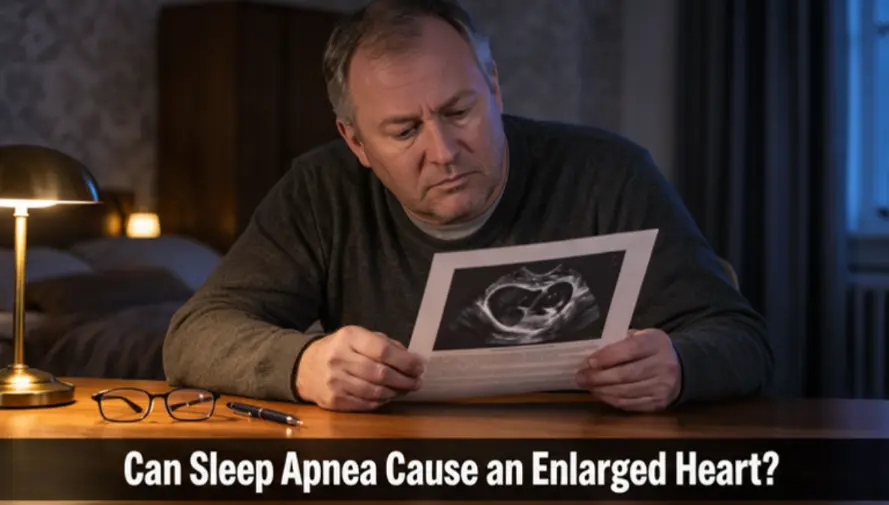
Can Sleep Apnea Cause an Enlarged Heart?
Last updated: November 17, 2026. Medically reviewed by Dr. Avinesh Bhar, Board-Certified Sleep Physician, SLIIIP.com.
Sleep apnea is associated with heart enlargement, especially thickening of the heart’s main pumping chamber.
Studies link obstructive sleep apnea to left ventricular hypertrophy, a thicker and heavier heart wall, and to larger upper heart chambers. High blood pressure and excess weight explain part of this link, and they often travel with sleep apnea.
Dr. Avinesh Bhar, Board-Certified Sleep Physician at SLIIIP.com, often meets patients whose thickened heart wall was found before anyone asked about snoring.
SLIIIP’s board-certified sleep physicians can do sleep evaluations for sleep apnea. Virtual consultations in all 50 states. Home sleep tests shipped to your door.
Can Sleep Apnea Cause an Enlarged Heart?
It is associated with it. A systematic review and meta-analysis found that obstructive sleep apnea was linked to left ventricular hypertrophy, chamber enlargement and atrial dilation.
Left ventricular hypertrophy means the wall of the left lower chamber has thickened. The heart muscle grows when it works against high pressure for a long time.
Atrial dilation means the upper chambers have stretched. Enlarged upper chambers are linked to atrial fibrillation.
Why Would Sleep Apnea Thicken the Heart?
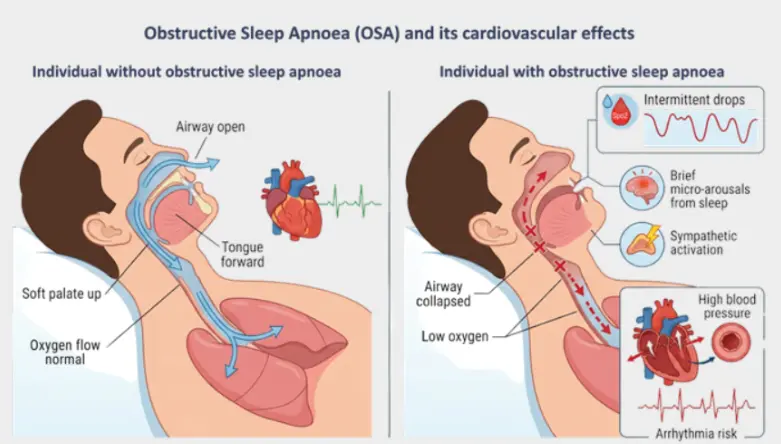
Several stresses add up night after night. Breathing against a closed airway creates strong pressure swings inside the chest, which add workload to the heart.
- Oxygen drops trigger stress hormones that raise heart rate and blood pressure.
- Nighttime blood pressure surges add pressure load to the left ventricle.
- Chest pressure swings stretch the heart walls and chambers.
- Repeated arousals keep the nervous system in a more alert state.
Over years, this extra load is associated with remodeling, a change in the heart’s size and shape.
How Do Blood Pressure and Weight Fit In?
They are a big part of the story. High blood pressure is the most common cause of left ventricular hypertrophy, and sleep apnea is strongly linked to high blood pressure.
Obesity also raises the risk of both sleep apnea and a thicker heart wall. Some studies suggest much of the link runs through weight and blood pressure.
One study in people with severe obesity found that sleep apnea severity was associated with left ventricular mass independent of other heart risk factors.
Our guide on sleep apnea and high blood pressure explains that connection in more detail.
What Does an Enlarged Heart Mean for You?
It depends on the type and cause. A mildly thickened wall from blood pressure is different from a weak, stretched heart muscle.
Left ventricular hypertrophy is associated with a higher risk of heart failure, rhythm problems and heart attack. Treating the causes can slow or sometimes partly reverse it.
What Symptoms Should You Watch For?
Early heart enlargement often has no symptoms. It is usually found on an echocardiogram, an ECG or a chest X-ray done for another reason.
As the heart changes, some people notice shortness of breath with activity, fatigue, palpitations or swelling in the legs.
Sleep apnea signs often appear alongside. Watch for loud snoring, gasping, morning headaches and heavy daytime sleepiness.
Our guide on how sleep apnea affects the heart covers related heart effects.
Watch: Dr. Wells explains what are the effects of poor sleep?
Can Treating Sleep Apnea Help an Enlarged Heart?
It may help as part of a broader plan. Treating sleep apnea reduces oxygen drops and nighttime blood pressure surges, which lowers some of the load on the heart.
Some studies have reported improvements in heart structure after consistent sleep apnea treatment. Results vary, and consistent nightly use matters.
Blood pressure control, weight management and heart medicines remain central. Sleep apnea treatment works alongside them, not instead of them.
What Tests Look at the Heart and Sleep?
Heart tests and sleep tests answer different questions. An echocardiogram shows the heart’s size, wall thickness and pumping strength, while a sleep study shows breathing pauses and oxygen levels.
- Echocardiogram: heart size, wall thickness and valve function.
- ECG: heart rhythm and signs of a thickened wall.
- Blood pressure monitoring: daytime and nighttime readings.
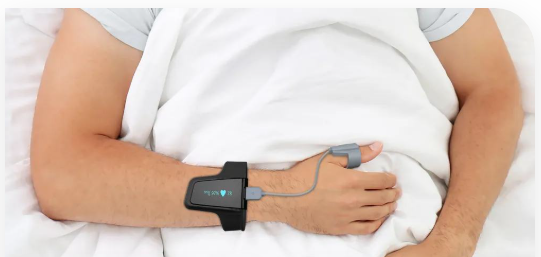
- Home sleep test or lab study: breathing pauses and oxygen drops during sleep.
Bringing your echocardiogram report to a sleep visit helps the sleep doctor understand your risk.
Who Is Most at Risk?
Risk rises when several factors meet. People with high blood pressure, obesity, diabetes or severe sleep apnea are more likely to show changes in heart structure.
Men and older adults have higher rates of sleep apnea. Women after menopause catch up.
If you have an enlarged heart and any sleep apnea signs, testing is reasonable even if you do not feel sleepy.
Can Lifestyle Changes Make a Difference?
Yes, for many people. Weight loss, less alcohol, regular activity and lower salt intake are linked to lower blood pressure and less strain on the heart.
Weight loss is also linked to fewer breathing events in sleep apnea. Alcohol near bedtime relaxes the airway and worsens apnea.
Make changes with your doctor’s guidance, especially if you have known heart disease.
What Questions Should You Ask Your Doctors?
A few questions can connect your heart care and sleep care. Ask whether your echocardiogram findings could be linked to nighttime breathing problems.
- Is my heart wall thickened, my chamber enlarged or my pumping weak?
- Is my blood pressure controlled day and night?
- Should I have a home sleep test or a lab study?
- How will we track whether treatment is helping my heart?
Sharing test results between your cardiologist and sleep doctor avoids repeat testing and gaps in care.
When to See a Doctor
See a doctor if an imaging test showed an enlarged or thickened heart, or if you have shortness of breath, swelling or palpitations.
Dr. Avinesh Bhar recommends a sleep evaluation for anyone with heart enlargement who also snores loudly, gasps at night or has hard-to-control blood pressure.
Check Your Insurance Before You Book
SLIIIP works with many major insurance plans. Checking your benefits first takes a few minutes and helps you avoid surprises.

SLIIIP’s board-certified sleep physicians can do sleep evaluations for sleep apnea. Virtual consultations in all 50 states. Home sleep tests shipped to your door.
For cash payments, price for Initial Consultation is $150
Follow up appointments cost $125
Frequently Asked Questions
Can sleep apnea cause an enlarged heart?
It is associated with heart enlargement, especially a thickened left ventricle.
What is left ventricular hypertrophy?
It is thickening of the wall of the heart's main pumping chamber.
How does sleep apnea strain the heart?
Oxygen drops, blood pressure surges and chest pressure swings add workload.
Is high blood pressure part of the link?
Yes. High blood pressure is a major cause of a thickened heart and is linked to sleep apnea.
Does obesity explain the link?
Obesity explains part of it, but some studies show a link independent of weight.
Can an enlarged heart improve?
Treating the causes can slow or sometimes partly reverse some changes.
Can CPAP help an enlarged heart?
Some studies report improvements with consistent treatment, but results vary.
What symptoms does an enlarged heart cause?
Often none at first. Later, breathlessness, fatigue, palpitations or swelling may appear.
How is an enlarged heart found?
Usually by echocardiogram, ECG or chest X-ray.
Does sleep apnea enlarge the upper heart chambers?
Sleep apnea is associated with atrial enlargement, which is linked to AFib.
Is an enlarged heart the same as cardiomyopathy?
Not always. Cardiomyopathy is a disease of the heart muscle, and some types enlarge the heart.
Should I get a sleep test if my heart is enlarged?
Yes, if you snore, gasp at night or have hard-to-control blood pressure.
Can weight loss help?
Weight loss is linked to lower blood pressure and fewer sleep apnea events.
Does alcohol affect heart enlargement?
Heavy alcohol use strains the heart and worsens sleep apnea.
Who is most at risk?
People with high blood pressure, obesity, diabetes or severe sleep apnea.
Can mild sleep apnea affect the heart?
Effects are more often reported with moderate to severe sleep apnea.
Do I need a cardiologist?
Yes. Heart enlargement should be followed by a cardiologist.
Can a home sleep test be used?
Often yes, though some heart conditions call for a lab study.
Does SLIIIP treat heart disease?
No. SLIIIP evaluates sleep disorders and works alongside your heart care team.
How can SLIIIP help?
SLIIIP's sleep physicians diagnose adult sleep apnea through virtual visits and home sleep tests.
Latest posts
-
Can Sleep Apnea Cause an Enlarged Heart?
Last updated: November 17, 2026. Medically reviewed by Dr. Avinesh Bhar, Board-Certified Sleep Physician, SLIIIP.com. Sleep apnea is associated with heart enlargement, especially thickening of the heart’s main pumping chamber.…
-
Can Sleep Apnea Cause Swollen Ankles?
Last updated: November 17, 2026. Medically reviewed by Dr. Avinesh Bhar, Board-Certified Sleep Physician, SLIIIP.com. Sleep apnea can be part of the picture, usually through its effects on the heart…
-
Can Sleep Apnea Cause Chest Pain at Night?
Last updated: November 17, 2026. Medically reviewed by Dr. Avinesh Bhar, Board-Certified Sleep Physician, SLIIIP.com. Sleep apnea is linked to nighttime chest discomfort, but it is rarely the only explanation.…
Get updates
Spam-free subscription, we guarantee. This is just a friendly ping when new content is out.

