👉 Register for Free. Peri/Menopause at Midnight: Why You Wake Up Hot, Wired, and Wide Awake at 3AM. – Friday, March 27th, 3:00 AM ET with Dr. Audrey Wells.

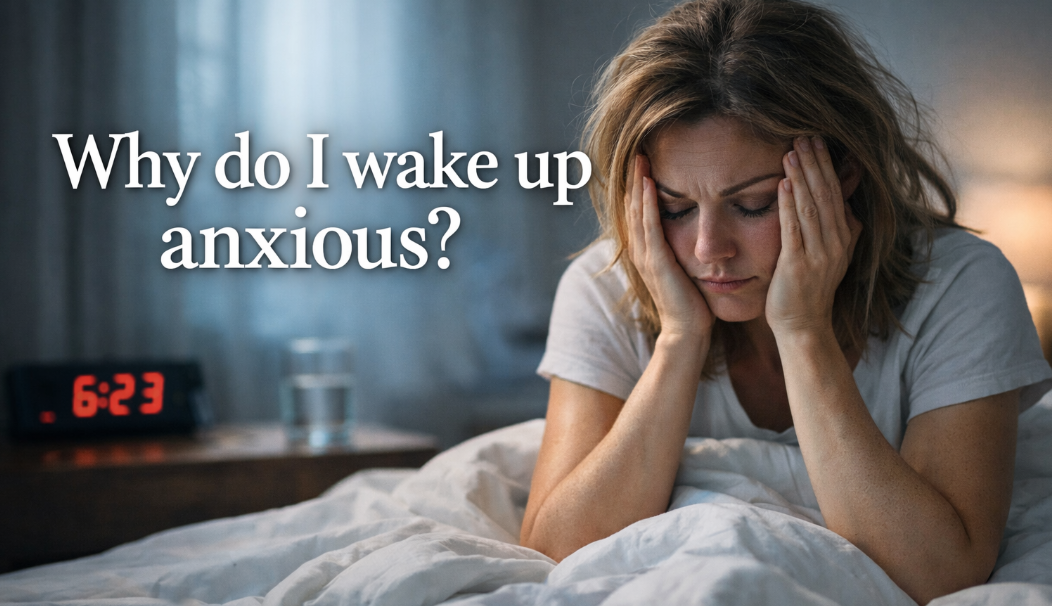
Why Do I Wake Up Anxious?
Why do I wake up anxious? Opening your eyes to a racing heart, tight chest, or a sense of impending doom is a distressing way to start the day. While many attribute this to daily stress, morning anxiety is frequently a physiological red flag for underlying breathing disruptions that occur while you sleep.
According to Dr. Avinesh Bhar, Board Certified Sleep Physician at Sliiip.com, the body’s response to restricted breathing is nearly identical to a panic attack. “When your airway narrows at night, your brain triggers a massive release of adrenaline to wake you up and restart your breathing,” explains Dr. Bhar.
Research published in the Journal of Activation and Health suggests that nearly 50 percent of patients with obstructive sleep apnea report significant symptoms of anxiety and morning panic. This biological link confirms that your morning jitters are often a survival mechanism triggered by your respiratory system.
If you are wondering “why do I wake up anxious”, it could be sleep apnea. Take our quiz to find out.

Morning Anxiety Myths vs. Reality
If you have been struggling with anxiety at night or waking up in a state of panic, the explanation may be far more physical than psychological. Here is what the clinical evidence actually shows.
Myth: Morning anxiety is strictly caused by a stressful job or personal life.
Reality: While life stress plays a role, a physical drop in oxygen during the night forces the adrenal glands to spike cortisol, creating a chemical anxiety that lingers after waking.
Myth: If I do not remember waking up gasping, my breathing did not cause my panic.
Reality: Most respiratory-related arousals are micro-awakenings that last only seconds. You will not remember the struggle for air, but you will feel the adrenaline surge when you finally wake up for the day.
Myth: Deep breathing exercises in the morning will fix the root cause.
Reality: Breathwork can calm the immediate symptoms, but if the trigger is a collapsed airway at 3:00 AM, the anxiety will return every morning until the sleep disorder is properly managed.
How Sleep Apnea Triggers Morning Panic
The biological answer to why do I wake up anxious? often lies in the autonomic nervous system. When you have sleep apnea, your breathing stops or becomes shallow. This causes your blood oxygen levels to plummet and your carbon dioxide levels to rise. To prevent suffocation, your brain interprets this as a life-threatening emergency and floods your system with norepinephrine and cortisol to jerk you out of deep sleep.
By the time you wake up at 7:00 AM, your body has been through a chemical marathon of stress hormones all night long, leaving you feeling physically shaky and mentally overwhelmed.
What is Sleep Apnea?
The Connection Between Cortisol and Sleep Disruption
When investigating why do I wake up anxious?, we must look at the “cortisol awakening response.” Naturally, cortisol rises in the morning to help us wake up. However, if your sleep is fragmented by breathing issues, this rise becomes an explosion.
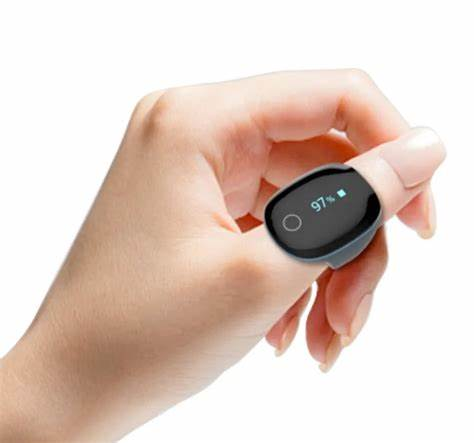
Instead of a gentle wake-up call, your body experiences a surge because it has been in a state of high alert for hours. This is why morning anxiety often feels much more intense than the stress you feel later in the afternoon. At Sliiip.com, we use the SleepImage ring to track these sympathetic surges, giving us data on the quality of your sleep.
Persistent daytime fatigue that accompanies this morning anxiety is often the clearest sign that the two are connected.
Ready to Finally Sleep Better?
- 10,000+ consultations completed
- No referral required
- Available in all 50 states
- Most major insurance accepted
Silent Airway Struggles and Mental Health
Many patients find themselves asking why do I wake up anxious? because they do not fit the typical snorer profile. If you have a narrow airway or a recessed jaw, you may experience Upper Airway Resistance Syndrome (UARS).
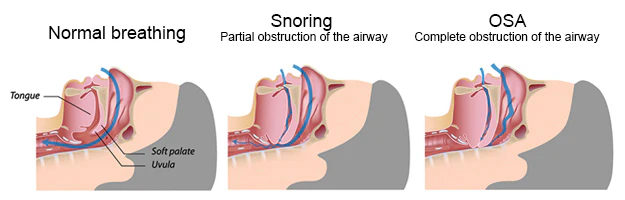
In UARS, you are not necessarily stopping breathing for long periods, but the work required to pull air through a narrow, straw-like throat is immense. This constant physical struggle keeps the brain in a state of hyper-vigilance. Over time, this mimics the symptoms of Generalized Anxiety Disorder. Many patients are surprised to find that once they use a CPAP or oral appliance to stabilize their airway, their anxiety significantly decreases or disappears entirely.
Oxygen Desaturation and the “Doom” Feeling
A specific symptom often tied to the question why do I wake up anxious? is a feeling of impending doom. This is a documented medical symptom of hypoxia, which is low oxygen in the blood. When the brain is not receiving enough oxygenated blood, it sends out a distress signal that manifests as intense fear.
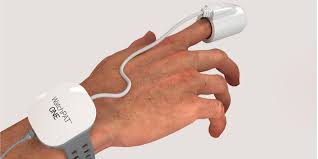
If you wake up feeling like something is wrong but cannot point to a specific problem, your brain may be reacting to a genuine physical shortage of oxygen during the night. Some patients also describe waking up gasping as the moment the panic peaks. By utilizing a home sleep test like WatchPAT, we can see exactly when your oxygen dips and whether those dips correlate with your heart rate spiking into a panic zone.
Breaking the Cycle of Morning Adrenaline
To stop asking why do I wake up anxious?, you have to break the cycle of nighttime adrenaline. Relying on anti-anxiety medication may mask the feeling, but it will not keep your airway open.
In fact, some sedatives can make the airway more likely to collapse, inadvertently worsening the morning panic.
According to the National Heart, Lung, and Blood Institute, the cardiovascular strain produced by untreated sleep-disordered breathing has measurable effects on the nervous system and long-term heart health. Professional diagnosis is the only way to differentiate between a mental health concern and a sleep-breathing disorder. The cardiovascular burden alone is reason enough to pursue an objective sleep evaluation rather than continuing to manage symptoms without a confirmed cause.
At Sliiip.com, our board-certified physicians specialize in identifying these crossover cases. We look at your daytime fatigue, your jaw structure, and your nighttime heart rate data to determine if your panic is actually a breathing problem in disguise.
Expert Q&A
Q: I have been on anxiety medication for years, but my heart still races every single morning the moment I wake up. Is it possible this is actually my breathing?
“It is very possible. In my practice, I see many patients who have been misdiagnosed with treatment-resistant anxiety when they actually have a structural airway issue. If your anxiety is most intense in the first thirty minutes of the day, that is a major indicator that your nervous system was under fire all night. We need to look at your sleep data to see if your brain is stuck in survival mode because of your breathing.”
Dr. Avinesh Bhar Board Certified Sleep Physician, Sliiip.com
Lifestyle Integration for a Calmer Morning
If you are struggling with morning jitters, these behavioral shifts can support a more stable nervous system while you pursue a formal evaluation.
Limit Alcohol: Alcohol relaxes the throat muscles and increases the severity of oxygen drops, leading to higher cortisol spikes the following morning.
Standardize Wake Times: A consistent sleep schedule helps regulate your natural cortisol rhythm and reduces the intensity of the awakening surge.
Nasal Breathing: Practice breathing through your nose during the day. Mouth breathing at night is less efficient and more likely to trigger arousal signals to the brain.
Hydration Balance: Dehydration can increase resting heart rate, which can mimic or amplify the feeling of morning anxiety and make it harder to distinguish from a breathing-related surge.
Not sure whether your symptoms point to a breathing disorder? Take our sleep apnea quiz for a clinical starting point before your consultation.
Ready to Finally Sleep Better?
- 10,000+ consultations completed
- No referral required
- Available in all 50 states
- Most major insurance accepted

Frequently Asked Questions
Why do I wake up anxious even if I had a long sleep?
The quantity of sleep does not equal the quality of sleep. You may have been unconscious for eight hours, but if your airway was struggling, your brain was likely in a state of high stress the entire time. Fragmented sleep prevents you from reaching the restorative stages that normally lower your cortisol levels overnight.
Can sleep apnea cause a racing heart in the morning?
Yes: a racing heart is a direct response to a respiratory event. When you stop breathing, your heart beats faster to circulate the remaining oxygen to your vital organs. This heart rate spike often lingers as you wake up, making you feel physically anxious even before you have had a single thought about the day ahead.
Is morning anxiety worse than evening anxiety?
For many with sleep disorders, morning anxiety is more intense because it is driven by a physiological adrenaline response rather than psychological worry. While evening anxiety is often about thoughts, morning anxiety is often a physical residue of the night’s breathing struggles that has built up over several hours.
How does cortisol play a role in why I wake up anxious?
Cortisol is your body’s primary stress hormone. While a small rise is needed to wake up, sleep apnea causes pathological spikes throughout the night. These spikes occur because your body is trying to restart breathing. The excess cortisol makes you feel jittery, wired, or on edge as soon as consciousness returns.
Can a home sleep test help with anxiety diagnosis?
Absolutely. If a home sleep test shows that you have oxygen desaturations or elevated heart rate variability at night, it provides a physical explanation for your morning anxiety. This allows you to treat the root cause, which is your breathing, rather than just managing symptoms with therapy or medication.
What is the “fight or flight” response during sleep?
The fight or flight response is managed by the sympathetic nervous system. In sleep apnea, every time the airway closes, this system activates. Your body acts as if it is being chased by a predator, even though you are lying in bed. This constant nighttime activation leads to chronic morning anxiety that feels disproportionate to your actual daily stressors.
Why do I wake up anxious with a dry mouth?
A dry mouth is a sign of mouth breathing during sleep, which is less stable for the airway than nasal breathing. Mouth breathing often indicates that your nasal passages are restricted, making you more prone to the airway collapses that trigger the adrenaline surges responsible for your morning panic.
Does treating sleep apnea reduce morning anxiety?
For many patients, treating sleep apnea with CPAP or an oral appliance significantly reduces or eliminates morning anxiety. When the brain no longer has to trigger an emergency response to get air, the adrenaline surges stop and the nervous system is able to remain calm through the transition into waking.
Can coffee make morning anxiety from sleep apnea worse?
Yes: if your body is already flooded with cortisol from a night of poor breathing, adding caffeine can push your system into an over-stimulated state. This can lead to increased heart rate and a heightened sense of panic that lasts throughout the workday, especially in patients with undiagnosed sleep-disordered breathing.
Why do I wake up anxious on my back?
Sleeping on your back is when gravity is most likely to pull the tongue and soft tissues into the airway. This often leads to more frequent and more severe apneas. If you notice your anxiety is consistently worse when you wake up on your back, it is a strong indicator of positional sleep apnea worth discussing with a specialist.
Is morning anxiety a sign of a heart problem?
While anxiety and heart palpitations should always be evaluated by a physician, they are very common symptoms of sleep apnea. The respiratory stress of not breathing places strain on the cardiovascular system, and high blood pressure is a documented downstream effect of untreated sleep-disordered breathing.
What should I tell my doctor if I wake up anxious?
Be specific about the timing and the physical quality of the anxiety. Tell them you wake up with a racing heart, a sense of panic, or a dry mouth. Ask specifically whether these symptoms could be related to your sleep architecture or nighttime breathing rather than just mental stress, and request a sleep evaluation if they cannot provide a clear explanation.
Latest posts
-
How Do I Fix My Circadian Rhythm?
How do I fix my circadian rhythm? When your internal biological clock falls out of sync with the natural world, every aspect of your health suffers. From daytime exhaustion to…
-
Why Do I Wake Up Anxious?
Why do I wake up anxious? Opening your eyes to a racing heart, tight chest, or a sense of impending doom is a distressing way to start the day. While…
-
Do I Have Sleep Apnea Without Snoring?
Do I have sleep apnea without snoring? While heavy snoring is the most famous red flag for sleep-disordered breathing, thousands of patients suffer from significant nighttime oxygen drops and fragmented…
Get updates
Spam-free subscription, we guarantee. This is just a friendly ping when new content is out.

