👉 Register for Free. How to Diagnose Sleep Apnea Faster in Primary Care – FREE Webinar by Dr. Audrey Wells. – Friday, April 24 at 12 PM ET

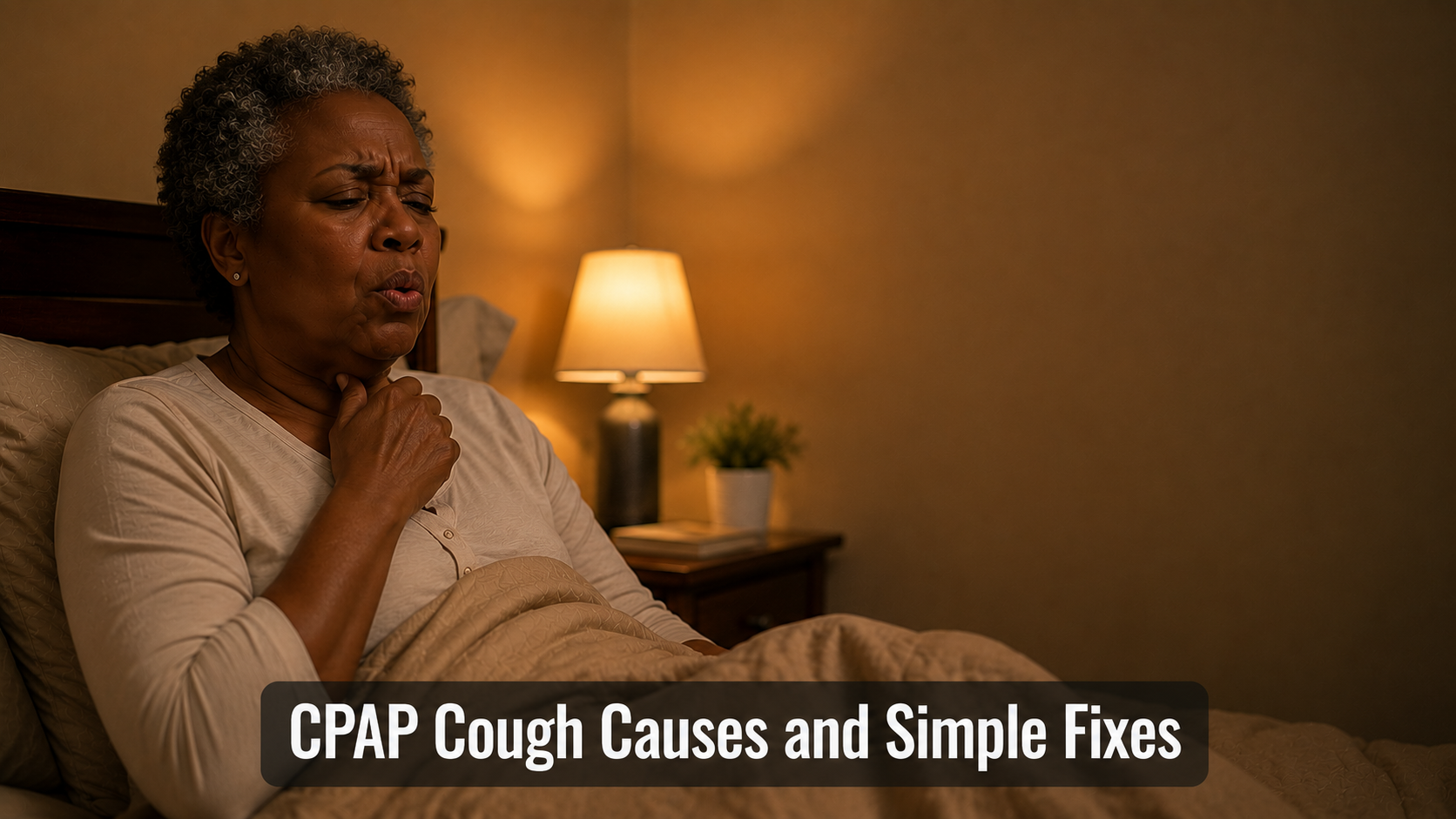
Why Does My CPAP Make Me Cough? CPAP Cough Causes and Simple Fixes
A CPAP cough can be an annoying surprise when a machine meant to help your sleep leaves your throat tickly, and Dr. Avinesh Bhar, Board-Certified Sleep Physician at SLIIIP.com, explains the common reasons behind it and the simple fixes that often help.
Most coughing tied to CPAP comes from everyday causes like dry air, mask fit, or equipment that needs cleaning, and small adjustments made with your care team can make a real difference.
SLIIIP’s board-certified sleep physicians can do sleep evaluations for sleep apnea. Virtual consultations in all 50 states. Home sleep tests shipped to your door.

Why Your CPAP Might Trigger a Cough
CPAP therapy pushes a steady stream of air into your airway to keep it open while you sleep. That airflow is what makes the therapy work, but it can also dry or irritate the throat for some people, especially when a setting or a piece of equipment is not quite right. A cough is one way the body reacts to that irritation. The National Heart, Lung, and Blood Institute describes CPAP as a common therapy that keeps the airway open during sleep.
The good news is that most causes are simple and fixable. A tickly throat, a dry mouth, or a light cough after starting therapy usually points to air quality, mask fit, or cleaning, rather than anything serious. Working through these one at a time, with support from your care team, often clears things up. If CPAP has felt like a struggle lately, our article on why you might not be loving CPAP is a friendly place to start.
CHECK YOUR SLEEP SYMPTOMS: TAKE THE 2 MINUTE QUIZ
TAKE THE QUIZ
How Dry Air Irritates Your Airway
Dry air is one of the most common reasons for a cough on CPAP. When the air moving through the machine is not warmed and moistened, it can leave your throat and nose feeling parched. That dryness can spark a tickle, a scratchy feeling, or a light cough, often worse in winter when indoor air is already dry.
Most modern machines include a heated humidifier for exactly this reason. Adding moisture to the air can soothe the airway and calm the tickle. Heated tubing can help too, since it keeps the warmed air from cooling and forming droplets before it reaches you. If a dry mouth is part of your morning routine, our piece on dry mouth with CPAP covers gentle ways to add comfort.
Common Causes of a CPAP Cough
Beyond dry air, a few other everyday issues can set off coughing. Knowing the usual suspects helps you and your provider find the fix faster. It is often a process of checking each one.
Pressure that feels too strong can make some people cough or swallow air as they get used to therapy. A mask that leaks can blow air toward the eyes or across the face in ways that trigger irritation. Equipment that has not been cleaned can collect dust or moisture that bothers the airway. Nasal congestion from allergies or a cold can also make the airflow harder to tolerate. Our guide on managing air and bloating on CPAP touches on the swallowing air issue, and our article on the best CPAP mask can help with fit.
Simple Fixes You Can Try
Many CPAP coughs ease with small, practical changes, and the Centers for Disease Control and Prevention frames steady, healthy sleep as something worth protecting. These are comfort and habit adjustments, not medical changes, and the ones involving your prescribed pressure should always go through your care team or equipment provider. Never change a prescribed setting on your own.
Start with humidity. If your machine has a heated humidifier, try turning it up a notch, and consider heated tubing if dry air is the culprit. Check your mask fit, since a snug, well matched mask reduces leaks that irritate the airway. Ask your provider about the ramp feature, which starts pressure low and builds slowly, giving you time to adjust. Keep your equipment clean on a regular schedule. If congestion is the trigger, a saline rinse before bed may help, and our page on using CPAP while sick offers more ideas for stuffy nights.
When the Cough May Not Be From Your CPAP
Sometimes a cough that shows up at night is not really about the machine at all. The CPAP just happens to be there when you notice it. It helps to keep an open mind about other common causes, since the fix depends on the real source.
A lingering cold, allergies, or postnasal drip can all cause nighttime coughing. Acid reflux is another common one, since stomach contents can irritate the throat when you lie down. If your cough comes with heartburn, a sour taste, or a hoarse voice, reflux may be worth exploring with your doctor. Dr. Avinesh Bhar encourages people to look at the whole picture, because a cough can have several causes, and a quick review helps point to the right fix. If breathing comfort is a broader goal, our article on improving your breathing for better sleep is a helpful read.
Keeping Your Equipment Clean
Regular cleaning is one of the easiest ways to prevent throat irritation. Over time, masks, tubing, and the humidifier chamber can collect moisture, dust, and residue. Breathing that in night after night can bother a sensitive airway and add to a cough. A steady cleaning routine keeps the air you breathe fresh.
A simple habit works well. Rinse the mask and chamber regularly, let parts air dry, and follow the cleaning guidance that came with your device. Use distilled water in the humidifier to cut down on mineral buildup. Replace supplies on the schedule your provider recommends, since worn parts can leak and irritate. Our overview of CPAP cleaning walks through easy routines, and our page on CPAP supplies covers what to replace and when.
Watch: CPAP Struggles
When to Talk to Your Doctor
Most CPAP coughs settle with humidity, fit, and cleaning changes. Still, a conversation with your doctor or provider is the right move when the cough lingers or comes with other symptoms. You should never stop your prescribed therapy on your own, since CPAP is doing important work for your sleep.
Reach out if the cough is persistent, if you cough up mucus, if you have a fever, wheezing, chest discomfort, or shortness of breath, or if adjusting humidity and fit has not helped. These signs deserve a professional look. Your care team can check your settings, review your equipment, and consider whether something beyond the machine is at play. The goal is to keep you comfortable and consistent with therapy that supports your rest.
How SLIIIP Can Help
SLIIIP was built to make CPAP support simple. If coughing or comfort issues are getting in the way, you can meet a board-certified sleep physician through a virtual visit and talk through what is happening with your therapy. There is no waiting room and no long drive. For those beginning their sleep journey, a home sleep test can be shipped straight to your door, so any testing happens in your own bed. Coverage runs across all 50 states, which means support is within reach wherever you live.
The aim is to turn frustration into a clear plan. You describe your symptoms and your setup, a physician listens, and together you find gentle adjustments that make therapy easier to stick with. Comfortable therapy is therapy you can keep using.
At Sliiip, we accept the following insurances:

SLIIIP’s board-certified sleep physicians can do sleep evaluations for sleep apnea. Virtual consultations in all 50 states. Home sleep tests shipped to your door.
Frequently Asked Questions
Why does my CPAP make me cough?
Common reasons include dry air, a mask that leaks, pressure you are still adjusting to, or equipment that needs cleaning. Congestion can also play a part.
What is a CPAP cough?
It is a light, tickly cough some people notice after starting CPAP therapy. It usually comes from airway irritation rather than anything serious.
Can dry air from CPAP cause coughing?
Yes. Air that is not warmed and moistened can dry the throat and nose, which often leads to a tickle or a light cough, especially in winter.
Does a heated humidifier help with coughing?
It can. Adding moisture to the air soothes the airway for many people. Turning the humidifier up a notch is a common first step to try.
Can my CPAP pressure be too high for comfort?
Pressure that feels strong can cause coughing or air swallowing as you adjust. Only your provider should change a prescribed pressure setting.
Can a mask leak cause coughing?
Yes. A leaky mask can blow air across the face or toward the eyes in ways that irritate you. A better fit often reduces the problem.
Can a dirty CPAP cause a cough?
It can. Dust, moisture, and residue in the mask, tubing, or chamber can bother a sensitive airway. Regular cleaning helps keep the air fresh.
How often should I clean my CPAP?
Follow the guidance that came with your device. A regular rinse of the mask and chamber, with air drying, is a simple routine many people keep.
Can CPAP cause a dry or sore throat?
Dry air can leave the throat parched, which may feel sore or scratchy. Humidification and good hydration often ease that feeling.
Why do I cough more in dry winter months?
Indoor air is drier in winter, which adds to airway dryness from the machine. Extra humidity can help balance that out.
Can a cold or congestion make coughing worse?
Yes. A stuffy nose or cold can make airflow harder to tolerate. A saline rinse before bed may help, and your provider can offer more tips.
Should I use my CPAP when I am sick?
Many people continue therapy while sick, though comfort can change. If you are unsure, ask your provider what is best for your situation.
Can acid reflux cause coughing with CPAP?
It can. Stomach contents can irritate the throat when you lie down. If you notice heartburn or a sour taste, mention it to your doctor.
Can I adjust my CPAP pressure myself?
No. Prescribed pressure should only be changed by your provider. If pressure feels off, contact your care team to review your settings.
Does the type of mask affect coughing?
It can. Fit and style influence leaks and comfort. Trying a better matched mask with your provider may reduce irritation.
Can distilled water reduce coughing?
Distilled water cuts down on mineral buildup in the humidifier, which keeps the air cleaner. It is a simple, helpful habit for many users.
Should I stop using my CPAP if it makes me cough?
No. Do not stop prescribed therapy on your own. Work with your care team on comfort fixes, since CPAP supports your sleep.
When should I call my doctor about coughing?
Reach out if the cough lingers, brings up mucus, or comes with fever, wheezing, chest discomfort, or shortness of breath, or if fixes have not helped.
Can a virtual visit help me troubleshoot my CPAP?
Yes. A virtual visit lets a board-certified physician review your symptoms and setup and guide comfort adjustments or next steps.
How do I get started with SLIIIP?
You can book a virtual consultation with a board-certified sleep physician, and a home test can be shipped to your door if an evaluation makes sense.
A cough on CPAP is usually a comfort issue, not a reason to give up on therapy. By checking humidity, fit, and cleaning, and by looping in your care team when a cough lingers, you can stay comfortable and keep the restful sleep your therapy is designed to protect.
SLIIIP’s board-certified sleep physicians can do sleep evaluations for sleep apnea. Virtual consultations in all 50 states. Home sleep tests shipped to your door.
Latest posts
-
Why Can’t I Wake Up Even After Getting Enough Sleep?
Last updated: October 2, 2026. Medically reviewed by Dr. Avinesh Bhar, Board-Certified Sleep Physician, SLIIIP.com. If you can’t wake up after enough sleep, the cause is usually not the number…
-
Why Does My Heart Rate Drop So Low While I Sleep?
Last updated: October 2, 2026. Medically reviewed by Dr. Avinesh Bhar, Board-Certified Sleep Physician, SLIIIP.com. Your heart rate drops low while sleeping mainly because your body needs less work from…
-
Why Are My Naps Never Refreshing?
Last updated: October 2, 2026. Medically reviewed by Dr. Avinesh Bhar, Board-Certified Sleep Physician, SLIIIP.com. Naps that leave you groggy usually come down to how long you sleep, when you…
Get updates
Spam-free subscription, we guarantee. This is just a friendly ping when new content is out.

