👉 Register for Free. How to Diagnose Sleep Apnea Faster in Primary Care – FREE Webinar by Dr. Audrey Wells. – Friday, April 24 at 12 PM ET

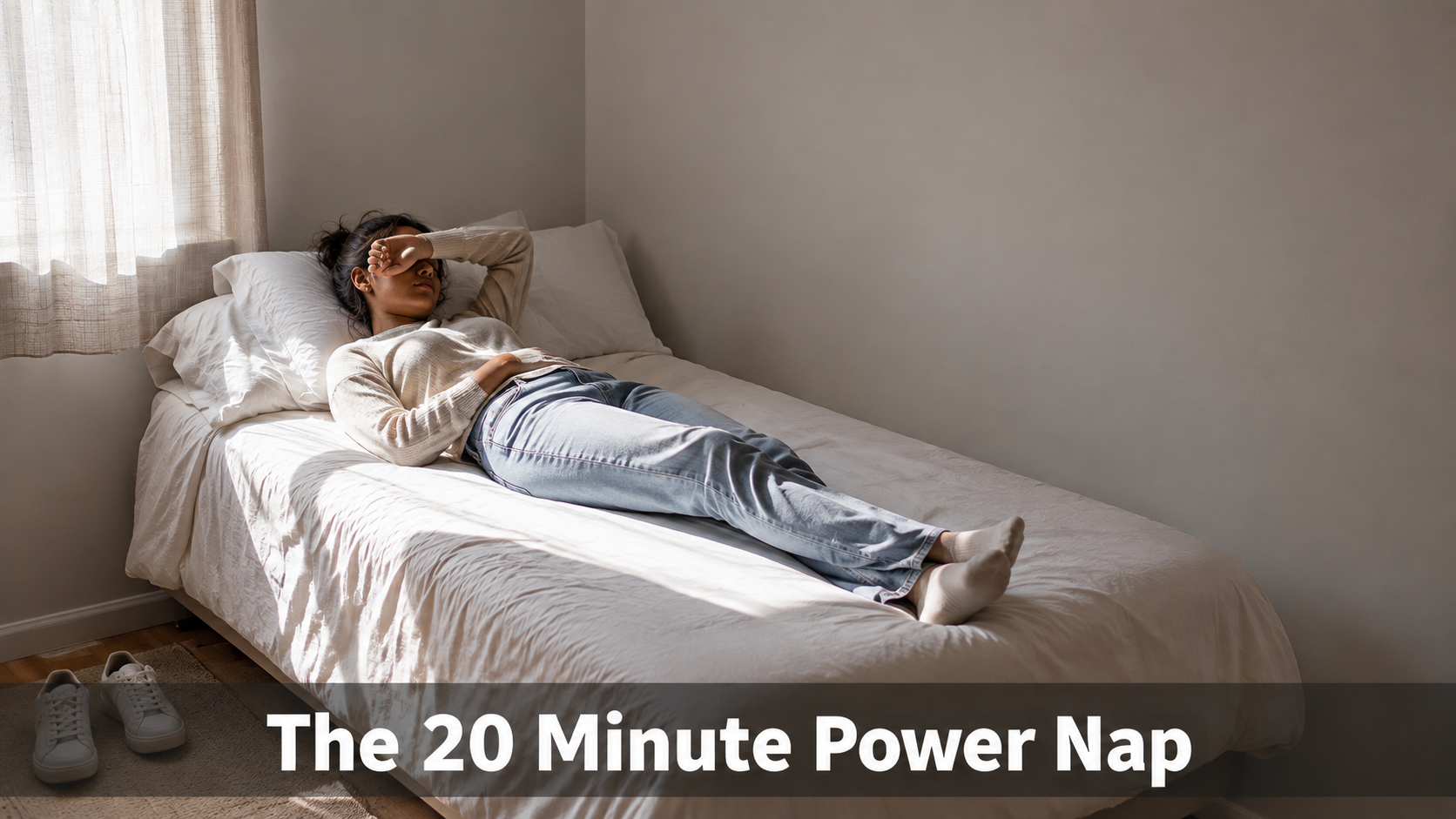
The 20 Minute Power Nap: The Secret Weapon of Straight-A Students
The 20 minute power nap earns its reputation among students because of what it leaves out rather than what it adds, and according to Dr. Avinesh Bhar, Board-Certified Sleep Physician at SLIIIP.com, the length is the whole point: short enough to restore alertness, short enough to avoid waking up worse than you started.
Anyone who has fallen asleep on a library couch and woken ninety minutes later knows the difference. That kind of nap leaves you heavy, disoriented, and somehow more tired than before. A brief nap and a long nap are not the same tool used for different amounts of time. They produce different results.
This guide covers why the twenty minute mark matters, when in the day to place a nap, how to actually fall asleep when you only have a short window, and what it means when you need naps just to get through the afternoon. For the broader picture on daytime sleep in general, our guide to the benefits of napping covers the full range.
SLIIIP’s board-certified sleep physicians can do sleep evaluations for sleep apnea. Virtual consultations in all 50 states. Home sleep tests shipped to your door.
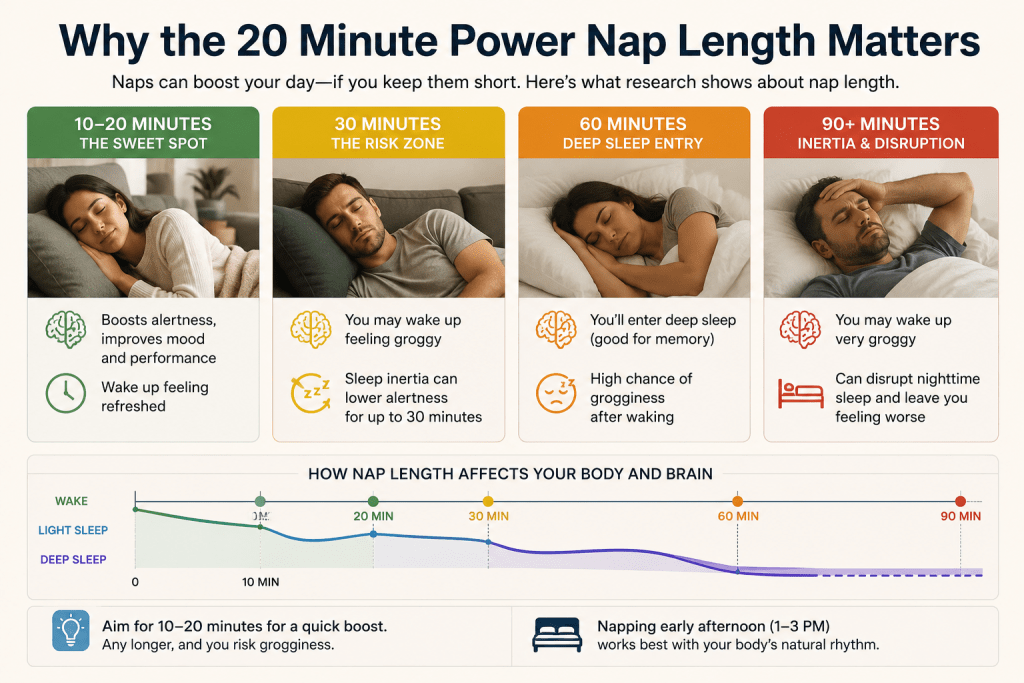
Why the 20 Minute Power Nap Length Matters
Sleep does not arrive all at once. You move through lighter stages first, then descend into deeper sleep, then eventually into dream heavy sleep. A full cycle takes roughly ninety minutes.
A short nap keeps you mostly in the lighter stages. You get some restoration of alertness without going deep enough that waking becomes difficult.
Cross the twenty five to thirty minute mark and you are more likely to be pulled out of deeper sleep. That produces sleep inertia, the heavy and disoriented feeling that can last anywhere from a few minutes to over half an hour. For a student with a lecture at two o’clock, sleep inertia is not a minor inconvenience. It is the entire afternoon.
The National Heart, Lung, and Blood Institute suggests that adults should limit naps to no more than twenty minutes, and that people who have trouble sleeping at night should keep naps early in the afternoon. That guidance lines up with how the stages are structured.
If you want to understand the stages themselves in more detail, our guide on core sleep versus deep sleep breaks them down.
CHECK YOUR SLEEP SYMPTOMS: TAKE THE 2 MINUTE QUIZ
TAKE THE QUIZ
What a Short Nap Does and Does Not Do
It helps to be precise about the claim here, because the internet tends to oversell this.
What a short nap is associated with: improved alertness for the following few hours, better reaction time, and a modest lift in mood and tolerance for tedious work. For a student facing a long afternoon of reading, that is genuinely useful.
What it does not do: replace a night of sleep. It does not undo the effects of chronic short sleep, and it does not deliver the full range of overnight processing that supports learning and recovery. A nap is a patch, not a repair.
This distinction matters because of how students tend to use it. Napping to bridge a naturally low energy afternoon is reasonable. Napping to compensate for sleeping five hours a night is a signal that the schedule needs fixing rather than patching. Our guide on how to fix your sleep schedule covers the reset.
The Best Time of Day for a 20 Minute Power Nap
Most people experience a natural dip in alertness in the early to mid afternoon. It is not caused by lunch, though a heavy meal can make it more noticeable. It is part of the daily rhythm.
That dip is the ideal window. For someone on a fairly typical schedule, that usually falls somewhere between about one and three in the afternoon.
The rule that matters more than the exact hour is the distance from bedtime. A nap late in the afternoon or in the early evening reduces the pressure your body has built up for sleep, and that pressure is what helps you fall asleep at night. Napping at six o’clock and then failing to sleep until two in the morning is a common and avoidable trap.
A reasonable guideline is to keep naps at least six hours before your intended bedtime.
How to Actually Take a 20 Minute Power Nap
The most common complaint is simple. Twenty minutes is not enough time to fall asleep, so the nap becomes twenty minutes of lying there.
A few things help.
Set the alarm for twenty five minutes. That allows a few minutes to drift off and still keeps the sleep portion short.
Make it dark. An eye mask or a hoodie over your face does more than most people expect. Light is one of the strongest signals telling your brain to stay awake.
Lie down or recline rather than slumping at a desk. Desk naps tend to produce neck pain and poor quality sleep.
Do not aim for sleep. Aim for rest with your eyes closed. Even if you only doze lightly, brief quiet rest often produces a noticeable lift. Trying hard to fall asleep tends to keep you awake.
Skip the phone. Checking messages for five minutes eats a quarter of the window and keeps the mind engaged.
Give yourself five minutes to come back. Stand up, get light, drink some water. Do not judge the nap by how you feel in the first ninety seconds.
If falling asleep quickly is a persistent struggle at any time of day, our guide on how to fall asleep fast covers techniques that apply here too.
Naps and Studying
For students, the practical question is where a nap fits around study blocks.
After a heavy learning session works well. Finishing a dense block of reading and then resting briefly is a reasonable pattern, and short daytime sleep has been linked with a modest benefit for retaining recently learned material.
Before an exam can work. If you are already under-slept, a short nap in the early afternoon before an evening exam is usually a better use of an hour than one more anxious review pass. Leave enough buffer to shake off any grogginess.
During a genuine crunch, use it to protect quality, not to extend hours. A nap that lets you do two focused hours in the evening is useful. A nap that lets you stay up until four in the morning is just moving the debt around.
One thing to avoid entirely: napping instead of sleeping at night, then napping again to cope with the result. That cycle fragments the whole system.
For more on what a well protected night contributes, see our guide on how to get more deep sleep.
Common Mistakes
The nap that runs long. Without an alarm, twenty minutes becomes ninety, and the grogginess plus the delayed bedtime cost more than the nap gained.
The nap was taken too late. This is the most frequent one, and it shows up as difficulty falling asleep that night.
Coffee immediately before or after. Some people use caffeine before a short nap deliberately, but for anyone who is sensitive or who naps late, it simply adds to the evening problem.
Judging the nap in the first minute. Some brief grogginess even after a short nap is normal. Give it a few minutes and daylight before deciding it failed.
Using naps to avoid dealing with a broken schedule. This is the one that matters most, because it hides the real issue rather than solving it.
When Needing a Nap Is Worth a Conversation
Here is the part worth reading carefully.
An occasional afternoon nap during a heavy week is ordinary. A daily and unavoidable need to sleep during the day, despite spending seven or eight hours in bed at night, is a different signal.
Patterns worth attention include falling asleep in lectures without meaning to, needing naps just to function on days when you slept a full night, waking with a dry mouth or a morning headache, loud or frequent snoring, and gasping or choking awake.
Excessive daytime sleepiness that does not improve with adequate time in bed is one of the more common signs of an underlying sleep disorder, and obstructive sleep apnea is not limited to older adults. The Centers for Disease Control and Prevention also notes that quality of sleep matters alongside quantity, which is why long nights can still leave someone exhausted.
Dr. Avinesh Bhar and the SLIIIP team evaluate these patterns through virtual consultations across all fifty states, and testing can often be arranged at home rather than in a lab. Our guides on sleep apnea symptoms and why you may feel exhausted no matter how much you sleep cover the warning signs, and how to get a home sleep test explains the process.
This article is general education and not a diagnosis. If you already use a prescribed therapy such as CPAP or an oral appliance, do not stop using it or change its settings on your own, including during naps. Speak with your treating physician first.
Watch: 8 Tricks to Core Sleep – Sliiip.com
The Short Version
The 20 minute power nap is a narrow tool that does one job well. It restores alertness for a few hours without dragging you into the deep sleep that makes waking difficult. Keep it short, keep it early, and treat it as support for a real night rather than a substitute for one.
For the wider case on why rest deserves a place in the schedule rather than the leftovers of it, see our guide on the importance of sleep.
At Sliiip, we accept the following insurances:

SLIIIP’s board-certified sleep physicians can do sleep evaluations for sleep apnea. Virtual consultations in all 50 states. Home sleep tests shipped to your door.
Frequently Asked Questions
Why is twenty minutes the recommended nap length?
A short nap keeps you mostly in lighter sleep stages, which makes waking easier and reduces grogginess.
What is sleep inertia?
The heavy, disoriented feeling after waking from deeper sleep. It can last from a few minutes to more than half an hour.
Is a thirty minute nap too long?
For many people it crosses into deeper sleep, which is when waking becomes harder. Twenty to twenty five minutes is a safer target.
What if I cannot fall asleep in twenty minutes?
Quiet rest with eyes closed still tends to help. Setting the alarm for twenty five minutes gives you time to drift off.
What is the best time of day to nap?
The early to mid afternoon dip suits most people, generally before three o’clock for a typical schedule.
How long before bedtime should I stop napping?
Roughly six hours is a reasonable buffer, since napping too late reduces the sleep pressure you need at night.
Can a short nap replace a night of sleep?
No. It can restore alertness for a few hours but does not deliver the full range of overnight processing.
Does napping help with studying?
Short daytime sleep has been linked with a modest benefit for retaining recently learned material and with better afternoon focus.
Should I nap before an exam?
If you are already underslept, a short early afternoon nap is often more useful than one more anxious review pass.
Is a ninety minute nap better than a short one?
It completes a full cycle and can suit some situations, but it takes far more time and is more likely to affect that night’s sleep.
Does coffee before a nap work?
Some people find it helps them wake more alert, but it can worsen the evening for anyone sensitive to caffeine or napping late.
Is it bad to nap every day?
A regular short nap is not inherently a problem. Needing one daily despite a full night is worth discussing with a physician.
Why do I wake up from naps feeling worse?
Usually because the nap ran long enough to reach deeper sleep, producing sleep inertia on waking.
Can I nap at my desk?
It is possible but tends to produce poorer quality sleep and neck discomfort. Reclining works better.
Does napping ruin your night sleep?
Short naps taken early usually do not. Long or late naps commonly do.
Should I nap if I have insomnia?
People with trouble sleeping at night are often advised to limit naps and keep them early. Discuss it with a healthcare professional.
Do I need an eye mask?
Darkness helps signal your brain to rest, so anything that blocks light tends to improve a short nap.
How do I stop a nap from turning into two hours?
Set an alarm, place it out of reach, and nap somewhere less comfortable than your bed if you are prone to oversleeping.
Is heavy daytime sleepiness normal for students?
Some tiredness during exam periods is common, but persistent sleepiness despite a full night is worth evaluating.
When should I see a sleep physician about daytime sleepiness?
When it persists for weeks despite adequate time in bed, or when snoring, gasping, or morning headaches are present.
SLIIIP’s board-certified sleep physicians can do sleep evaluations for sleep apnea. Virtual consultations in all 50 states. Home sleep tests shipped to your door.
Latest posts
-
RingConn vs Oura: Which Smart Ring Tracks Sleep Better?
Last updated: September 10, 2026. Medically reviewed by Dr. Avinesh Bhar, Board-Certified Sleep Physician, SLIIIP.com. RingConn and Oura both track sleep through a finger-worn ring, but they differ most in…
-
Withings ScanWatch Sleep Tracking Accuracy: What It Can and Cannot Tell You
Last updated: September 10, 2026. Medically reviewed by Dr. Avinesh Bhar, Board-Certified Sleep Physician, SLIIIP.com. Withings ScanWatch is a hybrid analog watch that tracks sleep stages and can flag nighttime…
-
Are Cheap Fitness Trackers Accurate for Sleep?
September 10, 2026. Medically reviewed by Dr. Avinesh Bhar, Board-Certified Sleep Physician, SLIIIP.com. Cheap fitness trackers can be reasonably accurate at telling you when you fell asleep and woke up,…
Get updates
Spam-free subscription, we guarantee. This is just a friendly ping when new content is out.

