👉 Register for Free. How to Diagnose Sleep Apnea Faster in Primary Care – FREE Webinar by Dr. Audrey Wells. – Friday, April 24 at 12 PM ET

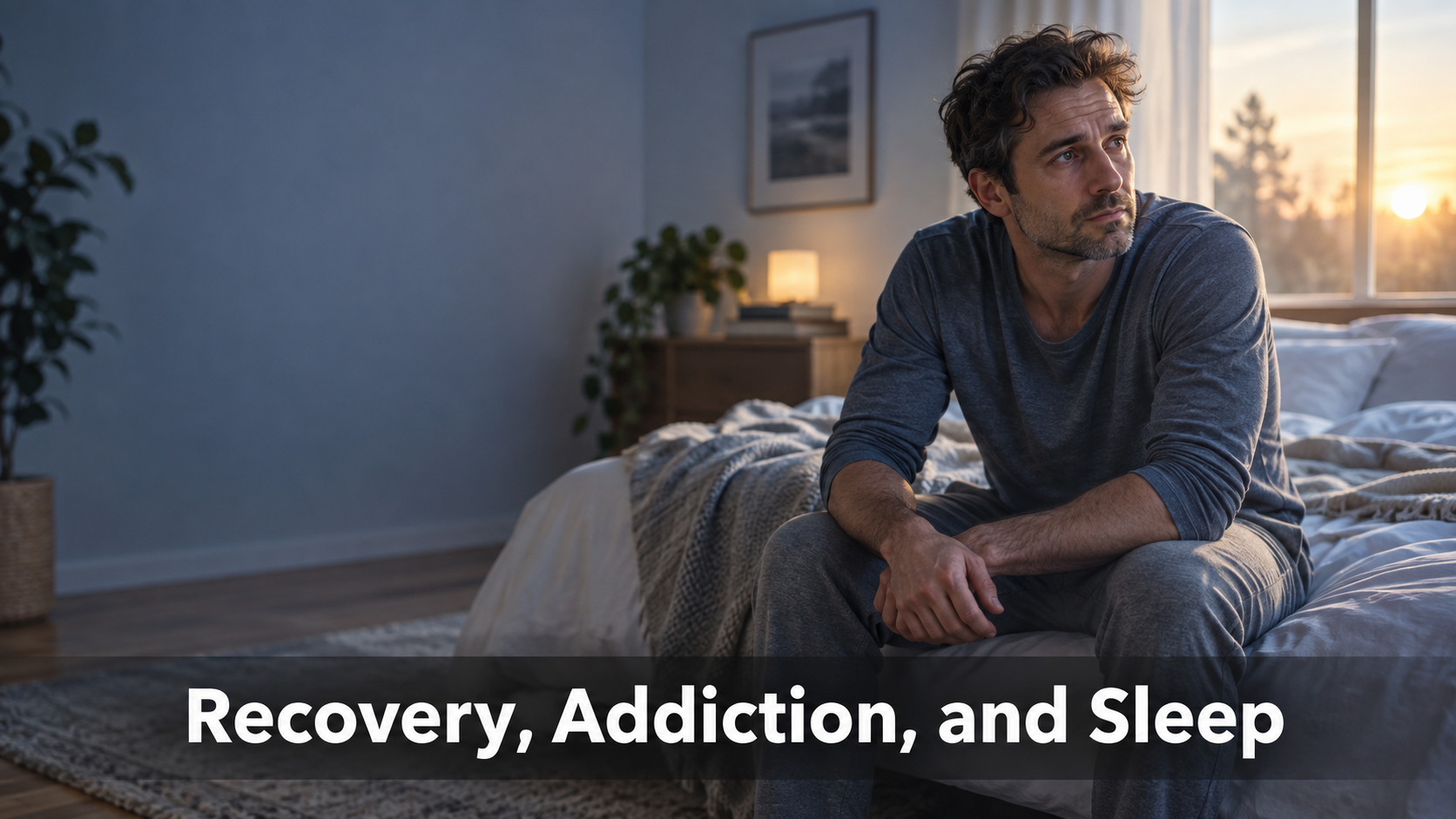
Recovery, Addiction, and Sleep: Why Rest Matters in Early Recovery
Last updated: September 6, 2026. Medically reviewed by Dr. Avinesh Bhar, Board-Certified Sleep Physician, SLIIIP.com.
Recovery from addiction and sleep problems often show up together, and one can make the other harder to manage. Dr. Avinesh Bhar, Board-Certified Sleep Physician at SLIIIP.com, sees patients in early recovery whose insomnia became a daily struggle that made staying on track much harder. Poor sleep during recovery is strongly linked to drug cravings and a higher risk of relapse, which makes sleep support an important part of any recovery plan. SLIIIP.com treats adults through virtual sleep evaluations, and Dr. Bhar explains why addressing sleep directly can support long-term recovery.
SLIIIP’s board-certified sleep physicians can do sleep evaluations for sleep apnea. Virtual consultations in all 50 states. Home sleep tests shipped to your door.
How Substance Use Disrupts Sleep
Most substances change sleep in measurable ways, whether someone is actively using or working through withdrawal. Alcohol, opioids, stimulants, and sedatives each disrupt normal sleep in different ways, according to the National Institute on Drug Abuse.
Some substances make falling asleep easier at first but fragment sleep later in the night, while others cause alertness that delays sleep onset entirely. For a closer look at one specific substance, see our guide on nicotine and sleep.
CHECK YOUR SLEEP SYMPTOMS: TAKE THE 2 MINUTE QUIZ
TAKE THE QUIZ
Can Poor Sleep Increase the Risk of Relapse?
Yes. Insomnia during withdrawal is a well documented trigger for drug cravings and can be a major factor in relapse, according to NIDA research on sleep and substance use disorders. Sleep also plays a role in learning new coping skills, so poor sleep quality can make it harder to build the routines that support long-term recovery.
Why Sleep Problems Persist Even After Substance Use Stops
Sleep does not always return to normal right away once someone stops using a substance. Sleep disturbances can continue for weeks or months into recovery, particularly after long-term alcohol, opioid, or stimulant use.
A clinical review published on PMC describes how disrupted sleep during this period is linked to increased psychiatric symptoms and a harder overall recovery course. Understanding that this is a common and temporary part of recovery, rather than a sign that something has gone wrong, can help people stay the course.
The Role of the Body Clock in Recovery
The circadian system, the body’s internal clock that regulates sleep and wake cycles, also plays a role in the reward pathways involved in addiction. Disrupted circadian rhythms are common during active substance use and can take time to stabilize once someone stops, which is part of why sleep schedules often feel unpredictable in early recovery.
Keeping consistent daily routines, including meal times and wake times, can help the body clock re-establish a steady rhythm faster than an irregular schedule would allow.
The Cycle Between Insomnia and Self-Medicating
The relationship between sleep and substance use can run in both directions. Some people first turn to alcohol or sedatives to manage insomnia, only to find that the substance itself makes sleep worse over time.
Using alcohol or drugs to fall asleep tends to reduce overall sleep quality even when it shortens the time it takes to fall asleep, which can create a cycle that is difficult to break without addressing both issues directly. Recognizing this pattern is often the first step toward treating sleep and substance use as connected problems rather than separate ones.
Sleep Strategies That Support Recovery
Rebuilding a stable sleep routine is one of the concrete steps that supports recovery, alongside therapy, medical care, and social support. A few strategies tend to help.
Keep a consistent wake time every day, even on difficult mornings, since a steady wake time helps reset the body clock.
Get natural light exposure early in the day to support a healthy sleep-wake cycle.
Limit caffeine in the afternoon and evening, since stimulant sensitivity can be heightened during recovery.
Talk to your treatment provider before starting any sleep aid, since some carry added risk during recovery.
Working with both an addiction specialist and a sleep physician gives the most complete picture of what is driving ongoing sleep problems.
Watch: Sleep Studies, Sleep Apnea, and Treatment with Avinesh Bhar MD
When to See a Doctor
Sleep problems that continue for more than a few weeks into recovery, or that feel unmanageable, are worth discussing with a healthcare provider.
Dr. Avinesh Bhar, Board-Certified Sleep Physician at SLIIIP.com, recommends a sleep evaluation for anyone in recovery whose insomnia persists or whose daytime fatigue is affecting their ability to stay on track, since an undiagnosed sleep disorder can sometimes be part of the pattern. If withdrawal symptoms feel severe or unsafe at any point, contact a medical provider or addiction treatment program directly rather than managing them alone.
At Sliiip, we accept the following insurances:

SLIIIP’s board-certified sleep physicians can do sleep evaluations for sleep apnea. Virtual consultations in all 50 states. Home sleep tests shipped to your door.
Frequently Asked Questions About Recovery and Sleep
Can poor sleep increase relapse risk during recovery?
Yes, insomnia during withdrawal is linked to stronger cravings and is a documented factor in relapse.
How long do sleep problems last after quitting a substance?
Sleep disturbances can continue for weeks or months, depending on the substance and length of use.
Does alcohol help you sleep?
Alcohol can shorten the time it takes to fall asleep but fragments sleep later in the night and lowers overall sleep quality.
Can insomnia during recovery be treated safely?
Yes, a healthcare provider can recommend safe options, since some sleep medications carry added risk during recovery.
Why do stimulants disrupt sleep so much?
Stimulants increase alertness and can delay sleep onset well after the effects of the drug have worn off.
Is it normal to feel exhausted but unable to sleep during recovery?
Yes, this combination is common in early recovery and typically improves as the body readjusts over time.
Can a sleep disorder be mistaken for withdrawal symptoms?
Yes, an underlying sleep disorder can overlap with withdrawal symptoms, which is why a sleep evaluation can help clarify the cause.
Does napping help during recovery if nighttime sleep is poor?
Short naps can help in the short term, but rebuilding consistent nighttime sleep is the more important long-term goal.
What is the connection between sleep and cravings?
Poor sleep affects the brain systems involved in reward and self-control, which can intensify cravings.
Should I tell my treatment provider about my sleep problems?
Yes, sleep problems are a common and treatable part of recovery, and your provider can help address them directly.
Can exercise help with sleep during recovery?
Regular daytime activity can support better sleep, though vigorous exercise close to bedtime may have the opposite effect.
Does caffeine make recovery-related sleep problems worse?
Yes, caffeine sensitivity can be heightened during recovery, so limiting intake in the afternoon and evening can help.
Can sleep apnea affect someone in addiction recovery?
Yes, sleep apnea can occur independent of substance use and can add to fatigue and cravings if left untreated.
Is it safe to use over-the-counter sleep aids during recovery?
Always check with your treatment provider first, since some over-the-counter sleep aids can interact with recovery medications.
How does light exposure affect sleep during recovery?
Getting natural light early in the day helps reset the body’s internal clock and can improve nighttime sleep.
Can therapy help with sleep problems during recovery?
Yes, cognitive behavioral therapy for insomnia is an evidence-based option that many treatment programs incorporate.
What should I do if withdrawal symptoms feel severe?
Contact a medical provider or addiction treatment program right away rather than managing severe symptoms alone.
Does sleep improve permanently once someone reaches long-term recovery?
For most people, sleep gradually improves over months, though ongoing sleep hygiene habits continue to help.
Can a home sleep test help someone in recovery?
Yes, a home sleep test can help determine whether an independent sleep disorder like sleep apnea is contributing to fatigue or poor sleep.
Who should I talk to first about sleep problems during recovery?
Start with your addiction treatment provider, who can coordinate with a sleep physician if a separate sleep evaluation is needed.
SLIIIP’s board-certified sleep physicians can do sleep evaluations for sleep apnea. Virtual consultations in all 50 states. Home sleep tests shipped to your door.
Latest posts
-
Why Are My Naps Never Refreshing?
Last updated: October 2, 2026. Medically reviewed by Dr. Avinesh Bhar, Board-Certified Sleep Physician, SLIIIP.com. Naps that leave you groggy usually come down to how long you sleep, when you…
-
Is Sleeping Too Much a Sleep Disorder?
Last updated: October 2, 2026. Medically reviewed by Dr. Avinesh Bhar, Board-Certified Sleep Physician, SLIIIP.com. Sleeping too much is not always a sleep disorder, but it can be a sign…
-
Why Does My Insomnia Get Worse After Stopping Sleep Medication?
Last updated: October 2, 2026. Medically reviewed by Dr. Avinesh Bhar, Board-Certified Sleep Physician, SLIIIP.com. Insomnia can get worse after stopping sleep medication for three main reasons. They are rebound…
Get updates
Spam-free subscription, we guarantee. This is just a friendly ping when new content is out.

