👉 Register for Free. How to Diagnose Sleep Apnea Faster in Primary Care – FREE Webinar by Dr. Audrey Wells. – Friday, April 24 at 12 PM ET

Nicotine and Sleep: How It Quietly Disrupts Your Rest
Nicotine and sleep pull in opposite directions, and Dr. Avinesh Bhar, Board-Certified Sleep Physician at SLIIIP.com, often points out that the same evening cigarette or vape people reach for to unwind can quietly work against a good night. Nicotine is a stimulant, closer in effect to caffeine than to a sedative. That means it can rev up the body right when it should be settling down. This article is for general education and does not diagnose, treat, or replace care from your own doctor. If you are thinking about quitting or changing your nicotine use, your physician is the right person to guide a safe plan. Below we look at how nicotine works at night, why it can fragment sleep, and steps that may soften its effect.
SLIIIP’s board-certified sleep physicians can do sleep evaluations for sleep apnea. Virtual consultations in all 50 states. Home sleep tests shipped to your door.
What Nicotine Does to Your Body at Night
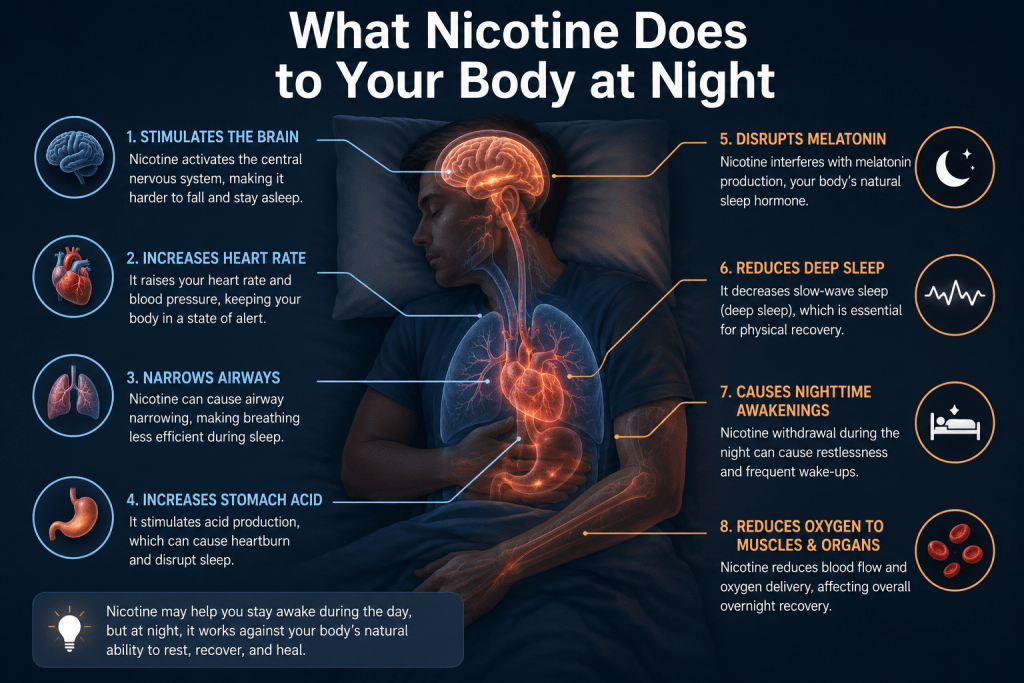
Nicotine is a stimulant that speeds up parts of the nervous system. Within minutes of use, it can raise heart rate, nudge blood pressure up, and increase alertness. These are exactly the changes you do not want as bedtime approaches.
The effect does not vanish the moment a cigarette is out or a vape is set down. Nicotine lingers in the body for hours, so an evening habit can keep the system mildly wound up well past lights out. That lingering push is a big reason evening use and rest do not mix well. Even people who feel they can fall asleep just fine may be getting shallower, more fragmented rest than they realize, which shows up as grogginess the next morning rather than obvious trouble at bedtime.
Because it acts like a stimulant, nicotine sits in the same broad category of sleep disruptors as caffeine. If you are curious how other substances compare, our overview of CBD and sleep looks at a very different kind of compound.
CHECK YOUR SLEEP SYMPTOMS: TAKE THE 2 MINUTE QUIZ
TAKE THE QUIZ
How Nicotine and Sleep Interact
The link between nicotine and sleep shows up in several ways that research has described. Studies have associated regular nicotine use with taking longer to fall asleep, more nighttime waking, and lighter, less restful sleep. These are associations reported in research, not certainties for any single person.
Part of the story is withdrawal. As nicotine levels fall overnight, the body can start to crave more, and that dip may nudge a person awake in the early hours. The result is a broken night that can leave someone reaching for a morning fix to feel normal again.
There is also a timing mismatch. The stimulant effect peaks soon after use, so a late night cigarette or vape lands right when the body is trying to wind down. Our guide on how to fall asleep fast covers habits that support a smoother transition to sleep.
Nicotine, Falling Asleep, and Waking at Night
Many people who use nicotine describe two common patterns. The first is difficulty drifting off, since the stimulant keeps the mind and body more alert than they should be at bedtime. The second is waking in the small hours, sometimes without knowing why.
That early morning waking can tie back to the body seeking its next dose. When levels drop during the night, the nudge to wake can feel like restlessness or a racing mind. If you often stir at the same time each night, our article on how to stop waking up multiple times at night may be useful.
None of this means one late night ruins your sleep forever. It means the pattern, repeated night after night, can chip away at rest. Understanding the cause is the first step toward changing the pattern. For many people, the relationship between nicotine and sleep becomes clear only once they track how their nights change with their evening use.
Vaping, Patches, and the Question of Timing
Cigarettes are not the only source. Vaping delivers nicotine too, and because it is easy to reach for, evening use can creep later into the night. The delivery method changes the experience, but the stimulant at the center stays the same.
Nicotine patches and gum raise their own timing questions. Some patches are worn overnight and can affect sleep or cause vivid dreams for certain people. Any decision about how and when to use these products should be made with your own doctor, who can weigh the tradeoffs for you.
The broader point is that timing matters with any nicotine source. Keeping use away from the hours before bed is a common suggestion, though your clinician can tailor advice to your situation. This article does not recommend any specific product or plan.
Habits That May Support Better Rest
Small, steady changes tend to help more than dramatic ones. Shifting nicotine use earlier in the day, well before bedtime, is one of the most direct ways to protect the wind down hours. Pairing that with a calm evening routine gives the body a clearer signal that night has come.
Keeping a consistent sleep schedule, dimming lights in the evening, and stepping away from screens all support the same goal. Our ultimate sleep routine guide shows how these pieces fit together into a routine you can repeat.
If you are considering quitting, that is a decision best made with professional support, and it can bring real benefits for rest over time. According to the Centers for Disease Control and Prevention, consistent habits are a foundation of healthy sleep, and reducing evening stimulants fits naturally into that picture.
Watch: Signs of a Sleep Disorder – SLIIIP.COM
When Poor Sleep Runs Deeper Than a Habit
Cutting back on evening nicotine can help, but it does not always solve tiredness on its own. If you still wake exhausted, snore loudly, or gasp for air despite better habits, something else may be at work. Those signs point beyond a simple stimulant effect. Managing nicotine and sleep habits is worthwhile, yet it cannot address a breathing problem that needs clinical care.
Conditions like obstructive sleep apnea fragment sleep from the inside, no matter how carefully you manage your evenings. As Dr. Avinesh Bhar notes, lasting fatigue that does not respond to good habits deserves a real evaluation rather than guesswork. If mornings leave you drained, our article on why you wake up tired is a helpful next read.
The National Heart, Lung, and Blood Institute notes that ongoing sleep problems are worth a professional look. A sleep evaluation is one part of a broader view of your health, and any concern beyond sleep belongs with your own physician.
At Sliiip, we accept the following insurances:

SLIIIP’s board-certified sleep physicians can do sleep evaluations for sleep apnea. Virtual consultations in all 50 states. Home sleep tests shipped to your door.
Frequently Asked Questions
Does nicotine affect sleep?
Yes, nicotine is a stimulant that can make it harder to fall and stay asleep. Research associates regular use with lighter, more broken sleep.
Is nicotine a stimulant or a relaxant?
Nicotine acts as a stimulant, even though some people feel it calms them. The calming feeling often reflects relief from withdrawal rather than true relaxation.
How long before bed should I avoid nicotine?
Keeping use away from the hours before bed is a common suggestion. Your own doctor can tailor timing advice to your situation.
Why do I wake up at night when I use nicotine?
As nicotine levels fall overnight, the body can crave more and stir you awake. This early waking is a common pattern.
Does vaping affect sleep the same as smoking?
Both deliver nicotine, so the stimulant effect is similar. Easy access to a vape can also lead to later evening use.
Can nicotine patches disrupt sleep?
Some overnight patches can affect sleep or cause vivid dreams for certain people. Discuss timing with your doctor.
Will quitting nicotine improve my sleep?
Many people notice better rest over time after quitting, though the first days can be bumpy. A doctor can help you plan a safe approach.
Does nicotine cause insomnia?
Nicotine is associated with trouble falling and staying asleep, but many factors shape insomnia. A professional can help sort out the causes.
Why do I feel tired even though nicotine is a stimulant?
Broken, lighter sleep from nicotine can leave you tired the next day. The stimulant effect and poor sleep can go together.
Can nicotine cause vivid dreams?
Some people report vivid dreams, especially with overnight patches. Experiences vary from person to person, and what one person notices may differ from the next.
Does nicotine affect deep sleep?
Research links nicotine use with lighter, less restful sleep. If deep sleep is a concern, a clinician can help you explore it.
Is it the nicotine or the smoking that hurts sleep?
Nicotine itself is a stimulant that affects sleep, and it is present in vapes and patches too. Your doctor can discuss the wider health picture.
How long does nicotine stay in my system?
Nicotine can linger for hours after use, which is why evening timing matters. The exact time varies by person, depending on factors like how much you use and your individual metabolism.
Can withdrawal at night wake me up?
Yes, a drop in nicotine overnight can trigger a nudge to wake. This is a common reason for early morning stirring.
Does caffeine plus nicotine make sleep worse?
Both are stimulants, so using them late can add up. Keeping both away from the evening may help.
Will one cigarette or vape before bed really matter?
A single late use will not ruin sleep forever, but a nightly habit can add up over the course of many weeks and months. The repeated pattern is what wears on rest.
Can better habits offset nicotine’s effect on sleep?
Good habits help, but they may not fully offset a nightly stimulant. Shifting use earlier is often more effective.
Is nicotine gum a problem at night?
Late use of any nicotine source can affect sleep. Your doctor can advise on timing and use.
Should I see a doctor about my sleep and nicotine use?
If poor sleep continues despite changes, a professional visit makes sense. A clinician can look at the full picture.
When should I seek a sleep evaluation?
If you snore heavily, gasp for air, or stay tired despite better habits, seek an evaluation. A sleep visit can clarify what is going on.
SLIIIP’s board-certified sleep physicians can do sleep evaluations for sleep apnea. Virtual consultations in all 50 states. Home sleep tests shipped to your door.
Latest posts
-
RingConn vs Oura: Which Smart Ring Tracks Sleep Better?
Last updated: September 10, 2026. Medically reviewed by Dr. Avinesh Bhar, Board-Certified Sleep Physician, SLIIIP.com. RingConn and Oura both track sleep through a finger-worn ring, but they differ most in…
-
Withings ScanWatch Sleep Tracking Accuracy: What It Can and Cannot Tell You
Last updated: September 10, 2026. Medically reviewed by Dr. Avinesh Bhar, Board-Certified Sleep Physician, SLIIIP.com. Withings ScanWatch is a hybrid analog watch that tracks sleep stages and can flag nighttime…
-
Are Cheap Fitness Trackers Accurate for Sleep?
September 10, 2026. Medically reviewed by Dr. Avinesh Bhar, Board-Certified Sleep Physician, SLIIIP.com. Cheap fitness trackers can be reasonably accurate at telling you when you fell asleep and woke up,…
Get updates
Spam-free subscription, we guarantee. This is just a friendly ping when new content is out.

