👉 Register for Free. How to Diagnose Sleep Apnea Faster in Primary Care – FREE Webinar by Dr. Audrey Wells. – Friday, April 24 at 12 PM ET


Ashwagandha for Sleep: What the Research Really Shows
Ashwagandha for sleep has moved from health food shelves to mainstream conversation in a few short years, and Dr. Avinesh Bhar, Board-Certified Sleep Physician at SLIIIP.com, now fields questions about it in nearly every week of consultations.
The honest answer sits between the marketing and the skepticism. The studies are real, they are small, and they measure something narrower than most product labels suggest.
SLIIIP’s board-certified sleep physicians can do sleep evaluations for sleep apnea. Virtual consultations in all 50 states. Home sleep tests shipped to your door.
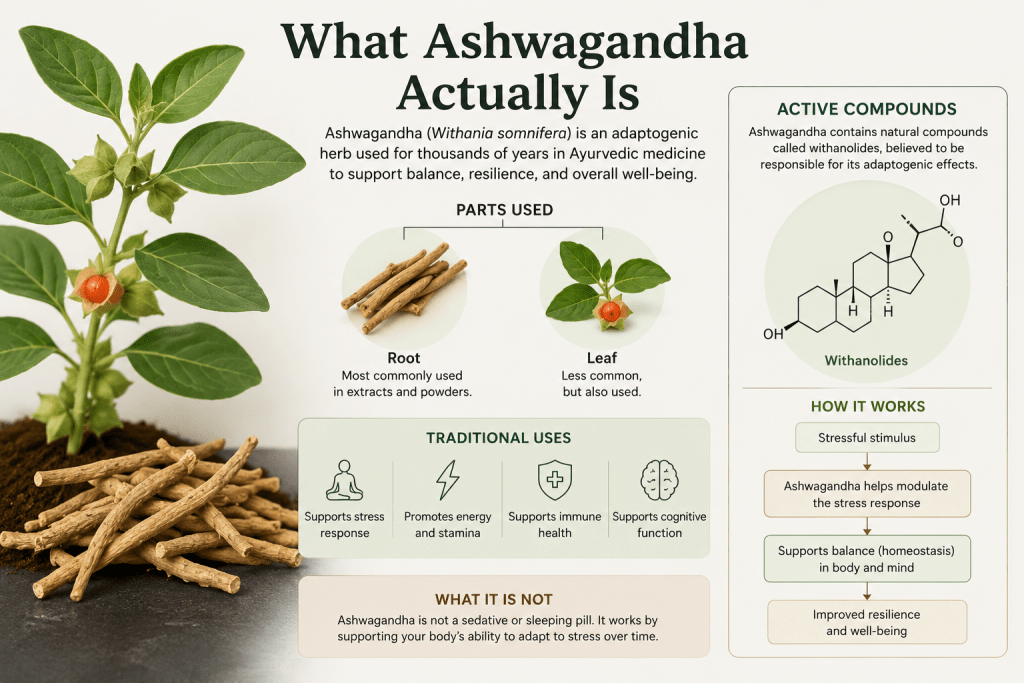
What Ashwagandha Actually Is
Ashwagandha is a shrub known botanically as Withania somnifera. It has been used in Ayurvedic practice in India for centuries, and the root is the part most supplement makers use.
Modern marketing calls it an adaptogen, a term describing plants said to help the body handle stress. That word carries no regulatory meaning in the United States. It is a category label, not a verified mechanism.
Ashwagandha is sold as a dietary supplement, which means it does not go through the approval process that medications do. Manufacturers are responsible for their own quality control, and what appears on a label is not independently verified before the product reaches a shelf.
That context matters before looking at any study.
CHECK YOUR SLEEP SYMPTOMS: TAKE THE 2 MINUTE QUIZ
TAKE THE QUIZ
What the Research on Ashwagandha for Sleep Actually Found
Several randomized placebo controlled trials have tested standardized root extracts over periods of six to eight weeks. Most enrolled somewhere between fifty and one hundred and fifty participants.
Results generally pointed in a positive direction. Across the published work on ashwagandha for sleep, the direction of effect was consistent even when the size of it was not. Participants taking the extract reported falling asleep somewhat faster, spending a slightly higher share of their time in bed asleep, and scoring better on questionnaires that measure sleep quality.
A 2021 systematic review pooled data from several of these trials. It found a small but statistically meaningful improvement in overall sleep, with stronger signals in participants who had a diagnosis of insomnia and in studies that ran longer.
Small and meaningful are not the same as large and reliable. The measured improvements were modest, and the reviewers themselves flagged significant limitations.
The Limitations Product Labels Leave Out
Sample sizes were small. A trial with sixty participants can detect a large effect and will miss a great deal else.
Study durations were short. Six to eight weeks tells you little about what happens over a year of daily use.
Most trials were conducted in India, often with funding or material support from supplement manufacturers. That does not make the findings wrong. It does mean independent replication in other populations is thin.
Outcomes relied heavily on questionnaires and sleep diaries rather than overnight recordings. Self reported sleep and measured sleep frequently disagree, and the gap between them is exactly what sleep physicians spend their time investigating.
Product standardization varies widely. Different extracts, different concentrations, and different plant parts appear under the same common name. Two bottles labeled ashwagandha for sleep may not contain comparable material.
Safety Is the Part That Gets Skipped
Natural does not mean harmless, and this is where a careful conversation matters most.
Case reports have described liver injury associated with ashwagandha use. These reports are uncommon relative to how many people take it, and they are documented enough that clinicians take them seriously.
The plant can influence thyroid hormone levels. Anyone with a thyroid condition or taking thyroid medication should raise it with their prescriber before starting.
Ashwagandha is generally advised against during pregnancy. It may also interact with sedatives, thyroid medications, immune modulating drugs, and blood sugar or blood pressure medications.
Autoimmune conditions warrant caution as well, given the plant’s reported effects on immune activity.
Anything you take nightly deserves a conversation with the clinician who knows your full medication list. That applies to supplements exactly as it applies to prescriptions.
Where It Fits Alongside Other Options
Ashwagandha sits in a crowded category. Our guides on melatonin and sleep, CBD and sleep, and essential oils for sleep cover neighboring options with their own evidence bases and their own gaps.
For a broader comparison, our roundup of sleep aids lays the categories side by side. Our piece on the sleeping pill problem is worth reading before any nightly product becomes a habit.
Worth knowing: for chronic insomnia, structured behavioral therapy has substantially stronger evidence than any supplement on the market. Our comparison of cognitive behavioral therapy and sleep medications explains why clinicians reach for it first, and natural approaches to insomnia covers what else is available.
What No Supplement Can Address
This is the point that matters most, and no product label will tell you.
If your airway narrows or closes repeatedly while you sleep, a capsule does not change that. Nothing about ashwagandha for sleep affects the mechanics of breathing overnight.
Loud snoring, gasping, witnessed pauses in breathing, morning headaches, and dry mouth all point toward how you breathe at night. Our overview of signs of sleep apnea lists what clinicians look for.
The real risk of any sleep supplement is not the ingredient. It is the delay. Months spent working through the supplement aisle are months a treatable condition goes unmeasured. Our article on why you wake up tired covers the explanations people usually miss.
Lifestyle Habits With Stronger Evidence Behind Them
These cost nothing and carry no interaction risk.
Keep a fixed wake time, including weekends. Consistency does more for sleep quality than any single product.
Get outdoor light within an hour of waking. Morning light anchors the internal clock that governs evening sleepiness.
Set a caffeine cutoff in the early afternoon and hold it. Afternoon caffeine lingers longer than most people assume.
Limit alcohol in the evening. It shortens the time to fall asleep and fragments the rest of the night.
Keep the bedroom cool, dark, and quiet. Simple, unglamorous, and consistently supported.
Move your body during the day. Timing matters less than regularity for most people.
Give yourself a wind down window without screens or work. A brain still processing email does not switch off on command.
Build a repeatable order of operations before bed. Our guide to falling asleep faster offers practical structure.
The Centers for Disease Control and Prevention publishes practical sleep guidance, and the National Heart, Lung, and Blood Institute maintains an overview of healthy sleep habits.
Watch: How to Get Off Sleep Meds Safely – SLIIIP.COM
When to Stop Experimenting and Get Evaluated
Dr. Avinesh Bhar and the SLIIIP clinical team start with your history. What you have already tried, how long you have tried it, and what your nights and mornings look like all shape the next step.
A home sleep test records airflow, breathing effort, oxygen levels, and heart rate while you sleep in your own bed. The device ships to your door with instructions. You wear it, mail it back, and a physician reviews the data. Our page on the home sleep apnea test walks through each stage.
Measurement answers the question a supplement cannot. Either your breathing is stable overnight or it is not, and only a recording can tell you which.
At Sliiip, we accept the following insurances:

SLIIIP’s board-certified sleep physicians can do sleep evaluations for sleep apnea. Virtual consultations in all 50 states. Home sleep tests shipped to your door.
Frequently Asked Questions
Does ashwagandha actually help you sleep?
Small trials suggest modest improvements in reported sleep quality and time to fall asleep. The effect is real in the data and smaller than most marketing implies.
How long does it take to notice anything?
Trials generally ran six to eight weeks. Reviewers noted stronger signals in the longer studies, so short trials of a few days tell you very little.
Is ashwagandha safe to take every night?
Long term safety data is limited. Case reports of liver injury exist, and several interactions are documented, so discuss ongoing use with your clinician.
Can it affect my thyroid?
It can influence thyroid hormone levels. Anyone with a thyroid condition or on thyroid medication should check before starting.
Is it safe during pregnancy?
It is generally advised against. Bring any supplement question to your obstetric provider.
Does it interact with medications?
Possible interactions include sedatives, thyroid medications, immune modulating drugs, and blood sugar or blood pressure medications. Share your full list with your prescriber.
How is it different from melatonin?
Melatonin relates to sleep timing signals. Ashwagandha is studied mainly around stress response and reported sleep quality. They are not interchangeable.
Are all ashwagandha products the same?
No. Extracts, concentrations, and plant parts vary considerably between brands, which makes comparing studies to store shelves difficult.
Is it regulated like a medication?
No. Dietary supplements do not go through premarket approval, and label accuracy is the manufacturer’s responsibility.
Should I look for third party testing?
Independent verification gives more confidence about what is in the bottle, though it does not make the product effective for you.
Can it replace treatment for sleep apnea?
No. Supplements do not affect airway mechanics during sleep. That requires evaluation and appropriate management.
Will it help if my problem is waking up at 3 am?
Repeated night waking has many causes, including breathing events. A supplement addresses none of them directly.
Does it help with stress rather than sleep?
Much of the research examined stress and anxiety measures. Some people find the sleep benefit follows from that, though the evidence remains modest.
What time of day do people take it?
Trial protocols varied. Timing questions are best directed to the clinician who knows your history and medications.
Are there side effects?
Reported effects include stomach upset, drowsiness, and loose stools. Liver related concerns are rarer but documented.
Is it addictive?
Dependence has not been described the way it has for some sleep medications, though that does not make indefinite use automatically wise.
Should I stop before surgery?
Tell your surgical team about every supplement you take. Many recommend stopping supplements in advance.
Can teenagers take it?
Evidence in younger populations is thin. Any supplement for a minor should go through their pediatrician.
What if it works for me but only a little?
That is consistent with the research. It also suggests something else may be limiting your sleep, which is worth investigating.
When should I stop trying products and see a physician?
When snoring is loud, a partner reports pauses in breathing, or fatigue follows you daily despite adequate hours in bed.
SLIIIP’s board-certified sleep physicians can do sleep evaluations for sleep apnea. Virtual consultations in all 50 states. Home sleep tests shipped to your door.
Latest posts
-
Why Can’t I Wake Up Even After Getting Enough Sleep?
Last updated: October 2, 2026. Medically reviewed by Dr. Avinesh Bhar, Board-Certified Sleep Physician, SLIIIP.com. If you can’t wake up after enough sleep, the cause is usually not the number…
-
Why Does My Heart Rate Drop So Low While I Sleep?
Last updated: October 2, 2026. Medically reviewed by Dr. Avinesh Bhar, Board-Certified Sleep Physician, SLIIIP.com. Your heart rate drops low while sleeping mainly because your body needs less work from…
-
Why Are My Naps Never Refreshing?
Last updated: October 2, 2026. Medically reviewed by Dr. Avinesh Bhar, Board-Certified Sleep Physician, SLIIIP.com. Naps that leave you groggy usually come down to how long you sleep, when you…
Get updates
Spam-free subscription, we guarantee. This is just a friendly ping when new content is out.

