👉 Register for Free. How to Diagnose Sleep Apnea Faster in Primary Care – FREE Webinar by Dr. Audrey Wells. – Friday, April 24 at 12 PM ET

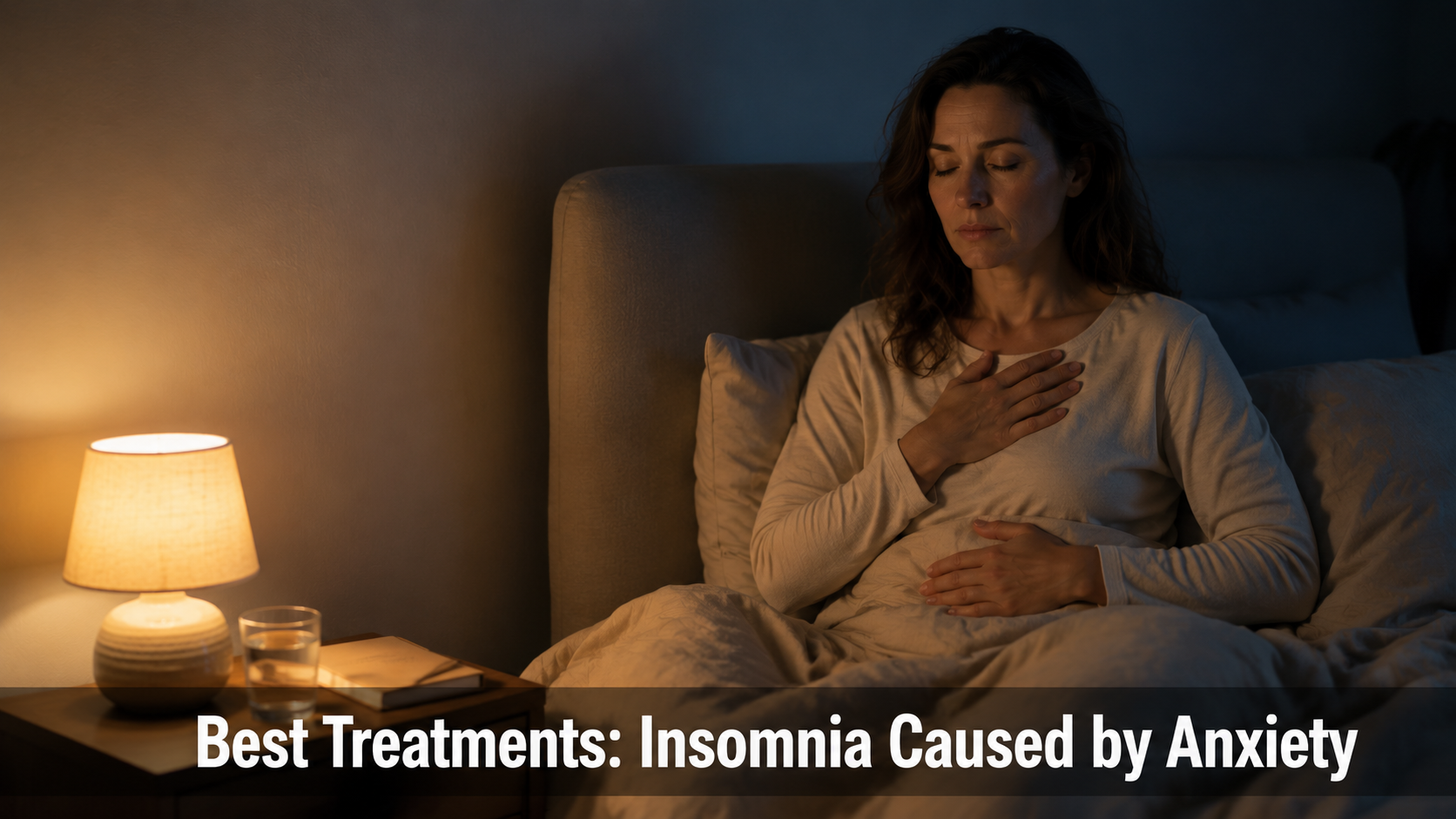
Best Treatments for Insomnia Caused by Anxiety
The best treatments for insomnia caused by anxiety hit both sides of the loop at once, and Dr. Avinesh Bhar, Board-Certified Sleep Physician at SLIIIP.com, has watched this two-front approach pull patients out of years of broken sleep in just a few weeks. Anxiety fuels insomnia, and insomnia fuels more anxiety, which is why a single fix rarely works for long. The right plan calms the mind, retrains the body, and protects sleep without leaning on a single tool.
SLIIIP’s board-certified sleep physicians can do sleep evaluations for sleep apnea. Virtual consultations in all 50 states. Home sleep tests shipped to your door.
Why Anxiety and Insomnia Get Stuck Together
Anxiety puts the body in a state of high alert. The heart rate climbs. The breathing speeds up. The mind starts scanning for problems. None of that is friendly to sleep, which needs the opposite of all those things.
When sleep gets cut short, the next day brings even more anxiety. Focus drops. Patience shrinks. Small problems feel bigger. By the time bedtime rolls around again, the body is wired and the mind is bracing for another rough night.
This loop is the engine behind anxiety-driven insomnia. The best treatments for insomnia caused by anxiety target the loop, not just the symptoms. To learn more about how insomnia patterns form, see types of insomnia guide and do I have insomnia or something else.
CHECK YOUR SLEEP SYMPTOMS: TAKE THE 2 MINUTE QUIZ
TAKE THE QUIZ

The Two Sides of the Loop
To break the loop, both sides need attention. One side is the mind, with its worry, planning, and overthinking. The other side is the body, with its racing heart, tight chest, and shallow breathing.
A strong plan usually includes:
- A method that retrains the brain around sleep
- Tools that calm the body in the evening
- A consistent sleep schedule
- Daytime habits that lower overall stress
- A check for any underlying medical issues
Each of these can stand alone, but they work better together. Read effective sleep solutions for mental health for a wider view.
Cognitive Behavioral Therapy for Insomnia (CBT-I)
CBT-I is the most studied option for chronic insomnia, including insomnia driven by anxiety. It is a structured short-term program that retrains the thoughts, behaviors, and habits that keep poor sleep stuck in place.
CBT-I is not generic talk therapy. It is a focused method with steps like:
- Tracking sleep patterns
- Adjusting time in bed to match actual sleep
- Building strong bedtime cues
- Challenging worry thoughts about sleep
- Slowly rebuilding a healthy sleep window
For most people with anxiety-related insomnia, CBT-I can produce results within 6 to 8 weeks. Read cognitive behavior therapy CBT-I for sleep disorders, why CBT-I works when medications don’t, and what CBT-I feels like week by week for a closer look.
CBT-I Versus Sleep Medications
Sleep medications can help in the short term, but they often leave the underlying loop untouched. When the pills stop, the insomnia tends to come back, sometimes worse than before.
CBT-I, on the other hand, builds skills that last. Many studies show that CBT-I outperforms medication for long-term results in adults with chronic insomnia. For a side-by-side view, see CBT-I vs sleep medications and is CBT-I better than sleep meds. For a more critical look at the medication side, the sleeping pill scam is a useful read.
This does not mean medication never has a place. It means medication is rarely the whole answer for anxiety-driven insomnia.
Calming the Body Before Bed
Anxiety lives in the body, not just the head. Helpful evening tools work directly with the nervous system to lower the alert level before sleep.
Approaches that often help:
- Slow breathing, like inhaling for 4 and exhaling for 6
- Progressive muscle relaxation
- A warm shower or bath about 90 minutes before bed
- Light stretching or gentle yoga
- A 10 to 15 minute walk after dinner
- Soft, dim lighting in the last hour of the day
These habits do not need to be perfect. They need to be repeated. Over time, the body learns the cues and starts to relax faster.
Quieting the Racing Mind
For many people with anxiety-driven insomnia, the mind is the loudest part of the problem. Worry loops, replays of the day, and what-if thinking can hijack the bedroom.
Tools that help:
- A 5 to 10 minute brain dump on paper before bed
- A short list of three good things from the day
- A guided meditation or sleep audio track
- A worry window earlier in the evening, not in bed
- Cognitive techniques learned through CBT-I
For more, read can’t shut brain off at night, how do I stop overthinking at night, why do I overthink before bed, and why do I feel anxious at night.
Sleep Hygiene as a Foundation
Sleep hygiene alone usually will not fix anxiety-driven insomnia. It is, however, the floor that other treatments stand on. Without it, even good therapy can stall.
Key habits to lock in:
- A consistent wake time, even on weekends
- Caffeine cut by early afternoon
- Less alcohol, especially close to bed
- A cool, dark, quiet bedroom
- The bed used only for sleep and rest
- Time outside in morning light
The Centers for Disease Control and Prevention reports that adults need at least seven hours of sleep per night for the best health and well-being. Hygiene habits help protect those hours.
Daytime Habits That Lower Anxiety
What happens during the day shapes what happens at night. Lower daytime anxiety almost always leads to easier sleep.
Habits that help:
- Regular movement, like walking, strength training, or yoga
- Time outside, especially in the morning
- A balanced meal pattern
- Less news scrolling and social media
- Honest social connection
- Therapy, coaching, or peer support when needed
For people whose mood and energy stay flat, why do I feel depressed and tired all the time and why do I wake up anxious offer useful next steps.
Watch: Signs of a Sleep Disorder
Rule Out Hidden Sleep Disorders
Sometimes what looks like anxiety-driven insomnia is also a sleep disorder hiding in plain sight. Conditions like sleep apnea can cause anxiety symptoms, racing heart on waking, and poor sleep quality, even with a calm mind.
The National Heart, Lung, and Blood Institute notes that sleep apnea affects breathing during sleep and can cause loud snoring, gasping, daytime tiredness, and other symptoms. Identifying it can change the entire treatment plan.
If you snore loudly, wake gasping, or feel exhausted no matter what, a sleep evaluation is a smart next step. For more, see insomnia treatment methods and how to fix insomnia naturally.
How SLIIIP Can Help
SLIIIP.com makes it easy to get expert care without leaving home. Patients can meet a board-certified sleep physician by video, complete a home sleep test if needed, and walk away with a clear, personalized plan.
Dr. Avinesh Bhar and the SLIIIP team take the time to ask the questions about anxiety, mood, and stress that often get rushed in shorter visits. The process is private and structured, and it pulls together everything from CBT-I referrals to home sleep testing in one place.
For people stuck in the anxiety-insomnia loop, a real evaluation can be the turning point.
At Sliiip, we accept the following insurances:

SLIIIP’s board-certified sleep physicians can do sleep evaluations for sleep apnea. Virtual consultations in all 50 states. Home sleep tests shipped to your door.
Frequently Asked Questions
- What are the best treatments for insomnia caused by anxiety? A combination of CBT-I, calming evening habits, strong sleep hygiene, and daytime stress management tends to work best.
- Is CBT-I really better than sleep pills for anxiety-driven insomnia? For long-term results, CBT-I has stronger evidence than medication for chronic insomnia.
- How long does it take CBT-I to work? Many people see real changes in 4 to 8 weeks of consistent practice.
- Can meditation alone fix anxiety insomnia? Meditation helps, but it usually works best as part of a fuller plan.
- Are sleep medications safe for anxiety insomnia? Some can be used short term under a doctor’s care, but they rarely fix the root issue.
- Should I see a therapist or a sleep doctor first? Both can help. A sleep evaluation can rule out hidden sleep disorders that look like pure anxiety.
- Can melatonin help with anxiety-driven insomnia? Melatonin can support sleep timing for some people, but it does not address anxiety itself.
- Is exercise good for anxiety insomnia? Yes. Regular movement is one of the most reliable tools for both anxiety and sleep.
- What should I avoid at night? Caffeine after noon, late alcohol, heavy meals, doom scrolling, and bright screens before bed.
- Can journaling really help me sleep? Yes. A short brain dump or worry list can lower mental load before bed.
- What if I cannot fall asleep within 20 minutes? Get out of bed, do something calm in low light, and return when sleepy.
- Can a weighted blanket help? Some people find weighted blankets calming. Results vary.
- Do herbal teas help with anxiety insomnia? Caffeine-free herbal teas can be a calming part of a routine, though they are not a stand-alone fix.
- Should I track my sleep with an app or watch? Tracking can help, but obsessing over numbers can also fuel anxiety. Use it lightly.
- Is anxiety insomnia the same as PTSD insomnia? There is overlap, but trauma-related insomnia often needs trauma-focused care alongside CBT-I.
- Can hormones affect anxiety and sleep? Yes. Hormone shifts in perimenopause and menopause often worsen anxiety and sleep.
- Should I cut caffeine completely? Most people do better cutting caffeine after lunch, not always cutting it altogether.
- Can a partner’s snoring make my insomnia worse? Yes. Loud snoring can disrupt sleep and may be a sign of sleep apnea worth evaluating.
- How do I know if it is anxiety or a sleep disorder? A sleep evaluation can sort that out. Many people have both.
- When should I see a sleep specialist? If insomnia lasts more than a few weeks, affects daily life, or comes with snoring or gasping, a sleep evaluation is a smart next step.
Break the Anxiety-Insomnia Loop
The best treatments for insomnia caused by anxiety are not magic. They are a steady mix of skill-building, smart habits, and the right professional support when needed. SLIIIP.com offers virtual consultations in all 50 states, home sleep tests shipped to your door, and nationwide coverage so the next step is simple.
SLIIIP’s board-certified sleep physicians can do sleep evaluations for sleep apnea. Virtual consultations in all 50 states. Home sleep tests shipped to your door.
Thank you for reading this article.
Latest posts
-
Why Can’t I Wake Up Even After Getting Enough Sleep?
Last updated: October 2, 2026. Medically reviewed by Dr. Avinesh Bhar, Board-Certified Sleep Physician, SLIIIP.com. If you can’t wake up after enough sleep, the cause is usually not the number…
-
Why Does My Heart Rate Drop So Low While I Sleep?
Last updated: October 2, 2026. Medically reviewed by Dr. Avinesh Bhar, Board-Certified Sleep Physician, SLIIIP.com. Your heart rate drops low while sleeping mainly because your body needs less work from…
-
Why Are My Naps Never Refreshing?
Last updated: October 2, 2026. Medically reviewed by Dr. Avinesh Bhar, Board-Certified Sleep Physician, SLIIIP.com. Naps that leave you groggy usually come down to how long you sleep, when you…
Get updates
Spam-free subscription, we guarantee. This is just a friendly ping when new content is out.

