👉 Register for Free. How to Diagnose Sleep Apnea Faster in Primary Care – FREE Webinar by Dr. Audrey Wells. – Friday, April 24 at 12 PM ET

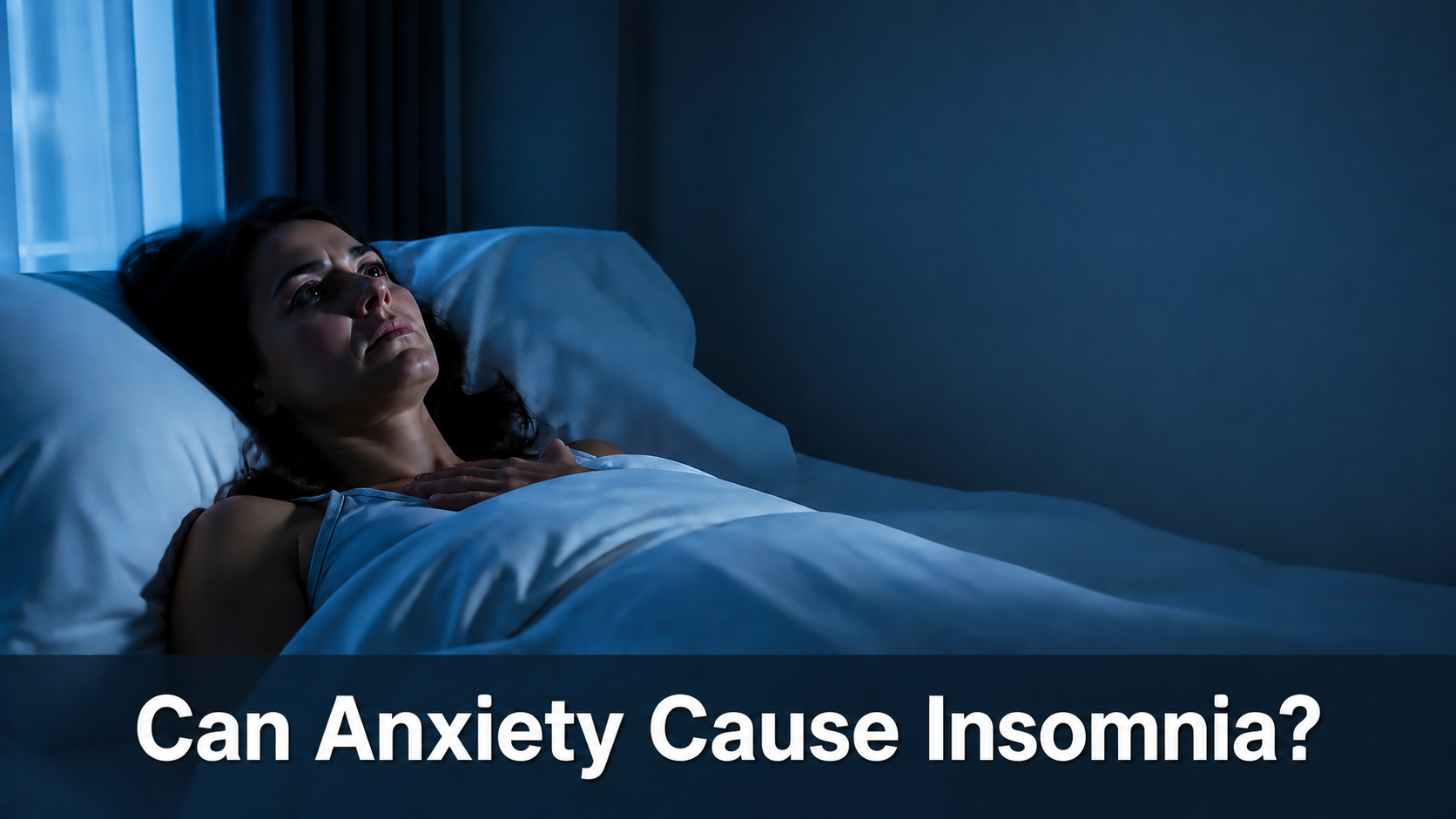
Can Anxiety Cause Insomnia? How Worry and Sleep Loss Feed Each Other
Anxiety can cause insomnia for millions of adults who lie awake with racing thoughts, says Dr. Avinesh Bhar, Board-Certified Sleep Physician at SLIIIP.com, and it remains one of the most common reasons sleep falls apart night after night.
If your mind speeds up the moment your head hits the pillow, you are not alone. Anxiety can cause insomnia by keeping the body in a high alert state when it should be winding down. The good news is that this pattern is well understood, and it can be evaluated from home through a board-certified telehealth visit. SLIIIP.com offers virtual consultations for sleep evaluations, with home sleep tests shipped directly to patients across all 50 states.
SLIIIP.com was built to make that answer easy to find, with virtual consultations in all 50 states, home sleep tests shipped to your door, and nationwide coverage.
SLIIIP’s board-certified sleep physicians can do sleep evaluations for sleep apnea. Virtual consultations in all 50 states. Home sleep tests shipped to your door.
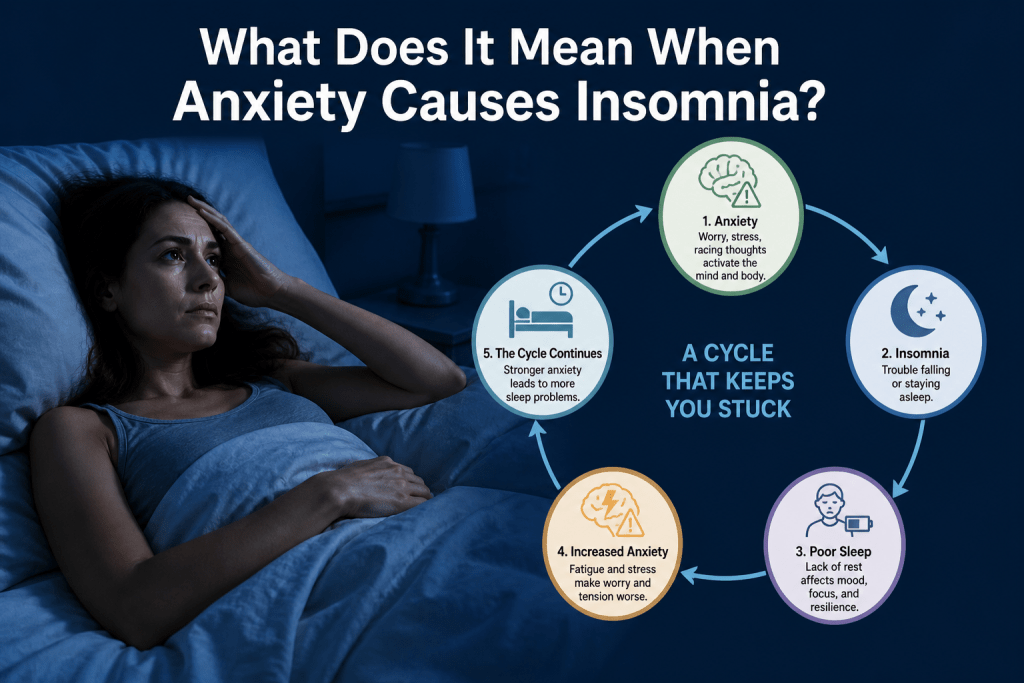
What Does It Mean When Anxiety Causes Insomnia?
Insomnia means trouble falling asleep, trouble staying asleep, or waking up too early and not being able to drift off again. When anxiety drives this pattern, the body and brain stay in a state of high alert long past bedtime.
Anxiety can cause insomnia in two main ways. First, racing thoughts make it hard to fall asleep at night. Second, stress hormones like cortisol and adrenaline stay elevated, which keeps the body ready for action instead of rest.
The result is a tense body, a busy mind, and hours spent staring at the ceiling. Many people then start to worry about not sleeping, which only feeds the cycle. To learn more about the different patterns this can take, see our types of insomnia guide.
CHECK YOUR SLEEP SYMPTOMS: TAKE THE 2 MINUTE QUIZ
TAKE THE QUIZ
How the Anxiety and Sleep Cycle Begins
The link between anxiety and sleep loss is a two-way street. Anxiety can cause insomnia, and insomnia can also raise anxiety levels the next day. According to the National Heart, Lung, and Blood Institute, insomnia is closely connected with mental health conditions including anxiety.
Here is how the cycle usually starts:
- A stressful event triggers worry or fear.
- The body releases stress chemicals that raise heart rate and alertness.
- Sleep becomes light, broken, or delayed.
- Daytime fatigue increases, which makes emotions harder to manage.
- The next night, the brain associates the bed with stress, not rest.
Once the brain links the bedroom with worry, falling asleep becomes a learned struggle. This is why so many people with anxiety say they feel tired all day but wide awake the moment they lie down. Our article on why you feel anxious at night explores this pattern in detail.
Common Signs Anxiety Is Driving Your Insomnia
Not every sleep problem comes from anxiety, but a few clues point in that direction. Watch for these signs:
- A racing or repeating loop of thoughts at bedtime
- A tight chest, shallow breathing, or muscle tension under the covers
- Waking up between 2 and 4 a.m. with worry already in motion
- A pounding heart or feeling of dread on waking
- Dreading the night well before bed arrives
If you often feel like you cannot turn your brain off, our guide on what to do when you cannot shut your brain off at night is a helpful starting point. Many readers also relate to the experience of waking up anxious.
Why Anxiety Makes the Brain Stay Awake
Sleep needs a calm nervous system. Anxiety puts the body into fight or flight mode, which is the opposite of what sleep requires.
During an anxious state, the brain releases cortisol and adrenaline, which raise heart rate, sharpen senses, and shut down rest signals. Even mild daytime stress can lift these hormone levels enough to delay sleep onset by an hour or more.
Common physical effects include:
- A faster pulse at rest
- A warmer body temperature
- Tense jaw, neck, and shoulders
- Light, fragmented sleep with frequent wake-ups
Over time, the brain may also start to release stress chemicals automatically at bedtime, even without a clear trigger. That is why many people with chronic worry struggle with sleep long after the original stress is gone.
Watch: Insomnia and Your Health online session by Dr. Avinesh Bhar (SLIIIP)
How Lack of Sleep Makes Anxiety Worse
Sleep loss does not just leave you tired. It changes how the brain handles emotion. The Centers for Disease Control and Prevention notes that insufficient sleep is linked to poor mental health outcomes and can worsen mood and stress.
When you are short on rest, the part of the brain that processes fear becomes more reactive, while the part that calms it down becomes weaker. Even one bad night of sleep can raise anxiety levels by the next afternoon. That is why a single rough week of sleep can feel like a slide into a more anxious version of yourself.
This is also why insomnia treatment often improves anxiety even before any direct anxiety therapy. Better sleep restores the brain’s natural ability to manage stress. Read more in our piece on effective sleep solutions for mental health.
Lifestyle Habits That Help Calm the Cycle
While anxiety can cause insomnia, daily habits play a big role in either feeding or easing the loop. The goal is to lower nighttime arousal and rebuild a calm pre-sleep routine.
Helpful habits include:
- Setting a consistent wake time, even after a poor night
- Cutting caffeine after noon
- Getting morning sunlight within 30 minutes of waking
- Moving the body daily, even with a short walk
- Keeping a worry journal earlier in the evening
- Slowing breathing with a 4-second inhale and 6-second exhale
- Avoiding the bed for activities other than sleep
For more practical steps, see our guide on how to fix insomnia naturally and tips for stopping overthinking at night.
When to Seek a Professional Sleep Evaluation
Short stretches of sleep loss are normal during stressful times. But when insomnia lasts more than three nights a week for three months or more, it has become chronic and deserves a closer look.
You should consider a sleep evaluation if any of the following apply:
- You have had insomnia for over 3 months
- Your sleep loss is hurting your work, mood, or relationships
- You wake up gasping, choking, or with a racing heart
- You feel exhausted no matter how long you stay in bed
- You snore loudly or have been told you stop breathing in sleep
Anxiety is not always the only factor. Conditions like sleep apnea can mimic or worsen anxiety symptoms, which is why a full evaluation matters. Approaches like cognitive behavior therapy for insomnia (CBT-I) are considered first-line care for chronic insomnia and often outperform sleep medications.
At Sliiip, we accept the following insurances:

SLIIIP’s board-certified sleep physicians can do sleep evaluations for sleep apnea. Virtual consultations in all 50 states. Home sleep tests shipped to your door.
How SLIIIP Helps People With Anxiety-Driven Insomnia
SLIIIP is a sleep telemedicine platform that connects patients with board-certified sleep physicians from home. Anxiety-related insomnia often improves once the right type of evaluation is done, and SLIIIP makes that easy to access.
With SLIIIP, you can:
- Book a virtual consultation with a board-certified sleep physician
- Receive a home sleep test by mail if needed
- Access nationwide coverage in all 50 states
- Use insurance to help cover services
- Get clear next steps based on your sleep history and symptoms
Many patients turn to SLIIIP after months of trying sleep aids without lasting relief. A proper evaluation can help separate primary insomnia, anxiety-driven insomnia, and underlying sleep disorders so the right plan can move forward. You can also explore our broader insomnia treatment methods for more context.
Frequently Asked Questions
1. Can anxiety cause insomnia even if I do not feel anxious during the day?
Yes. Many people only feel anxiety physically at night, with a racing heart or restless body, even if their mind feels calm during the day.
2. How long does anxiety insomnia usually last?
It depends on the trigger. Short-term insomnia from stress can last days to weeks. When it lasts over 3 months, it is considered chronic.
3. Is it anxiety or sleep apnea?
Both can cause nighttime wake-ups and morning fatigue. A sleep evaluation can tell them apart, especially if snoring or gasping is involved.
4. Why do I wake up at 3 a.m. with my heart racing?
This often points to a stress hormone surge or a breathing event. It is worth a closer look from a sleep physician.
5. Does anxiety cause insomnia in women more often?
Women are nearly twice as likely as men to report both anxiety and insomnia, often tied to hormonal shifts.
6. Can children get anxiety-related insomnia?
Yes. Worry, school stress, or family changes can all delay sleep in children and teens.
7. Is melatonin enough for anxiety insomnia?
Melatonin helps with sleep timing, not anxiety. It is rarely a full fix for anxiety-driven sleep loss.
8. What is the best therapy for anxiety insomnia?
CBT-I is considered the first-line option. It targets the thoughts, habits, and signals that keep the cycle going.
9. Can lack of sleep cause panic attacks?
Yes. Sleep loss raises baseline anxiety and can trigger panic in people who are already vulnerable.
10. Should I take a sleep aid for anxiety and insomnia?
Sleep aids can offer short-term relief but rarely solve the root cause. Many lose effect over time.
11. Can deep breathing really help me fall asleep?
Yes. Slow breathing turns off fight or flight signals and lowers heart rate, which makes sleep easier.
12. Is it normal to dread bedtime?
Dreading bed is common with anxiety and insomnia. The brain has linked the bedroom with frustration and worry.
13. Can exercise help anxiety-related insomnia?
Yes. Daily movement lowers stress hormones and helps deepen sleep, but try to finish workouts a few hours before bed.
14. Does caffeine make anxiety insomnia worse?
Caffeine raises stress hormones and stays in the body for hours. Cutting it after noon often helps.
15. Can alcohol help me sleep through anxiety?
Alcohol may speed up falling asleep but breaks up sleep later in the night, which can worsen anxiety the next day.
16. Is journaling really useful for sleep?
Yes. A short worry list earlier in the evening can offload mental clutter so the brain has less to chew on at bedtime.
17. How can I stop overthinking at night?
Build a wind-down routine, dim lights early, and keep a notepad nearby for stray thoughts. See our guide on why you overthink before bed for more.
18. Do I need a sleep study for anxiety insomnia?
A study is not always required, but it helps rule out conditions like sleep apnea, which is often missed in anxious patients.
19. Is anxiety insomnia a sign of something serious?
Often it is not, but chronic insomnia raises the risk of mood disorders, heart issues, and burnout. It deserves attention.
20. How do I know if I have insomnia or just stress?
If sleep trouble happens 3 nights a week for 3 months or more, and it affects your day, that meets the bar for insomnia. Read Do I have insomnia or something else? to learn more.
Take the Next Step Toward Calmer Nights
Anxiety can cause insomnia, but it does not have to control your nights forever. A board-certified sleep physician can help untangle the cycle, rule out hidden sleep disorders, and build a plan that fits your life.
SLIIIP’s board-certified sleep physicians can do sleep evaluations for sleep apnea. Virtual consultations in all 50 states. Home sleep tests shipped to your door.
Thank you for reading this article.
Latest posts
-
Why Can’t I Wake Up Even After Getting Enough Sleep?
Last updated: October 2, 2026. Medically reviewed by Dr. Avinesh Bhar, Board-Certified Sleep Physician, SLIIIP.com. If you can’t wake up after enough sleep, the cause is usually not the number…
-
Why Does My Heart Rate Drop So Low While I Sleep?
Last updated: October 2, 2026. Medically reviewed by Dr. Avinesh Bhar, Board-Certified Sleep Physician, SLIIIP.com. Your heart rate drops low while sleeping mainly because your body needs less work from…
-
Why Are My Naps Never Refreshing?
Last updated: October 2, 2026. Medically reviewed by Dr. Avinesh Bhar, Board-Certified Sleep Physician, SLIIIP.com. Naps that leave you groggy usually come down to how long you sleep, when you…
Get updates
Spam-free subscription, we guarantee. This is just a friendly ping when new content is out.

