👉 Register for Free. How to Diagnose Sleep Apnea Faster in Primary Care – FREE Webinar by Dr. Audrey Wells. – Friday, April 24 at 12 PM ET

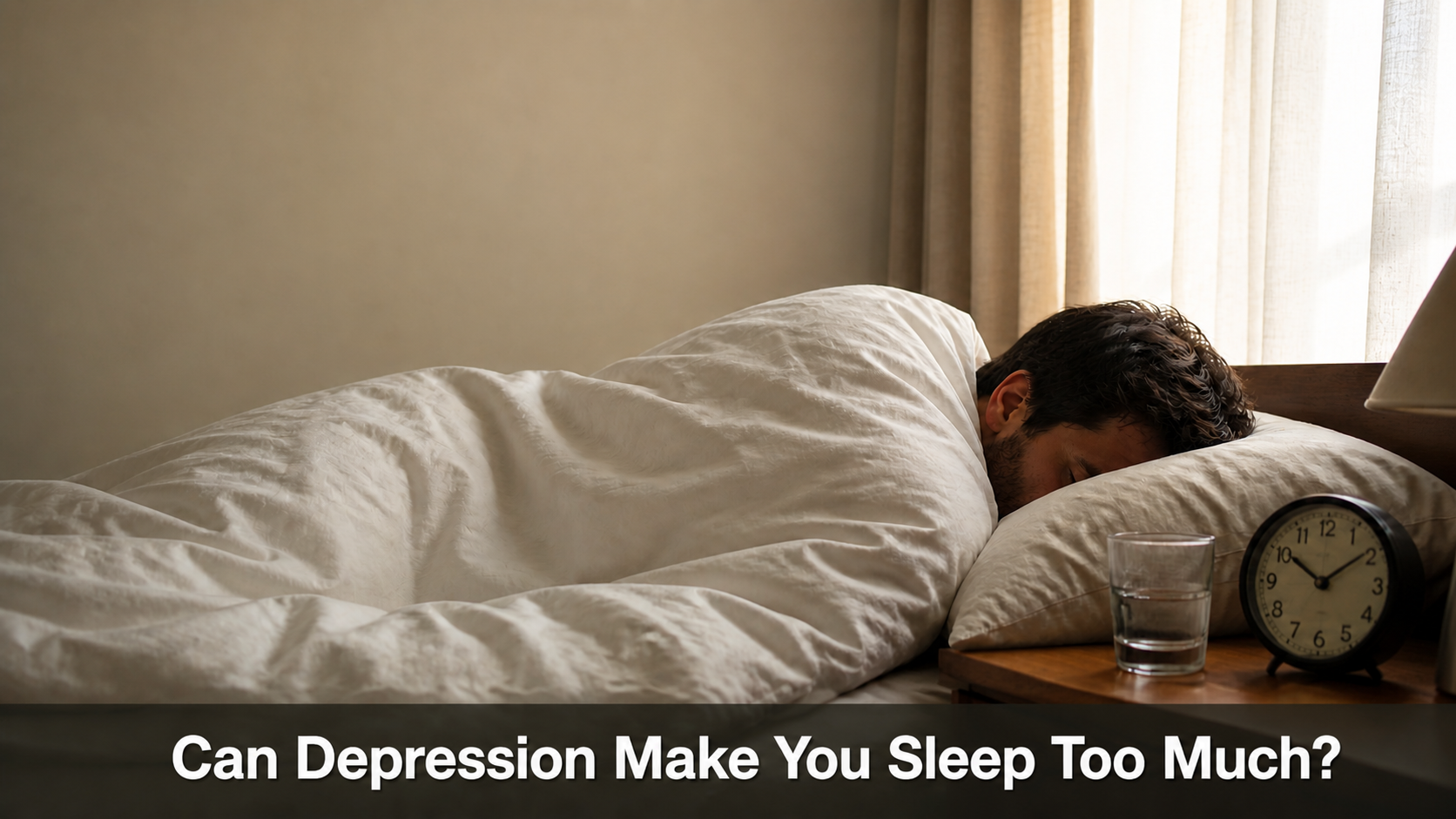
Can Depression Make You Sleep Too Much? Understanding Hypersomnia and Mood
Depression can make you sleep too much, and for many people that heavy, never-rested feeling is one of the earliest signs something deeper is going on, says Dr. Avinesh Bhar, Board-Certified Sleep Physician at SLIIIP.com.
If you keep clocking 10 or 12 hours in bed and still wake up exhausted, your sleep may be telling a story your mood is also writing. Depression can make you sleep too much by slowing the brain’s energy systems and disrupting the natural rhythm that controls when you feel awake. This pattern is well known in sleep medicine, and it deserves a closer look. SLIIIP.com offers virtual consultations for sleep evaluations, with home sleep tests shipped directly to patients across all 50 states.
SLIIIP.com was built to make that answer easy to find, with virtual consultations in all 50 states, home sleep tests shipped to your door, and nationwide coverage.
SLIIIP’s board-certified sleep physicians can do sleep evaluations for sleep apnea. Virtual consultations in all 50 states. Home sleep tests shipped to your door.
What It Means When Depression Makes You Sleep Too Much
Sleeping too much, also called hypersomnia, means needing more than 9 to 10 hours of sleep most nights or feeling pulled to nap during the day even after a long rest. When this pattern shows up with low mood, low energy, or low motivation, depression is often part of the picture.
Depression can make you sleep too much by changing brain chemicals that control mood, energy, and the sleep-wake cycle. Levels of serotonin, dopamine, and norepinephrine drop, which leaves the body in a low-power state. The brain then leans on sleep as a way to escape, recover, or simply pass time.
This is different from being lazy or unmotivated. It is a real physical symptom, and it shows up in millions of adults each year. To understand more about this overlap, see our piece on is my depression actually a sleep problem.
CHECK YOUR SLEEP SYMPTOMS: TAKE THE 2 MINUTE QUIZ
TAKE THE QUIZ
How Depression and Oversleeping Are Linked
The link between mood and sleep runs both ways. Depression can make you sleep too much, and oversleeping can also deepen depression. According to the Centers for Disease Control and Prevention, sleep problems are tightly tied to mental health, and changes in sleep are often one of the first signals of mood disorders.
Here is how the cycle usually plays out:
- Mood drops, and stress chemicals shift the brain into low-energy mode.
- Sleep becomes longer but lighter and less restorative.
- Daytime energy keeps falling, which leads to more time in bed.
- Time outside, sunlight, and movement all decrease.
- The body’s internal clock drifts later, which worsens both sleep and mood.
Once oversleeping becomes a daily habit, the brain’s reward and energy systems get even weaker. That is why so many people with depression say they sleep all the time but never feel rested. Our article on why you feel depressed and tired all the time covers this loop in more detail.
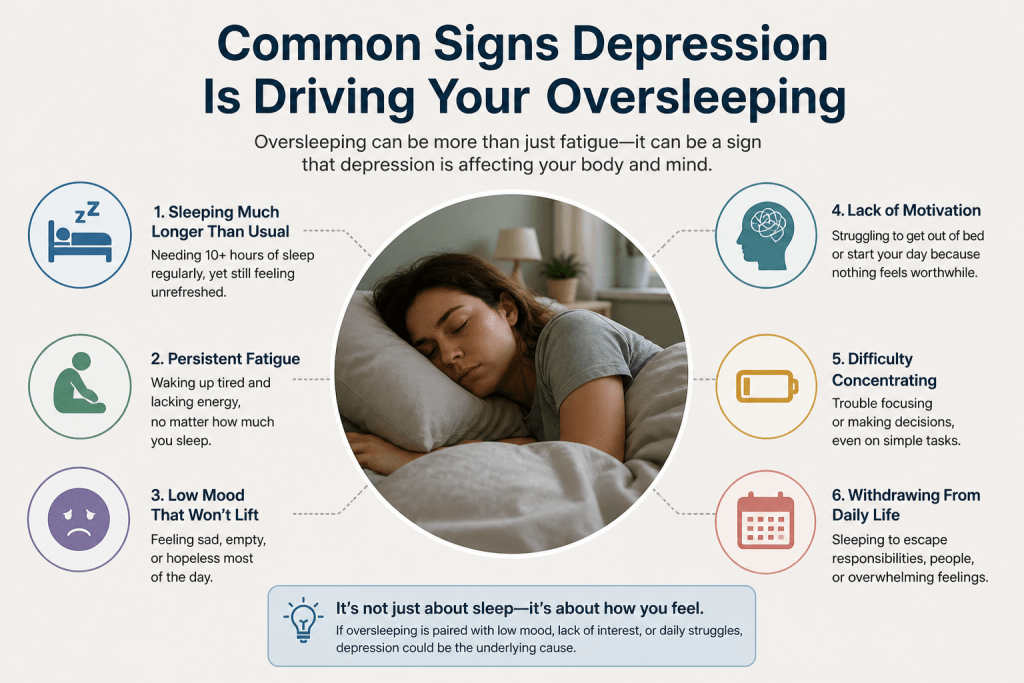
Common Signs Depression Is Driving Your Oversleeping
Not every long sleeper is depressed, but a few patterns point in that direction. Watch for these signs:
- Sleeping more than 9 to 10 hours and still feeling drained
- Trouble getting out of bed in the morning, even after enough rest
- Daytime naps that do not refresh you
- Low mood, low motivation, or a sense of heaviness
- Loss of interest in things you used to enjoy
- A heavy, weighted feeling in the arms or legs
This pattern is sometimes called atypical depression, where the body craves sleep and food instead of losing both. If you often feel like rest is never enough, our guide on why am I exhausted no matter how much I sleep is worth a read.
Why Depression Causes the Brain to Crave More Sleep
Sleep is not just rest. It is an active process that helps the brain repair, file memories, and reset emotion. In depression, this system gets out of balance.
During depression, the brain’s reward and energy networks slow down, which makes wakefulness feel like more work than the body wants to give. Light sleep stages stretch out, deep sleep gets shorter, and REM sleep starts earlier than normal. The result is more total sleep with less actual recovery.
Common physical effects include:
- A heavy, slow feeling on waking
- Long sleep that still feels shallow
- Brain fog and slow thinking during the day
- Strong urge to nap in the afternoon
- A flat, low mood that lifts only briefly
Over time, the brain may even start to use sleep as a coping tool, which makes the cycle harder to break without help.
How Oversleeping Makes Depression Worse
It seems like more sleep should help mood, but past a certain point the opposite happens. The National Heart, Lung, and Blood Institute notes that both too little and too much sleep can affect health and well-being.
When the body stays in bed too long, sunlight exposure drops, social contact shrinks, and physical activity falls. Each of these missing pieces is a known mood booster, and losing them feeds the same low energy state that started the problem. Long sleep also pushes the body’s internal clock later, which adds jet-lag-like symptoms on top of depression.
This is why fixing the sleep pattern is often part of feeling better. Many people notice mood gains within days of waking up at a steady time and getting morning light. Read more in our piece on effective sleep solutions for mental health.
Watch: The Dangers of Poor Sleep
Other Sleep Conditions That Mimic Depression
Not all oversleeping comes from depression. Several sleep disorders look almost identical from the outside, and they often go missed for years.
Conditions that can mimic or worsen depression include:
- Obstructive sleep apnea, where breathing pauses break up sleep all night
- Narcolepsy and idiopathic hypersomnia, where the brain cannot stay alert
- Circadian rhythm disorders, where the internal clock runs late or early
- Restless legs syndrome, which steals deep sleep without you knowing
Sleep apnea in particular is often missed in people who do not snore loudly, are not overweight, or are younger than 50. Untreated sleep apnea can mimic depression so closely that patients spend years on mood medication that never quite works. Our article on sleep apnea and depression explores this overlap in detail.
Lifestyle Habits That Help Reset Sleep and Mood
While depression can make you sleep too much, daily habits play a big role in either feeding or easing the loop. The goal is to retrain the body’s clock and rebuild energy.
Helpful habits include:
- Setting a fixed wake time, even on weekends
- Getting bright outdoor light within 30 minutes of waking
- Limiting daytime naps to 20 minutes before 3 p.m.
- Moving the body daily, even with a 10 minute walk
- Eating meals at steady times to anchor the clock
- Cutting screens an hour before bed
- Talking to someone you trust about how you feel
For more on resetting your internal clock, see how do I fix my circadian rhythm and our overview of circadian rhythm sleep disorders.
When to Seek a Professional Sleep Evaluation
Short stretches of long sleep during stress or illness are normal. But when oversleeping lasts more than a few weeks and starts hurting your day, it deserves a closer look.
You should consider a sleep evaluation if any of the following apply:
- You sleep more than 9 hours and still feel tired
- You nap heavily during the day with no relief
- You wake up gasping, choking, or with a racing heart
- You have been told you snore loudly or stop breathing in sleep
- Your mood and energy stay flat no matter how much you rest
Mood symptoms and sleep symptoms often share roots. A proper evaluation can help separate primary depression, hypersomnia, and hidden sleep disorders so the right plan can move forward. If you are not sure where your fatigue falls, is my fatigue normal is a good starting point.
How SLIIIP Helps People Who Sleep Too Much
SLIIIP is a sleep telemedicine platform that connects patients with board-certified sleep physicians from home. Many patients with low mood and long sleep find that a sleep evaluation finally explains symptoms that mood treatment alone could not solve.
With SLIIIP, you can:
- Book a virtual consultation with a board-certified sleep physician
- Receive a home sleep test by mail if needed
- Access nationwide coverage in all 50 states
- Use insurance to help cover services
- Get clear next steps based on your sleep history and symptoms
Patients often turn to SLIIIP after months or years of being told their fatigue is just stress or low mood. A focused sleep evaluation can uncover real, treatable causes that change the picture quickly.
At Sliiip, we accept the following insurances:

SLIIIP’s board-certified sleep physicians can do sleep evaluations for sleep apnea. Virtual consultations in all 50 states. Home sleep tests shipped to your door.
Frequently Asked Questions
1. Can depression really make you sleep 12 hours a night?
Yes. Atypical depression often causes long sleep, sometimes 10 to 14 hours, with little daytime relief.
2. What is hypersomnia?
Hypersomnia means needing too much sleep or feeling unable to stay awake during the day, even after a long rest.
3. Is sleeping all day a sign of depression?
It can be. When long sleep is paired with low mood, low motivation, and loss of interest, depression is a common cause.
4. Why do I feel more tired after sleeping longer?
Extra hours often add light, broken sleep. They also push your body clock later, which leaves you groggy.
5. Can sleep apnea look like depression?
Yes. Untreated sleep apnea causes fatigue, brain fog, and low mood that often gets misread as depression.
6. Do antidepressants make you sleep more?
Some can. Sedating antidepressants are sometimes chosen on purpose for people who cannot sleep, but they may add daytime grogginess.
7. Is oversleeping a sign of seasonal depression?
Yes. Seasonal affective disorder often brings long sleep, low energy, and carb cravings during darker months.
8. How much sleep is too much?
Most adults do best in 7 to 9 hours. Regularly needing more than 10 hours may signal a problem.
9. Can teenagers have depression-related oversleeping?
Yes. Teens can show depression as long sleep, school avoidance, and irritability rather than open sadness.
10. Will fixing my sleep cure my depression?
Not always, but it often helps. Better sleep can lift mood, sharpen thinking, and make therapy or other care work better.
11. Should I force myself out of bed earlier?
A steady wake time helps reset the body clock. Slow shifts of 15 to 30 minutes a day work better than sudden changes.
12. Does morning sunlight really help?
Yes. Bright morning light is one of the strongest signals for the body clock and lifts mood for many people.
13. Is it normal to nap every day with depression?
Long, heavy naps are common in depression but rarely refresh. Short power naps work better.
14. Can lack of sleep also cause depression?
Yes. The link runs both ways. Read more in our guide on can lack of sleep cause depression.
15. What is atypical depression?
Atypical depression is a form of depression that brings long sleep, increased appetite, and a heavy body feeling instead of insomnia and weight loss.
16. Can exercise help if I sleep too much?
Yes. Even short daily movement raises energy, improves mood, and helps the body crave normal length sleep.
17. Is oversleeping bad for my heart?
Long, regular oversleeping has been linked to higher rates of heart disease, diabetes, and early death in large studies.
18. Should I get a sleep study for hypersomnia?
A sleep study can rule out apnea, narcolepsy, and other causes that mimic depression. It is often a smart first step.
19. Can teens with depression sleep 14 hours?
Yes. Teens may sleep extreme hours during depressive episodes, especially during school breaks.
20. How do I know if it is depression or just being tired?
If long sleep comes with low mood, loss of interest, and trouble functioning for two weeks or more, that fits the pattern of depression. A sleep evaluation can help sort the rest.
Take the Next Step Toward Better Days
Depression can make you sleep too much, but more rest is rarely the answer on its own. A board-certified sleep physician can help untangle the cycle, rule out hidden sleep disorders, and build a plan that fits your life.
SLIIIP’s board-certified sleep physicians can do sleep evaluations for sleep apnea. Virtual consultations in all 50 states. Home sleep tests shipped to your door.
Thank you for reading this article.
Latest posts
-
Why Are My Naps Never Refreshing?
Last updated: October 2, 2026. Medically reviewed by Dr. Avinesh Bhar, Board-Certified Sleep Physician, SLIIIP.com. Naps that leave you groggy usually come down to how long you sleep, when you…
-
Is Sleeping Too Much a Sleep Disorder?
Last updated: October 2, 2026. Medically reviewed by Dr. Avinesh Bhar, Board-Certified Sleep Physician, SLIIIP.com. Sleeping too much is not always a sleep disorder, but it can be a sign…
-
Why Does My Insomnia Get Worse After Stopping Sleep Medication?
Last updated: October 2, 2026. Medically reviewed by Dr. Avinesh Bhar, Board-Certified Sleep Physician, SLIIIP.com. Insomnia can get worse after stopping sleep medication for three main reasons. They are rebound…
Get updates
Spam-free subscription, we guarantee. This is just a friendly ping when new content is out.

