👉 Register for Free. How to Diagnose Sleep Apnea Faster in Primary Care – FREE Webinar by Dr. Audrey Wells. – Friday, April 24 at 12 PM ET

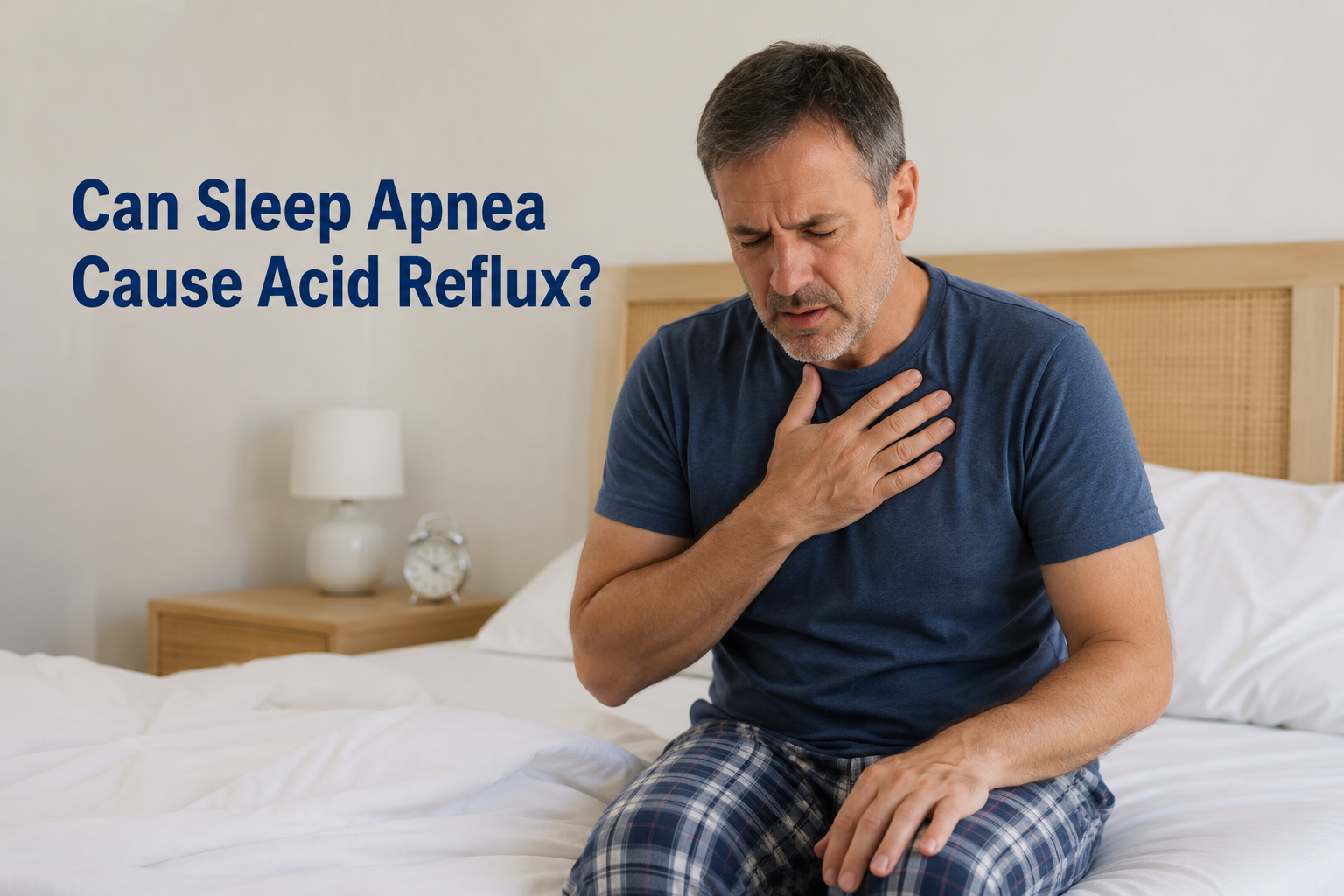
Can Sleep Apnea Cause Acid Reflux at Night?
Sleep apnea cause acid reflux at night more often than most people realize, according to Dr. Avinesh Bhar, Board-Certified Sleep Physician at SLIIIP.com, and many patients show up complaining about heartburn at 2 a.m. without knowing their breathing is the real driver.
You lie down, try to drift off, and within an hour a hot, sour feeling rises in your chest. Maybe you wake up coughing, clearing your throat, or with a bitter taste in your mouth. For many people, this is not just a stomach problem. It is a sleep problem in disguise. The link between sleep apnea and nighttime reflux is well documented, and treating one can ease the other. The body is not designed to handle pauses in breathing and stomach acid rising at the same time, so when both happen night after night, the toll adds up.
SLIIIP’s board-certified sleep physicians can do sleep evaluations for sleep apnea. Virtual consultations in all 50 states. Home sleep tests shipped to your door.
What Acid Reflux at Night Actually Is
Acid reflux happens when stomach acid moves up into the esophagus, the tube that connects your throat to your stomach. During the day, gravity and your posture keep most of that acid where it belongs. At night, when you lie flat, gravity stops helping and acid can travel up much more easily. That is why so many people feel reflux worse in bed than at the dinner table.
Common nighttime reflux symptoms include burning in the chest, a sour taste, sudden coughing, throat clearing, hoarseness in the morning, and waking up choking. When this pattern shows up several nights a week, it has a name: nocturnal gastroesophageal reflux disease, or nocturnal GERD.
CHECK YOUR SLEEP SYMPTOMS: TAKE THE 2 MINUTE QUIZ
TAKE THE QUIZ
Can Sleep Apnea Cause Acid Reflux at Night? The Short Answer
Yes, sleep apnea can cause acid reflux at night, and the connection works in both directions. When breathing pauses during sleep, pressure inside the chest changes in a way that can pull stomach acid up into the esophagus. At the same time, acid in the throat can irritate the airway and worsen breathing problems. Many patients see real improvement in reflux once their sleep breathing is treated, even when no other change is made.
Dr. Avinesh Bhar and other sleep doctors see this overlap so often that reflux is now considered one of the common signs that point toward a possible sleep breathing issue. You can review related symptoms in our guides on signs of sleep apnea and sleep apnea symptoms.
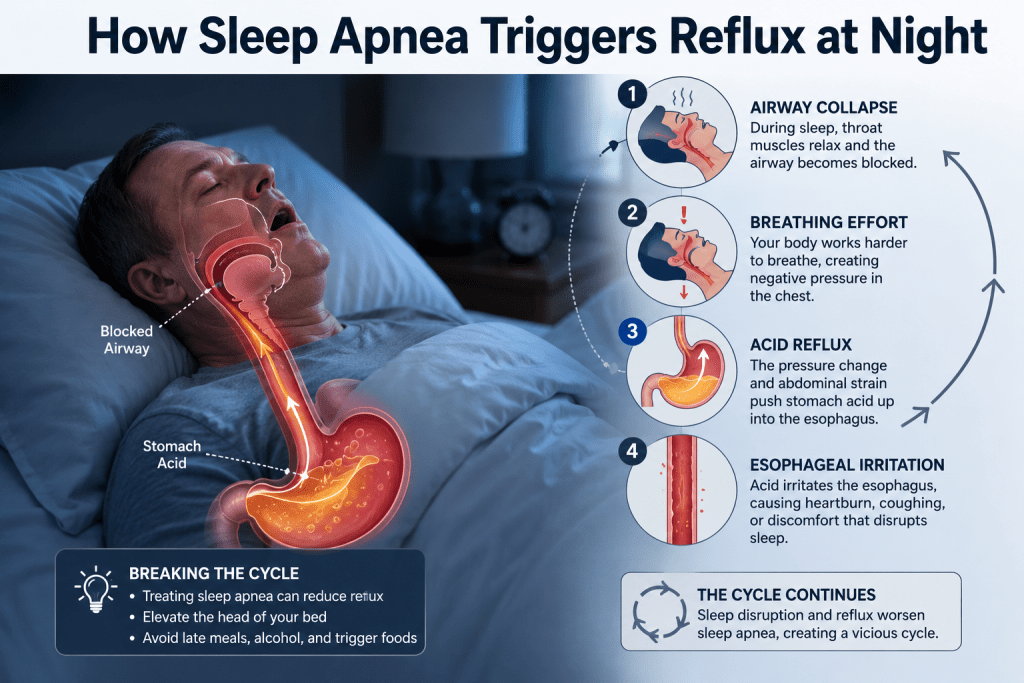
How Sleep Apnea Triggers Reflux at Night
The link is not just a coincidence. Several real, measurable changes happen during an apnea event.
1. Negative Pressure in the Chest
When the airway closes, the chest still tries to pull in air. This creates strong negative pressure inside the chest cavity. That suction can pull stomach contents past the lower esophageal sphincter, the small valve that normally keeps acid down. Over and over through the night, this acts like a vacuum on the stomach.
2. Arousals and Body Movements
Each apnea event wakes the brain just enough to restart breathing. These tiny awakenings shift muscle tone in the throat and stomach. They can loosen the valve at the top of the stomach for a moment, which is all acid needs to slip up.
3. Changes in Stomach and Throat Position
People with sleep apnea often shift, snort, gasp, or roll during the night. According to the National Heart, Lung, and Blood Institute, these events disrupt normal sleep patterns.
Restless, broken sleep means the body never settles into the steady, calm state needed for digestion to finish properly.
4. Weight and Belly Pressure
Sleep apnea and excess belly weight often go together. Extra pressure on the stomach pushes acid upward, especially when lying flat. Even small changes in weight can affect both problems at the same time.
5. Mouth Breathing and Dry Throat
People with apnea often breathe through the mouth. The throat dries out, saliva drops, and the natural buffer against acid weakens. This makes any reflux feel sharper and more painful. Our guide on mouth taping for sleep covers this issue in detail.
How Reflux Can Make Sleep Apnea Worse
The two conditions feed each other. Acid that rises into the throat can irritate the tissues around the airway. This can cause swelling and make the throat narrower, which raises the risk of more apnea events. It is a loop that keeps spinning until one side gets treated. Reflux can also trigger coughing fits that fragment sleep, leaving you tired even when you spend eight hours in bed. Read more in our piece on why I wake up gasping for air and choking while sleeping.
Signs Your Reflux May Be Linked to Sleep Apnea
Watch for these patterns. They are common in people who have both problems at once.
- Loud snoring with reflux symptoms most nights
- Waking up with a sour or bitter taste in the mouth
- Morning hoarseness, sore throat, or cough
- Reflux that returns even when you take stomach medication
- Daytime tiredness even after a full night in bed
- Witnessed pauses in breathing during sleep
- Waking up choking or coughing
- High blood pressure that is hard to control
If two or more of these fit, it is worth taking the do I have sleep apnea quiz or reading is it worth getting tested for sleep apnea.
Simple Lifestyle Steps That May Ease Nighttime Reflux
These steps are general wellness habits, not medical treatments. They often help while you work with a doctor on the deeper cause.
- Finish eating two to three hours before bed.
- Skip large, fatty, or spicy meals late at night.
- Cut back on alcohol, especially within a few hours of sleep.
- Limit coffee, soda, and chocolate after early afternoon.
- Sleep on your left side rather than your right or back.
- Raise the head of your bed by a few inches.
- Wear loose clothing to bed so the belly is not pressed.
- Drink water through the day instead of large amounts at night.
- Lose extra weight slowly if your doctor agrees.
- Stop smoking, which weakens the valve at the top of the stomach.
Our guide on the best sleeping position and wedge pillow for sleep apnea explains how small angle changes can help both reflux and breathing. Position alone will not cure apnea, but it can lower the load while you wait for a real evaluation.
How Treating Sleep Apnea Can Calm Nighttime Reflux
Many people see reflux ease when their breathing is steady at night. With less negative pressure pulling on the stomach and fewer arousals shifting the valve, acid stays where it belongs. A real evaluation can show how often breathing pauses are happening and how severe they are. That information shapes the plan. SLIIIP uses home sleep tests so the study happens in your own bed, with your own pillow, in your own routine. You can read more in our guides on home sleep apnea testing and how to prepare for a home sleep study.
Watch: Sleeping with Sleep Apnea
When to Talk to a Sleep Doctor
Reach out to a doctor like Dr. Avinesh Bhar when any of the following fit your life.
- You wake up with reflux most nights of the week.
- Reflux returns after stopping a stomach medication.
- You snore loudly or have been told you stop breathing.
- You feel tired all day even after long sleep.
- You have high blood pressure, diabetes, or heart concerns.
- Morning sore throat, cough, or hoarseness keeps coming back.
According to the Centers for Disease Control and Prevention, poor sleep is tied to a range of long-term health concerns, so a clear plan with a sleep doctor is worth your time.
What a SLIIIP Visit Looks Like
You book a virtual visit. You talk to a board-certified sleep physician from home. If a study is needed, a small home device ships to you. You wear it for one or two nights, send it back, and review the results on a follow-up video visit.
The whole process is built around your schedule, not a lab schedule. You can meet the providers on the SLIIIP physicians page and read more on the how it works page.
At Sliiip, we accept the following insurances:

SLIIIP’s board-certified sleep physicians can do sleep evaluations for sleep apnea. Virtual consultations in all 50 states. Home sleep tests shipped to your door.
20 Common Questions About Sleep Apnea and Acid Reflux at Night
1. Can sleep apnea cause acid reflux at night even without snoring?
Yes. Some people have apnea events without loud snoring, and reflux can still appear.
2. Does treating sleep apnea improve reflux?
Many people see less reflux once their breathing is steady at night.
3. Can acid reflux cause sleep apnea?
Reflux can irritate the airway and make apnea worse, but it does not usually create apnea on its own.
4. Is nighttime reflux a sign I should get tested for sleep apnea?
It can be, especially if you also snore, gasp, or feel tired during the day.
5. Why does my reflux feel worse at night?
Lying flat removes gravity’s help, so acid moves up the esophagus more easily.
6. Can sleep apnea cause heartburn during the day?
Daytime heartburn is usually about food and posture, but poor nighttime breathing can worsen overall reflux.
7. Does losing weight help both problems?
Often yes. Less belly pressure means less reflux and often fewer apnea events.
8. Will sleeping on my side help?
Left side sleeping tends to ease reflux. Side sleeping in general can lower apnea events too.
9. Should I raise the head of my bed?
A small lift of four to six inches under the mattress can help acid stay down.
10. Can a home sleep test really show this?
Yes. A home test can record breathing pauses, oxygen levels, and heart rate while you sleep in your own bed.
11. Do I need a lab study?
Not always. SLIIIP uses home sleep tests for many patients.
12. Can stress make both reflux and apnea worse?
Stress can raise stomach acid and tighten the body, which affects sleep and breathing.
13. Why do I wake up with a sour taste?
Acid moved up into the throat during the night, often during an apnea event.
14. Can mouth breathing cause more reflux?
Mouth breathing dries the throat and lowers saliva, which usually buffers acid.
15. What foods should I avoid at night?
Fatty foods, spicy meals, chocolate, citrus, tomato, alcohol, soda, and coffee.
16. Is it safe to wait and see?
If symptoms are frequent or come with snoring and tiredness, do not wait.
17. Can children have this overlap?
Yes, but pediatric care is different and should be guided by a child’s own doctor.
18. Will a wedge pillow fix apnea?
A wedge can help reflux and may ease mild apnea, but it is not a full treatment.
19. How fast can I see a SLIIIP doctor?
Visits are virtual and often scheduled within days through SLIIIP.com.
20. What if my reflux medication is not working?
That is a strong signal to look at sleep breathing. Talk to a sleep doctor.
Talk to a Sleep Doctor at SLIIIP
If reflux keeps waking you up at night, a sleep evaluation can help you find the real cause and a clear next step.
SLIIIP’s board-certified sleep physicians can do sleep evaluations for sleep apnea. Virtual consultations in all 50 states. Home sleep tests shipped to your door.
Latest posts
-
Why Are My Naps Never Refreshing?
Last updated: October 2, 2026. Medically reviewed by Dr. Avinesh Bhar, Board-Certified Sleep Physician, SLIIIP.com. Naps that leave you groggy usually come down to how long you sleep, when you…
-
Is Sleeping Too Much a Sleep Disorder?
Last updated: October 2, 2026. Medically reviewed by Dr. Avinesh Bhar, Board-Certified Sleep Physician, SLIIIP.com. Sleeping too much is not always a sleep disorder, but it can be a sign…
-
Why Does My Insomnia Get Worse After Stopping Sleep Medication?
Last updated: October 2, 2026. Medically reviewed by Dr. Avinesh Bhar, Board-Certified Sleep Physician, SLIIIP.com. Insomnia can get worse after stopping sleep medication for three main reasons. They are rebound…
Get updates
Spam-free subscription, we guarantee. This is just a friendly ping when new content is out.

