👉 Register for Free. How to Diagnose Sleep Apnea Faster in Primary Care – FREE Webinar by Dr. Audrey Wells. – Friday, April 24 at 12 PM ET

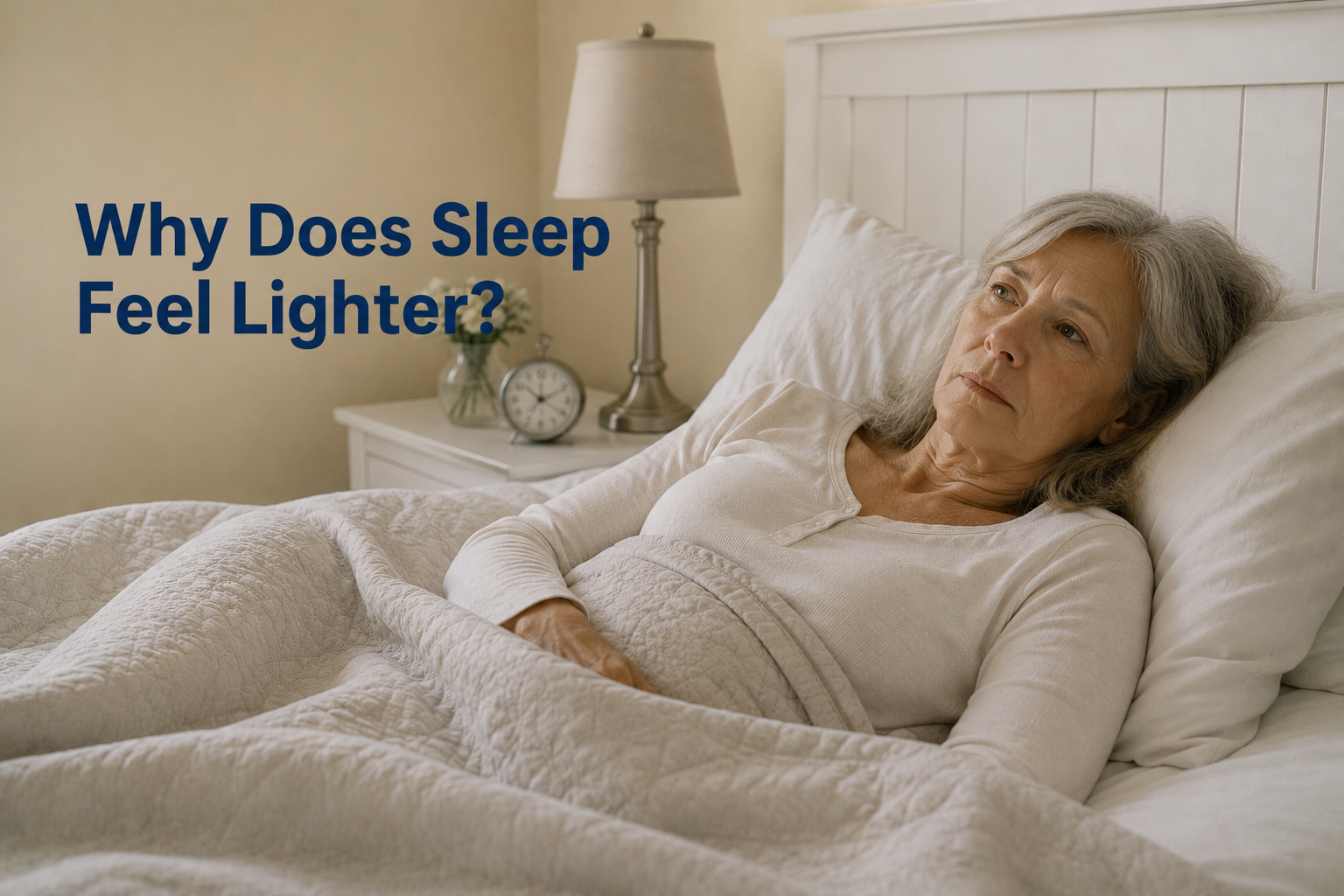
Why Does Sleep Feel Lighter as You Age?
Sleep feels lighter as you age and can creep in slowly over the years, according to Dr. Avinesh Bhar, Board-Certified Sleep Physician at SLIIIP.com, and many adults notice they wake at every small sound long before they think of themselves as old.
You might remember sleeping through thunderstorms as a teenager. Now a soft creak in the hallway pulls you out of a dream. The body does not stop sleeping with age, but it does change the way it sleeps. Deep stages get shorter. Wake-ups get longer. The internal clock shifts earlier. None of this means something is broken. It means the sleep system is doing what time tells it to do. The good news is that lighter sleep with age is not all chance. Habits, hormones, breathing, and health all play a part, and many of these can be helped.
SLIIIP’s board-certified sleep physicians can do sleep evaluations for sleep apnea. Virtual consultations in all 50 states. Home sleep tests shipped to your door.
What “Lighter Sleep” Really Means
Sleep is not one steady state. It is made of stages that move in a cycle through the night. Light sleep, deep sleep, and dream sleep, also called REM, take turns. Deep sleep is the heavy, hard-to-wake stage that feels the most restorative. Light sleep is more alert. The brain notices noise, motion, and changes in body temperature. Both stages matter. The problem is that with age, the time spent in deep sleep falls, and the time spent in light sleep rises. You can read more about the building blocks in our guides on core sleep, core sleep vs deep sleep, and understanding rapid eye movement.
So when people say their sleep feels lighter, they usually mean three things at once. They wake more often. They wake from small things. They feel less rested in the morning.
CHECK YOUR SLEEP SYMPTOMS: TAKE THE 2 MINUTE QUIZ
TAKE THE QUIZ
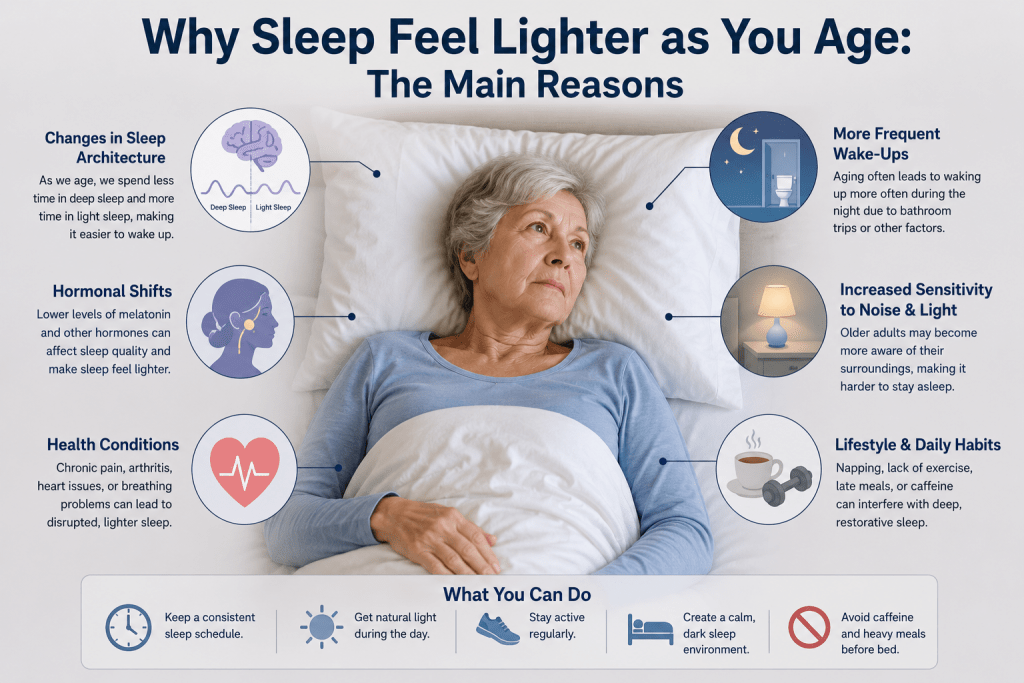
Why Sleep Feel Lighter as You Age: The Main Reasons
There is no single cause. Most older adults have a mix of these working at the same time.
1. Natural Changes in Sleep Architecture
The brain’s sleep system shifts with age. Slow-wave deep sleep is most plentiful in childhood and slowly drops through adult life. By the 50s and 60s, deep sleep can be a fraction of what it was at 20. Less deep sleep means more time in lighter stages, where wake-ups happen more easily. This is the single biggest reason sleep feels lighter as you age.
2. An Earlier Internal Clock
Your circadian rhythm sets bedtime and wake time. With age, it tends to move earlier. Many older adults feel sleepy by 8 or 9 p.m. and wake up before sunrise. If you fight that shift and stay up late, you end up sleeping fewer hours, which adds to the feeling of lighter sleep. Our piece on how to fix your circadian rhythm covers this in detail, along with circadian rhythm sleep disorder.
3. Hormonal Shifts
Hormones drive sleep more than most people think. Melatonin output falls with age. In women, perimenopause and menopause bring drops in estrogen and progesterone that disrupt sleep. Hot flashes, night sweats, and mood shifts all chip away at deep sleep. Read more in our guides on menopause sleep problems and hormonal insomnia.
4. Sleep Apnea Becomes More Common
Sleep apnea is one of the most missed reasons sleep feels lighter with age. Throat tissue softens, weight tends to climb, and breathing pauses at night become more likely. Each pause pulls the brain into a lighter state to restart breathing. Many older adults blame age for poor sleep when a treatable breathing problem is the real driver. Our articles on signs of sleep apnea and sleep apnea symptoms in women explain what to watch for.
5. More Trips to the Bathroom
Bladder capacity falls, fluid balance changes, and certain medications make nighttime trips more common. Each trip means a wake-up, and each wake-up makes the next sleep stretch lighter. See our guide on how to stop waking up multiple times at night.
6. Aches, Pains, and Joint Stiffness
Arthritis, back pain, and old injuries do not stop at bedtime. Even mild pain can pull the brain into lighter stages or full wake-ups. The body shifts position to find comfort, and each shift breaks the cycle.
7. Medications and Health Conditions
Many common medications, including blood pressure drugs, steroids, some antidepressants, and certain inhalers, can lighten sleep. Heart conditions, diabetes, thyroid issues, and reflux all play a role too. The more medications and conditions in the mix, the lighter sleep tends to get.
8. Less Daytime Activity and Sunlight
Retirement, mobility changes, and shorter outings can mean less sunlight and less movement during the day. Both are powerful signals to the body’s sleep system. Without strong daytime signals, the brain has a harder time settling into deep night sleep.
9. Anxiety and Worry
Health worries, family stress, grief, and money concerns climb in many people’s later years. The mind races at bedtime and the body stays alert. See why I feel anxious at night and how to stop overthinking at night.
10. Alcohol and Caffeine Sensitivity
The body breaks down caffeine and alcohol more slowly with age. A coffee at lunch or a glass of wine with dinner can stay in the system longer than it used to and lighten the night.
How Aging Changes Each Sleep Stage
A short, plain look at the changes most adults see by their 60s and 70s.
- Deep sleep: Drops in length and depth. The biggest change.
- REM sleep: Stays fairly steady but may shift earlier in the night.
- Light sleep: Takes up a larger share of the total night.
- Wake-ups: Happen more often and last longer.
- Sleep onset: Often a bit faster, since sleep pressure builds well during the day.
- Total sleep need: Still about seven hours for most older adults.
Lighter sleep is not the same as needing less sleep. Most older adults need similar total sleep to younger adults. They just have a harder time getting it in one block.
When Lighter Sleep Becomes a Sleep Problem
Some lightness with age is expected. These signs suggest it has crossed into a real problem.
- You wake up four or more times most nights.
- You feel tired or foggy throughout the day.
- You doze off during quiet activities like reading or watching TV.
- You snore loudly, gasp, or have been told you stop breathing.
- You take more than 30 minutes to fall asleep most nights.
- Your mood, focus, or memory is slipping.
- You rely on alcohol or many over-the-counter sleep aids.
According to the Centers for Disease Control and Prevention, poor sleep is linked with a range of long-term health concerns, which is why ongoing lighter sleep in older adults is worth a real look. The National Heart, Lung, and Blood Institute also notes that sleep needs continue through life, even as patterns shift.
Simple Habits That May Make Sleep Feel Deeper at Any Age
These are lifestyle habits, not medical treatments. Many older adults see real change from small, steady shifts.
- Keep a steady bedtime and wake time, even on weekends.
- Get bright outdoor light within an hour of waking.
- Move your body each day in a way that fits your health.
- Limit naps to 20 to 30 minutes and avoid napping after 3 p.m.
- Stop caffeine after early afternoon.
- Cut alcohol in the two to three hours before bed.
- Eat the last meal two to three hours before sleep.
- Keep the bedroom cool, dark, and quiet.
- Limit fluids in the last hour before bed.
- Use the bathroom right before bed to lower trips later.
- Manage pain with help from your doctor.
- Treat snoring and breathing pauses early.
Our piece on the ultimate sleep routine guide and how do I get more deep sleep covers more ways to support the deeper stages.
How Dr. Avinesh Bhar and the SLIIIP Team Help Older Adults
Older patients often arrive thinking nothing can be done. A clear evaluation can sort age-related changes from sleep apnea, hormonal issues, medication effects, or insomnia patterns. From there, a plan is built around the patient’s real life. SLIIIP runs everything by video, ships the home sleep test to your home, and reviews the results with you on a follow-up visit. No driving. No lab. You can meet the team on the SLIIIP physicians page and learn more on the how it works page.
At Sliiip, we accept the following insurances:

SLIIIP’s board-certified sleep physicians can do sleep evaluations for sleep apnea. Virtual consultations in all 50 states. Home sleep tests shipped to your door.
20 Common Questions About Why Sleep Feels Lighter as You Age
1. At what age does sleep start to feel lighter?
Many people notice the shift in their 40s and 50s. It gets clearer in the 60s and beyond.
2. Is it normal to wake up several times a night after 60?
A few brief wake-ups can be normal. Four or more nightly wake-ups deserves attention.
3. Do older adults need less sleep?
No. Total need is still about seven hours for most older adults.
4. Why do I wake up so early now?
The internal clock shifts earlier with age. Bright morning light can support this in a healthy way.
5. Can hormones make sleep feel lighter?
Yes. Drops in melatonin, estrogen, and progesterone all play a part.
6. Does menopause cause lighter sleep?
Often yes. Hot flashes, mood shifts, and sleep apnea risk all climb during and after menopause.
7. Can sleep apnea make sleep feel lighter?
Yes. Each breathing pause pulls the brain out of deep sleep.
8. How do I know if I have sleep apnea?
Loud snoring, gasping, witnessed pauses, morning headaches, and daytime tiredness are common signs.
9. Does pain at night make sleep lighter?
Yes. Even mild pain can stop deep sleep from settling in.
10. Can naps help or hurt?
Short naps under 30 minutes can help. Long late-day naps can lighten night sleep.
11. Does melatonin work for older adults?
Some people find low-dose melatonin helpful. Talk to a doctor before starting any supplement.
12. Is wine before bed a good idea?
No. Alcohol may help with falling asleep but lightens sleep later in the night.
13. Why do I feel foggy after a full night in bed?
Light sleep is less restorative. Many wake-ups can leave the brain feeling slow.
14. Can a home sleep test help?
Yes. It can show breathing pauses, oxygen drops, and other patterns from your own bed.
15. Do I need a lab study?
Not always. SLIIIP uses home sleep tests for many older patients.
16. Can lighter sleep harm my health?
Long-term poor sleep is tied to heart, brain, and mood concerns, so it is worth treating.
17. Will exercise help?
Yes. Daily activity, even walking, supports deeper night sleep.
18. How long should I wait before seeing a doctor?
If lighter sleep has lasted more than a few weeks and affects your day, do not wait.
19. Can lighter sleep affect memory?
Poor sleep is linked to memory and focus problems. See our piece on sleep and dementia.
20. How fast can I see a SLIIIP doctor?
Visits are virtual and often scheduled within days through SLIIIP.com.
Talk to a Sleep Doctor at SLIIIP
If your sleep feels lighter year after year, you do not have to accept it as just part of getting older. A virtual visit with a board-certified sleep physician can show what is changing and what can be done.
SLIIIP’s board-certified sleep physicians can do sleep evaluations for sleep apnea. Virtual consultations in all 50 states. Home sleep tests shipped to your door.
Latest posts
-
Why Can’t I Wake Up Even After Getting Enough Sleep?
Last updated: October 2, 2026. Medically reviewed by Dr. Avinesh Bhar, Board-Certified Sleep Physician, SLIIIP.com. If you can’t wake up after enough sleep, the cause is usually not the number…
-
Why Does My Heart Rate Drop So Low While I Sleep?
Last updated: October 2, 2026. Medically reviewed by Dr. Avinesh Bhar, Board-Certified Sleep Physician, SLIIIP.com. Your heart rate drops low while sleeping mainly because your body needs less work from…
-
Why Are My Naps Never Refreshing?
Last updated: October 2, 2026. Medically reviewed by Dr. Avinesh Bhar, Board-Certified Sleep Physician, SLIIIP.com. Naps that leave you groggy usually come down to how long you sleep, when you…
Get updates
Spam-free subscription, we guarantee. This is just a friendly ping when new content is out.

