👉 Register for Free. How to Diagnose Sleep Apnea Faster in Primary Care – FREE Webinar by Dr. Audrey Wells. – Friday, April 24 at 12 PM ET

Can Sleep Apnea Cause Eye Problems?
Sleep apnea causes eye problems more often than most people expect, according to Dr. Avinesh Bhar, Board-Certified Sleep Physician at SLIIIP.com, and many patients first notice dry, red, or puffy eyes long before they ever think of their breathing at night.
Most people connect sleep apnea to snoring, fatigue, or heart issues. The eyes are easy to forget, yet they sit right in the middle of the systems that sleep apnea hits hardest. Lower oxygen, higher blood pressure, and steady inflammation all touch the eye in some way. That is why eye doctors and sleep doctors share patients more often than the public realizes. The eyes do not just feel tired in the morning. Over time, untreated sleep apnea has been linked to a list of eye conditions that range from mild irritation to serious vision concerns.
SLIIIP’s board-certified sleep physicians can do sleep evaluations for sleep apnea. Virtual consultations in all 50 states. Home sleep tests shipped to your door.
Can Sleep Apnea Cause Eye Problems? The Short Answer
Yes, research has linked sleep apnea to several eye conditions. The relationship is well documented and runs through three main paths. Low oxygen at night, swings in blood pressure, and chronic inflammation all stress the small blood vessels and nerves that keep the eyes healthy. This is why eye doctors increasingly ask their patients about snoring, daytime tiredness, and witnessed breathing pauses. You can review the basics on our what is sleep apnea page and what causes sleep apnea.
CHECK YOUR SLEEP SYMPTOMS: TAKE THE 2 MINUTE QUIZ
TAKE THE QUIZ
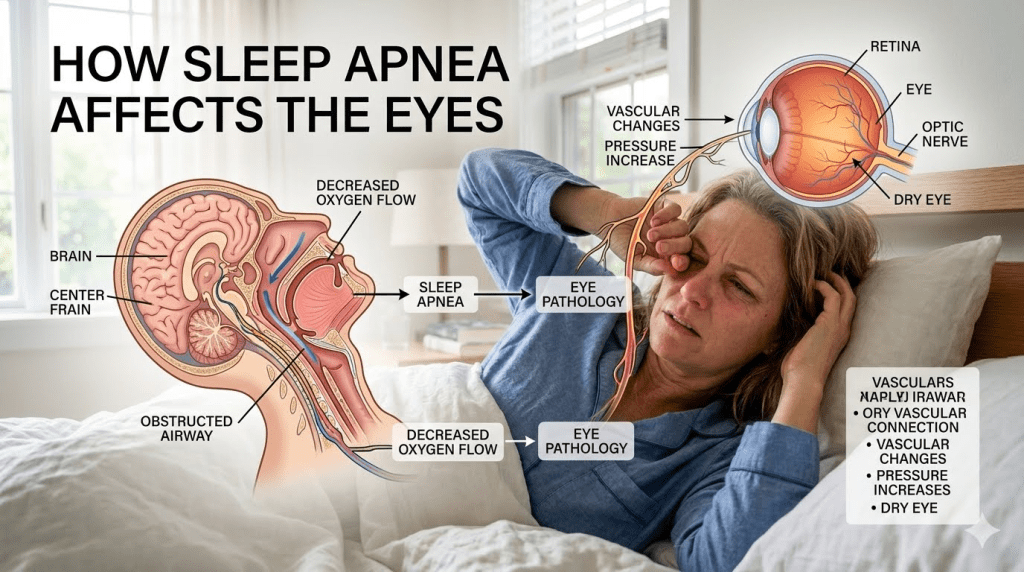
How Sleep Apnea Affects the Eyes
The eye is one of the most blood-rich parts of the body. Anything that lowers oxygen or raises pressure shows up here first. Below are the main ways sleep apnea reaches the eye.
1. Low Oxygen at Night
Each apnea event drops blood oxygen for a short window. The retina and optic nerve depend on a steady oxygen supply. When oxygen dips again and again through the night, the small vessels in the eye take repeated hits. Over months and years, this can affect the way the eye works in the morning and beyond.
2. Blood Pressure Swings
Sleep apnea pushes blood pressure up during the night. Each breathing pause triggers a small surge. Higher pressure means more strain on tiny eye vessels. Read more on the link in our piece on can sleep apnea cause high blood pressure.
3. Inflammation
Repeated drops in oxygen create inflammation across the body. The eye is not protected from this. Inflammation can worsen dry eye, swelling, and small blood vessel problems.
4. Mechanical Issues from Mouth Breathing
People with apnea often sleep with the mouth open. Air flow shifts and the eyelids may not close as tightly. Air can move across the surface of the eye through the night, drying it out. This is part of why many patients wake with red, gritty, or sore eyes.
Eye Problems That Have Been Linked to Sleep Apnea
These are conditions an eye doctor may bring up if sleep apnea is on the table. This is general health information, not a diagnosis.
Dry Eye
One of the most common complaints. Patients wake with eyes that feel sandy, stuck, or burning. Mouth breathing, partial eyelid closure, and inflammation all play a role. Eye drops can help for a while, but the underlying breathing pattern often keeps the problem alive.
Floppy Eyelid Syndrome
The upper eyelid becomes loose and turns inside out easily, especially against a pillow. People with this often wake with red, irritated, or sticky eyes on one side. Floppy eyelid syndrome is strongly linked to obstructive sleep apnea, especially in adults who sleep on the same side every night.
Glaucoma
Glaucoma is a group of conditions that damage the optic nerve. Studies have found higher rates of certain forms of glaucoma in people with sleep apnea. The thinking is that low oxygen and blood pressure swings both affect blood flow to the optic nerve. Anyone with glaucoma who also snores should mention it to their eye doctor.
Non-Arteritic Anterior Ischemic Optic Neuropathy
This is a sudden loss of vision in one eye caused by reduced blood flow to the optic nerve. It is rare, but research has tied it to sleep apnea. It often shows up after waking, which is one of the clues that points to the overnight cause.
Papilledema and Higher Pressure Around the Optic Nerve
Some patients with severe untreated apnea show signs of pressure buildup that affects the optic nerve. This is more common when other risk factors are present.
Retinal Vein Occlusion
A blockage in a small vein at the back of the eye. People with sleep apnea face a higher risk because of pressure and clotting changes that happen at night.
Diabetic Eye Disease
For people who also have diabetes, sleep apnea can make diabetic retinopathy harder to control. The combination of high blood sugar and low overnight oxygen puts steady stress on the retina.
Eye Twitching and Tiredness
Not a disease, but a real signal. Tired, twitching, heavy eyes in the morning often reflect poor sleep, and sleep apnea is one of the top reasons sleep stays light through the night. Our piece on why I wake up tired covers more on this.
Signs Your Eyes May Be Telling You About Sleep Apnea
Watch for these signs. One on its own is not proof, but a cluster is worth taking to a sleep doctor.
- Eyes that feel dry, gritty, or sticky most mornings
- Red or irritated eyes on the side you sleep on
- Puffy eyelids that take a while to settle each day
- Blurry vision when you first wake up
- Eye twitching that comes and goes
- New or harder-to-control glaucoma
- Waking up with a headache around the eyes or forehead
- Heavy snoring, gasping, or witnessed breathing pauses
- Daytime tiredness even after a full night in bed
If two or more sound familiar, our do I have sleep apnea quiz and is it worth getting tested for sleep apnea are good next reads. According to the National Heart, Lung, and Blood Institute, untreated sleep apnea is tied to a range of health concerns across the body, which is why early testing matters.
How Treating Sleep Apnea May Support Eye Health
This article does not promise cures. What research and clinical experience do support is this: when overnight breathing steadies and oxygen levels stay normal, the body has fewer reasons to stress the eyes. Patients often notice less morning dryness, fewer red eyes, and a calmer feeling in the lids within the first weeks of steady treatment. Long-term, the goal is to protect blood vessels, the optic nerve, and the retina from the slow damage of low oxygen and high pressure.
Dr. Avinesh Bhar and the SLIIIP team work alongside eye doctors when needed. A home sleep test can show how often pauses happen, how deep oxygen drops go, and how heart rate responds. From there, a plan is built around your life. You can read more on our pages for home sleep apnea testing and how to prepare for a home sleep study.
Simple Habits That May Help Eyes and Sleep at the Same Time
These are lifestyle steps, not medical treatments. They work best beside a real evaluation.
- Keep a steady sleep and wake time, even on weekends.
- Sleep on your side rather than your back when possible.
- Keep the bedroom cool and use a humidifier in dry air.
- Limit alcohol in the two to three hours before bed.
- Cut caffeine after early afternoon.
- Use clean, hypoallergenic pillowcases and wash them often.
- Manage allergies, since congestion worsens both apnea and dry eye.
- Take screen breaks through the day so the eyes can rest.
- Drink water steadily so the eye surface stays hydrated.
- Get tested for sleep apnea if snoring is loud or breaks happen.
Watch: Your Brain with Sleep Apnea
When to See a Doctor
Reach out to a doctor if any of these fit your life.
- Eye symptoms keep coming back after eye drops or eye care.
- You snore loudly or someone has seen you stop breathing.
- You wake up with morning headaches around the eyes.
- You have glaucoma, diabetes, or high blood pressure.
- You feel tired all day even after a full night in bed.
- Your vision feels different in the morning than later in the day.
According to the Centers for Disease Control and Prevention, poor sleep is tied to many long-term health concerns, which is why steady care from a sleep doctor pays off.
What a SLIIIP Visit Looks Like
You book a virtual visit. You talk with a board-certified sleep physician from home. If a sleep study is needed, a small home device is shipped to your door. You wear it for one or two nights, send it back, and review results on a follow-up video visit. Everything happens around your life, not a lab schedule. Meet the team on the SLIIIP physicians page and see the full flow on the how it works page.
At Sliiip, we accept the following insurances:

SLIIIP’s board-certified sleep physicians can do sleep evaluations for sleep apnea. Virtual consultations in all 50 states. Home sleep tests shipped to your door.
20 Common Questions About Sleep Apnea and Eye Problems
1. Can sleep apnea cause eye problems even without snoring?
Yes. Quiet apnea is possible, and eye signs can still appear.
2. Does sleep apnea cause dry eyes?
Mouth breathing and inflammation can both lead to dryness in many patients.
3. Can sleep apnea raise my risk of glaucoma?
Research has linked sleep apnea to higher rates of certain forms of glaucoma.
4. What is floppy eyelid syndrome?
A condition where the upper eyelid is loose and turns inside out easily. It is strongly tied to obstructive sleep apnea.
5. Can untreated apnea harm vision?
Long-term untreated apnea is tied to several conditions that can affect vision.
6. Will treating sleep apnea improve dry eye?
Many patients see less morning dryness once their breathing steadies at night.
7. Can sleep apnea cause sudden vision loss?
Rarely, through a condition called non-arteritic anterior ischemic optic neuropathy.
8. Are eye twitches a sign of sleep apnea?
They can be a sign of poor sleep in general, which apnea often drives.
9. Why do my eyes feel puffy in the morning?
Inflammation, fluid shifts, and shallow sleep can all play a part.
10. Can sleep apnea affect diabetic eye disease?
Yes. Low overnight oxygen can worsen control in people with diabetes.
11. Should I tell my eye doctor I snore?
Yes. It can change the way they look at certain findings.
12. Does a home sleep test help here?
Yes. It can show breathing pauses and oxygen drops from your own bed.
13. Do I need a lab study?
Not always. SLIIIP uses home sleep tests for many patients.
14. Are kids affected too?
Children can have sleep apnea, but pediatric care is its own field.
15. Can side sleeping help?
Side sleeping can ease both apnea events and floppy eyelid irritation.
16. Will a humidifier help?
A humidifier can ease dryness in the eye and the airway.
17. Can losing weight help my eyes?
Steady weight care can reduce apnea events, which can ease eye stress.
18. Are eye drops enough?
Eye drops help symptoms but do not fix overnight breathing problems.
19. How soon will I notice changes?
Some patients see eye changes within weeks of steady treatment.
20. How fast can I see a SLIIIP doctor?
Visits are virtual and often scheduled within days through SLIIIP.com.
Talk to a Sleep Doctor at SLIIIP
If your eyes feel off morning after morning and your nights feel restless, you do not have to keep guessing. A virtual visit with a board-certified sleep physician can show how breathing, sleep, and eye health line up.
SLIIIP’s board-certified sleep physicians can do sleep evaluations for sleep apnea. Virtual consultations in all 50 states. Home sleep tests shipped to your door.
Latest posts
-
Why Can’t I Wake Up Even After Getting Enough Sleep?
Last updated: October 2, 2026. Medically reviewed by Dr. Avinesh Bhar, Board-Certified Sleep Physician, SLIIIP.com. If you can’t wake up after enough sleep, the cause is usually not the number…
-
Why Does My Heart Rate Drop So Low While I Sleep?
Last updated: October 2, 2026. Medically reviewed by Dr. Avinesh Bhar, Board-Certified Sleep Physician, SLIIIP.com. Your heart rate drops low while sleeping mainly because your body needs less work from…
-
Why Are My Naps Never Refreshing?
Last updated: October 2, 2026. Medically reviewed by Dr. Avinesh Bhar, Board-Certified Sleep Physician, SLIIIP.com. Naps that leave you groggy usually come down to how long you sleep, when you…
Get updates
Spam-free subscription, we guarantee. This is just a friendly ping when new content is out.

