👉 Register for Free. How to Diagnose Sleep Apnea Faster in Primary Care – FREE Webinar by Dr. Audrey Wells. – Friday, April 24 at 12 PM ET

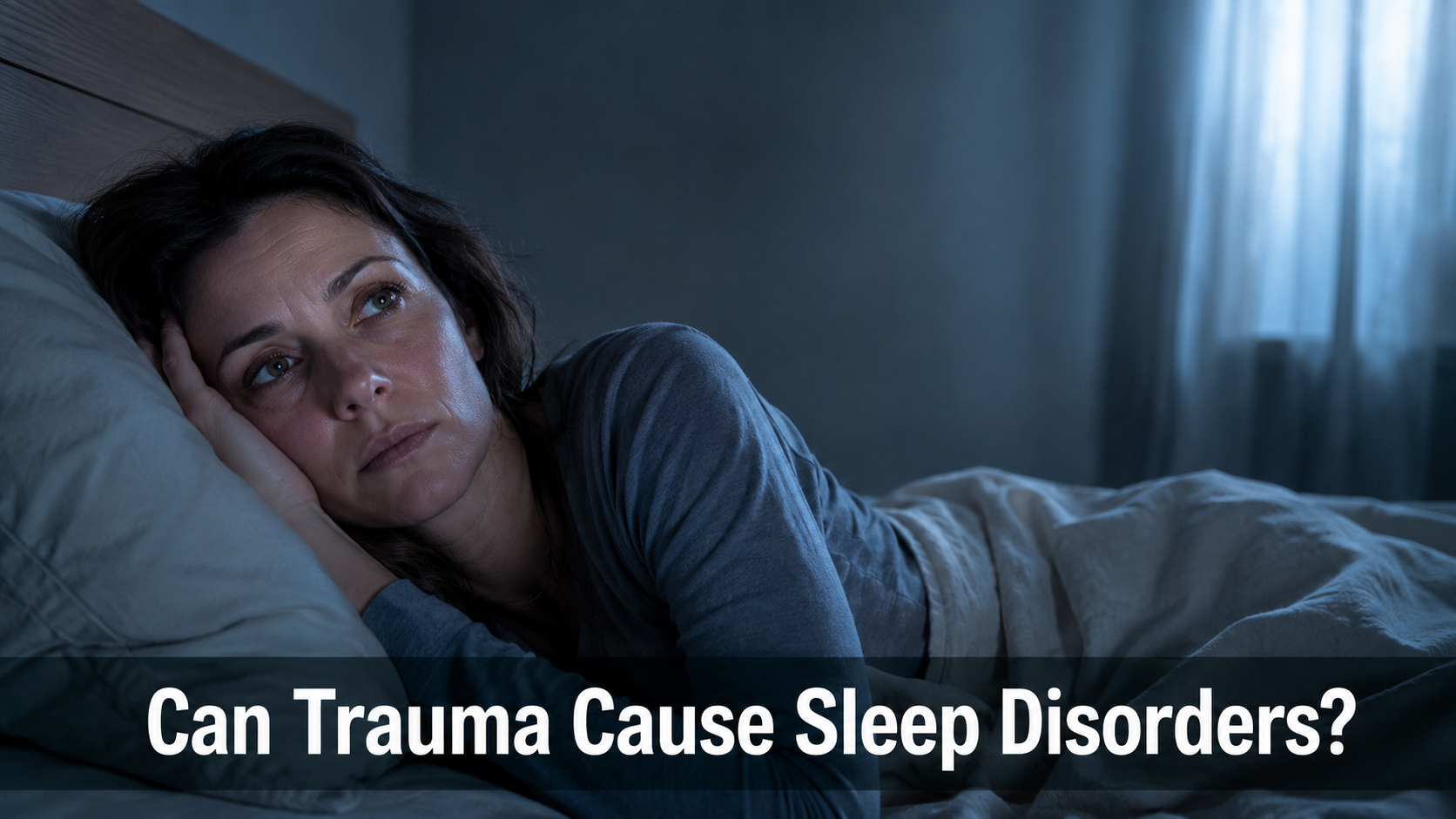
Can Trauma Cause Sleep Disorders?
Trauma and sleep disorders are tightly connected, and according to Dr. Avinesh Bhar, Board-Certified Sleep Physician at SLIIIP.com, the link shows up in patients again and again, even years after the original event has passed. Many people who survive a difficult experience notice their sleep change first, before any other symptom. They lie awake replaying memories, jolt out of dreams in a panic, or feel wired the moment their head hits the pillow.
SLIIIP’s board-certified sleep physicians can do sleep evaluations for sleep apnea. Virtual consultations in all 50 states. Home sleep tests shipped to your door.
How Trauma and Sleep Disorders Connect
Trauma is more than a memory. It is a full-body response that can rewire how the nervous system handles rest. When the brain stays on alert long after the danger is gone, sleep becomes one of the first things to break down.
The body has a built-in stress system. After a frightening or overwhelming event, that system can stay switched on. Heart rate stays high. Cortisol stays high. The brain treats the bedroom like a place where something might happen. Falling asleep starts to feel risky, even when nothing is wrong.
This is why people who survive accidents, abuse, combat, medical emergencies, or major loss often develop sleep problems weeks, months, or even years later. The body remembers, even when the mind tries to move on.
CHECK YOUR SLEEP SYMPTOMS: TAKE THE 2 MINUTE QUIZ
TAKE THE QUIZ

Common Sleep Problems Linked to Trauma
Not every trauma survivor has the same sleep issue. The signs can shift depending on age, history, and the type of event. Some people cannot fall asleep at all. Others fall asleep fast but wake up over and over.
The most common patterns include:
- Trouble falling asleep because the mind will not slow down
- Waking up at the same time each night, often between 2 and 4 a.m.
- Vivid nightmares or recurring dream themes
- Feeling tired during the day even after a full night in bed
- Sudden waking with a racing heart or shortness of breath
- A sense of dread at bedtime
These patterns can fit into known categories, like chronic insomnia or REM-related issues. To learn more about the different forms, see types of insomnia guide.
Why the Brain Will Not Power Down
After trauma, the brain often stays in scanning mode. It looks for threats. It listens for sounds. It checks the door. This is called hyperarousal, and it is one of the biggest reasons trauma survivors cannot fall asleep.
The mind keeps circling back to the same thoughts. People describe it as a noisy brain that will not turn off. If this sounds familiar, you may relate to can’t shut brain off at night.
Hyperarousal does not always feel like fear. Sometimes it feels like restlessness. Sometimes it feels irritable. Sometimes it just feels like being too tired to sleep, which sounds strange but is very real.
Trauma, Nightmares, and REM Sleep
REM sleep is the stage where most dreams happen. After trauma, REM can become disrupted. Nightmares can pull a person out of REM before the brain finishes processing emotion, which can leave a lingering sense of dread the next day.
Some trauma survivors develop a condition where they act out their dreams. This is rare but serious. You can read more about it at REM sleep behavior disorder.
Repeating nightmares are not a sign of weakness. They are a sign that the brain is trying to work through something it never finished processing. Treatment can help reduce both the frequency and the intensity over time.
Childhood Trauma and Adult Sleep
Trauma that happens early in life can shape sleep patterns for decades. Children who grow up in unsafe homes often learn to stay alert, even at night. That alertness can carry into adulthood as light sleep, frequent waking, or a habit of checking the room.
Adults who experienced childhood trauma may not connect their sleep issues to the past at all. They might just say they have always been bad sleepers. A careful sleep evaluation can help separate biological causes from learned patterns and point toward solutions.
When Anxiety, Depression, and Sleep Overlap
Trauma rarely shows up alone. It often travels with anxiety, depression, or both. These conditions feed each other in a loop. Poor sleep makes the mood worse, and a worse mood makes sleep harder.
If you wake up dreading the day, you might want to read why do I wake up anxious. If your low mood feels heaviest at night, sleep apnea and depression explains how disrupted sleep can deepen depressive symptoms. The links between mood, sleep, and trauma are real, and they often need to be addressed together.
For broader support, see effective sleep solutions for mental health.
Can Trauma Cause Sleep Apnea?
Trauma does not directly cause sleep apnea, but it can make symptoms worse and harder to treat. Stress and trauma can shift breathing patterns, weight, and even jaw tension, all of which can play a role in airway problems during sleep.
Some trauma survivors also have a hard time wearing a CPAP mask because it feels confining. This is a known issue, and there are workarounds, including oral appliance therapy and gradual desensitization. A board-certified sleep physician can help you find a path that works.
According to the National Heart, Lung, and Blood Institute, sleep apnea affects breathing during sleep and can cause loud snoring, gasping, and daytime tiredness. Identifying it is the first step toward feeling better.
Watch: Sleep Apnea, Explained.
Healthy Sleep Habits That Support Recovery
Lifestyle changes will not erase trauma, but they can lower the noise around it. Consistent habits give the nervous system something steady to lean on, which makes deeper rest more possible.
Helpful habits include:
- A wind-down routine that starts an hour before bed
- A dim, cool, and quiet bedroom
- Limited caffeine after noon
- Gentle movement during the day, like walking or stretching
- A consistent wake-up time, even on weekends
- Time in natural morning light
- Journaling or breathwork to ease racing thoughts
The Centers for Disease Control and Prevention notes that adults need at least seven hours of sleep per night for the best health and well-being. Building habits that protect those hours can make a real difference over time.
For more, see how to fix insomnia naturally.
When Talking Helps More Than Pills
Cognitive behavioral therapy for insomnia, often called CBT-I, has strong evidence for helping people retrain their sleep without medication. CBT-I works on the thoughts, behaviors, and routines that keep poor sleep stuck in place.
For people with trauma, CBT-I can be paired with trauma-focused therapy for even better results. Read more at cognitive behavior therapy CBT-I for sleep disorders and why CBT-I works when medications don’t.
Medication can have a place, but it rarely solves the root issue alone. A full evaluation can help guide what comes first.
How SLIIIP Can Help
SLIIIP.com offers virtual sleep consultations in all 50 states. Patients can meet with a board-certified sleep physician from home, complete a home sleep test if needed, and get a personalized plan.
Dr. Avinesh Bhar and the SLIIIP team take the time to ask the questions that matter, including the ones about stress, anxiety, and trauma history that often get skipped in quick visits. Care is private, structured, and built around what the patient actually needs.
For people who suspect their sleep issues go deeper than surface habits, a sleep evaluation can be the turning point.
At Sliiip, we accept the following insurances:

SLIIIP’s board-certified sleep physicians can do sleep evaluations for sleep apnea. Virtual consultations in all 50 states. Home sleep tests shipped to your door.
Frequently Asked Questions
- Can trauma cause sleep disorders? Yes. Trauma can lead to insomnia, nightmares, fragmented sleep, and other patterns that meet the criteria for a sleep disorder.
- What sleep problems are most common after trauma? Trouble falling asleep, frequent waking, nightmares, early morning waking, and feeling tired despite hours in bed.
- Can PTSD cause chronic insomnia? Yes. Insomnia is one of the most common symptoms of post-traumatic stress.
- Why do I have nightmares after a stressful event? The brain replays unresolved emotional content during REM sleep, which can produce vivid or distressing dreams.
- Can childhood trauma affect adult sleep? Yes. Patterns of light sleep or hyperalertness learned in childhood can carry into adulthood.
- How long do sleep problems last after trauma? It varies. Some people improve in weeks. Others have symptoms for years without support.
- Can trauma cause sleep apnea? Trauma does not directly cause sleep apnea, but it can worsen symptoms and complicate treatment.
- What is trauma-related insomnia? It is insomnia that is triggered or worsened by a traumatic event and the body’s stress response.
- Why do I wake up panicked at night? This can be linked to nightmares, hyperarousal, or breathing issues. See why do I wake up with my heart racing.
- Can therapy help trauma-related sleep issues? Yes. CBT-I and trauma-focused therapy have strong evidence for helping with sleep recovery.
- Does trauma change the brain in ways that affect sleep? Trauma can shift activity in the stress and arousal systems of the brain, which affects sleep timing and depth.
- Can ongoing stress mimic trauma sleep issues? Yes. High chronic stress can produce many of the same patterns, even without a single triggering event.
- Why do I feel hyperalert at bedtime? The nervous system may be stuck in a protective mode that makes rest feel unsafe.
- Can trauma disturb REM sleep? Yes. REM is often fragmented in trauma survivors, which can affect mood and memory.
- How does PTSD affect deep sleep? Deep sleep can be reduced or interrupted, leaving people feeling unrefreshed.
- Can meditation or yoga help trauma-related sleep issues? Gentle practices can calm the nervous system and support better sleep, especially when added to a fuller plan.
- Are sleep issues a sign of unresolved trauma? They can be. Persistent sleep problems are worth exploring with a professional.
- Can trauma cause sleepwalking or other parasomnias? Stress and trauma can increase the risk of parasomnias in some people.
- What is the best treatment for trauma-related sleep issues? A combined approach, including CBT-I, trauma therapy, and medical evaluation, often works best.
- When should I see a sleep specialist about trauma-related sleep problems? If sleep issues last more than a few weeks, affect daily life, or come with breathing concerns, a sleep evaluation is a smart next step.
Ready to Sleep Better?
Trauma and sleep disorders do not have to define your nights. A clear evaluation can show what is happening and what to do next, without judgment or rush.
SLIIIP’s board-certified sleep physicians can do sleep evaluations for sleep apnea. Virtual consultations in all 50 states. Home sleep tests shipped to your door.
Thank you for reading this article.
Latest posts
-
Why Can’t I Wake Up Even After Getting Enough Sleep?
Last updated: October 2, 2026. Medically reviewed by Dr. Avinesh Bhar, Board-Certified Sleep Physician, SLIIIP.com. If you can’t wake up after enough sleep, the cause is usually not the number…
-
Why Does My Heart Rate Drop So Low While I Sleep?
Last updated: October 2, 2026. Medically reviewed by Dr. Avinesh Bhar, Board-Certified Sleep Physician, SLIIIP.com. Your heart rate drops low while sleeping mainly because your body needs less work from…
-
Why Are My Naps Never Refreshing?
Last updated: October 2, 2026. Medically reviewed by Dr. Avinesh Bhar, Board-Certified Sleep Physician, SLIIIP.com. Naps that leave you groggy usually come down to how long you sleep, when you…
Get updates
Spam-free subscription, we guarantee. This is just a friendly ping when new content is out.

