👉 Register for Free. How to Diagnose Sleep Apnea Faster in Primary Care – FREE Webinar by Dr. Audrey Wells. – Friday, April 24 at 12 PM ET

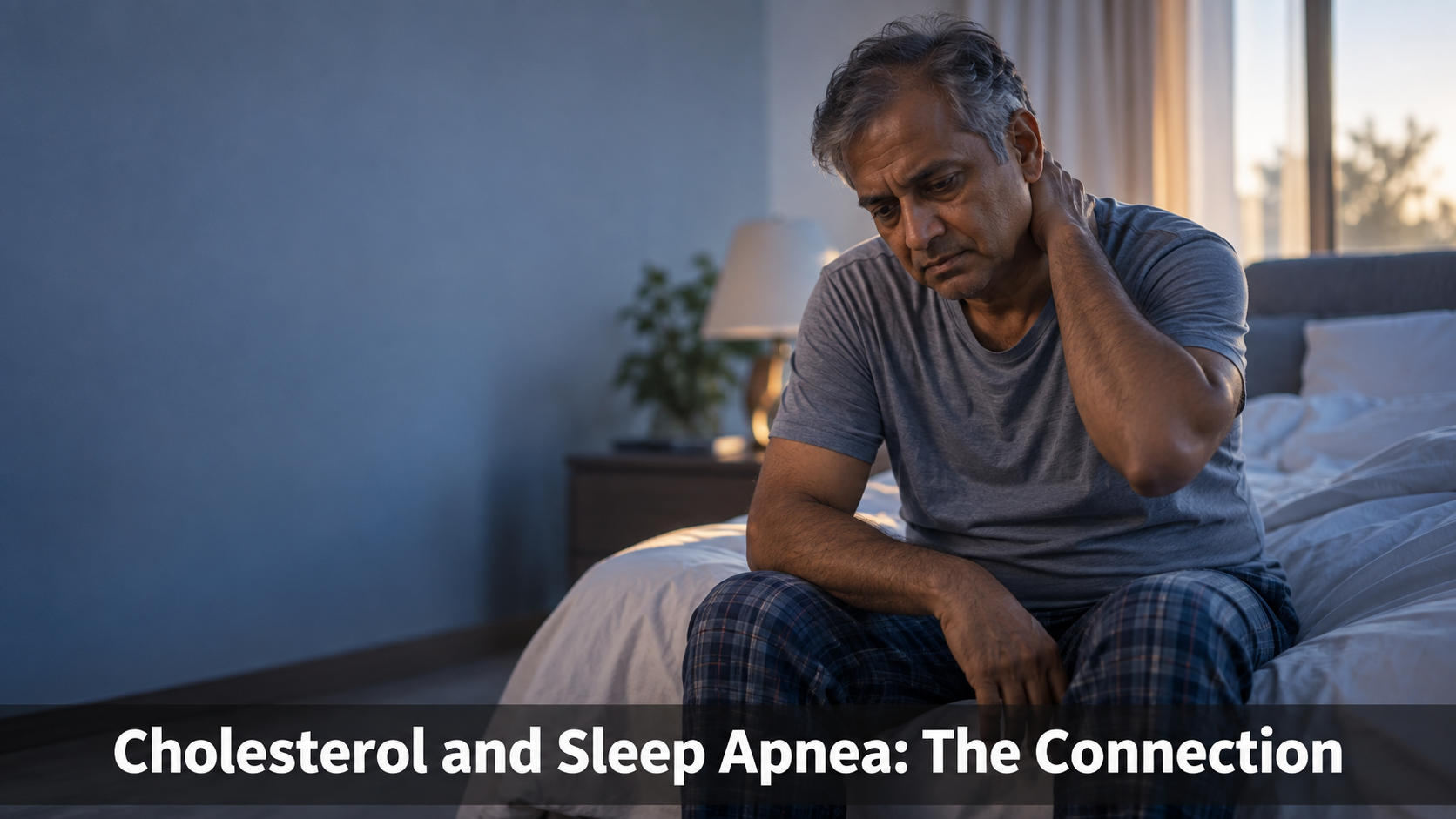
Cholesterol Screening and Sleep Apnea: What the Connection Means for You
Last updated: September 6, 2026. Medically reviewed by Dr. Avinesh Bhar, Board-Certified Sleep Physician, SLIIIP.com.
Cholesterol screening and sleep apnea are not usually discussed in the same appointment, but they often should be. Dr. Avinesh Bhar, Board-Certified Sleep Physician at SLIIIP.com, regularly sees patients whose high cholesterol and undiagnosed sleep apnea developed side by side without anyone connecting the two. Sleep apnea is independently associated with unhealthy cholesterol levels, separate from weight or diet. SLIIIP.com treats adults through virtual sleep evaluations, and Dr. Bhar explains why a sleep study is sometimes the missing piece in a cholesterol conversation.
SLIIIP’s board-certified sleep physicians can do sleep evaluations for sleep apnea. Virtual consultations in all 50 states. Home sleep tests shipped to your door.
How Often Should You Get a Cholesterol Screening?
Most healthy adults should have their cholesterol checked once every four to six years starting at age twenty, according to the CDC. People with risk factors such as diabetes, obesity, or a family history of heart disease often need testing more often, sometimes every one to two years.
A standard test, called a lipid panel, measures total cholesterol, LDL, HDL, and triglycerides from a blood sample. High cholesterol usually causes no symptoms, which is exactly why routine screening matters.
CHECK YOUR SLEEP SYMPTOMS: TAKE THE 2 MINUTE QUIZ
TAKE THE QUIZ
Can Sleep Apnea Cause High Cholesterol?
Yes, research points in that direction. A large study found that nighttime drops in oxygen from sleep apnea are independently linked to unhealthy cholesterol levels, separate from weight, age, or other risk factors, according to research published on PubMed.
Repeated drops in oxygen during sleep appear to change how the liver processes fat, which can raise triglycerides and shift the balance between LDL and HDL cholesterol.
The effect has been observed in people across a range of body weights, which is part of why researchers describe it as an independent association rather than something fully explained by obesity. Someone with a lean build who eats a balanced diet can still develop an unfavorable lipid pattern if sleep apnea is going untreated for years.
Why Sleep Apnea and Cholesterol Show Up Together
The connection comes down to how the body responds to repeated breathing pauses during sleep. Each time breathing stops, oxygen levels drop and then rebound once breathing resumes.
This repeated stress pattern, called intermittent hypoxia, can increase fat production in the liver and interfere with how the body clears fat from the bloodstream. Over months and years, this pattern can push cholesterol numbers in the wrong direction even in people who eat well and exercise regularly. For more on the broader metabolic picture, see our guide on sleep apnea and weight gain.
What About Triglycerides Specifically?
Triglycerides are a type of fat in the blood measured on the same lipid panel as cholesterol, and they respond strongly to the oxygen swings caused by sleep apnea. Elevated triglycerides are one of the most consistent lipid changes seen in people with untreated sleep apnea, often more pronounced than the change in LDL or HDL alone.
High triglycerides combined with sleep apnea can compound cardiovascular risk, which is one reason a lipid panel that looks only at total cholesterol may miss part of the picture. Asking your doctor for the full breakdown, not just a single number, gives a clearer view of what is happening.
Does Treating Sleep Apnea Improve Cholesterol Levels?
Treating sleep apnea addresses one contributor to unhealthy cholesterol, though it is not a replacement for standard cholesterol care. Some patients see modest improvements in their lipid panel after starting CPAP therapy or another sleep apnea treatment, though results vary by individual.
Sleep apnea treatment works best as part of a broader plan that also includes diet, activity, and any cholesterol medication your doctor recommends.
Watch: Dr. Wells Explains Can Obesity Cause Sleep Apnea?
Who Should Ask About Both Cholesterol and Sleep Apnea?
Certain patterns make it worth raising both topics at the same visit. If you have unhealthy cholesterol numbers that do not fully explain themselves through diet or family history, sleep apnea is worth ruling out.
Loud snoring, witnessed breathing pauses, morning headaches, and daytime fatigue alongside high cholesterol are a combination worth mentioning to a sleep physician. This is especially true for people who are not significantly overweight, since sleep apnea can affect cholesterol independent of body weight.
When to See a Doctor
See your primary care doctor for routine cholesterol screening on the schedule outlined above, and sooner if you have chest pain, shortness of breath, or a strong family history of early heart disease.
Dr. Avinesh Bhar, Board-Certified Sleep Physician at SLIIIP.com, recommends a sleep evaluation for anyone whose cholesterol stays elevated despite treatment, particularly if snoring or unrefreshing sleep is also present. A home sleep test can determine whether disrupted breathing is part of the picture.
At Sliiip, we accept the following insurances:

SLIIIP’s board-certified sleep physicians can do sleep evaluations for sleep apnea. Virtual consultations in all 50 states. Home sleep tests shipped to your door.
Frequently Asked Questions About Cholesterol and Sleep Apnea
Can sleep apnea cause high cholesterol?
Yes, research links nighttime oxygen drops from sleep apnea to unhealthy cholesterol levels, independent of weight.
How often should adults get cholesterol screened?
Most healthy adults should get screened every four to six years starting at age twenty, per CDC guidance.
What does a cholesterol test measure?
A lipid panel measures total cholesterol, LDL, HDL, and triglycerides from a blood sample.
Does treating sleep apnea lower cholesterol?
Some patients see modest improvement after starting CPAP therapy, though it is not a replacement for standard cholesterol treatment.
Can sleep apnea affect cholesterol even at a healthy weight?
Yes, sleep apnea has been linked to unhealthy cholesterol independent of body weight in research studies.
What is intermittent hypoxia?
It is the repeated pattern of oxygen dropping and then rebounding that occurs with each breathing pause in sleep apnea.
Should I get a sleep test if my cholesterol is high?
If your cholesterol stays elevated despite treatment, or you also snore or feel tired during the day, a sleep evaluation is worth considering.
What are normal LDL and HDL levels?
A healthcare provider interprets your specific numbers, but general guidance targets lower LDL and higher HDL for heart health.
Can high cholesterol happen without any symptoms?
Yes, high cholesterol usually causes no symptoms, which is why routine screening matters.
Does snoring have anything to do with cholesterol?
Snoring can be a sign of sleep apnea, which is independently associated with unhealthy cholesterol levels.
How does sleep apnea affect the liver and fat metabolism?
Repeated oxygen drops during sleep apnea may increase fat production in the liver and reduce how efficiently the body clears fat from the blood.
Can children need cholesterol screening too?
Yes, guidelines recommend a first cholesterol check between ages nine and eleven, and again in the late teens.
Is a fasting blood test required for cholesterol screening?
Some cholesterol tests require fasting, while newer direct LDL tests do not. Your provider will advise which applies to you.
Does CPAP therapy help with heart health beyond cholesterol?
CPAP is associated with broader cardiovascular benefits, including effects on blood pressure, in addition to any impact on cholesterol.
How soon after starting sleep apnea treatment might cholesterol improve?
Changes vary by individual and are typically assessed over several months of consistent treatment.
Can family history override the benefit of treating sleep apnea?
Family history remains an independent risk factor, so treating sleep apnea is one part of a broader cholesterol management plan.
What lifestyle changes help both sleep apnea and cholesterol?
Regular exercise, a diet lower in saturated fat, and maintaining a healthy weight can support both conditions.
Can untreated sleep apnea affect cholesterol medication effectiveness?
This has not been clearly established, but unmanaged sleep apnea adds ongoing metabolic stress that can work against overall heart health goals.
Who is at higher risk for both conditions together?
Adults with obesity, a family history of heart disease, or metabolic syndrome are at higher risk for both unhealthy cholesterol and sleep apnea.
How can I find out if sleep apnea is affecting my health?
A home sleep test reviewed by a board-certified sleep physician is a direct way to find out whether disrupted breathing is part of your health picture.
SLIIIP’s board-certified sleep physicians can do sleep evaluations for sleep apnea. Virtual consultations in all 50 states. Home sleep tests shipped to your door.
Latest posts
-
Why Are My Naps Never Refreshing?
Last updated: October 2, 2026. Medically reviewed by Dr. Avinesh Bhar, Board-Certified Sleep Physician, SLIIIP.com. Naps that leave you groggy usually come down to how long you sleep, when you…
-
Is Sleeping Too Much a Sleep Disorder?
Last updated: October 2, 2026. Medically reviewed by Dr. Avinesh Bhar, Board-Certified Sleep Physician, SLIIIP.com. Sleeping too much is not always a sleep disorder, but it can be a sign…
-
Why Does My Insomnia Get Worse After Stopping Sleep Medication?
Last updated: October 2, 2026. Medically reviewed by Dr. Avinesh Bhar, Board-Certified Sleep Physician, SLIIIP.com. Insomnia can get worse after stopping sleep medication for three main reasons. They are rebound…
Get updates
Spam-free subscription, we guarantee. This is just a friendly ping when new content is out.

