👉 Register for Free. How to Diagnose Sleep Apnea Faster in Primary Care – FREE Webinar by Dr. Audrey Wells. – Friday, April 24 at 12 PM ET

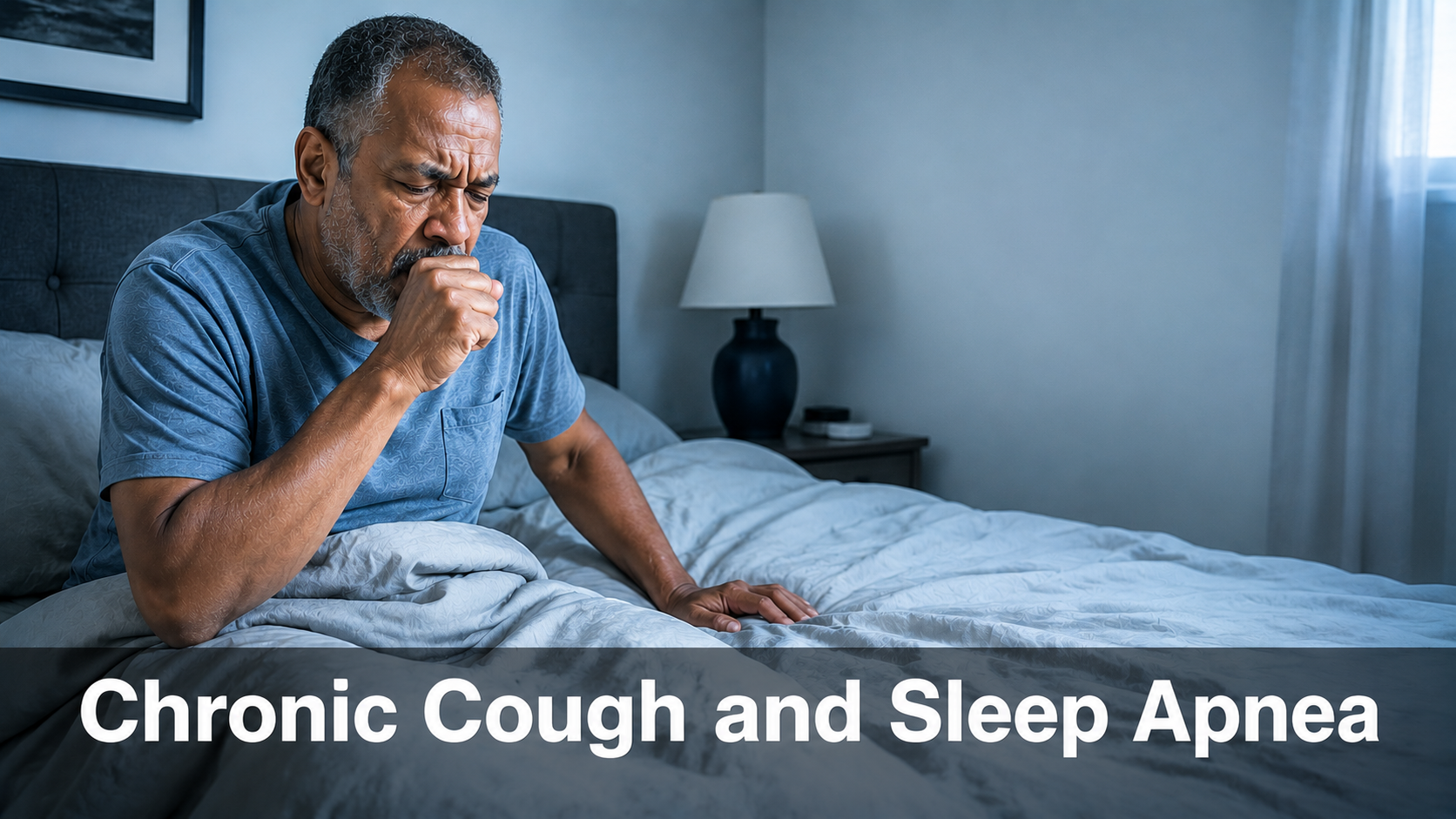
The Connection Between Chronic Cough and Obstructive Sleep Apnea
A chronic cough that drags on for weeks can carry a surprising sleep angle, says Dr. Avinesh Bhar, Board-Certified Sleep Physician at SLIIIP.com, because research links some stubborn coughs to obstructive sleep apnea and the airway irritation it can stir up overnight.
Most people never connect a daytime cough with how they breathe while asleep. Yet the two can be tangled together in ways that surprise patients and doctors alike. Understanding the link helps you and your care team look in the right places instead of chasing the cough alone.
SLIIIP’s board-certified sleep physicians can do sleep evaluations for sleep apnea. Virtual consultations in all 50 states. Home sleep tests shipped to your door.
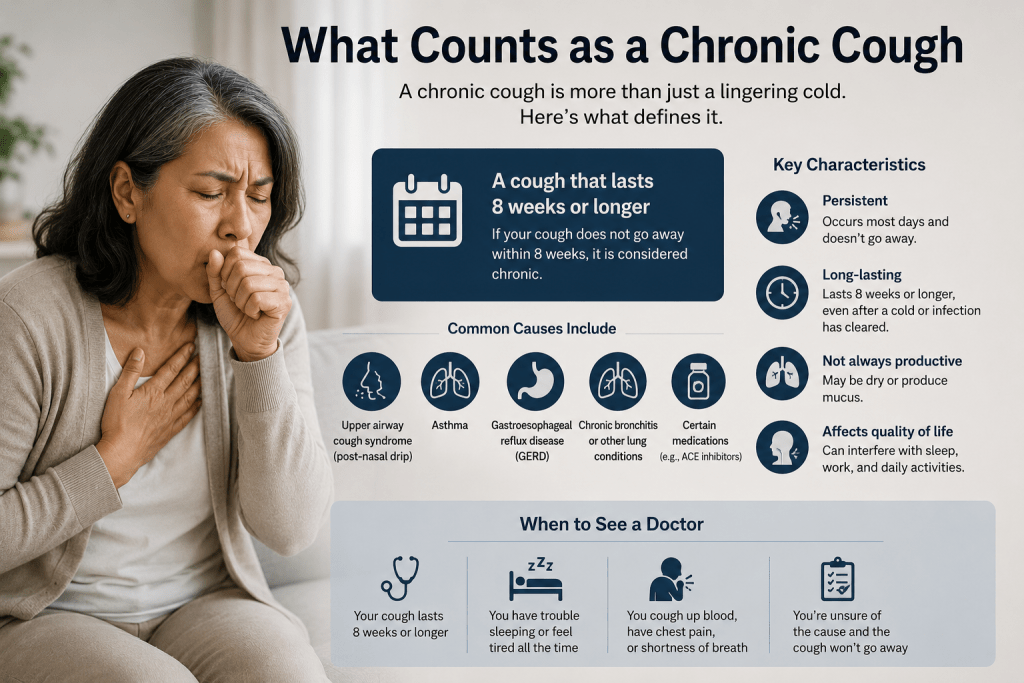
What Counts as a Chronic Cough
A cough that comes with a cold and clears in a week or two is acute. A chronic cough is one that lingers for about eight weeks or longer in adults. It is one of the most common reasons people see a doctor, and it has a long list of possible causes.
The usual suspects include asthma, acid reflux, postnasal drip from allergies or sinus issues, certain blood pressure medicines, and smoking. Because the list is so long, a lingering cough always deserves a proper medical workup rather than guesswork.
Obstructive sleep apnea is a less obvious entry on that list, but a growing body of research suggests it belongs in the conversation. Our overview of what sleep apnea is covers the basics of the condition.
CHECK YOUR SLEEP SYMPTOMS: TAKE THE 2 MINUTE QUIZ
TAKE THE QUIZ
How Sleep Apnea and a Cough Can Be Linked
Researchers have noticed that a chronic cough and obstructive sleep apnea often show up in the same people more than chance alone would explain. The link is not fully settled, but a few plausible threads stand out.
The Reflux Connection
This is the thread doctors point to most. Sleep apnea is closely tied to acid reflux at night. The pressure changes in the chest during breathing pauses can pull stomach acid upward toward the throat.
Acid that reaches the throat and voice box is a well known trigger for a lingering cough. So apnea may feed a cough indirectly, through reflux, even when heartburn is mild or silent.
Airway Inflammation
Repeated airway collapse and reopening through the night can irritate and inflame the upper airway. An inflamed, sensitive airway can be quicker to trigger a cough, both at night and during the day.
Postnasal Drip and Congestion
Many people with sleep apnea also deal with nasal congestion and a drip at the back of the throat. That drip is itself a classic cause of a lingering cough, so the two problems can stack.
A Two Way Street
The relationship may run both ways. A cough disturbs sleep, and disturbed sleep can worsen how the airway behaves. It can become a loop where each problem nudges the other along.
Why This Connection Gets Missed
A daytime cough and nighttime breathing feel like separate worlds, so they often get treated by separate doctors who never compare notes. A person may bounce between specialists for a cough while their sleep apnea sits undiagnosed in the background.
There is another reason. The reflux behind an apnea linked cough can be silent, with no classic heartburn to point the way. Without that clue, the sleep angle is easy to overlook. Our guide to obstructive sleep apnea warning signs can help you spot the pattern.
Signs Your Cough Might Have a Sleep Angle
A cough that lingers has many causes, so these clues do not prove anything on their own. They simply suggest the sleep side is worth checking.
You snore loudly most nights or have been told you stop breathing in your sleep.
You wake up gasping or choking, covered in our piece on waking up gasping for air.
Your cough is worse at night or first thing in the morning.
You feel unrefreshed despite a full night in bed, with daytime sleepiness.
You have silent reflux, a sour taste, or frequent throat clearing.
Your cough has resisted the usual treatments for asthma, allergies, and reflux.
If several of these ring true, it is reasonable to ask about a sleep evaluation as part of your wider workup.
Watch: Sleep apnea sounds
Getting Checked the Right Way
Here is the most important point in this whole article. A persistent cough needs a full medical evaluation, and a sleep test is only one part of that. Your own doctor or a pulmonologist should lead the workup to rule out asthma, reflux, medication effects, infection, and other causes that need their own care.
A sleep evaluation answers a separate, specific question. Does your breathing pause during sleep, how often, and how far does your oxygen dip. A home sleep test gathers this data, and a sleep physician reads it. Our guide on how to get a home sleep test walks through the steps.
If testing shows obstructive sleep apnea, treating it may improve the cough for some people, often by easing the reflux and airway irritation behind it. That is a possible benefit, not a promise, and it works best alongside the cough care your other doctors provide. To map out the sleep side, Dr. Avinesh Bhar and the SLIIIP team review your results and history, then explain what they mean for you.
Everyday Habits That Support Calmer Airways
Daily habits will not replace the medical workup your cough needs. They simply give your airways a gentler baseline. Always follow your own physicians’ guidance first.
Raise the head of your bed a little if reflux is part of the picture, which can keep acid down at night.
Avoid late heavy meals, alcohol, and known reflux triggers in the evening.
Stay on top of nasal allergies and congestion during the day, since a drip can feed a cough.
Keep a healthy weight when you can, as extra tissue around the airway affects apnea and reflux alike.
Avoid smoke and other airway irritants, and keep your sleep schedule steady so your body recovers.
For trusted background on sleep health, the Centers for Disease Control and Prevention and the National Heart, Lung, and Blood Institute both offer clear public guides.
At Sliiip, we accept the following insurances:

SLIIIP’s board-certified sleep physicians can do sleep evaluations for sleep apnea. Virtual consultations in all 50 states. Home sleep tests shipped to your door.
Frequently Asked Questions
Can sleep apnea cause a chronic cough?
Research links the two, though sleep apnea is rarely the sole cause. It may feed a cough indirectly through nighttime reflux and airway irritation. A persistent cough still needs a full workup to check every possible cause.
Why is my cough worse at night?
Lying flat can let acid rise toward the throat, and postnasal drip pools when you are down. Both can trigger coughing at night. If you also snore or gasp, the sleep angle may be worth checking.
What is the link between reflux and sleep apnea?
Breathing pauses change the pressure in the chest, which can pull stomach acid upward at night. Acid reaching the throat is a known cough trigger, which is one way apnea and cough connect.
How long does a cough have to last to be chronic?
In adults, a cough that lasts about eight weeks or longer is considered chronic. At that point it deserves a medical workup rather than waiting it out.
Will CPAP stop my cough?
It might help some people if apnea and its reflux are driving the cough, but it is not guaranteed. CPAP treats the apnea, and any cough still needs its own evaluation and care.
Can silent reflux cause a cough without heartburn?
Yes. Reflux can irritate the throat and trigger a cough even when there is no classic heartburn. This silent pattern is part of why the sleep link gets missed.
Should I see a sleep doctor or a lung doctor for a cough?
Start with your own doctor or a pulmonologist to lead the cough workup. A sleep physician can check the apnea piece if there are signs pointing that way. The two work together.
Can a lingering cough disturb my sleep?
Yes. Coughing through the night breaks up sleep, and poor sleep can worsen how the airway behaves. It can become a loop where each problem feeds the other.
Does snoring relate to a lingering cough?
Loud snoring can be a sign of sleep apnea, which is linked with reflux and airway irritation that may drive a cough. Snoring plus a stubborn cough is worth raising with a doctor.
Can allergies and postnasal drip cause both problems?
They can. A drip at the back of the throat is a classic cough cause, and nasal congestion can also worsen apnea. Managing allergies may ease both.
Is a chronic cough dangerous?
A lingering cough can have minor or serious causes, which is why a proper workup matters. Do not assume it is harmless or that it is only about sleep. See your doctor to find the cause.
Can losing weight help with cough and apnea?
It can. Extra weight affects both apnea and reflux, so a healthy weight may ease both. This works alongside medical care, not instead of it.
Why does my throat feel irritated in the morning?
Nighttime reflux, dry mouth from snoring, or postnasal drip can all leave the throat raw by morning. If this comes with snoring, the sleep angle is worth a look.
Can a home sleep test help find the cause of my cough?
A home sleep test checks for apnea, which is one possible piece of a cough puzzle. It does not replace the broader workup your cough needs.
Should I stop my blood pressure medicine if it causes a cough?
No. Some blood pressure medicines can cause a cough, but never stop a prescription on your own. Talk to your prescribing doctor, who can review whether a change makes sense.
Does treating reflux help an apnea linked cough?
It can, since reflux is a leading thread between apnea and cough. Reflux care from your doctor, alongside apnea treatment when present, gives the best chance of relief.
Can children have a cough linked to sleep apnea?
Children can have both, and any persistent cough in a child should be guided by their pediatrician. The evaluation belongs with their own care team.
Why has my cough resisted all the usual treatments?
When standard care for asthma, allergies, and reflux does not work, doctors look for less obvious causes. Undiagnosed sleep apnea is sometimes one of them, which is why a sleep check can help.
How do I bring up the sleep angle with my doctor?
Note your nighttime symptoms, snoring, and when the cough is worst, then share that record. It helps your doctor decide whether a sleep evaluation belongs in your workup.
Where do I start if I have both a cough and snoring?
Keep your cough workup with your own doctor, and book a virtual visit with a sleep physician to check the apnea side. The two evaluations together give the fullest picture.
SLIIIP’s board-certified sleep physicians can do sleep evaluations for sleep apnea. Virtual consultations in all 50 states. Home sleep tests shipped to your door.
Latest posts
-
Why Can’t I Wake Up Even After Getting Enough Sleep?
Last updated: October 2, 2026. Medically reviewed by Dr. Avinesh Bhar, Board-Certified Sleep Physician, SLIIIP.com. If you can’t wake up after enough sleep, the cause is usually not the number…
-
Why Does My Heart Rate Drop So Low While I Sleep?
Last updated: October 2, 2026. Medically reviewed by Dr. Avinesh Bhar, Board-Certified Sleep Physician, SLIIIP.com. Your heart rate drops low while sleeping mainly because your body needs less work from…
-
Why Are My Naps Never Refreshing?
Last updated: October 2, 2026. Medically reviewed by Dr. Avinesh Bhar, Board-Certified Sleep Physician, SLIIIP.com. Naps that leave you groggy usually come down to how long you sleep, when you…
Get updates
Spam-free subscription, we guarantee. This is just a friendly ping when new content is out.

