👉 Register for Free. How to Diagnose Sleep Apnea Faster in Primary Care – FREE Webinar by Dr. Audrey Wells. – Friday, April 24 at 12 PM ET

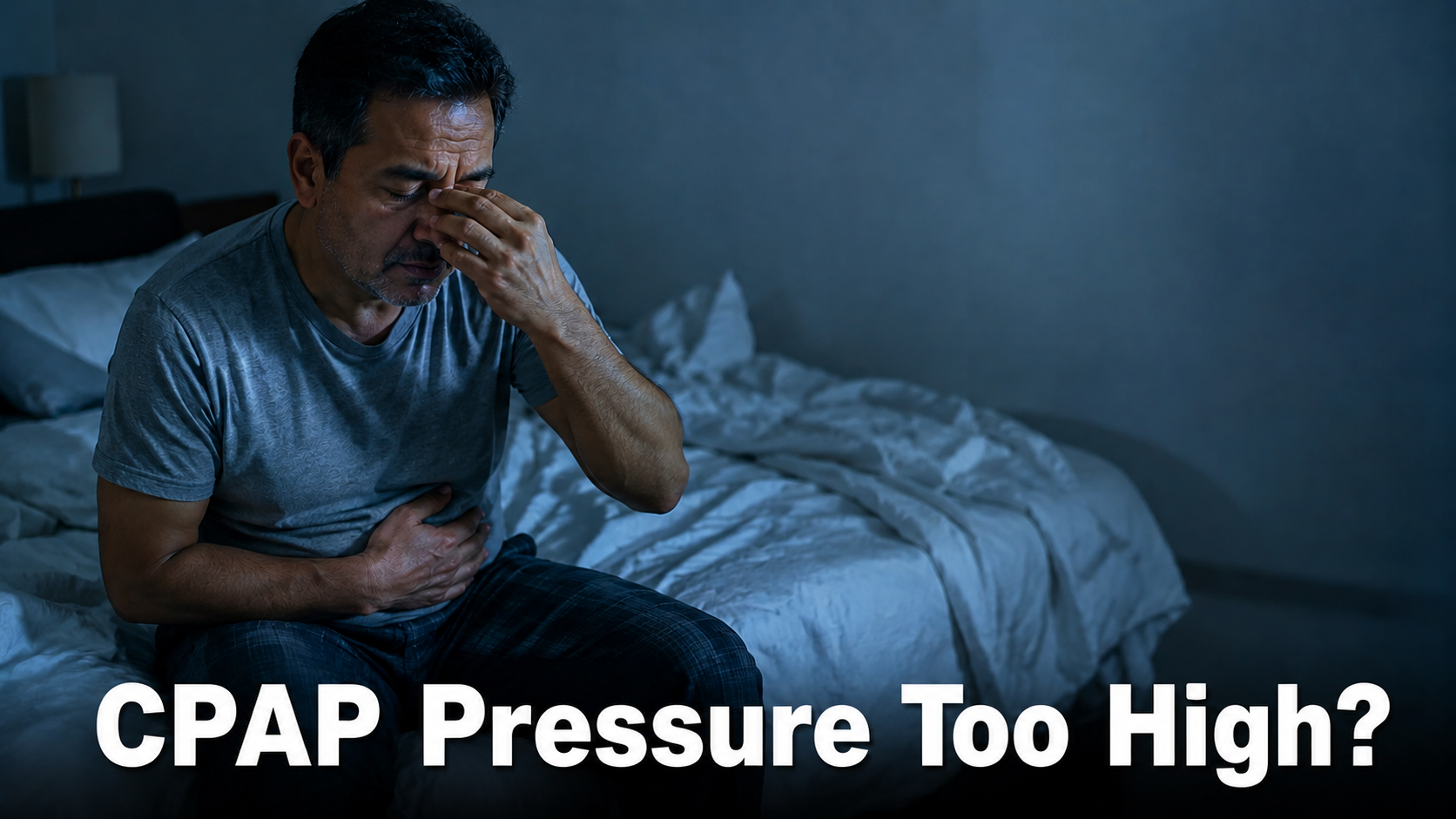
Is Your CPAP Pressure Too High? 5 Signs Your Settings Need Adjusting
A CPAP pressure too high for your airway rarely stays a secret, says Dr. Avinesh Bhar, Board-Certified Sleep Physician at SLIIIP.com, because the extra force tends to surface as bloating, leaks, and restless nights that send people hunting for answers.
Your machine is supposed to make breathing easier, not turn sleep into a wrestling match. When the air feels like too much, your settings may have drifted past what your airway actually needs. The good news is that the fix is usually a small adjustment, not a brand new machine.
SLIIIP’s board-certified sleep physicians can do sleep evaluations for sleep apnea. Virtual consultations in all 50 states. Home sleep tests shipped to your door.
What CPAP Pressure Actually Does
CPAP stands for continuous positive airway pressure. The machine sends a steady stream of air through a mask to hold your airway open while you sleep. That gentle splint keeps the soft tissue at the back of your throat from collapsing and blocking your breathing.
Pressure is measured in a unit called centimeters of water, often written as cmH2O. Most adults land somewhere between 6 and 14 on that scale, though some need more and some need less. The right number is the lowest pressure that keeps your airway open through the night. Anything above that adds force you do not need.
A sleep study or a titration sets your starting number. Over time your body, weight, sleep position, and nasal health can change. A setting that fit perfectly two years ago may now be more than your airway calls for. That is how a CPAP pressure too high sneaks into an otherwise steady routine.
CHECK YOUR SLEEP SYMPTOMS: TAKE THE 2 MINUTE QUIZ
TAKE THE QUIZ

5 Signs Your CPAP Pressure May Be Too High
You do not need to read your machine’s data to notice that something feels wrong. Your body sends clear signals. Here are five of the most common ones.
1. You Swallow Air and Wake Up Bloated
When the pressure is stronger than your airway needs, the leftover air has to go somewhere. Some of it slips past the top of your food pipe and heads into your stomach. This is called aerophagia, and it leaves you burping, gassy, and bloated in the morning. Our guide on how to manage bloating and flatulence on CPAP walks through this in more detail.
2. Your Mask Keeps Leaking
Higher pressure pushes harder against the seal of your mask. The more force behind the air, the easier it is for that air to find a gap and escape. If you tighten the straps and still hear hissing, the issue may be the pressure rather than the fit. A solid CPAP mask helps, but no mask can hold back air that is set too strong.
3. You Wake Up With Headaches or a Dry, Sore Throat
Strong airflow can dry out your nose and throat fast. It can also leave some people with morning headaches. If you wake up parched or with a dull ache behind your eyes, the volume of air may be part of the story. You can read more in our article on whether CPAP can cause headaches.
4. You Struggle to Breathe Out Against the Air
A pressure that is too high can feel like you are exhaling into a strong wind. Breathing out becomes work. Some people describe a tight or smothered feeling that makes them want to pull the mask off. That sense of fighting the machine is one of the clearest hints that the setting needs a second look.
5. You Keep Waking Up Through the Night
Therapy is meant to give you smoother sleep, not break it into pieces. If you are waking up often, feeling startled awake, or ripping the mask off in your sleep, the pressure could be the trigger. Many people who feel this way assume the machine is not working, when a CPAP pressure too high is actually the culprit. If this sounds familiar, our piece on why some people are not loving CPAP covers more of these early bumps.
Why a CPAP Pressure Too High Causes These Problems
Your airway only needs enough air to stay open. Once it is open, extra pressure does not add benefit. It just adds force that your body has to deal with.
That force shows up in predictable places. It pushes air toward your stomach. It strains the seal of your mask. It dries the lining of your nose and throat. It makes the simple act of breathing out harder than it should be. None of this means CPAP is bad for you. It means the dial is set above your personal sweet spot.
There is a flip side worth knowing. A pressure that is too low leaves your airway free to collapse, so your breathing pauses return. The goal is balance, not the highest or lowest number. A sleep physician finds that balance by reading the data your machine records every night.
How Pressure Gets Set Too High in the First Place
A few common situations lead to a CPAP pressure too high for your current needs.
Weight change is a big one. If you have lost weight since your last study, your airway may need less support than before. Your old setting can suddenly feel like too much.
Nasal health matters too. When your nose is clear, air moves freely, and a setting that felt fine during a stuffy season can now feel forceful.
Old titration data plays a role as well. A number chosen years ago does not always match the airway you have today. Bodies change, and settings should be reviewed to keep up.
Finally, a fixed pressure machine gives the same number all night, even during stretches when your airway needs far less. That single high setting can feel heavy during the calmer parts of your sleep.
What an APAP Machine Changes
Many people do better on an auto adjusting machine, often called an APAP. Instead of one fixed number, it raises and lowers pressure moment to moment based on what your airway needs right then. During calm stretches, it backs off. When your airway starts to narrow, it nudges the pressure up.
For people bothered by a CPAP pressure too high during the quiet parts of the night, this on demand approach can feel much gentler. Our overview of CPAP and auto pap options explains how the two styles compare. A sleep physician can tell you whether a switch makes sense for your case.
What To Do If You Think Your Pressure Is Too High
Start by writing down what you feel and when. Note the bloating, the leaks, the dry mouth, or the night wakings. That record gives your physician something concrete to work with.
Do not change your own pressure settings. It can be tempting to open the machine’s menu and turn the number down, but doing so without guidance can leave your airway unprotected or mask a problem that needs a closer look. Pressure changes belong with a clinician who can read your data.
Bring your machine or its data card to a virtual visit. A sleep physician can see your average pressure, your leak rate, and how often your breathing was interrupted. From there, Dr. Avinesh Bhar and the SLIIIP team can suggest a lower setting, a different machine style, or a small change to your mask or routine.
You may also want to check whether your therapy is working overall. Our guide to what counts as a good AHI score on CPAP helps you read one of the key numbers your machine tracks.
Watch: CPAP Tips
Everyday Habits That Help Your Therapy
Settings do most of the heavy lifting, but daily habits make those settings work better. None of these replace a physician’s guidance. They simply give your therapy a smoother foundation.
Keep your nose clear during the day, not just at bedtime. Allergies, dry air, and colds all make air feel more forceful, so treating congestion early helps.
Sleep on your side when you can. Lying flat on your back can make air swallowing easier and breathing harder.
Use the ramp feature if your machine has one. It starts the pressure low and builds it slowly, which makes the first part of the night feel gentler.
Clean your mask and check the seal often. A worn cushion leaks more, which can make pressure feel uneven.
Stay in touch with your care team. Healthy sleep is about the whole picture, not one number on a screen.
For trusted background on sleep health, the Centers for Disease Control and Prevention and the National Heart, Lung, and Blood Institute both offer clear public guides.
At Sliiip, we accept the following insurances:

SLIIIP’s board-certified sleep physicians can do sleep evaluations for sleep apnea. Virtual consultations in all 50 states. Home sleep tests shipped to your door.
Frequently Asked Questions
How do I know if my CPAP pressure is too high for the reason I feel bad?
Watch for bloating, frequent leaks, a dry or sore throat, trouble breathing out, and waking up often. If several of these line up, your setting may be stronger than your airway needs, and a sleep physician can confirm it by reading your data.
Can high CPAP pressure make me bloated?
Yes. When pressure is higher than needed, extra air can slip into your stomach instead of your lungs. That leads to burping, gas, and morning bloating, a pattern known as aerophagia.
Should I lower my own CPAP pressure?
No. Changing the setting on your own can leave your airway unprotected or hide a problem. Pressure changes should always be made by a clinician who can review your machine data.
What is a normal CPAP pressure?
Most adults fall between 6 and 14 cmH2O, though some need more and some need less. The right number is the lowest pressure that keeps your airway open all night.
Why does my CPAP feel too strong when I breathe out?
A high setting can feel like exhaling into a strong wind. Breathing out becomes work, and some people feel smothered. This is a common sign that the pressure deserves a second look.
Can high pressure cause CPAP headaches?
It can play a part. Strong airflow may dry your sinuses and contribute to morning headaches for some people. A physician can help sort out whether your pressure is involved.
Will an APAP machine fix a pressure that is too high?
Often it helps. An auto adjusting machine raises and lowers pressure based on what your airway needs at the moment, so it can feel gentler than one fixed high number.
Does losing weight change my CPAP pressure needs?
It can. Weight loss may reduce the support your airway needs, which can leave your old setting feeling too strong. A review with your physician keeps the number current.
Why do I keep waking up with my CPAP on?
Frequent wakings can come from a pressure that is too high, a leaking mask, or other setup issues. Tracking when it happens helps your physician find the cause.
Can my mask leak because of high pressure?
Yes. Stronger air pushes harder against the seal, so it finds gaps more easily. If tightening straps does not help, the pressure may be the real issue.
Is it dangerous to use a CPAP pressure that is too high?
For most people it is uncomfortable rather than dangerous, but it can hurt your sleep quality and make you want to quit therapy. It is worth getting reviewed rather than pushing through.
How often should my CPAP pressure be checked?
A good rule is to revisit your therapy at least once a year, or sooner if your weight, health, or comfort changes. Regular reviews keep your setting matched to your body.
Does sleeping position affect how my pressure feels?
Yes. Lying on your back can make air feel more forceful and swallowing easier. Side sleeping often makes the same pressure feel gentler.
What is aerophagia on CPAP?
Aerophagia is swallowing air during therapy, which can happen when pressure is higher than your airway needs. It shows up as bloating, burping, and gas.
Can nasal congestion make my CPAP pressure feel higher?
Yes. A stuffy nose makes air harder to move, so the same setting can feel more forceful. Treating congestion often makes therapy feel smoother.
Should I stop using CPAP if the pressure bothers me?
No. Stopping leaves your sleep apnea untreated, which carries real risks. Instead, ask a sleep physician to adjust your therapy so it feels better.
Can a home sleep test help check my CPAP needs?
A home sleep test can give a physician useful data about your breathing. Your provider can tell you whether one fits your situation.
What is the ramp feature and does it help?
Ramp starts your pressure low and builds it slowly over time. It can make the first part of the night feel gentler while your machine eases up to your set number.
Can I switch from a fixed CPAP to an auto adjusting one?
Often yes, with a physician’s guidance. Many people who dislike a single high setting feel better on a machine that adjusts pressure throughout the night.
How do I talk to a sleep doctor about my pressure?
Write down your symptoms and when they happen, then bring your machine data to a virtual visit. A sleep physician can read the numbers and suggest a clear next step.
SLIIIP’s board-certified sleep physicians can do sleep evaluations for sleep apnea. Virtual consultations in all 50 states. Home sleep tests shipped to your door.
Latest posts
-
Why Can’t I Wake Up Even After Getting Enough Sleep?
Last updated: October 2, 2026. Medically reviewed by Dr. Avinesh Bhar, Board-Certified Sleep Physician, SLIIIP.com. If you can’t wake up after enough sleep, the cause is usually not the number…
-
Why Does My Heart Rate Drop So Low While I Sleep?
Last updated: October 2, 2026. Medically reviewed by Dr. Avinesh Bhar, Board-Certified Sleep Physician, SLIIIP.com. Your heart rate drops low while sleeping mainly because your body needs less work from…
-
Why Are My Naps Never Refreshing?
Last updated: October 2, 2026. Medically reviewed by Dr. Avinesh Bhar, Board-Certified Sleep Physician, SLIIIP.com. Naps that leave you groggy usually come down to how long you sleep, when you…
Get updates
Spam-free subscription, we guarantee. This is just a friendly ping when new content is out.

