👉 Register for Free. How to Diagnose Sleep Apnea Faster in Primary Care – FREE Webinar by Dr. Audrey Wells. – Friday, April 24 at 12 PM ET


CPAP Skin Rash: How to Protect Your Face from Mask Irritation
A CPAP skin rash can turn a helpful therapy into a daily annoyance, and as Dr. Avinesh Bhar, Board-Certified Sleep Physician at SLIIIP.com, points out, the red marks and itchy patches almost always trace back to fit, cleaning, or materials.
The good news is that most mask irritation responds well to a few simple changes, so you rarely have to choose between your skin and your sleep. A little troubleshooting goes a long way.
SLIIIP’s board-certified sleep physicians can do sleep evaluations for sleep apnea. Virtual consultations in all 50 states. Home sleep tests shipped to your door.
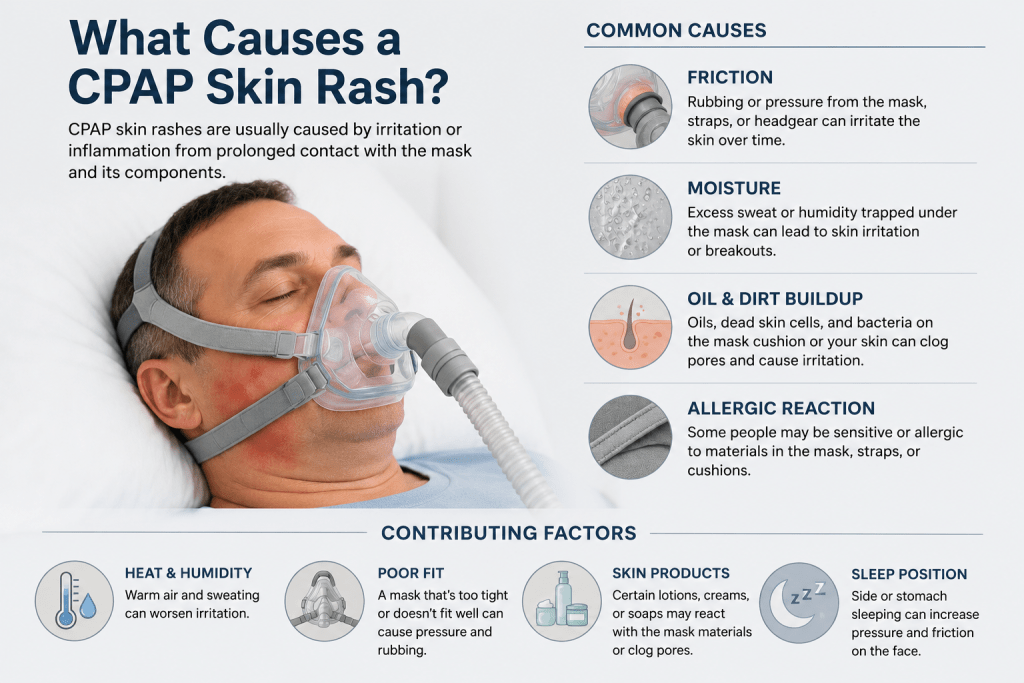
What Causes a CPAP Skin Rash
Before you can fix the problem, it helps to know where it comes from. A few everyday issues are behind most cases. Once you spot the cause, the fix is usually straightforward.
A Mask That Does Not Fit Right
A mask that is too tight presses into your skin all night. A mask that is too loose leaks air and slides around, rubbing as it goes. Both can leave red marks, sore spots, or a rash. Finding the right shape and size matters most, which is why our CPAP mask guide is a good starting point.
Dirty Equipment
Your mask sits against your face for hours. Oils, sweat, and bacteria build up on the cushion over time. When that buildup is not cleaned away, it can irritate your skin. Regular cleaning is one of the simplest fixes, and our notes on CPAP cleaning explain how.
Sensitivity to Materials
Some people react to the silicone or other materials in the cushion. This can show up as itching, redness, or a rash where the mask touches. A different cushion material or a soft liner often solves it.
Trapped Moisture and Sweat
Warm, damp air plus a snug seal can trap moisture against your skin. That damp environment can lead to irritation, especially in skin folds. Airflow, clean gear, and the right humidity setting all help.
CHECK YOUR SLEEP SYMPTOMS: TAKE THE 2 MINUTE QUIZ
TAKE THE QUIZ
How to Protect Your Face from Mask Irritation
Now for the part that matters most. A short routine around fit, cleaning, and skin care prevents most mask irritation before it starts. Try these steps.
Get the Right Mask and Fit
Aim for a seal that is snug but not crushing. If straps leave deep marks, loosen them a touch and check the seal again. Some people do better with a nasal pillow mask that touches less of the face. Our guide on getting rid of CPAP lines covers fit tips that also reduce irritation.
Keep Everything Clean
Wash your cushion regularly with gentle, fragrance free soap and let it dry fully. Replace cushions and other parts on schedule, since worn parts seal poorly and hold buildup. Stock up through trusted CPAP supplies so you are never stuck using old gear.
Prep Your Skin
Wash your face before bed and let it dry before you put the mask on. Skip heavy creams right at the seal line, since they can break down the cushion and trap residue. A clean, dry surface seals better and irritates less.
Try a Barrier or Liner
Soft cloth mask liners sit between your skin and the cushion. They can cut down on rubbing and on contact with materials that bother you. Many people find a liner makes a big difference for a small cost.
Signs Your CPAP Skin Rash Needs a Doctor’s Eye
Most irritation clears up with these changes. Sometimes it does not, and that is your cue to get help. Do not just push through a rash that keeps getting worse.
Watch for a rash that spreads or does not fade after you improve fit and cleaning.
Look out for blisters, open sores, or skin that breaks down.
Notice swelling, oozing, or signs of infection like warmth and increasing redness.
Pay attention to itching that keeps you up or spreads beyond the mask area.
If you see these, a physician or dermatologist should take a look. A reaction or a skin infection needs proper care, not just a new liner. Our article on why people are not loving CPAP covers more bumps that make people want to quit, and why working through them beats stopping cold.
Watch: CPAP Tips
When to Talk With Dr. Avinesh Bhar and the SLIIIP Team
If skin trouble is making you dread your mask, do not give up on therapy on your own. There is almost always a fix, and a quick visit can save you weeks of frustration.
Dr. Avinesh Bhar and the SLIIIP care team can review your setup during a virtual visit, talk through your mask and routine, and point you toward options. Because SLIIIP runs on telemedicine, this happens from home.
If the mask simply never works for your skin, it is worth knowing there are other paths. Our overview of oral appliance versus CPAP explains an alternative some patients use when CPAP is a poor fit. Your physician can help you weigh it.
Daily Habits That Keep Your Skin Calm
Beyond fit and cleaning, small habits keep your skin happy night after night. Consistency is what makes these work.
Clean your mask cushion on a regular schedule, not just when you remember.
Replace parts before they wear out and start to leak.
Wash and fully dry your face before each use.
Use a soft liner if your skin is sensitive.
Keep your humidity setting comfortable so air is not too dry or too damp.
Check your skin in the morning and adjust fit early if you see marks.
These habits do not treat or cure any skin condition, and they do not replace medical care. They simply lower the chance of irritation and keep your therapy comfortable. Healthy skin and steady sleep can go together with a little routine.
For trusted background on sleep health, the Centers for Disease Control and Prevention and the National Heart, Lung, and Blood Institute both publish clear public guides.
At Sliiip, we accept the following insurances:

SLIIIP’s board-certified sleep physicians can do sleep evaluations for sleep apnea. Virtual consultations in all 50 states. Home sleep tests shipped to your door.
Frequently Asked Questions
What causes a CPAP skin rash?
Common causes are a poor mask fit, dirty equipment, sensitivity to mask materials, and trapped moisture. Spotting the cause usually points to a simple fix like a new cushion, better cleaning, or a soft liner.
How do I stop my CPAP mask from irritating my face?
Start with a good fit that is snug but not tight, clean your gear regularly, prep your skin before bed, and try a cloth liner. These steps prevent most mask irritation.
Can a dirty CPAP mask cause a rash?
Yes. Oils, sweat, and bacteria build up on the cushion and can irritate your skin. Regular cleaning and timely part replacement help a lot.
Am I allergic to my CPAP mask?
Some people react to silicone or other cushion materials. If you get itching or redness right where the mask touches, a different material or a liner may help. A doctor can confirm a true allergy.
What is the best mask to avoid skin irritation?
There is no single best mask for everyone. Many people with sensitive skin do well with a nasal pillow mask that touches less of the face. A guide or a physician can help you choose.
Should I stop using CPAP if I get a rash?
Do not stop on your own, since that leaves your apnea untreated. Instead, fix the fit and cleaning, try a liner, and talk with a provider if the rash continues.
How often should I clean my CPAP mask?
Clean the cushion often with gentle, fragrance free soap and let it dry fully. Frequent cleaning keeps buildup from irritating your skin.
Can CPAP cause acne or breakouts?
Trapped oil, sweat, and bacteria under the mask can contribute to breakouts for some people. Washing your face before use and keeping gear clean can help.
What is a CPAP mask liner?
It is a soft cloth barrier that sits between your skin and the cushion. It can reduce rubbing and contact with materials that bother sensitive skin.
Why do I get red marks from my mask every morning?
Marks often come from straps that are too tight or a cushion that presses in. Loosening the fit a touch while keeping a good seal usually helps.
Can moisturizer help or hurt with CPAP irritation?
Heavy creams at the seal line can break down the cushion and trap residue. Wash and dry your skin instead, and ask a provider about skin friendly options.
How do I get rid of CPAP lines on my face?
Better fit, the right strap tension, and a liner can reduce lines. They usually fade through the morning once the fit is improved.
Can dry air from CPAP irritate my skin?
Very dry air can leave skin feeling raw, while very damp air can trap moisture. A comfortable humidity setting helps strike a balance.
Is it normal for a new CPAP user to get irritation?
Some early irritation is common as your skin adjusts and you dial in the fit. It often eases within a few weeks with the right routine.
When should I see a doctor about a CPAP rash?
See a provider if the rash spreads, does not fade with better care, blisters, oozes, or shows signs of infection like warmth and growing redness.
Can changing my mask cushion fix irritation?
Often yes. A fresh cushion in the right size and material seals better and is gentler on skin. Replacing worn parts on schedule matters.
Does facial hair affect mask irritation?
Facial hair can affect the seal, which leads to leaks and rubbing. A different mask style or careful fitting can help in that case.
Can I use a barrier cream under my mask?
Some people use skin friendly barriers, but the wrong product can harm the cushion or seal. Ask a provider what is safe for your setup.
Will the irritation go away on its own?
Mild irritation often eases once you fix fit and cleaning. A rash that lingers or worsens needs a closer look from a professional.
How can SLIIIP help with mask irritation?
Through virtual consultations, the SLIIIP team can review your mask and routine, suggest options, and help you stay on therapy comfortably without quitting on your own.
SLIIIP’s board-certified sleep physicians can do sleep evaluations for sleep apnea. Virtual consultations in all 50 states. Home sleep tests shipped to your door.
Latest posts
-
Why Can’t I Wake Up Even After Getting Enough Sleep?
Last updated: October 2, 2026. Medically reviewed by Dr. Avinesh Bhar, Board-Certified Sleep Physician, SLIIIP.com. If you can’t wake up after enough sleep, the cause is usually not the number…
-
Why Does My Heart Rate Drop So Low While I Sleep?
Last updated: October 2, 2026. Medically reviewed by Dr. Avinesh Bhar, Board-Certified Sleep Physician, SLIIIP.com. Your heart rate drops low while sleeping mainly because your body needs less work from…
-
Why Are My Naps Never Refreshing?
Last updated: October 2, 2026. Medically reviewed by Dr. Avinesh Bhar, Board-Certified Sleep Physician, SLIIIP.com. Naps that leave you groggy usually come down to how long you sleep, when you…
Get updates
Spam-free subscription, we guarantee. This is just a friendly ping when new content is out.

