👉 Register for Free. How to Diagnose Sleep Apnea Faster in Primary Care – FREE Webinar by Dr. Audrey Wells. – Friday, April 24 at 12 PM ET

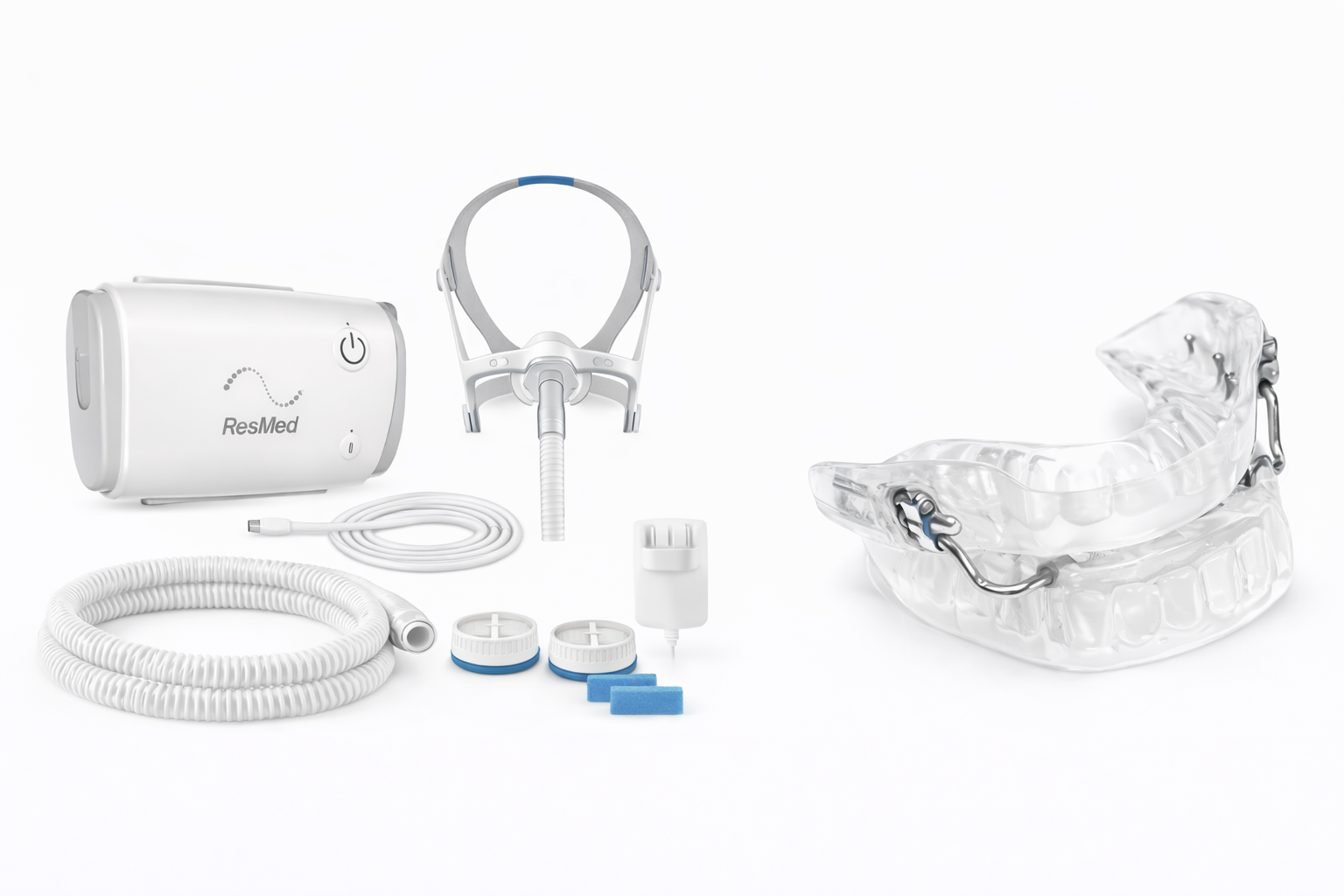
Oral Appliance vs CPAP: Which Sleep Apnea Option Is Right for You?
In this article, Dr. Avinesh Bhar breaks down Oral Appliance vs CPAP, so you can make a confident, informed decision about your sleep apnea treatment. Both options address obstructive sleep apnea, but they differ significantly in comfort, portability, adherence rates, and suitability based on the severity of your condition.
You Deserve an Option That Actually Works for Your Life
If you have been told you need to address your sleep apnea but the thought of strapping a mask to your face every night fills you with dread, you are not alone. Millions of people share that exact feeling. And many of them quietly stop using their CPAP within the first year, leaving their sleep apnea completely unmanaged.
Here is the reality. According to the American Academy of Sleep Medicine, adherence to CPAP therapy remains one of the biggest challenges in sleep medicine. The best option is not always the most clinically powerful one on paper. It is the one you will actually use, consistently, every single night.
This guide breaks down the oral appliance vs CPAP comparison honestly so you can have a productive conversation with your sleep physician and choose the path that fits your body, your lifestyle, and your nightly routine.
Myth vs Reality: Common Misconceptions About Oral Appliances and CPAP
Myth: Oral appliances are only for mild snoring, not real sleep apnea.
Reality: Custom-fitted mandibular advancement devices are FDA-approved for obstructive sleep apnea and have demonstrated meaningful reductions in breathing disruptions across mild, moderate, and even select severe cases.
Myth: CPAP is always the superior choice no matter what.
Reality: CPAP is more effective at reducing the apnea-hypopnea index in controlled settings, but real-world effectiveness depends on adherence. Published research in the Journal of Dental Sleep Medicine shows that health outcomes between the two approaches are often similar because oral appliance users tend to wear their device more consistently.
Myth: Oral appliances are just boil-and-bite mouthguards from the drugstore.
Reality: Medical-grade oral appliances are custom-fabricated by trained dental professionals using precise measurements. Over-the-counter devices are not FDA-approved for sleep apnea and lack the titration capabilities of prescription appliances.
Myth: Once you start CPAP, you can never switch.
Reality: Many people transition from CPAP to oral appliance therapy after discussing alternatives with their sleep physician. Some use both, relying on CPAP at home and an oral appliance for travel.
How CPAP Works and Who It Serves Best

CPAP stands for continuous positive airway pressure. The machine sits on your bedside table and pushes a steady stream of filtered air through a tube connected to a mask you wear over your nose, your mouth, or both. This air pressure acts as a pneumatic splint, holding your airway open throughout the night.
CPAP remains the first-line recommendation for moderate to severe obstructive sleep apnea. It is highly effective at reducing the apnea-hypopnea index, improving oxygen saturation levels, and reducing loud snoring. For people who tolerate it well, CPAP can meaningfully improve daytime energy, focus, and overall quality of life.
However, CPAP comes with practical challenges. Common complaints include mask discomfort, skin irritation, nasal congestion, dry mouth, aerophagia (swallowing air that causes bloating), noise that disrupts a bed partner, and the inconvenience of traveling with equipment that requires electricity.
If you are currently using CPAP and struggling with consistency, it is worth exploring your options rather than simply abandoning your care. Sliiip offers CPAP management and remote monitoring alongside alternative approaches so you are never left without support.
How Oral Appliances Work and Who They Serve Best

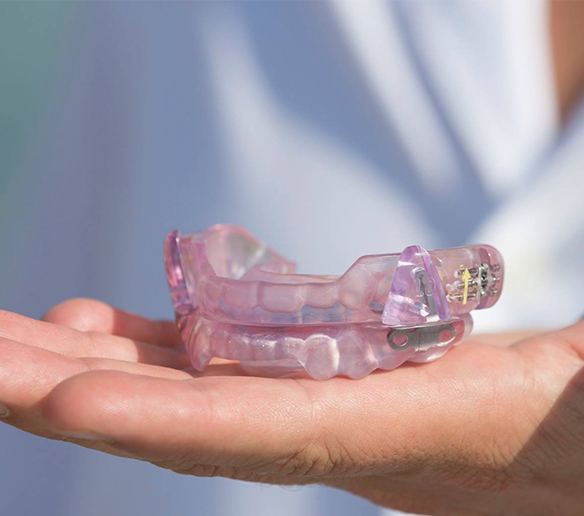
An oral appliance, sometimes called a mandibular advancement device or MAD, is a custom-fitted dental device that resembles an athletic mouthguard. It snaps over your upper and lower teeth and gently holds your lower jaw in a slightly forward position while you sleep.
By advancing the mandible, the device pulls the tongue base forward and increases the space in the back of your throat. This reduces the likelihood of soft tissue collapse that causes airway obstruction during sleep.
Oral appliances are recommended for people with mild to moderate obstructive sleep apnea and for those with more severe cases who cannot tolerate CPAP. The American Academy of Dental Sleep Medicine recognizes oral appliance therapy as an effective, non-invasive approach that fits easily into your nightly routine.
Oral appliances are silent, require no electricity, fit in a small travel case, and allow you to sleep in any position. For many people, the simplicity of an oral appliance translates directly into consistent nightly use.
To learn more about how Sliiip coordinates oral appliance therapy through telemedicine and local dental providers, visit our oral appliance therapy page.
Comparing Oral Appliance and CPAP: Key Factors
Effectiveness at Reducing Breathing Disruptions CPAP consistently produces a greater reduction in the apnea-hypopnea index in clinical settings. However, oral appliances achieve meaningful reductions for most users, and a significant percentage of people reach target levels with a properly titrated device.
Real-World Adherence This is where the comparison shifts. Research consistently shows that oral appliance users report higher nightly usage rates than CPAP users. Since a device can only help you when you actually use it, the adherence advantage of oral appliances often closes the effectiveness gap in daily life.
Comfort and Ease of Use Oral appliances are generally rated as more comfortable by users. There are no hoses, no masks, no straps, and no noise. You insert the device before bed and remove it in the morning.
Travel and Portability An oral appliance fits in a pocket-sized case. CPAP machines, even travel models, require a carrying bag, power source, tubing, and a mask. If you travel frequently for work or leisure, this distinction matters.
Noise Oral appliances are completely silent. Even modern CPAP machines produce some degree of ambient noise that can affect light sleepers or bed partners.
Cost and Insurance Both CPAP and oral appliances are typically covered by medical insurance when prescribed for obstructive sleep apnea. Oral appliances are classified as durable medical equipment. Costs for custom oral appliances generally range from $1,500 to $2,500 before insurance. CPAP machines range from $500 to $3,000 depending on the model, plus ongoing costs for replacement masks, filters, and tubing.
Side Effects CPAP side effects include dry mouth, nasal congestion, skin marks from the mask, aerophagia, and claustrophobia. Oral appliance side effects include temporary jaw soreness, excessive salivation during the adjustment period, and gradual bite changes with long-term use. Both sets of side effects are manageable with proper follow-up care.
Expert Q and A with 2 Sleep Dentists
1) I dont think I have sleep apnea so how can a dentist see this?
“ I usually start with a thorough screening questionnaire for all my adult dental patients. I also document dental changes in the mouth that can clue me in on how someone sleeps. I then compare these two results with a patient’s medical history and discuss the likelihood of having sleep apnea. If I believe a patient reasonably might have sleep apnea I will give them a referral to a sleep physician who can order a sleep study. “
Dr. Doni Mallia DDS
designforsleep.com
Question 2: Will an oral appliance make it easier for me to stick to treatment?
“Successful sleep apnea treatment depends greatly on patient comfort and long-term consistency. Oral sleep appliances offer a personalized approach through a custom-fit device that gently repositions the jaw to help keep the airway open during sleep. For many patients, this option feels less restrictive than traditional therapies, making it easier to use night after night. These appliances are also convenient for travel or camping, since patients don’t need to carry bulky equipment or worry about finding distilled water or a nearby power outlet. When treatment feels comfortable and fits naturally into a patient’s lifestyle, they are more likely to use it consistently, leading to better sleep quality, improved daytime energy, and overall wellness.”
-Dr. Haley Lawrence
Auburn Hills – Sleep and Airway Medicine Centers
Can You Use Both a CPAP and an Oral Appliance?
Yes. Combination therapy is more common than many people realize. Some individuals use CPAP as their primary approach at home and keep an oral appliance for travel, camping, or situations where electricity is unavailable. Others use an oral appliance in conjunction with CPAP to reduce the pressure setting needed, which can improve mask comfort and reduce side effects like aerophagia.
Your sleep physician can help you determine whether a combination approach makes sense for your situation.
How to Get Started With Either Option
The first step for both CPAP and oral appliance therapy is the same: a proper sleep evaluation. A board-certified sleep physician reviews your symptoms, medical history, and sleep study results to determine which approach is most appropriate.
At Sliiip, the process begins with a telemedicine consultation from wherever you live. If a sleep study is needed, a home sleep apnea test is shipped directly to your door. Based on the results, your physician discusses your options, including CPAP, oral appliance therapy, or both.
If you choose oral appliance therapy, Sliiip coordinates with a sleep-trained dentist in your area to handle the custom fitting, titration, and follow-up care. If you choose CPAP, equipment is arranged and your physician monitors your progress remotely.
Making the Decision: What to Ask Your Sleep Physician
Choosing between an oral appliance and CPAP is a personal decision that depends on the severity of your sleep apnea, your anatomy, your lifestyle, and your ability to use each device consistently. Before your next appointment, consider asking:
- How severe is my obstructive sleep apnea based on my sleep study results?
- Am I a candidate for oral appliance therapy based on my jaw health and dental status?
- What are the expected outcomes with each option for someone with my profile?
- How will we measure whether the chosen approach is working?
- What happens if the first option does not work well for me?
These questions help ensure you are making an informed, collaborative decision with your physician rather than defaulting to a single approach without exploring alternatives.
Your Next Step Toward Better Sleep
Ready to find out which option fits your life?
Sliiip’s board-certified sleep physicians help you evaluate both CPAP and oral appliance therapy through a simple telemedicine visit. No referral required. Available in all 50 states. Over 10,000 consultations completed. Most major insurance plans accepted.
We accept Medicare, Tricare and major insurances such as the ones shown below.
Integrating Your Choice Into Daily Life
Whichever option you choose, consistency is everything. Build your sleep routine around your device. Place your oral appliance or CPAP next to your bed in a visible spot. Clean it at the same time each morning. Keep follow-up appointments so your physician can track your progress and make adjustments.
If you notice your energy improving, your morning headaches fading, or your bed partner telling you the snoring has stopped, those are signs your approach is working. If you are still struggling after a reasonable adjustment period, speak up. Your sleep physician can modify your approach rather than letting you go without support.
Frequently Asked Questions
Is an oral appliance as effective as CPAP for sleep apnea? CPAP produces a larger reduction in the apnea-hypopnea index in clinical settings. However, because oral appliance users tend to wear their device more consistently, real-world health outcomes between the two are often comparable. Your sleep physician can help determine which is best for your severity level.
How long does it take to get used to an oral appliance? Most people adjust to wearing an oral appliance within one to two weeks. Minor jaw soreness and increased salivation are common during the first few nights and typically resolve quickly as your mouth adapts to the device.
Can I get an oral appliance without seeing a dentist? A prescription oral appliance requires a dental professional for custom fitting and titration. Sliiip coordinates this process by connecting you with a sleep-trained dentist in your area after your telemedicine consultation and sleep study.
Do oral appliances work for snoring without sleep apnea? Yes. Mandibular advancement devices are effective at reducing snoring by opening the airway. However, insurance coverage for oral appliances typically requires a diagnosis of obstructive sleep apnea, not snoring alone.
What happens if my oral appliance stops working over time? Your sleep physician should schedule periodic follow-up evaluations, including repeat sleep studies, to confirm your device remains effective. Adjustments to the titration setting or replacement of the device may be needed over time.
Can children use oral appliances for sleep apnea? Oral appliances for sleep apnea are designed for adults. Children with sleep-related breathing issues require different evaluation and management approaches guided by a pediatric specialist.
Will wearing an oral appliance change my bite? Long-term oral appliance use can produce gradual, minor changes in bite alignment, including small reductions in overbite and overjet. Regular dental follow-up helps monitor and manage any changes early.
How much does an oral appliance cost compared to CPAP? Custom oral appliances typically cost between $1,500 and $2,500 before insurance. CPAP machines range from $500 to $3,000 plus ongoing supply costs. Both are generally covered by medical insurance with a valid sleep apnea diagnosis.
Is CPAP the only option for severe sleep apnea? CPAP is the standard first-line recommendation for severe obstructive sleep apnea. However, for patients who are unable to tolerate CPAP, oral appliance therapy may be considered as an alternative with close follow-up to verify effectiveness.
How do I know if I am a candidate for oral appliance therapy? Good candidates typically have mild to moderate obstructive sleep apnea, healthy teeth and gums, adequate jaw mobility, and no significant temporomandibular joint issues. A sleep physician and dental professional evaluate your candidacy together.
Can I travel with an oral appliance on an airplane? Absolutely. An oral appliance fits in a small case, requires no electricity, produces no noise, and passes through airport security without issue. This is one of the most commonly cited advantages over CPAP for frequent travelers.
What is the difference between a mandibular advancement device and a tongue retaining device? A mandibular advancement device repositions the lower jaw forward to open the airway. A tongue retaining device uses suction to hold the tongue in a forward position. Mandibular advancement devices are more widely prescribed and studied for obstructive sleep apnea.
Latest posts
-
Why Teenagers Need More Sleep Than Adults
The debate over why teenagers need more sleep than adults usually gets treated as a discipline question, but Dr. Avinesh Bhar, Board-Certified Sleep Physician at SLIIIP.com, points to a biological…
-
How to Sleep Better in a Dorm Room
The CDC recommends that adults get at least seven hours of sleep each night. Dorm life makes that hard to protect. Roommates keep different schedules, hallways stay loud late into…
-
Sleep Debt: What It Is and How to Pay It Back
Most people first hear the term sleep debt after a rough week, and Dr. Avinesh Bhar, Board-Certified Sleep Physician at SLIIIP.com, says the banking metaphor is useful right up until…
Get updates
Spam-free subscription, we guarantee. This is just a friendly ping when new content is out.

