👉 Register for Free. How to Diagnose Sleep Apnea Faster in Primary Care – FREE Webinar by Dr. Audrey Wells. – Friday, April 24 at 12 PM ET

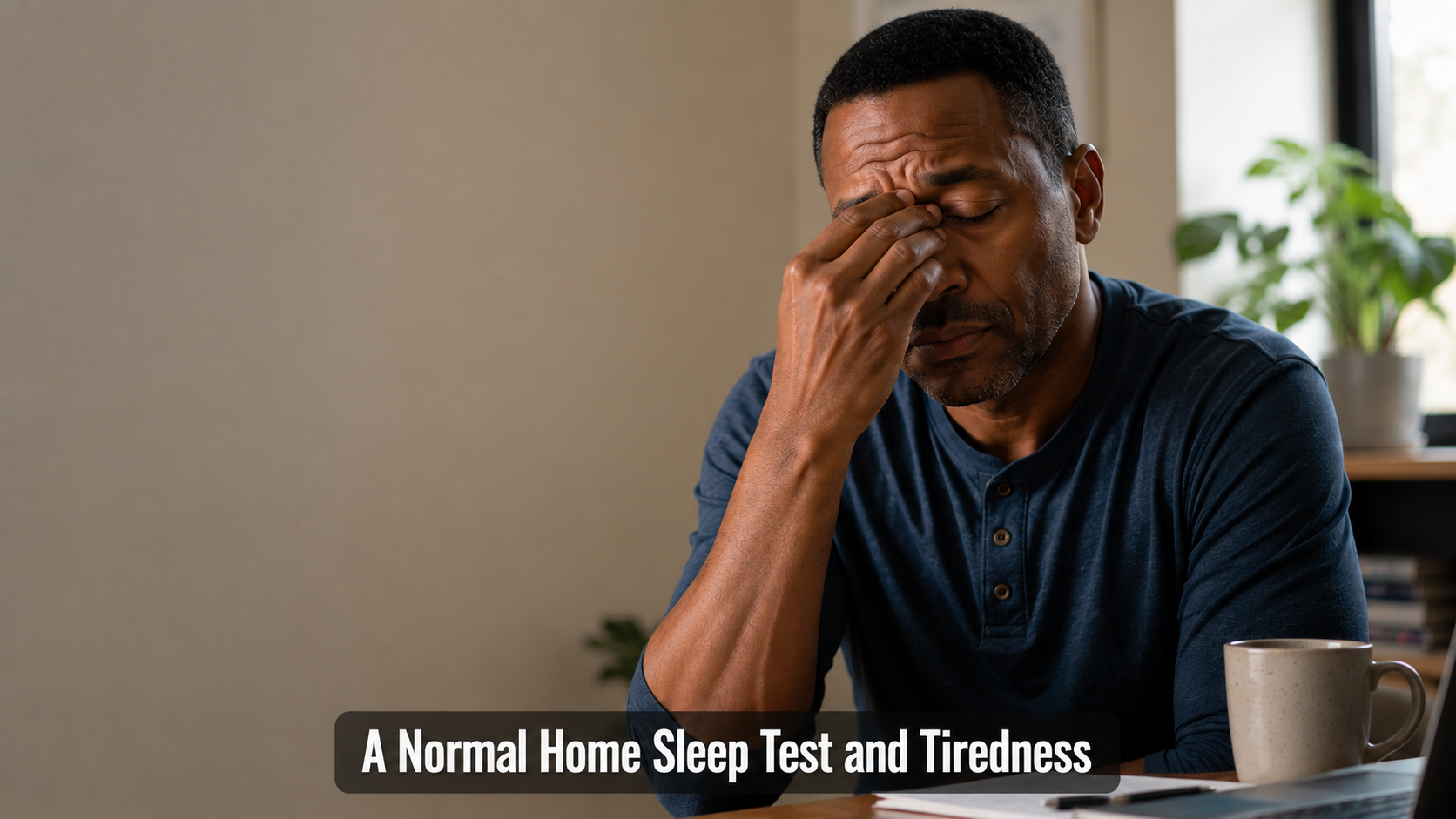
What a Normal Home Sleep Test Means When You Are Still Tired
A normal home sleep test can feel confusing when you still wake up worn out, and Dr. Avinesh Bhar, Board-Certified Sleep Physician at SLIIIP.com, helps people understand what a clear result does and does not rule out.
A clean result is good news, yet it does not always explain lingering tiredness, because a home test looks mainly at breathing and oxygen, not every reason a person can feel drained during the day.
SLIIIP’s board-certified sleep physicians can do sleep evaluations for sleep apnea. Virtual consultations in all 50 states. Home sleep tests shipped to your door.

What a Normal Home Sleep Test Actually Checks
A home sleep test is a handy tool, but it has a specific job. It mostly watches your breathing, airflow, oxygen levels, and sometimes heart rate while you sleep. The main goal is to look for pauses in breathing that point to sleep apnea. When those numbers come back in a healthy range, the test reads as normal.
That focus is a strength and a limit at the same time. It is great at spotting a breathing problem, yet it does not measure everything about your sleep. It usually does not track brain waves, leg movements, or the full picture of how deeply you cycle through sleep stages. So a clean breathing result is only one piece of the puzzle. The National Heart, Lung, and Blood Institute describes how different sleep studies are designed to measure different things. Our overview of a normal sleep study walks through what these results include and what they leave out.
CHECK YOUR SLEEP SYMPTOMS: TAKE THE 2 MINUTE QUIZ
TAKE THE QUIZ
Why You Can Feel Tired After a Normal Home Sleep Test
Here is the honest part. A normal home sleep test tells you that your breathing looked steady on the night you were tested. It does not promise that your sleep is perfect or that your energy will be high. Tiredness has many possible sources, and most of them sit outside what a breathing focused test can see.
You might still be short on total sleep, waking often without knowing it, or dealing with a sleep schedule that fights your body clock. Stress, mood, diet, and certain health factors can all sap energy too. This is why a clear result should be the start of a conversation, not the end of one. If exhaustion follows you no matter how long you rest, our article on why you feel exhausted no matter how much you sleep offers a useful next read.
Sleep Disorders a Home Test May Not Catch
A breathing focused test can miss patterns that a fuller study might catch. It is not that the test failed. It simply was not built to measure these things. Knowing the gaps helps you and your care team decide what to look at next.
Conditions like restless legs, periodic limb movements, and some forms of insomnia can disturb sleep without changing your breathing much. Narcolepsy and other disorders of deep tiredness also fall outside the scope of most home tests. A home test can also miss lighter or central patterns that a lab setting is better at capturing. If you want to compare options, our guide on home versus lab sleep tests lays out the differences in plain terms, and our piece on central versus obstructive sleep apnea explains why the type matters.
Everyday Habits That Quietly Drain Your Energy
Before assuming something is wrong, it helps to look at the daily basics. Small habits add up, and several common ones can leave you tired even when a test is clean. The good news is that many of these are within your control.
Short sleep is the biggest one, and the Centers for Disease Control and Prevention points to steady, sufficient sleep as a foundation of daytime energy. Many people simply do not spend enough hours in bed, night after night. An irregular schedule can also throw off your internal clock, so you feel foggy even after a full night. Caffeine late in the day, alcohol before bed, heavy screen use at night, and a lack of daylight or movement can all chip away at your energy. If a shifting schedule sounds familiar, our article on circadian rhythm sleep disorder explains how timing shapes how rested you feel.
Building steadier habits is a gentle place to start. A consistent wake time, a wind down routine, and some daytime movement often help more than people expect. These are wellness steps, not cures, and they work best with patience.
Health Factors Worth Reviewing With Your Doctor
Sometimes tiredness points to something beyond sleep itself. This is where your primary care team is a valuable partner. A normal breathing test does not check the many body systems that influence energy, so a broader review can be worthwhile.
Thyroid function, iron levels, blood sugar, mood, and certain medications can all affect how alert you feel. None of this is a reason to worry on its own. It simply means daytime tiredness deserves a wider look when sleep testing comes back clear. Dr. Avinesh Bhar often reminds people that a sleep test is one part of a bigger health picture, and that ongoing fatigue is worth raising with a doctor who knows your history. If you are unsure whether your tiredness is typical, our article on whether your fatigue is normal can help you think it through.
Watch: How Does a Home Sleep Test Work? — SLIIIP.COM
When to Consider a Follow Up or Lab Study
A clean home result does not mean you are out of options. If your symptoms continue, a follow up makes sense. Sometimes that means a repeat test, and sometimes it means a more detailed study in a lab that can track brain waves and leg movements through the night.
The right step depends on your symptoms and history. Loud snoring, gasping, or witnessed pauses that continue despite a clear test are worth another look. Heavy daytime sleepiness, trouble staying awake, or unusual events during sleep may also point toward a fuller study. Our guide on whether you need another sleep study can help you and your physician decide. A short conversation often clears up whether more testing is the right move.
How SLIIIP Can Help
SLIIIP was built to make this next step simple. Instead of guessing after a confusing result, you can meet a board-certified sleep physician through a virtual visit and talk through what your test showed and how you feel. There is no waiting room and no long drive. If a home sleep test is the right tool, it can be shipped straight to your door, so any testing happens in your own bed. Coverage runs across all 50 states, which means support is within reach wherever you live.
The aim is to turn a puzzling result into a clear plan. You share your history and symptoms, a physician reviews the details, and together you decide on gentle next steps that fit your life. That kind of guidance can take the mystery out of feeling tired.
At Sliiip, we accept the following insurances:

SLIIIP’s board-certified sleep physicians can do sleep evaluations for sleep apnea. Virtual consultations in all 50 states. Home sleep tests shipped to your door.
Frequently Asked Questions
What does a normal home sleep test result mean?
It means your breathing and oxygen looked steady on the night you were tested, with no clear signs of sleep apnea. It does not measure every part of your sleep.
Can I still have sleep apnea after a normal home sleep test?
It is possible in some cases. Home tests can miss lighter or central patterns, so ongoing symptoms are worth discussing with a physician.
Why am I still tired if my test was normal?
Tiredness has many sources beyond breathing, such as short sleep, an off schedule, stress, mood, diet, or health factors that a breathing test does not check.
What sleep problems can a home test miss?
It may miss restless legs, periodic limb movements, some insomnia patterns, and conditions like narcolepsy, since it focuses mainly on breathing.
Is a home sleep test as accurate as a lab study?
For breathing problems, home tests work well for many people. A lab study measures more, including brain waves and leg movements, which a home test does not track.
Should I get a lab study after a normal home test?
Maybe. If symptoms continue, a physician may suggest a fuller lab study to look at parts of sleep a home test cannot capture.
Can insomnia make me tired even with normal breathing?
Yes. Trouble falling or staying asleep can leave you drained, and it may not change your breathing enough to show on a home test.
Could restless legs cause my tiredness?
It can. Uncomfortable leg sensations and movements can disturb sleep quality, which a breathing focused test often does not measure.
Can my thyroid or iron levels affect my energy?
Yes. Factors like thyroid function and iron levels can influence how alert you feel. These are worth reviewing with your primary care team.
Does poor sleep quality show up on a home test?
Not fully. A home test focuses on breathing, so it may not capture fragmented or light sleep that leaves you feeling unrested.
Can stress and anxiety cause daytime fatigue?
They can. Ongoing stress can disturb sleep and drain energy during the day, even when your breathing looks normal at night.
Could my medications be making me tired?
Some medications can affect alertness or sleep quality. If you suspect this, ask the doctor who prescribed them before making any changes.
Can a home test detect narcolepsy?
Usually not. Narcolepsy involves patterns a home breathing test does not measure, so a specialist evaluation is the right path for those concerns.
Can my sleep schedule be the real issue?
Yes. A schedule that fights your internal clock can leave you foggy even after a full night. Steadier timing often helps.
How many hours of sleep do I really need?
Most adults do best with about seven or more hours. Needs vary, so notice how you feel across several steady nights.
Can diet and caffeine affect my energy?
They can. Late caffeine, alcohol before bed, and skipped meals can all influence how rested and alert you feel.
Should I repeat the home sleep test?
Sometimes a repeat test helps, especially if the first night was unusual. A physician can advise whether that step makes sense for you.
When should I talk to a sleep physician?
If tiredness lasts for weeks, affects your day, or comes with ongoing snoring or gasping, a conversation with a physician is a wise step.
Can a virtual sleep consultation help me figure this out?
Yes. A virtual visit lets a board-certified physician review your result and symptoms and guide next steps, with testing arranged at home if needed.
How do I get started with SLIIIP?
You can book a virtual consultation with a board-certified sleep physician, and a home test can be shipped to your door if further testing is helpful.
A normal result is a genuinely good sign, and it does not have to be the end of the story if you still feel tired. By checking your daily habits, reviewing wider health factors with your doctor, and asking about a follow up when symptoms persist, you can keep working toward the rested feeling you are after.
SLIIIP’s board-certified sleep physicians can do sleep evaluations for sleep apnea. Virtual consultations in all 50 states. Home sleep tests shipped to your door.
Latest posts
-
Why Are My Naps Never Refreshing?
Last updated: October 2, 2026. Medically reviewed by Dr. Avinesh Bhar, Board-Certified Sleep Physician, SLIIIP.com. Naps that leave you groggy usually come down to how long you sleep, when you…
-
Is Sleeping Too Much a Sleep Disorder?
Last updated: October 2, 2026. Medically reviewed by Dr. Avinesh Bhar, Board-Certified Sleep Physician, SLIIIP.com. Sleeping too much is not always a sleep disorder, but it can be a sign…
-
Why Does My Insomnia Get Worse After Stopping Sleep Medication?
Last updated: October 2, 2026. Medically reviewed by Dr. Avinesh Bhar, Board-Certified Sleep Physician, SLIIIP.com. Insomnia can get worse after stopping sleep medication for three main reasons. They are rebound…
Get updates
Spam-free subscription, we guarantee. This is just a friendly ping when new content is out.

