👉 Register for Free. How to Diagnose Sleep Apnea Faster in Primary Care – FREE Webinar by Dr. Audrey Wells. – Friday, April 24 at 12 PM ET

The Truth About Skinny Sleep Apnea: Why Fitness Doesn’t Make You Immune
Skinny sleep apnea surprises many people who assume a lean, active body rules out breathing trouble at night, and Dr. Avinesh Bhar, Board-Certified Sleep Physician at SLIIIP.com, sees fit and healthy patients with this pattern more often than most people expect.
Being thin or athletic lowers the odds for some people, yet it does not build a wall against sleep apnea, because airway shape, facial structure, and genetics all play a part alongside weight.
SLIIIP’s board-certified sleep physicians can do sleep evaluations for sleep apnea. Virtual consultations in all 50 states. Home sleep tests shipped to your door.
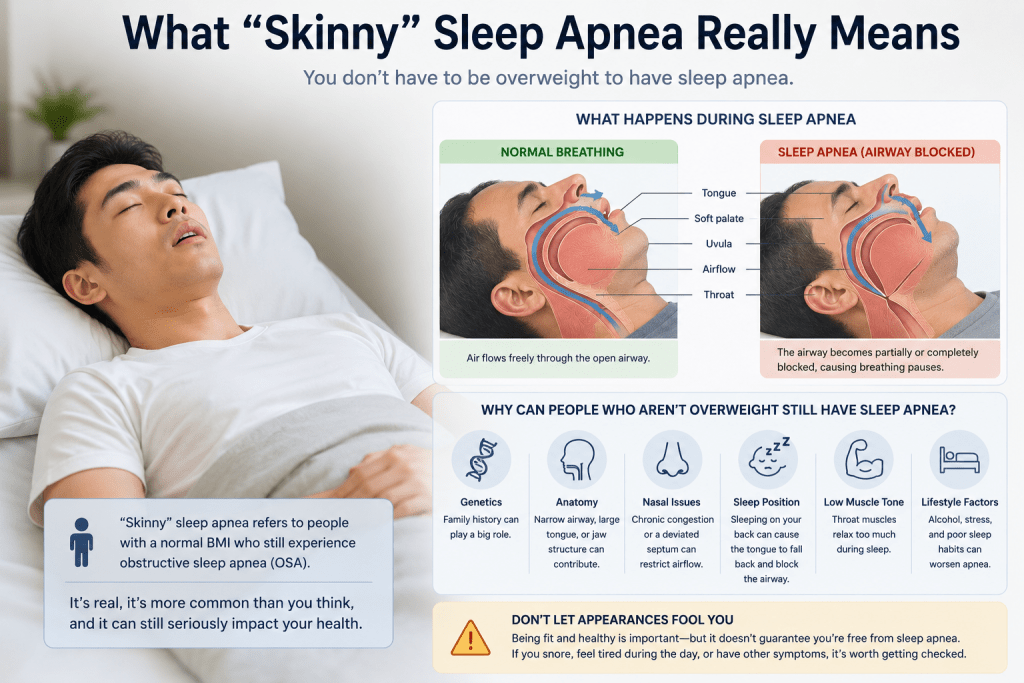
What “Skinny” Sleep Apnea Really Means
The phrase describes something simple. It is the experience of breathing pauses during sleep in a person who is thin, fit, or both. Many people picture sleep apnea as a problem that only affects those who carry extra weight. That picture is incomplete. Weight is one risk factor among several, not the whole story. The National Heart, Lung, and Blood Institute lists traits beyond weight that can affect breathing at night, which is exactly why skinny sleep apnea is possible.
When breathing pauses happen at night, the cause is often a narrowing of the airway during sleep. Extra weight around the neck can add to that narrowing, which is why weight comes up so often. Yet a slim person can still have a naturally narrow airway, a certain jaw shape, or other traits that lead to the same pattern. If you have ever been told you do not look the part, our article on hearing you don’t look like someone with sleep apnea explores that exact experience.
CHECK YOUR SLEEP SYMPTOMS: TAKE THE 2 MINUTE QUIZ
TAKE THE QUIZ
Why Skinny Sleep Apnea Happens
There is no single cause. Instead, a mix of factors can shape how open your airway stays while you sleep. A lean body can still carry any of these traits. Understanding them helps explain why fitness alone does not settle the question.
Airway and jaw shape play a large role. Some people have a smaller lower jaw, a set-back chin, or a longer soft palate. These features can crowd the space that air moves through. Large tonsils or a thick tongue base can do the same. None of these have anything to do with body fat, which is a key reason why a fit person can still have this pattern. Our overview of what causes sleep apnea covers these structural factors in plain terms.
Nasal issues matter too. Chronic congestion, a deviated septum, or allergies can push you toward mouth breathing, which can make the airway less stable at night. Add in factors like alcohol before bed, sleep position, or aging muscles, and a slim person can end up with the same interrupted breathing seen in others.
The Role of Genetics and Family History
Family patterns show up often in sleep medicine. If close relatives snore heavily or have been diagnosed with breathing pauses, your own airway shape may follow a similar blueprint. This is not a guarantee, but it is a reason to pay attention even when your weight is low. Our piece on whether sleep apnea is genetic walks through what research suggests about inherited risk.
The takeaway is steady. You cannot always exercise your way out of a trait you were born with. That is not a reason to worry, and it is not a reason to stop staying active. It simply means a lean, fit body does not erase the question.
Signs Fit People Often Miss
Active people are used to feeling tired after hard training, so they may brush off warning signs as normal fatigue. That habit can hide a breathing pattern for years. It helps to know what to watch for, since the signs are not always loud snoring.
Common clues include waking up unrefreshed after a full night, morning headaches, dry mouth, or a partner noticing pauses in breathing. Some people wake with a gasp or a choking feeling. Others notice trouble focusing during the day or a mood that dips without a clear reason. Our list of signs of sleep apnea can help you sort ordinary tiredness from a pattern worth checking. It is also worth knowing that you can have sleep apnea without snoring, which trips up many fit people.
Why Others Overlook It
Bias plays a real part here. Friends, and sometimes even busy clinicians, may assume a healthy-looking, athletic person could not have a breathing problem. That assumption can delay a simple evaluation. When you look fit, people expect your sleep to be fine, so your concerns may be waved off.
This is where speaking up matters. If you notice the signs, your appearance should not decide whether you get checked. A short evaluation gives you real information instead of a guess based on how you look. Dr. Avinesh Bhar often points out that airway anatomy does not read the scale, and that a fit body deserves the same careful review as anyone else.
How Fitness Helps, and Where It Stops
Staying active is genuinely good for sleep, and the Centers for Disease Control and Prevention frames healthy sleep as one pillar of overall wellness. Regular movement can support deeper rest, steadier mood, and healthier weight, all of which help the body. For some people, weight loss can ease a breathing pattern, which is why our article on whether losing weight reduces sleep apnea is a popular read.
Here is the honest limit. Fitness supports your overall health, but it cannot reshape a narrow jaw or a naturally crowded airway. So while exercise is a smart habit to keep, it is not a test result, and skinny sleep apnea can persist in someone who trains hard. If the signs are there, the calm next step is an evaluation, not more assumptions about your body type.
Watch: Sleeping with Sleep Apnea
How to Check Without Guessing
You do not need to look a certain way to get evaluated. The point of testing is to replace guesses with data. A modern sleep study can often be done at home, so you sleep in your own bed while a small device records your breathing and oxygen through the night.
A home sleep test makes this simple, and a board-certified physician reviews the results with you. If you are unsure whether testing is worth it, our guide on whether it is worth getting tested can help you weigh the choice. You can also start with a quick sleep apnea self-check quiz to gather your thoughts before a visit.
How SLIIIP Can Help
SLIIIP was built to make this process easy, no matter your shape or schedule. You can meet a board-certified sleep physician through a virtual visit, share your history, and talk through your symptoms in plain language. If testing makes sense, a home sleep test is shipped to your door. Coverage runs across all 50 states, so support is within reach wherever you live.
This keeps the whole path calm and clear. There is no need to justify your concerns based on your appearance. You share what you notice, a physician reviews it, and testing happens at home when it is the right move.
At Sliiip, we accept the following insurances:

SLIIIP’s board-certified sleep physicians can do sleep evaluations for sleep apnea. Virtual consultations in all 50 states. Home sleep tests shipped to your door.
Frequently Asked Questions
Can thin people really have sleep apnea?
Yes. Weight is only one risk factor. Airway shape, jaw structure, and genetics can lead to breathing pauses even in a lean, fit person.
What is skinny sleep apnea?
It is a plain way to describe breathing pauses during sleep in someone who is thin or athletic. The term highlights that body size does not tell the whole story.
Does being fit protect me from sleep apnea?
Fitness supports your overall health, but it cannot reshape a narrow airway or jaw. Active people can still have this pattern.
Why would an athlete have breathing pauses at night?
Airway anatomy, nasal issues, family history, and aging can all affect breathing during sleep. None of these depend on how fit you are.
Is snoring required for sleep apnea?
No. Some people have quiet pauses without loud snoring. That is one reason fit people are often missed.
What signs should fit people watch for?
Waking up tired, morning headaches, dry mouth, gasping at night, and trouble focusing are common clues worth taking seriously.
Can a narrow jaw cause breathing pauses?
A smaller or set-back jaw can crowd the airway during sleep. This is a structural trait that has nothing to do with body weight.
Does family history matter if I am thin?
Yes. If close relatives snore heavily or have breathing pauses, your airway shape may be similar, so it is worth paying attention.
Why do doctors sometimes overlook this in fit people?
Appearance can create bias. A healthy-looking person may have their concerns waved off, which can delay a simple evaluation.
Can I get tested if I look healthy?
Absolutely. Testing is based on your symptoms, not your appearance. A home sleep study can gather real data either way.
How does a home sleep test work?
You wear a small device for a night or two while sleeping at home. A physician then reviews the recorded breathing and oxygen data with you.
Will losing more weight fix the problem?
For some people weight loss can help, but it may not remove a structural cause. Your care team can help you understand your situation.
Can allergies or a stuffy nose play a role?
Yes. Congestion and nasal issues can push you toward mouth breathing, which may make the airway less stable during sleep.
Is this the same as the sleep apnea seen in heavier patients?
The breathing pattern can look similar, though the leading factors may differ. A proper evaluation sorts out what is going on for you.
Does alcohol affect breathing during sleep?
Alcohol can relax the muscles that keep the airway open, which may worsen pauses at night for some people, regardless of body type.
Should I see a specialist or start online?
Many people start with a virtual visit for convenience. A board-certified sleep physician can guide you and arrange home testing if needed.
Can young, healthy adults have sleep apnea?
Yes. Age is a factor, but younger fit adults can still have airway traits that lead to breathing pauses during sleep.
Is a virtual consultation reliable for this?
A virtual visit lets a physician review your history and symptoms. When testing is needed, it can often be arranged at home.
Does insurance cover a sleep evaluation?
Coverage depends on your plan. You can check your benefits before booking so you know what to expect up front.
How do I get started with SLIIIP?
You can book a virtual consultation with a board-certified sleep physician, and a home test can be shipped to your door if it fits your needs.
A lean, fit body is a wonderful thing, and it is not a reason to skip a question about your sleep. Breathing patterns at night depend on more than weight, so if the signs are there, a calm evaluation gives you the clarity that guesses never will.
SLIIIP’s board-certified sleep physicians can do sleep evaluations for sleep apnea. Virtual consultations in all 50 states. Home sleep tests shipped to your door.
Latest posts
-
Why Can’t I Wake Up Even After Getting Enough Sleep?
Last updated: October 2, 2026. Medically reviewed by Dr. Avinesh Bhar, Board-Certified Sleep Physician, SLIIIP.com. If you can’t wake up after enough sleep, the cause is usually not the number…
-
Why Does My Heart Rate Drop So Low While I Sleep?
Last updated: October 2, 2026. Medically reviewed by Dr. Avinesh Bhar, Board-Certified Sleep Physician, SLIIIP.com. Your heart rate drops low while sleeping mainly because your body needs less work from…
-
Why Are My Naps Never Refreshing?
Last updated: October 2, 2026. Medically reviewed by Dr. Avinesh Bhar, Board-Certified Sleep Physician, SLIIIP.com. Naps that leave you groggy usually come down to how long you sleep, when you…
Get updates
Spam-free subscription, we guarantee. This is just a friendly ping when new content is out.

