👉 Register for Free. How to Diagnose Sleep Apnea Faster in Primary Care – FREE Webinar by Dr. Audrey Wells. – Friday, April 24 at 12 PM ET


Is Sleep Apnea Genetic? What the Research Says
Yes, sleep apnea has a significant genetic component. Studies estimate that genetics account for approximately 40 percent of the variance in obstructive sleep apnea risk. Inherited traits including craniofacial structure, upper airway anatomy, obesity predisposition, and neural respiratory control all influence whether a person develops sleep apnea, making family history a meaningful clinical risk factor.
This article draws on the expertise of Dr. Avinesh Bhar, Board Certified Sleep Physician at Sliiip.com. Dr. Bhar works with patients across all 50 states via telemedicine and regularly evaluates patients who seek evaluation after a parent, sibling, or partner receives a sleep apnea diagnosis.
If someone in your family has sleep apnea, it is natural to wonder whether you might have it too. That instinct is clinically sound.
SLIIIP’s board-certified sleep physicians can do sleep evaluations for sleep apnea. Virtual consultations in all 50 states. Home sleep tests shipped to your door.
How Genetic Is Sleep Apnea?
Sleep apnea is not caused by a single gene. It is a complex, multifactorial condition influenced by multiple genetic pathways that each contribute to different aspects of airway anatomy, respiratory function, and metabolic risk.
The heritability of obstructive sleep apnea, meaning the proportion of variation in disease risk attributable to genetic factors, has been estimated at approximately 40 percent across large twin and family studies.
This does not mean that having a parent with sleep apnea guarantees you will develop it. It means your baseline risk is meaningfully elevated, and that proactive awareness and evaluation are warranted.
The genetic contribution to sleep apnea operates through several distinct biological pathways, each of which is worth understanding separately.
The Genetic Pathways Behind Sleep Apnea
Craniofacial Structure
The architecture of the face and skull is strongly heritable. Jaw width, palate dimensions, chin position, nasal passage anatomy, and the relative size of facial bones all influence how much space is available for the upper airway.
Individuals with a retrognathic jaw, meaning a jaw that sits further back relative to the skull base, have a structurally narrower posterior airway space. Those with a high-arched narrow palate have less room for the tongue, which sits lower in the mouth and is more likely to fall toward the back of the throat during sleep.

These structural features are significantly heritable and they are among the strongest anatomical predictors of obstructive sleep apnea risk. Research using cephalometric measurements, which are X-ray measurements of craniofacial dimensions, consistently demonstrates familial clustering of the structural features most associated with sleep apnea.
Upper Airway Soft Tissue
Beyond bony anatomy, the size and properties of the soft tissues surrounding the airway are also heritable. Tongue volume, tonsillar and adenoidal size, and the amount of pharyngeal soft tissue are all influenced by genetic factors.
Larger tongue volume relative to jaw space is one of the most significant predictors of sleep apnea. The tongue occupies the majority of the mouth and proximal throat, and when it falls posteriorly during sleep, its size determines how severely it narrows the airway. Genetic influences on tongue size and positioning contribute meaningfully to familial aggregation of sleep apnea.

Obesity and Body Fat Distribution
Excess body weight is one of the most significant modifiable risk factors for obstructive sleep apnea. Fatty deposits in the parapharyngeal region and neck narrow the airway and increase its collapsibility.
The tendency toward obesity itself is strongly heritable. Genome-wide association studies have identified multiple genetic loci associated with body mass index and abdominal fat distribution. Families with a history of obesity and sleep apnea often show both conditions clustering together, reflecting the shared genetic architecture underlying both.
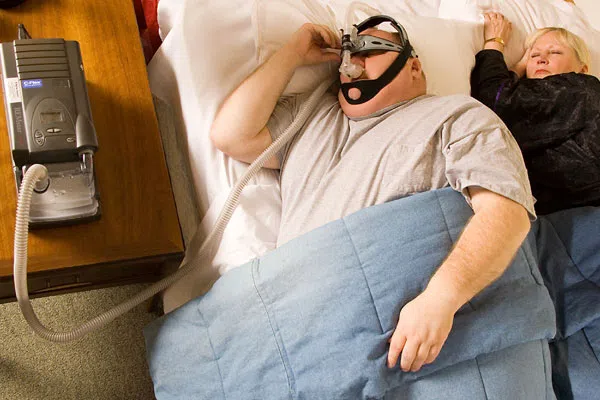
This creates an important interaction: a person may inherit both the structural predisposition to sleep apnea and the metabolic predisposition to the weight gain that amplifies it. Understanding the relationship between weight and sleep apnea in your own health picture is relevant whether or not you have a family history.
Neural Control of Breathing
The neural regulation of respiratory drive during sleep, including how sensitively the brain responds to drops in blood oxygen and how quickly it triggers arousal after an apnea event, is also heritable.
Individuals with a low arousal threshold, meaning they wake easily in response to airway obstruction, tend to have more fragmented sleep but also recover more quickly from apnea events before severe oxygen desaturation occurs. Those with a high arousal threshold may experience longer and more severe apnea events before the arousal response triggers.
Myth vs. Reality: Sleep Apnea Genetics
Myth: Sleep apnea is only genetic if every family member has it.
Reality: Genetic risk for sleep apnea is probabilistic, not deterministic. You can carry the structural and metabolic predispositions without developing the condition, particularly if non-genetic risk factors such as weight and sleep position are managed. Conversely, you can develop sleep apnea without a clear family history if acquired risk factors are significant.
Myth: If sleep apnea runs in your family, treatment will not work as well because it is “in your genes.”
Reality: Genetic predisposition affects the likelihood of developing sleep apnea and the anatomical factors that drive it. It does not reduce the effectiveness of clinical treatments including oral appliance therapy, CPAP, or positional therapy. Treating genetically predisposed sleep apnea is as effective as treating sleep apnea from any other cause.
Myth: Children of parents with sleep apnea will always develop it.
Reality: Family history elevates risk. It does not guarantee the condition. Children of affected parents warrant earlier awareness and evaluation if symptoms emerge, but a family history alone is not a diagnosis.
Expert Q&A
Q: “My father had severe sleep apnea and used CPAP for 20 years. I am 34, I snore, and I wake up tired. Should I assume I have sleep apnea too?”
“You should not assume, you should get tested. The fact that your father had severe sleep apnea is clinically meaningful. First-degree family history is a recognized risk factor, and the combination you are describing of snoring, unrefreshing sleep, and daytime fatigue is a textbook presentation. But assuming is not the same as knowing. Your AHI could be 3 or it could be 35, and the treatment implications are completely different. A home sleep test is non-invasive, takes one night, and gives you a real number. That number is what tells us what is actually happening and what to do about it. Family history is a good reason to look. A sleep study is what tells you what you are looking at.”
Dr. Avinesh Bhar Board Certified Sleep Physician Sliiip.com
SLIIIP’s board-certified sleep physicians can do sleep evaluations for sleep apnea. Virtual consultations in all 50 states. Home sleep tests shipped to your door.
Is Sleep Apnea Hereditary in Women?
The genetics of sleep apnea operate similarly across sexes, but the expression of the condition differs. Women are significantly underdiagnosed with sleep apnea compared to men, in part because symptoms often present differently and in part because cultural assumptions have historically led clinicians to screen women less aggressively.
Women with a family history of sleep apnea should be aware that their genetic risk is equivalent to that of men with the same family history. The structural and neurological pathways that create sleep apnea risk are not sex-specific. Hormonal factors, particularly the decline in progesterone during perimenopause and menopause, can unmask genetic predispositions that were previously subclinical. Many women are diagnosed for the first time in their 50s, often after a parent’s diagnosis prompts evaluation.

Sleep apnea symptoms in women include fatigue, morning headaches, mood changes, and insomnia-like difficulty maintaining sleep, presentations that differ from the stereotypical male snoring profile and are more easily attributed to stress or hormonal changes.
Genetic Research: What GWAS Studies Are Revealing
Genome-wide association studies (GWAS) have significantly advanced understanding of the genetic architecture of obstructive sleep apnea in the past decade.
Research published in Nature Communications by Strausz et al. identified multiple genomic loci associated with obstructive sleep apnea risk, including regions near genes involved in facial development (MEIS1, SOX11), neural development, and circadian rhythm regulation. The study confirmed that sleep apnea genetic risk spans multiple biological domains.
Pediatric Considerations: Sleep Apnea in Children of Affected Parents
Children of parents with obstructive sleep apnea inherit both the anatomical predispositions and, in families with shared obesity risk, the metabolic predispositions. Pediatric sleep apnea is a distinct clinical entity from adult sleep apnea but shares overlapping genetic risk factors.
In children, large tonsils and adenoids relative to the size of the airway are the most common anatomical driver of obstructive sleep apnea. The tonsillar and adenoidal size is influenced by both genetic factors and the immune system’s response to environmental exposures.
Parents with sleep apnea should be aware of signs of sleep apnea in children including mouth breathing, snoring, observed breathing pauses, bedwetting, behavioral changes, and poor school performance. These symptoms warrant pediatric evaluation. Childhood sleep apnea is often highly treatable when identified early.
What to Do If Sleep Apnea Runs in Your Family
Family history is one of the most actionable risk factors for sleep apnea precisely because it can be identified before symptoms become severe. The typical patient with sleep apnea goes undiagnosed for an average of six to seven years after symptoms begin. Family history is an opportunity to close that gap.
If you have a parent or sibling with diagnosed sleep apnea, and you have any of the following, a home sleep test is a clinically reasonable next step: snoring that has worsened over time, waking unrefreshed despite adequate sleep time, significant daytime fatigue, morning headaches, difficulty concentrating, waking gasping or with a racing heart, or a jaw or facial structure similar to the affected family member.
The signs of sleep apnea span a wider range of symptoms than most people realize, and many of them are easily attributed to other causes. Family history is the context that elevates their significance.
A home sleep test produces an AHI score, which is the number that determines whether you have sleep apnea, how severe it is, and what clinical action is appropriate.

Family History Is a Reason to Act, Not Wait
Does sleep apnea run in your family?
Sliiip.com has completed over 10,000 consultations with patients across all 50 states. No referral is required. A board-certified sleep physician reviews your home sleep test and helps you understand your results in the context of your health history and family background.
Most major insurance plans are accepted. Testing is done from home in a single night.
Frequently Asked Questions: Is Sleep Apnea Genetic?
Is sleep apnea genetic? Yes. Research estimates that genetics account for approximately 40 percent of obstructive sleep apnea risk. Inherited traits including craniofacial structure, upper airway soft tissue anatomy, obesity predisposition, and neural respiratory control all contribute to familial risk. First-degree relatives of sleep apnea patients have approximately twice the risk compared to those without a family history.
Is sleep apnea hereditary? Sleep apnea is partially hereditary. Family history is a recognized clinical risk factor, and the anatomical and physiological traits that predispose individuals to sleep apnea, including jaw structure, tongue volume, palate shape, and respiratory control patterns, are significantly heritable. Hereditary predisposition does not guarantee the condition but meaningfully elevates risk.
If my parent has sleep apnea, will I get it? Not necessarily. Genetic predisposition increases your risk but does not make sleep apnea inevitable. Non-genetic factors including body weight, sleep position, alcohol use, and age also influence risk. However, a parent’s diagnosis is a clinically significant risk signal that warrants proactive evaluation if symptoms are present.
Does sleep apnea run in families? Yes. Multiple studies demonstrate familial clustering of obstructive sleep apnea at rates significantly above population prevalence. The Sleep Heart Health Study and research by Redline et al. confirmed that first-degree relatives of sleep apnea patients have approximately twice the risk of developing the condition.
What genetic traits cause sleep apnea? The primary heritable contributors include retrognathic jaw position, high-arched narrow palate, large tongue volume relative to airway space, tonsillar size, obesity predisposition, and the neural regulation of respiratory drive during sleep. Genome-wide association studies have identified genomic loci near genes involved in facial development, neural development, and circadian regulation.
Can children inherit sleep apnea from parents? Children of affected parents inherit the anatomical and metabolic predispositions that increase sleep apnea risk. Pediatric sleep apnea presents differently from adult sleep apnea and is often associated with enlarged tonsils and adenoids. Parents with sleep apnea should be aware of snoring, mouth breathing, and behavioral changes in their children that may indicate sleep-disordered breathing.
Does sleep apnea skip generations? There is no established skipping pattern in sleep apnea inheritance. Since multiple genetic pathways contribute, the expression of risk depends on how many predisposing genetic variants an individual inherits and how they interact with environmental and lifestyle factors. A grandparent with sleep apnea represents an elevated risk signal regardless of whether the parent was affected.
Is central sleep apnea also genetic? Central sleep apnea, which involves neurological disruption of breathing signals rather than physical airway obstruction, has a different etiology and is less clearly heritable than obstructive sleep apnea. Most genetic research on sleep apnea heritability focuses on the obstructive form, which is far more prevalent.
What is the heritability of sleep apnea? Studies estimate the heritability of obstructive sleep apnea at approximately 40 percent, meaning genetic factors account for roughly 40 percent of the variation in disease risk within the population. This is a moderate to high heritability estimate, comparable to conditions like hypertension and type 2 diabetes.
Can you prevent sleep apnea if it runs in your family? While genetic predispositions to craniofacial anatomy cannot be changed, several modifiable risk factors significantly influence whether genetic predisposition translates into clinical sleep apnea. Maintaining a healthy body weight, avoiding sedatives and alcohol before bed, and sleeping on your side can reduce severity or delay onset in genetically predisposed individuals. Regular evaluation ensures early identification if the condition develops.
How do I get tested for sleep apnea if it runs in my family? A home sleep test is the standard first step. It is worn overnight at home and measures breathing patterns, blood oxygen levels, and heart rate. A board-certified sleep physician interprets the results and generates a formal AHI score. This can be arranged entirely through telemedicine without an in-person appointment.
Does genetics affect how severe sleep apnea is? Yes. Genetic factors that influence the degree of airway narrowing, the amount of soft tissue in the upper airway, and the sensitivity of the respiratory arousal response all influence how severely sleep apnea presents. Individuals with a combination of structural predispositions and metabolic factors such as obesity tend to present with higher AHI scores.
SLIIIP’s board-certified sleep physicians can do sleep evaluations for sleep apnea. Virtual consultations in all 50 states. Home sleep tests shipped to your door.
Latest posts
-
Why Are My Naps Never Refreshing?
Last updated: October 2, 2026. Medically reviewed by Dr. Avinesh Bhar, Board-Certified Sleep Physician, SLIIIP.com. Naps that leave you groggy usually come down to how long you sleep, when you…
-
Is Sleeping Too Much a Sleep Disorder?
Last updated: October 2, 2026. Medically reviewed by Dr. Avinesh Bhar, Board-Certified Sleep Physician, SLIIIP.com. Sleeping too much is not always a sleep disorder, but it can be a sign…
-
Why Does My Insomnia Get Worse After Stopping Sleep Medication?
Last updated: October 2, 2026. Medically reviewed by Dr. Avinesh Bhar, Board-Certified Sleep Physician, SLIIIP.com. Insomnia can get worse after stopping sleep medication for three main reasons. They are rebound…
Get updates
Spam-free subscription, we guarantee. This is just a friendly ping when new content is out.

