👉 Register for Free. How to Diagnose Sleep Apnea Faster in Primary Care – FREE Webinar by Dr. Audrey Wells. – Friday, April 24 at 12 PM ET

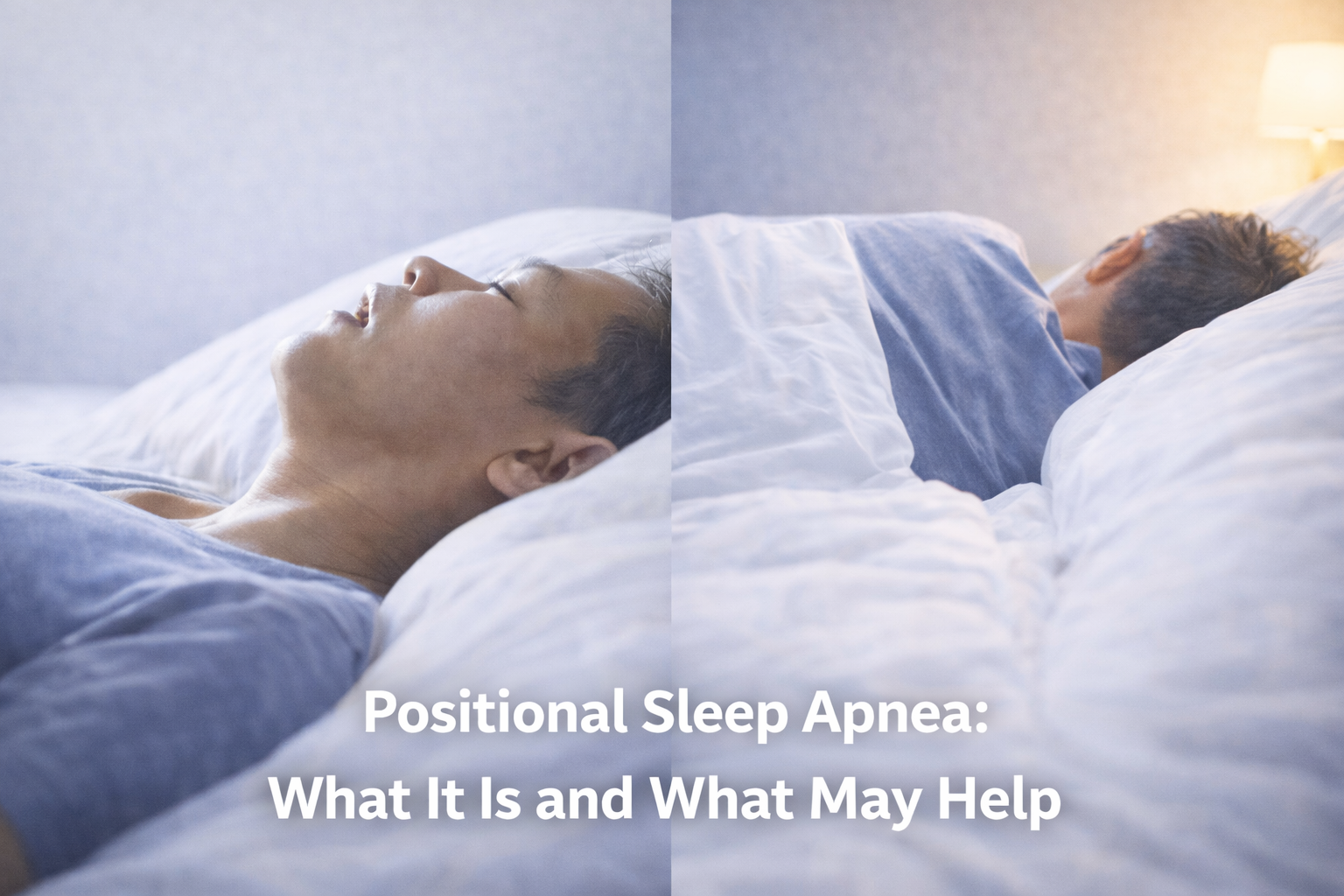
Positional Sleep Apnea: What It Is and What May Help
Not everyone with obstructive sleep apnea experiences the same number of breathing disruptions regardless of how they sleep, according to Dr. Avinesh Bhar.
For a significant proportion of people with OSA, breathing events are substantially more frequent when they sleep on their back than in any other position. This pattern is known as positional sleep apnea, and it is a clinically recognized subtype that has important implications for how the condition is identified and managed.
Understanding whether your sleep apnea has a strong positional component, or whether breathing disruptions occur at a similar frequency across all positions, shapes the clinical approach to your care. This guide covers what positional sleep apnea is, how it is identified, the mechanisms behind it, and what the evidence suggests about positional approaches to management.
SLIIIP’s board-certified sleep physicians can do sleep evaluations for sleep apnea. Virtual consultations in all 50 states. Home sleep tests shipped to your door.

What Is Positional Sleep Apnea?
Positional obstructive sleep apnea (POSA) is defined in sleep medicine research as OSA in which the apnea-hypopnea index (AHI) during back-sleeping (supine position) is at least twice as high as the AHI in other sleep positions. In practical terms, this means the number of breathing disruption events per hour roughly doubles or more when a person lies on their back compared to when they sleep on their side.
The significance of this definition is that a person with positional OSA may have a supine AHI that meets the threshold for moderate or severe sleep apnea, while their non-supine AHI is in the mild or even normal range. Their overall average AHI, which is what is typically reported on a standard sleep study result, may reflect a moderate severity that does not capture this positional variation.
Research estimates suggest that positional OSA accounts for approximately 50 to 60 percent of all OSA cases, making it the majority presentation rather than a rare subtype. Despite this prevalence, many patients are not routinely informed about the positional component of their sleep apnea, and the positional data from their sleep study may not feature prominently in the clinical discussion of their results.
Why Does Body Position Affect Breathing During Sleep?
The mechanism connecting supine sleep position to increased apnea severity is primarily gravitational. When you lie on your back, the tongue, soft palate, and the other soft tissue structures of the upper pharynx are subject to gravitational forces that pull them downward toward the back of the throat. This increases the degree to which the airway is narrowed or occluded when the pharyngeal muscles relax during sleep.
In side-sleeping (lateral) positions, the same gravitational forces act sideways rather than posteriorly, and the anatomical structures of the upper airway are better supported by surrounding tissue. The effective cross-sectional area of the pharyngeal airway is typically larger in lateral positions than in the supine position, reducing the likelihood of collapse during the muscle relaxation of sleep.
This gravitational mechanism explains why supine position is the most problematic for most people with positional OSA, and why lateral sleeping is associated with fewer breathing events. It also explains why body weight distribution matters: greater adipose tissue around the neck and throat amplifies the effect of gravity on the upper airway in the supine position.
How Is Positional Sleep Apnea Identified?
Positional OSA is identified through sleep study data that includes body position recording. During a polysomnography or a home sleep test with position sensing, the device records which position you are sleeping in at each point throughout the night, and the AHI is calculated separately for supine and non-supine periods.
The comparison of these two AHI values is what reveals whether your breathing disruptions are predominantly positional. If your supine AHI is substantially higher than your lateral AHI, and you spend a meaningful proportion of the night in the supine position, your overall AHI is being driven by that supine component, and your non-supine AHI may be considerably more favorable.
Not all home sleep tests include body position recording, though most modern devices do. If you have had a home sleep test and are uncertain whether position data was captured, asking your reviewing physician whether positional AHI data is available in your results is worthwhile.
Understanding the full picture of your sleep study results is also relevant to understanding whether your OSA presentation might qualify as silent or non-obvious. The guide to silent sleep apnea covers cases where breathing disruptions occur without the obvious snoring and gasping that many people associate with the condition.
CHECK YOUR SLEEP SYMPTOMS: TAKE THE 2 MINUTE QUIZ
TAKE THE QUIZ
Who Is Most Likely to Have Positional Sleep Apnea?
Research has identified several characteristics that are more common in people with positional OSA compared to non-positional OSA.
Younger adults. Positional OSA is more common in younger patients. As people age, the structural and anatomical changes associated with aging tend to increase OSA severity across all positions, making non-positional presentations more prevalent in older age groups.
Lower BMI. People with lower body mass index are more likely to have positional OSA than those who are significantly overweight. In higher BMI patients, the airway may be compromised to a degree that positioning alone cannot adequately compensate for, making the positional effect less pronounced relative to the overall severity.
Mild to moderate OSA. Positional OSA is more commonly identified in people with overall AHI values in the mild to moderate range. People with severe OSA often have high AHI values regardless of position, though a positional component may still be present even in more severe cases.
Habitual supine sleepers. People who spend a large proportion of their night on their back are more likely to have their overall AHI dominated by supine breathing events. If you know you predominantly sleep on your back, this is a factor worth noting when discussing your sleep study results.
Positional Therapy: What It Is and What the Evidence Shows
Positional therapy refers to any approach designed to encourage or maintain lateral sleep positioning and reduce the time spent sleeping on the back. Several methods have been studied and used clinically.
Positional Devices and Vibrotactile Feedback
A category of wearable devices has been developed specifically for positional sleep apnea management. These devices, typically worn at the chest or on the back of the neck, detect when the sleeper rolls into the supine position and deliver a gentle vibration signal designed to prompt an unconscious position change without fully waking the person.
Clinical research on vibrotactile positional devices has shown meaningful reductions in time spent in the supine position and corresponding reductions in AHI in patients with positional OSA. These devices represent one of the more evidence-informed non-CPAP approaches for appropriately selected patients.
The Tennis Ball Technique
One of the oldest and simplest approaches to positional therapy is attaching a tennis ball or similar object to the back of a sleep shirt, creating discomfort when the person rolls onto their back and prompting them to shift to their side. Despite its low-tech nature, research has documented that this approach can be effective at reducing supine sleep time. However, adherence over the long term is lower than for purpose-built positional devices, as the discomfort can also disrupt sleep quality.
Positional Pillows
Specialty pillows designed to support the body in a lateral position, or to make the supine position less stable, are widely available. The evidence base for positional pillows in OSA management is less robust than for vibrotactile devices, but they may provide benefit for some users, particularly in combination with other positional strategies.
The relationship between sleep position and overall sleep quality is explored in more depth in the guide to the best sleeping positions, which covers how body position affects multiple aspects of sleep beyond breathing.
Positional Sleep Apnea and CPAP: Is CPAP Still Needed?
Whether positional therapy alone is sufficient depends on the individual’s positional AHI and the clinical severity of their condition. For some people with purely positional OSA where the non-supine AHI is within normal limits, positional therapy may be an appropriate primary approach. For others, particularly those where the non-supine AHI is still elevated above mild thresholds, CPAP or another therapeutic intervention remains appropriate regardless of positional improvements.
A repeat sleep study or home sleep test with position data, conducted after a period of consistent positional therapy, is the appropriate way to assess whether positional therapy has achieved an adequate reduction in breathing events. Clinical decisions about whether CPAP can be reduced, modified, or discontinued should always be made in consultation with your prescribing physician rather than unilaterally.
The specific question of whether stomach sleeping might be beneficial for sleep apnea has a dedicated analysis in the guide to whether stomach sleeping can help sleep apnea, which examines what the evidence shows about prone positioning and airway dynamics.
Oral Appliances and Positional Sleep Apnea
Oral appliance therapy (OAT), which uses a custom-fitted mandibular advancement device to maintain a more open upper airway during sleep, may be particularly well suited to positional OSA. Research suggests that oral appliances can be effective at reducing AHI across all positions but may be especially beneficial in patients whose non-supine AHI is already low, as the device may reduce supine breathing events to a level where overall AHI meets clinical targets.
For people with positional OSA who prefer a non-CPAP option, an oral appliance represents a meaningful alternative worth discussing with a sleep medicine physician. The clinical pathway and what the therapy involves is covered in the oral appliance therapy for sleep apnea guide.
Getting a Home Sleep Test That Captures Positional Data
If you suspect your sleep apnea has a significant positional component, either because you are a habitual back sleeper, because your symptoms seem more pronounced on nights when you slept on your back, or because a previous sleep study suggested positional variation, requesting a home sleep test that includes body position monitoring is the appropriate clinical step.
SLIIIP provides home sleep testing with position sensing and physician review through a fully online platform. Sleep medicine physician Dr. Avinesh Bhar reviews all results and can provide clinical interpretation of positional AHI data as part of the standard reporting.
For a broader overview of what the home sleep testing process involves, the guide to what sleep apnea is provides foundational context, and the full explanation of sleep apnea signs and symptoms is available in the signs of sleep apnea guide.
Want to know if your sleep apnea is positional?
A home sleep test with position sensing can identify whether your AHI varies significantly between supine and lateral positions. Results reviewed by a board-certified physician.
Positional Sleep Apnea and Self-Care
For people managing sleep-disordered breathing through a combination of approaches, positional awareness is one component of a broader self-care framework. Understanding your positional AHI data, maintaining CPAP therapy when prescribed, keeping your weight within a healthy range, and addressing nasal congestion through appropriate management all contribute to the overall picture.
The broader context of lifestyle-based approaches to supporting sleep-disordered breathing management is covered in the sleep apnea self-care guide.
Is your sleep test covered by insurance?
Many insurance plans cover home sleep apnea testing when ordered by a licensed provider. Find out what your plan includes before you order.

SLIIIP’s board-certified sleep physicians can do sleep evaluations for sleep apnea. Virtual consultations in all 50 states. Home sleep tests shipped to your door.
Frequently Asked Questions About Positional Sleep Apnea
What is positional sleep apnea?
Positional sleep apnea is a subtype of obstructive sleep apnea in which breathing disruptions are significantly more frequent when sleeping on the back (supine) than in other positions. The standard clinical definition requires the supine AHI to be at least twice the non-supine AHI.
How common is positional sleep apnea?
Research estimates suggest positional OSA accounts for approximately 50 to 60 percent of all OSA cases, making it a majority presentation rather than a rare subtype.
Why is sleep apnea worse when sleeping on your back?
In the supine position, gravity pulls the tongue, soft palate, and surrounding pharyngeal tissue posteriorly, narrowing or obstructing the upper airway. In lateral positions, these structures are better supported and the effective airway cross-section is typically larger, reducing the likelihood of collapse during sleep.
How is positional sleep apnea diagnosed?
It is identified through sleep study data that includes body position recording. The AHI is calculated separately for supine and non-supine periods, and the comparison of these values reveals whether a significant positional component is present.
Can positional therapy replace CPAP?
For some people with purely positional OSA where the non-supine AHI is within normal limits, positional therapy may be a clinically appropriate primary approach. For others where the non-supine AHI remains elevated, CPAP or another therapeutic intervention is appropriate regardless of positional improvements. Clinical decisions should be made in consultation with your prescribing physician.
What is the most effective positional therapy for sleep apnea?
Vibrotactile positional devices that detect supine position and deliver a gentle vibration signal have the strongest evidence base among positional therapy options. The tennis ball technique and specialty positioning pillows are lower-cost alternatives with more modest evidence.
Does sleeping on your side help sleep apnea?
For people with positional OSA, sleeping on their side is associated with significantly fewer breathing disruption events than sleeping on their back. This positional benefit is consistent across multiple research studies. Side sleeping is often the first positional recommendation for people with OSA regardless of whether positional therapy is formally prescribed.
Is positional sleep apnea more common in certain types of people?
Research suggests positional OSA is more common in younger adults, people with lower BMI, and those with mild to moderate overall OSA severity. Habitual supine sleepers are more likely to have their overall AHI driven by a positional component.
Can losing weight help positional sleep apnea?
Weight loss reduces the amount of adipose tissue around the neck and throat that contributes to airway narrowing in the supine position. For people with positional OSA who are overweight, weight reduction may reduce overall OSA severity and potentially reduce the positional component, though clinical monitoring is needed to evaluate the effect.
Does an oral appliance help with positional sleep apnea?
Research suggests oral appliances may be particularly well suited to positional OSA, potentially reducing supine AHI to levels where overall therapy targets are met. Oral appliances represent a meaningful alternative to CPAP for appropriate patients, particularly those with predominantly positional presentations.
Can I just avoid sleeping on my back?
Consciously avoiding the supine position is the basis of positional therapy. The challenge is that most people change position during sleep without awareness. Positional devices, body pillows, and clothing-based approaches are designed to make back-sleeping uncomfortable enough to prompt an unconscious position change without disrupting sleep.
What if my sleep study did not include positional data?
Ask your reviewing physician whether positional AHI data was captured in your study. If it was not, and you suspect a positional component, a repeat study with position sensing may provide clinically useful information.
Is positional sleep apnea serious?
Positional OSA carries the same potential consequences as non-positional OSA when the supine AHI is elevated and the person spends significant time on their back during sleep. The clinical significance depends on the overall AHI, the proportion of sleep time in the supine position, and the daytime and cardiovascular effects the individual is experiencing.
Does CPAP pressure need to be higher for supine sleeping?
Auto-adjusting CPAP (APAP) devices automatically deliver higher pressure when more is needed, including during periods of supine sleep when breathing events may be more frequent. Fixed-pressure CPAP prescriptions are typically set at a level adequate for supine-position breathing, which means some over-pressurization may occur in lateral positions. APAP may be a more comfortable option for people with strongly positional OSA.
What is the difference between positional and non-positional sleep apnea?
In positional OSA, breathing disruptions are significantly worse in one position (usually supine) than others, and managing position can meaningfully reduce AHI. In non-positional OSA, the AHI is elevated across all positions and positional changes do not produce a clinically significant improvement. Most people with OSA have at least some degree of positional variation, but the extent and clinical relevance varies.
Does pillow type affect positional sleep apnea?
A pillow that maintains a neutral neck position in lateral sleep may support better airway alignment than one that causes the neck to flex excessively. However, pillow type alone is unlikely to produce substantial changes in AHI in the absence of other positional or therapeutic interventions.
Can I have positional sleep apnea without snoring loudly?
Yes. Not all people with sleep-disordered breathing, positional or otherwise, snore loudly. Silent or non-snoring presentations of OSA are more common than many people realize. The guide to silent sleep apnea covers this presentation in detail.
How do I find out if I have positional sleep apnea?
A home sleep test that includes body position recording is the most practical diagnostic approach. SLIIIP provides home sleep testing with physician review through a fully online platform. Your reviewing physician can calculate your positional AHI values and discuss the clinical implications with you as part of the results consultation.
Does sleeping position matter if I already use CPAP?
CPAP therapy is generally effective across all sleeping positions, as the continuous positive pressure splints the airway open regardless of gravity’s effect on pharyngeal tissue. However, some CPAP users find that supine sleeping is associated with higher leak rates or mask displacement. From a pure OSA management standpoint, position matters more in users not on CPAP than in those consistently using their prescribed therapy.
Thank you for reading this article.
SLIIIP’s board-certified sleep physicians can do sleep evaluations for sleep apnea. Virtual consultations in all 50 states. Home sleep tests shipped to your door.
Latest posts
-
Why Are My Naps Never Refreshing?
Last updated: October 2, 2026. Medically reviewed by Dr. Avinesh Bhar, Board-Certified Sleep Physician, SLIIIP.com. Naps that leave you groggy usually come down to how long you sleep, when you…
-
Is Sleeping Too Much a Sleep Disorder?
Last updated: October 2, 2026. Medically reviewed by Dr. Avinesh Bhar, Board-Certified Sleep Physician, SLIIIP.com. Sleeping too much is not always a sleep disorder, but it can be a sign…
-
Why Does My Insomnia Get Worse After Stopping Sleep Medication?
Last updated: October 2, 2026. Medically reviewed by Dr. Avinesh Bhar, Board-Certified Sleep Physician, SLIIIP.com. Insomnia can get worse after stopping sleep medication for three main reasons. They are rebound…
Get updates
Spam-free subscription, we guarantee. This is just a friendly ping when new content is out.

