👉 Register for Free. How to Diagnose Sleep Apnea Faster in Primary Care – FREE Webinar by Dr. Audrey Wells. – Friday, April 24 at 12 PM ET

The Vicious Cycle of Sleep Anxiety: How to Stop Dreading Your Bedtime
Sleep anxiety can turn the simple act of going to bed into something you quietly dread, and Dr. Avinesh Bhar, Board-Certified Sleep Physician at SLIIIP.com, helps people understand why that dread builds and how to ease it.
The more you worry about not sleeping, the harder sleep becomes, which feeds the worry again the next night and locks the pattern in place.
SLIIIP’s board-certified sleep physicians can do sleep evaluations for sleep apnea. Virtual consultations in all 50 states. Home sleep tests shipped to your door.
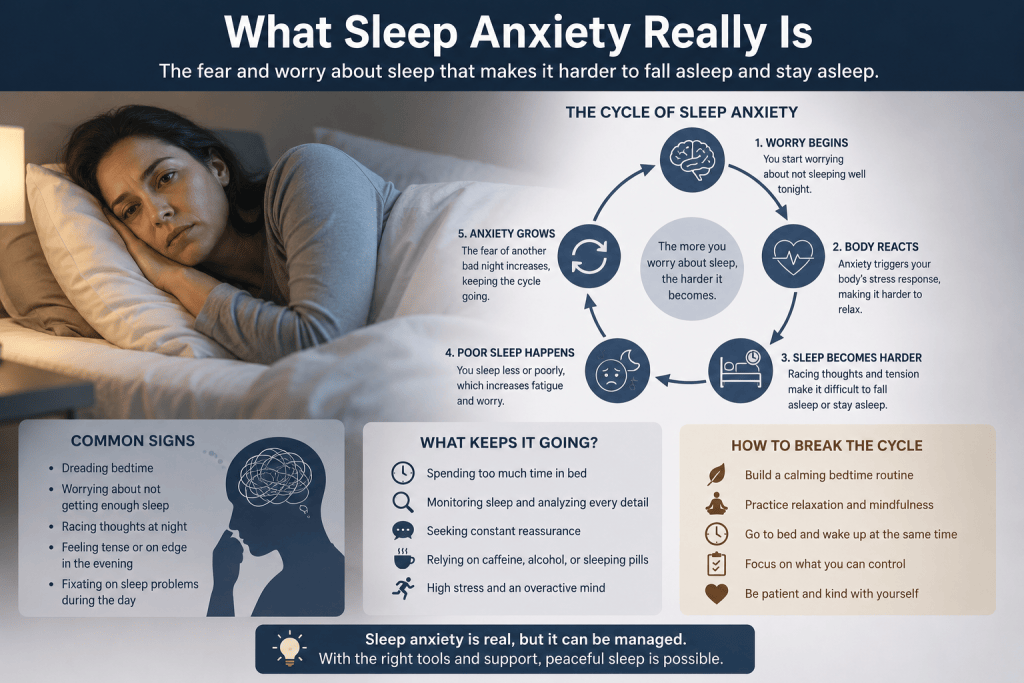
What Sleep Anxiety Really Is
Sleep anxiety is the worry, tension, or fear that shows up around bedtime and the idea of falling asleep. For some people it is a light unease. For others it grows into real dread as the evening goes on. The feeling can start hours before bed, building as the clock ticks toward the moment you know you should be resting.
This is different from a single rough night. Everyone has trouble sleeping now and then. The pattern becomes a problem when the bed itself starts to feel like a place of stress rather than rest. Over time, your mind can begin to link your pillow with pressure instead of calm. If your evenings often bring a wave of unease, our piece on why you feel anxious at night offers a helpful starting point.
CHECK YOUR SLEEP SYMPTOMS: TAKE THE 2 MINUTE QUIZ
TAKE THE QUIZ
Why Sleep Anxiety Becomes a Vicious Cycle
The tricky part is how the worry feeds itself. You lie down, hope to fall asleep, and notice you are still awake. That thought sparks a little stress. Stress makes the body more alert, which pushes sleep further away. Then you notice you are still awake, and the loop repeats. Each turn of the wheel makes the next night feel more loaded.
This loop is what makes it feel so stubborn. The harder you try to force sleep, the more your body treats bedtime as a task to solve rather than a time to rest. Trying hard to sleep is a bit like trying hard to relax. The effort works against the goal. Many people find that once they understand the loop, it loses some of its grip. Our article on how to stop overthinking at night breaks down why the racing mind gets louder in the dark.
What Fuels the Dread at Bedtime
Several everyday things can pour fuel on the fire. Watching the clock is a big one. Each glance at the time adds pressure and math, as your mind counts the hours you have left. Screens are another. Bright light and busy content can keep the brain switched on when it should be winding down.
Caffeine late in the day, heavy meals, and alcohol can all stir the pot as well. Alcohol may feel like it helps you drift off, yet it often breaks up sleep later in the night. Daytime stress that never got processed can also wait until the lights go out, then flood in all at once. If your brain refuses to quiet down, our guide on when you cannot shut your brain off at night speaks directly to that experience.
How the Body Reacts to Nighttime Worry
Worry is not only in your head. When the mind senses stress, the body responds. Your heart rate can rise, muscles can tense, and breathing can grow shallow. This is the same alert system that helps you in a real emergency. At bedtime, though, it is the opposite of what you need. The National Heart, Lung, and Blood Institute notes that stress and worry are common threads in ongoing sleep trouble.
That physical alertness is why sleep anxiety can feel so real in the body. You may feel restless, warm, or wired even when you are exhausted. The good news is that the body also responds to calm signals. Slow breathing, a cool dark room, and a steady routine can gently tell your system that it is safe to rest. These are wellness habits, not quick fixes, and they tend to work best with patience.
Simple Habits That Calm the Mind Before Bed
Small, steady changes often help more than any single trick. The aim is to make bedtime feel less like a test and more like a soft landing. Here are a few gentle habits many people find useful.
Give yourself a wind down window of about an hour with dim lights and calm activity. Keep screens out of that window when you can. Try slow breathing, where you make the exhale a little longer than the inhale, to nudge the body toward calm. If your mind is busy, jot worries on paper earlier in the evening so they are not waiting for you in bed. A short guided meditation for sleep can also give the mind something soft to rest on.
One more habit helps a lot. If you have been lying awake for a while and feel tense, it is often better to get up, sit somewhere calm with low light, and return to bed when you feel sleepy. This keeps the bed linked with rest rather than struggle.
Building an Evening Routine You Can Keep
Routines work because they are predictable. When your evening follows a familiar path, your body starts to read the cues and prepare for rest on its own. The routine does not need to be fancy. It needs to be steady and easy to repeat on a normal weeknight.
Pick a regular wind down time, a consistent wake time, and a short sequence you enjoy, such as a warm shower, a few pages of a book, and slow breathing. Keeping your wake time steady, even after a rough night, helps set your internal clock, a point the Centers for Disease Control and Prevention echoes in its guidance on healthy sleep. If broken nights are part of your pattern, our article on how to stop waking up multiple times at night offers more ideas. For a fuller reset, our guide on how to fix insomnia naturally covers habit based approaches in plain language.
Watch: Why Sleep Apnea Is More Dangerous Than Most People Realize | Signs, Risks & Treatment
When It Is Time to Talk to a Professional
Self help habits carry many people a long way. Still, there are times when a conversation with a professional is the wise next step. If your worry around sleep has lasted for weeks, affects your mood or daytime function, or feels bigger than you can manage alone, reaching out is a strong and healthy choice.
A structured approach called cognitive behavioral therapy for insomnia, often shortened to CBT for insomnia, is widely studied for changing the thoughts and habits that keep the cycle going. Our overview of CBT for insomnia explains how it works, and our piece on why CBT for insomnia works looks at the research behind it. Dr. Avinesh Bhar encourages people to bring these concerns to a care team rather than carry them alone, since sleep, mood, and stress are closely tied and deserve real support.
How SLIIIP Can Help
SLIIIP was built to make getting help feel simple and calm. You can meet a board-certified sleep physician through a virtual visit, share what your nights look like, and talk through your options in plain language. There is no waiting room and no long drive. If a broader sleep evaluation makes sense, a home sleep test can be shipped to your door, so any testing happens in your own bed. Coverage runs across all 50 states, which means support is within reach wherever you live.
The goal is to meet you where you are. You describe your sleep, a physician listens, and together you map out gentle next steps that fit your life. That kind of guidance can take a lot of pressure off the nights that feel hardest.
At Sliiip, we accept the following insurances:

SLIIIP’s board-certified sleep physicians can do sleep evaluations for sleep apnea. Virtual consultations in all 50 states. Home sleep tests shipped to your door.
Frequently Asked Questions
What is sleep anxiety?
It is worry, tension, or fear that shows up around bedtime and the idea of falling asleep. It can range from mild unease to real dread as the night gets closer.
Why do I feel anxious right before bed?
Quiet and darkness remove daytime distractions, so unprocessed stress can surface. Watching the clock and worrying about sleep can add to that feeling.
Is dreading bedtime the same as insomnia?
They often overlap but are not identical. Bedtime dread is the worry itself, while insomnia describes trouble falling or staying asleep. One can feed the other.
Why does my brain race when I lie down?
With fewer distractions, the mind has space to wander. Worries you pushed aside during the day can rush in once the lights are off.
Can bedtime worry cause real physical symptoms?
Yes. Stress can raise heart rate, tense muscles, and make breathing shallow. That is why you may feel wired even when you are tired.
How do I stop dreading bedtime?
A steady wind down routine, less screen time, and calm breathing can help. Keeping the bed linked with rest rather than struggle also makes a difference.
Why do I wake up feeling anxious?
Stress hormones naturally shift in the early morning, and lingering worry can surface as you wake. A calm morning routine can soften the effect.
Does screen time before bed make things worse?
It can. Bright light and busy content keep the brain alert when it should be winding down. A screen free window before bed often helps.
Can a bedtime routine really help?
Yes. Predictable habits give your body cues to prepare for rest. The routine works best when it is simple and repeated on normal nights.
Should I get out of bed if I cannot sleep?
Often yes. If you feel tense after lying awake for a while, getting up and returning when sleepy keeps the bed tied to rest, not frustration.
Does caffeine affect sleep anxiety?
It can. Caffeine late in the day may keep the body alert and add to nighttime restlessness. Cutting it off earlier can help some people.
Is it bad to watch the clock at night?
Clock watching tends to add pressure and mental math about lost hours. Turning the clock away from view can lower that stress.
Can breathing exercises calm a racing mind?
Slow breathing, with a longer exhale than inhale, can nudge the body toward calm. It gives the mind a simple focus instead of spinning thoughts.
Why is my worry worse on work nights?
The pressure of an early alarm and a busy next day can raise the stakes of sleep. That added weight can make the loop feel stronger.
Can exercise help with sleep?
Regular daytime movement can support deeper, steadier rest for many people. It is best to avoid intense workouts very close to bedtime.
Does alcohol help me fall asleep?
Alcohol may help you drift off, but it often breaks up sleep later in the night. That can leave you feeling less rested overall.
When should I talk to a professional about sleep?
If worry around sleep lasts for weeks, affects your mood or day, or feels bigger than you can handle alone, a professional visit is a wise step.
What is CBT for insomnia?
It is a structured, well studied approach that helps change the thoughts and habits that keep sleep trouble going. Many people find it helpful over time.
Can a virtual sleep consultation help with this?
Yes. A virtual visit lets a board-certified physician hear your history and guide next steps. Any testing can often be arranged at home.
How do I get started with SLIIIP?
You can book a virtual consultation with a board-certified sleep physician, and a home test can be shipped to your door if a broader evaluation makes sense.
Bedtime does not have to feel like something you dread. By understanding the loop, building calm habits, and reaching out when you need support, you can slowly teach your body that rest is safe again. Small steps, repeated with patience, are often what turn the nights around.
SLIIIP’s board-certified sleep physicians can do sleep evaluations for sleep apnea. Virtual consultations in all 50 states. Home sleep tests shipped to your door.
Latest posts
-
Why Can’t I Wake Up Even After Getting Enough Sleep?
Last updated: October 2, 2026. Medically reviewed by Dr. Avinesh Bhar, Board-Certified Sleep Physician, SLIIIP.com. If you can’t wake up after enough sleep, the cause is usually not the number…
-
Why Does My Heart Rate Drop So Low While I Sleep?
Last updated: October 2, 2026. Medically reviewed by Dr. Avinesh Bhar, Board-Certified Sleep Physician, SLIIIP.com. Your heart rate drops low while sleeping mainly because your body needs less work from…
-
Why Are My Naps Never Refreshing?
Last updated: October 2, 2026. Medically reviewed by Dr. Avinesh Bhar, Board-Certified Sleep Physician, SLIIIP.com. Naps that leave you groggy usually come down to how long you sleep, when you…
Get updates
Spam-free subscription, we guarantee. This is just a friendly ping when new content is out.

