👉 Register for Free. How to Diagnose Sleep Apnea Faster in Primary Care – FREE Webinar by Dr. Audrey Wells. – Friday, April 24 at 12 PM ET


Can You Do a Home Sleep Test If You Use a Pacemaker?
A home sleep test raises a fair question for anyone with a pacemaker, and as Dr. Avinesh Bhar, Board-Certified Sleep Physician at SLIIIP.com, points out, the worry usually comes from picturing the wrong kind of device.
These tests use small sensors worn on the body, not anything that sends signals into your chest, so for most people they fit comfortably alongside a pacemaker. Still, the smart move is always to confirm the plan with your own physician and cardiologist first.
SLIIIP’s board-certified sleep physicians can do sleep evaluations for sleep apnea. Virtual consultations in all 50 states. Home sleep tests shipped to your door.
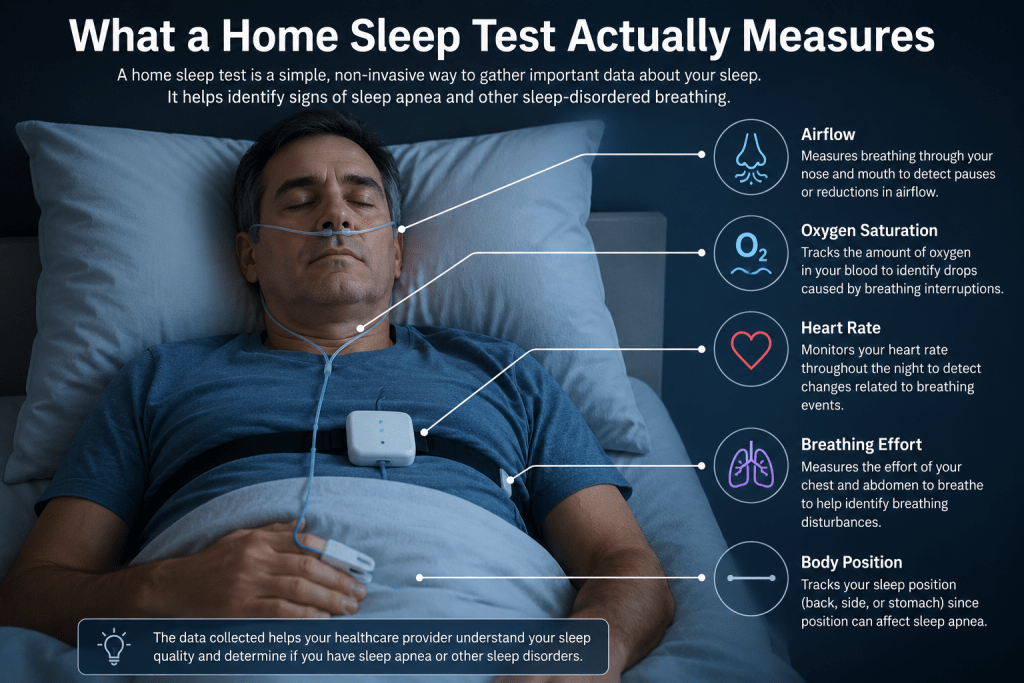
What a Home Sleep Test Actually Measures
A lot of the worry around this test comes from not knowing what is in the kit. So let us clear that up first. The device is a small recorder with a few sensors that sit on the outside of your body.
Nothing about the test goes inside you, and nothing sends an electrical pulse, which is the part that matters most for pacemaker users. A pacemaker is an active device in your chest. The test is a passive recorder on your skin. They do very different things.
A typical kit checks a handful of signals while you sleep. It tracks your breathing through a small band or sensor. It measures the oxygen in your blood with a soft clip on your finger. It often notes airflow at your nose and your body position. To compare this with a lab visit, see our overview of home versus lab sleep tests.
CHECK YOUR SLEEP SYMPTOMS: TAKE THE 2 MINUTE QUIZ
TAKE THE QUIZ
Can You Take a Sleep Test at Home With a Pacemaker?
For most people, the answer is yes, but the real answer comes from your care team. Because the sensors are non-invasive and worn on the surface of your body, they are generally compatible with a pacemaker, though your physician and cardiologist should confirm it for your situation.
This is not a one size fits all topic. Your heart history is unique, and only your own doctors know the full picture. Here is how to think it through.
How the Sensors Work
The finger clip uses a gentle light to read your oxygen. The breathing band simply senses the rise and fall of your chest or belly. The nasal sensor measures airflow. None of these send current into your body or near your device. They listen, they do not transmit into you.
Why Your Cardiologist Should Be in the Loop
Even though the test itself is gentle, your heart care is its own thing. Looping in your cardiologist keeps everyone on the same page and is simply good practice when you have a heart device. Your sleep physician and your cardiologist can coordinate so your sleep evaluation fits your overall care.
If you are weighing whether testing is right for you at all, our article on whether you need a sleep study can help you start the conversation.
Why Heart Patients Are Often Steered Toward Sleep Testing
If a doctor has suggested a sleep evaluation, there is usually a reason. Sleep apnea and heart health are closely studied together. People with certain heart conditions are checked for sleep apnea more often, not less.
This is exactly why many people with pacemakers end up needing a home test in the first place. Their care team wants to know if a breathing problem at night is adding strain. You can read more in our overviews of how sleep apnea affects the heart and the link between sleep apnea and atrial fibrillation.
Understanding what apnea is helps here too. Our plain language guide on what sleep apnea is lays out the basics, and our page on sleep and heart disease connects the dots.
What to Expect During an At-Home Test
The process is built to be simple, which is part of why so many people prefer it. You sleep in your own bed, on your own schedule, with no overnight stay in a lab.
The kit arrives at your door with clear instructions. You set up the sensors at bedtime, which usually takes only a few minutes. You sleep as you normally would. In the morning you take everything off and return the device or upload the data, depending on the kit.
A sleep physician then reviews your results. If you want a step by step picture, our guides on how to get a sleep test at home and how to prepare for a home sleep study walk through the details.
If you are worried about cost, our article on whether an at-home study is covered by insurance is a good place to check.
Watch: How Does a Home Sleep Test Work? — SLIIIP.COM
When to Talk With Dr. Avinesh Bhar and the SLIIIP Team
If you have a pacemaker and a doctor has raised sleep apnea, a virtual visit is an easy first step. You can ask every question you have before any device shows up at your door.
Dr. Avinesh Bhar and the SLIIIP care team can review your history, talk through your heart device, and coordinate with your other doctors as needed. Because SLIIIP runs on telemedicine, this happens from home, which is helpful when travel or appointments are hard to manage.
From there, your physician can decide if a home sleep apnea test makes sense and explain what the results could mean for your care. The goal is a clear, coordinated plan, not a rushed one.
Lifestyle Habits That Support Heart and Sleep Health
Testing answers the question of whether apnea is present. Daily habits help your heart and your sleep no matter what the test shows. Small, steady routines add up over time.
Keep a regular sleep and wake schedule.
Follow your cardiologist’s guidance on diet, salt, and activity.
Go easy on alcohol near bedtime, since it can affect both sleep and the airway.
Manage stress with calm routines before bed.
Take any prescribed medication exactly as directed, and never stop it on your own.
Bring up new or worsening symptoms with your care team promptly.
These habits do not treat or cure any condition, and they do not replace your doctors. They simply support the bigger plan your care team builds with you. Healthy sleep is one part of heart health, working alongside your medical care.
For trusted background, the Centers for Disease Control and Prevention and the National Heart, Lung, and Blood Institute both publish clear public guides on sleep and the heart.
At Sliiip, we accept the following insurances:

SLIIIP’s board-certified sleep physicians can do sleep evaluations for sleep apnea. Virtual consultations in all 50 states. Home sleep tests shipped to your door.
Frequently Asked Questions
Can you do a home sleep test if you use a pacemaker?
For most people, yes. The sensors sit on the outside of the body and do not send signals into you, so they are generally compatible with a pacemaker. Always confirm the plan with your physician and cardiologist.
Does an at-home test interfere with a pacemaker?
The sensors are passive and worn on the skin. They read signals rather than send current into your body, so they are not designed to interfere with a pacemaker. Your care team can confirm your case.
Is an at-home test safe for heart patients?
The test is non-invasive and gentle, which is why many heart patients use it. Because every heart history is different, your own doctors should confirm it fits your situation.
Why would a heart doctor order a sleep test?
Sleep apnea and heart health are closely linked. A cardiologist may want to know if a nighttime breathing problem is adding strain, which is why sleep testing is common for heart patients.
What does an at-home test measure?
It typically tracks your breathing, the oxygen in your blood, airflow at your nose, and your body position while you sleep. A physician reviews the results.
Do I need to remove my pacemaker for the test?
No. The test does not touch or affect the device itself. The sensors stay on the surface of your body.
Will the finger clip affect my pacemaker?
The finger clip uses a gentle light to read oxygen. It does not send electrical signals into your body, so it is not designed to affect a pacemaker.
Should I tell the sleep clinic about my pacemaker?
Yes. Always share your full heart history, including your pacemaker, so your sleep physician can coordinate care and answer your questions.
Can I do the test in my own bed?
Yes. The test is meant to be done in your own bed on your normal schedule, with no overnight lab stay.
How accurate is an at-home test?
For many people with suspected sleep apnea, a home test gives useful results. In some cases a physician may suggest a lab study instead, based on your history.
Is an at-home test covered by insurance?
Coverage varies by plan. Many plans cover at-home testing when a physician recommends it. You can verify your own benefits before you start.
How long does the test take?
You wear the sensors for one night of sleep. Setup usually takes only a few minutes at bedtime.
What happens after the test?
A sleep physician reviews your data and explains the results. If a problem is found, they talk through your options and coordinate with your other doctors as needed.
Can sleep apnea affect my heart?
Sleep apnea is studied alongside heart rhythm issues and heart disease. This is one reason heart patients are often checked for it.
Do I need a referral for a sleep test?
Requirements vary. With telemedicine, a sleep physician can often evaluate you directly during a virtual visit and arrange testing if appropriate.
Will my cardiologist and sleep doctor talk to each other?
They can coordinate care when you have a heart device. Sharing your history with both helps keep your plan consistent.
Can I keep taking my heart medication during the test?
Yes, unless your own doctor tells you otherwise. Never stop prescribed medication on your own. Ask your care team if you have questions.
What if my test shows sleep apnea?
Your physician will explain what the results mean and discuss next steps that fit your heart history. Nothing is decided without your input and coordination.
Is an at-home test more comfortable than a lab study?
Many people find it more comfortable since they sleep at home. A physician can tell you which option suits your situation best.
How can SLIIIP help me if I have a pacemaker?
Through virtual consultations, the SLIIIP team can review your history, talk through your heart device, coordinate with your other doctors, and arrange a test if it is appropriate.
SLIIIP’s board-certified sleep physicians can do sleep evaluations for sleep apnea. Virtual consultations in all 50 states. Home sleep tests shipped to your door.
Latest posts
-
Circular Ring Sleep Accuracy: What It Gets Right and Wrong
Last updated: September 14, 2026. Medically reviewed by Dr. Avinesh Bhar, Board-Certified Sleep Physician, SLIIIP.com. The Circular Ring estimates sleep stages, heart rate, and recovery using a finger-worn light sensor,…
-
Ballistocardiography Sleep Sensors: How Under-Mattress Tracking Works
Last updated: September 14, 2026. Medically reviewed by Dr. Avinesh Bhar, Board-Certified Sleep Physician, SLIIIP.com. Ballistocardiography sleep sensors sit under your mattress and detect the tiny mechanical vibrations your body…
-
RingConn vs Oura: Which Smart Ring Tracks Sleep Better?
Last updated: September 10, 2026. Medically reviewed by Dr. Avinesh Bhar, Board-Certified Sleep Physician, SLIIIP.com. RingConn and Oura both track sleep through a finger-worn ring, but they differ most in…
Get updates
Spam-free subscription, we guarantee. This is just a friendly ping when new content is out.

