👉 Register for Free. How to Diagnose Sleep Apnea Faster in Primary Care – FREE Webinar by Dr. Audrey Wells. – Friday, April 24 at 12 PM ET

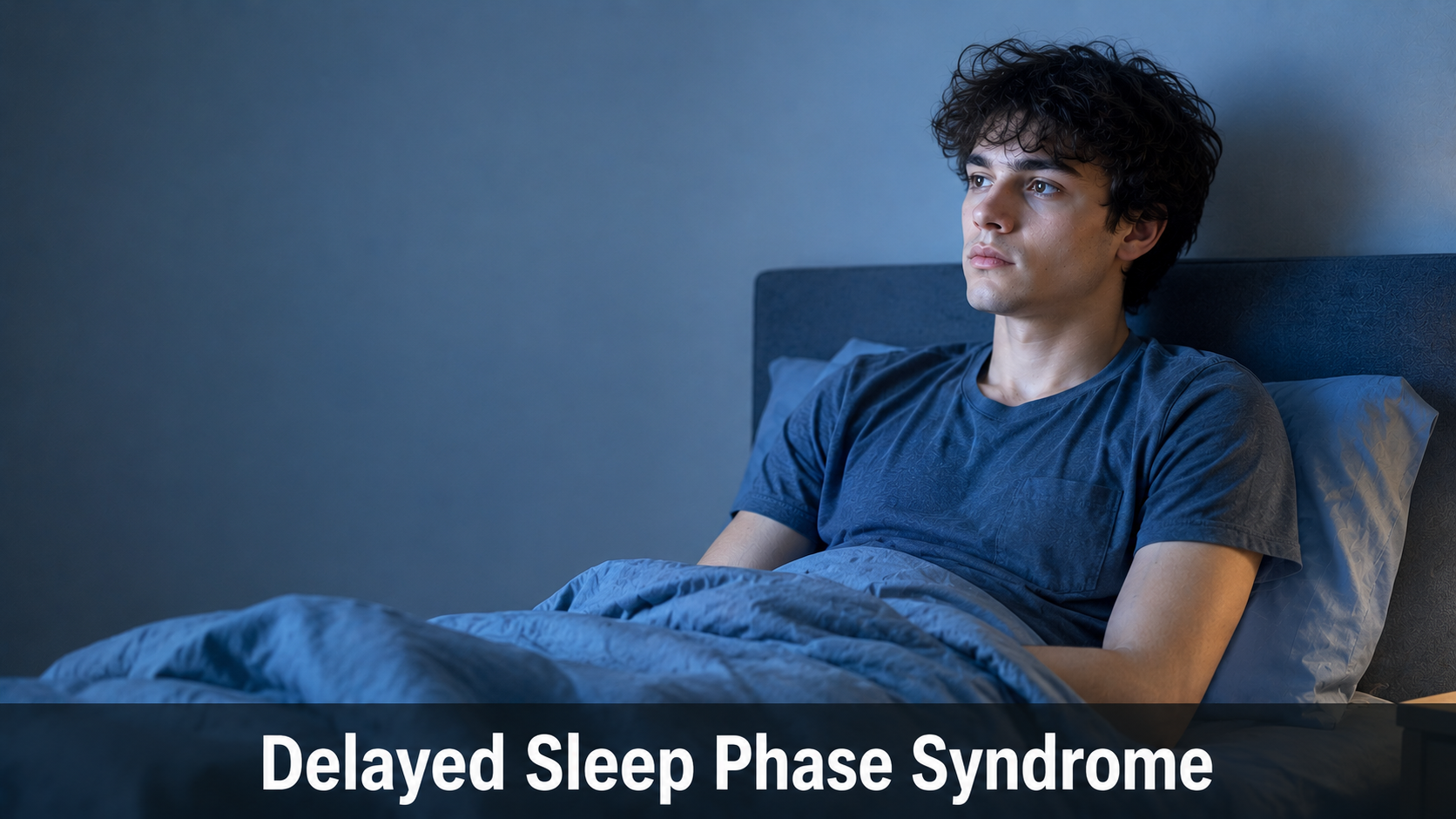
Delayed Sleep Phase Syndrome: Why You Cannot Fall Asleep on Time
Delayed sleep phase syndrome, a pattern where your natural sleep window slides hours later than most schedules allow, is something Dr. Avinesh Bhar, Board-Certified Sleep Physician at SLIIIP.com, hears about from people who feel wired at midnight yet drained at dawn. These are not lazy sleepers or people who simply stay up too late by choice. Their internal clock is set to a later hour, and forcing an early bedtime rarely works. This article is for general education and does not diagnose, treat, or replace care from your own doctor. If a shifted sleep schedule is disrupting your life, your physician is the right person to guide next steps based on your full history. Below we explain what the pattern is, how it differs from insomnia or simply being a night owl, and what may help.
SLIIIP’s board-certified sleep physicians can do sleep evaluations for sleep apnea. Virtual consultations in all 50 states. Home sleep tests shipped to your door.

Delayed sleep phase syndrome is a circadian rhythm pattern in which the body’s clock runs several hours later than a typical schedule. A person with this pattern may not feel sleepy until 2 a.m. or later, and then struggles to wake for an early morning.
The key point is that the sleep itself is usually normal once it happens. The problem is timing, not quality. When these people can follow their own late schedule, such as on a long break, they often sleep well and wake refreshed. The trouble appears when life demands early mornings. In other words, the body is not broken, it is simply set to a different schedule than the alarm clock expects. That gap between biology and daily demands is where the real strain shows up.
Because it involves the body clock, this pattern belongs to a larger group of circadian rhythm sleep disorders. Learning how the clock works makes the delayed pattern easier to understand.
CHECK YOUR SLEEP SYMPTOMS: TAKE THE 2 MINUTE QUIZ
TAKE THE QUIZ
How It Differs From a Night Owl or Insomnia
Everyone knows a night owl who thrives in the evening. The difference with this delayed pattern is that the late timing is persistent and hard to move, and it clashes with the person’s needed schedule. A casual night owl can shift earlier when they need to, while this pattern resists that shift.
It is also easy to confuse with insomnia, but the two are not the same. With insomnia, a person wants to sleep at a normal time and cannot. With this delayed pattern, the person could sleep well, just at a later hour than their day allows. Our guide on insomnia or something else helps tease these apart.
This distinction matters because the strategies differ. Treating a timing shift as if it were classic insomnia can miss the real issue. A clear picture of the pattern points toward more useful steps.
Common Signs and Who It Affects
The signs tend to cluster around a mismatch between the body clock and daily demands. A strong inability to fall asleep before a very late hour, paired with great difficulty waking early, is the core feature. Many report feeling most alert late at night.
Other common experiences include:
Daytime sleepiness and grogginess, especially in the morning. A sense of being wide awake at bedtime no matter how tired the body feels. Sleeping well and long when free to choose the schedule. Repeated lateness or missed mornings tied to sleep, not motivation.
This pattern often appears in teenagers and young adults, whose clocks naturally lean later during those years. If mornings leave you exhausted, our article on why you wake up tired may resonate. Still, only a professional can sort a lasting pattern from an ordinary rough patch.
What Causes the Shifted Clock
Researchers link this pattern to how a person’s internal clock responds to light and to natural differences in circadian timing. Some people are simply wired to run later, and studies suggest genetics and light exposure both play a part. These are associations reported in research, not certainties for any single person.
Modern habits can deepen the shift. Bright screens late at night send a wake up signal to the brain, which can push the clock even later. Irregular schedules and little morning light can add to the drift. You can read more about resetting timing in our guide on how to fix your circadian rhythm.
None of this means the pattern is a personal failing. It reflects biology meeting a world built around early mornings. Understanding that can take some of the frustration and self blame out of the picture.
Habits That May Help Shift the Clock
Gentle, consistent habits are the usual starting point, and they work best with professional guidance. Getting bright light soon after you wake is one of the strongest signals to nudge the clock earlier. A morning walk or time by a window can help set the day in motion.
In the evening, dim the lights and step away from bright screens well before bed. Keeping a steady wake time, even on weekends, gives the clock a stable anchor to shift toward. Our ultimate sleep routine guide lays out how these pieces fit together.
Some people ask about melatonin timing, which can be part of a plan but should be discussed with a clinician first, since timing and dose matter. Our overview of melatonin and sleep explains the basics. According to the Centers for Disease Control and Prevention, a consistent schedule and good light habits are core foundations of healthy rest.
Watch: Circadian Rhythm Disorders and Restless Legs Syndrome by Dr. Avinesh Bhar (SLIIIP)
When to Talk to a Professional
Habits help many people, but a stubborn timing shift sometimes needs expert input. When a late clock keeps colliding with work, school, or health despite steady effort, a professional evaluation is a sensible next step. A clinician can confirm the pattern and rule out other issues.
This pattern is not something to self diagnose from an article, and it is not the same as ordinary tiredness. As Dr. Avinesh Bhar notes, a careful evaluation can separate a circadian timing issue from other sleep conditions that need different care. Any concern beyond sleep belongs with your own physician.
The National Heart, Lung, and Blood Institute points out that ongoing sleep problems deserve a professional look rather than guesswork at home. A sleep evaluation is one part of a broader view of your health. SLIIIP.com makes that step simple with virtual visits and home sleep tests that fit around your schedule.
At Sliiip, we accept the following insurances:

SLIIIP’s board-certified sleep physicians can do sleep evaluations for sleep apnea. Virtual consultations in all 50 states. Home sleep tests shipped to your door.
Frequently Asked Questions
What is delayed sleep phase syndrome?
It is a circadian rhythm pattern where the body clock runs several hours later than a typical schedule. Sleep is usually normal once it begins, but the timing is late.
Is this delayed pattern the same as insomnia?
No, with insomnia a person cannot sleep at a normal time despite trying. With this pattern, they could sleep well, just at a much later hour.
Am I just a night owl or is this something more?
A casual night owl can shift earlier when needed, while this pattern resists change. When the late timing is persistent and disruptive, it may be more than preference.
What are the main signs to look for?
A strong inability to fall asleep before a very late hour and great difficulty waking early are the core signs. Morning grogginess and a slow, foggy start to the day are common too.
Who is most likely to have this pattern?
It often appears in teenagers and young adults, whose clocks naturally lean later. It can affect adults of any age as well.
What causes delayed sleep phase syndrome?
Research links it to genetics and how the clock responds to light. These are associations, not certainties, so your doctor is the best source for your case.
Can screens at night make it worse?
Yes, bright screens send a wake signal that can push the clock later. Dimming lights before bed may help.
Does morning light really help?
Bright light soon after waking is one of the strongest cues to nudge the clock earlier. A morning walk is a simple way to get it.
Should I take melatonin for this?
Melatonin timing can be part of a plan, but dose and timing matter. Discuss it with a clinician before starting.
Can I fix my schedule on my own?
Steady light and sleep habits help many people. A stubborn pattern that resists effort is worth a professional look.
Will sleeping in on weekends hurt my progress?
Large weekend shifts can pull the clock later again. A steadier wake time tends to support progress.
Is this pattern permanent?
Many people improve timing with consistent habits and guidance. Others manage it long term with a schedule that fits their clock.
How is it different from ordinary tiredness?
Ordinary tiredness eases with rest, while this is a timing mismatch. Feeling wide awake at bedtime yet exhausted at dawn is a telling clue.
Can this pattern affect school or work?
Yes, early start times can clash sharply with a late clock. This can lead to lateness or missed mornings tied to sleep, not motivation. Understanding the cause can help others respond with support rather than judgment.
Does it run in families?
Studies suggest a genetic component in some people. A family history of late sleepers is not unusual, and noticing it can help you make sense of your own pattern rather than blaming willpower.
Can it be mistaken for depression?
Low mood and fatigue can overlap with a shifted schedule. A professional can help sort out what is driving the symptoms.
What kind of doctor treats sleep timing issues?
A sleep clinician can evaluate circadian patterns and guide care. A telemedicine visit can help you get started.
Do I need a sleep study for this?
Not always, since timing patterns are often assessed by history and logs. Your clinician will advise what is needed.
Can keeping a sleep diary help?
Yes, a simple log of your sleep and wake times gives useful clues. It can make a professional visit more productive.
When should I see a professional about my sleep timing?
If a late clock keeps disrupting your life despite steady effort, seek an evaluation. A sleep visit can clarify what is going on.
SLIIIP’s board-certified sleep physicians can do sleep evaluations for sleep apnea. Virtual consultations in all 50 states. Home sleep tests shipped to your door.
Latest posts
-
Why Does My Body Ache and I Feel Tired With No Fever?
Last updated: October 13, 2026. Medically reviewed by Dr. Avinesh Bhar, Board-Certified Sleep Physician, SLIIIP.com. If your body aches and you feel tired with no fever, the cause is often…
-
COVID and Sleep: Why Sleep Problems Can Linger After Infection
Last updated: October 13, 2026. Medically reviewed by Dr. Avinesh Bhar, Board-Certified Sleep Physician, SLIIIP.com. The link between COVID and sleep often shows up after the test turns negative. Sleep…
-
Why Do I Feel Drunk or Confused When I Wake Up?
Last updated: October 2, 2026. Medically reviewed by Dr. Avinesh Bhar, Board-Certified Sleep Physician, SLIIIP.com. If you often feel drunk when you wake up, you may have sleep drunkenness. It…
Get updates
Spam-free subscription, we guarantee. This is just a friendly ping when new content is out.

