👉 Register for Free. How to Diagnose Sleep Apnea Faster in Primary Care – FREE Webinar by Dr. Audrey Wells. – Friday, April 24 at 12 PM ET

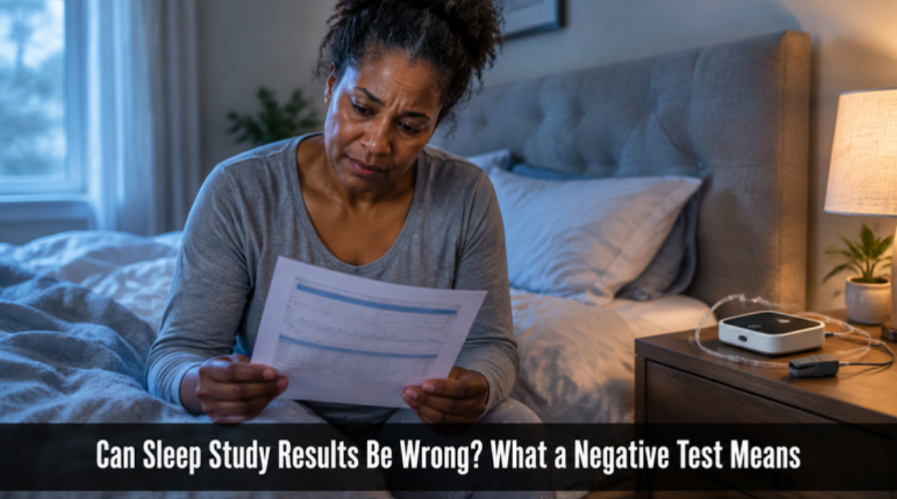
Can Sleep Study Results Be Wrong? What a Negative Test Means
Last updated: October 25, 2026. Medically reviewed by Dr. Avinesh Bhar, Board-Certified Sleep Physician, SLIIIP.com.
Yes, sleep study results can be wrong, and a negative home sleep test is the result most likely to miss something. A home test counts breathing events over the hours you wore it, not the hours you actually slept. Dr. Avinesh Bhar, Board-Certified Sleep Physician at SLIIIP.com, notes that a restless night of tossing and turning can make a real problem look smaller on paper. A normal home sleep test does not always rule out sleep apnea. If your symptoms are still there, the next step is a talk with a sleep physician, not a shrug.
SLIIIP’s board-certified sleep physicians can do sleep evaluations for sleep apnea. Virtual consultations in all 50 states. Home sleep tests shipped to your door.
Can a Sleep Study Be Wrong?
A sleep study can give a misleading result, but it is usually an incomplete picture rather than a false one. The most common error is a test that undercounts breathing events, which can make sleep apnea look milder or absent. It is much less common for a test to show sleep apnea in someone who does not have it.
Two kinds of tests are used to check for sleep apnea. An in-lab sleep study, called polysomnography, records brain waves, eye movements, breathing, heart rhythm, oxygen, and leg movements overnight. The NHLBI overview of sleep studies describes the many sensors placed on the scalp, face, chest, limbs, and finger during a lab test.
A home sleep apnea test is simpler. It usually tracks airflow, breathing effort, oxygen level, and heart rate. Most home devices do not record brain waves. That means the device cannot tell for sure when you were asleep and when you were lying awake.
Each test answers a slightly different question, so each one has its own blind spots. Knowing those blind spots helps you read your report with the right level of trust.
Why Can a Home Sleep Test Miss Sleep Apnea?
A home sleep test can miss sleep apnea because it measures less than a lab study does. The American Academy of Sleep Medicine guideline on diagnostic testing explains that home tests divide breathing events by recording time, not sleep time. The guideline states that these factors can lead to an underestimate of the true apnea-hypopnea index, or AHI.
Here is how that plays out. Say you wore the device for eight hours but only slept for five. The device divides your breathing events by eight hours, not five. Your score comes out lower than it would in a lab, where sleep is measured directly.
Breathing events that end in a brief wake-up
Some breathing events cause a short arousal from sleep without a big drop in oxygen. A lab study can see these arousals on the brain wave tracing. The AASM guideline notes that standard home test sensors cannot detect hypopneas linked only to these arousals. People whose apnea shows up mainly as frequent brief wake-ups may get a reassuring home result that does not match how they feel.
A night that does not look like your usual night
Sleep apnea often gets worse in certain conditions. Events tend to cluster during REM sleep and when you sleep on your back. Maybe you slept mostly on your side or got little REM sleep that night. Then the test may catch fewer events than a typical night would show.
Alcohol, a new pillow, a stuffy nose, or the stress of wearing sensors can also change one night of sleep. One night is a snapshot. It is not a full movie of your sleep.
Sensor and data problems
Home tests rely on you placing the sensors yourself. A nasal cannula can slip out. A finger probe can come loose. A belt can shift during the night. When that happens, the report may show only a few usable hours of data.
Your sleep physician checks how many hours of good signal the device recorded. A report with too little clean data is called technically inadequate. A technically inadequate test is not the same thing as a normal test, even if the score looks low.
What Should You Do After a Negative Home Sleep Test?
If your home sleep test is negative but your symptoms continue, ask your sleep physician whether an in-lab study is the right next step. The AASM guideline recommends polysomnography when a single home sleep apnea test is negative, inconclusive, or technically inadequate. The same guideline advises against simply repeating a home test in that situation.
A negative result is still useful information. It can lower the odds of severe sleep apnea. It just does not close the case when you still snore, stop breathing in your sleep, or wake up exhausted.
Before your follow-up visit, it helps to gather a few things:
- A copy of the full sleep test report, not only the summary score
- How many hours you think you actually slept that night
- Whether you slept on your back or side, and whether you drank alcohol
- Any sensor that fell off or felt out of place in the morning
- A list of your symptoms and how long you have had them
Your physician may also consider causes other than sleep apnea. Insomnia, restless legs, circadian rhythm problems, medications, and mood changes can all be linked to poor sleep and daytime fatigue. A negative apnea test is a reason to keep looking, not a reason to stop.
Can a Sleep Study Show Sleep Apnea When You Don’t Have It?
A sleep study rarely shows sleep apnea in someone who does not have it. Breathing pauses and oxygen drops are real signals, and a sleep physician reviews them before making a diagnosis. Still, the severity score can shift from night to night.
Some people score in the mild range one night and the moderate range another night. That variation reflects real changes in sleep, not a broken test. A borderline result is best read alongside your symptoms, your health history, and your physician’s judgment.
If you feel a result does not fit how you sleep, say so. Ask your physician to walk you through the raw data, such as the oxygen tracing and the hours of usable signal. A good review can explain why the number came out the way it did.
Home Sleep Test vs In-Lab Sleep Study: Which Is More Accurate?
An in-lab sleep study is more complete, but a home sleep test is a valid first step for many adults. The AASM guideline supports either test for uncomplicated adults. This applies when signs and symptoms point to moderate to severe obstructive sleep apnea.
The guideline favors an in-lab study for people with significant heart or lung disease, a history of stroke, chronic opioid use, or severe insomnia. These conditions make a home test more likely to miss or misread what is happening at night.
For most people, the home test is convenient and lower cost. You sleep in your own bed, which can make the night feel more normal. If you want tips on getting the most out of the night, see our guide on how to prepare for a home sleep study. For a walkthrough of the night itself, read what to expect during a home sleep apnea test.
Signs Your Sleep Test May Not Tell the Whole Story
Some patterns suggest it is worth a second look after a normal or mild result. Ongoing symptoms after a negative test deserve attention, not dismissal. Common signs include:
- A bed partner still hears loud snoring, choking, or pauses in breathing
- You wake up with headaches or a dry mouth most mornings
- You feel very sleepy during the day, even after a full night in bed
- You barely slept on the test night or took the sensors off early
- Your report lists only a few hours of usable data
- You have high blood pressure that is hard to control
None of these signs proves you have sleep apnea. They are reasons to bring the question back to a sleep physician and ask whether another type of test makes sense.
Watch: A doctor explains why sleep apnea is often misdiagnosed
When to See a Doctor
See a sleep physician if your test came back normal but you still snore loudly, stop breathing during sleep, or feel exhausted during the day. Dr. Avinesh Bhar recommends bringing the full report to the visit, including the hours of usable data. That helps the physician judge whether the test was truly adequate. If the night was short or the data was thin, an in-lab study is often the clearest way to get an answer.
Seek care sooner if you fall asleep while driving, have a heart condition, or have had a stroke. These situations make an accurate diagnosis more important. Do not change any prescribed treatment, including CPAP settings, on your own based on a test result. Talk with your care team first.
A sleep physician can also look at causes beyond sleep apnea. That broader view matters when a test is negative and you still feel unwell.
Most major insurance plans are accepted, including Medicare and TRICARE.

Check your coverage in minutes before you book. SLIIIP works with most major insurance plans for virtual sleep visits and home sleep tests.
For cash payments, price for Initial Consultation is $150
Follow up appointments cost $125
Frequently Asked Questions
Can sleep study results be wrong?
Yes. A sleep study can undercount breathing events, which can make sleep apnea look milder or absent.
Can a home sleep test miss sleep apnea?
Yes. Home tests measure recording time instead of sleep time, which can lower the score.
Does a negative home sleep test rule out sleep apnea?
Not always. A negative home test can miss sleep apnea, especially mild cases or events linked to brief wake-ups.
What should I do if my home sleep test is negative but I still have symptoms?
Talk with a sleep physician. The AASM recommends an in-lab study after a negative, inconclusive, or inadequate home test.
Should I just repeat the home sleep test?
Usually no. The AASM guideline advises an in-lab study instead of a repeat home test in that situation.
Why would a home sleep test underestimate my AHI?
It divides breathing events by the hours you wore it, not the hours you slept.
What is a technically inadequate sleep test?
It is a test with too few hours of usable signal. It is not the same as a normal result.
Can a bad night of sleep affect my results?
Yes. Little sleep, little REM sleep, or side sleeping on test night can lower the number of events recorded.
Is an in-lab sleep study more accurate than a home test?
An in-lab study records more signals, including brain waves. It gives a more complete picture of your sleep.
Can a sleep study show sleep apnea when I don't have it?
This is uncommon. The severity score can vary from night to night, though.
Why do my results differ between two nights?
Sleep position, REM sleep, alcohol, and nasal congestion can all change how many events occur.
Do home sleep tests measure brain waves?
Most do not. That is why they cannot tell exactly when you were asleep.
Who should have an in-lab study instead of a home test?
People with significant heart or lung disease, prior stroke, chronic opioid use, or severe insomnia are often better served by a lab study.
What if a sensor fell off during my home test?
Tell your physician. The report may show too little usable data to be reliable.
Can sleep apnea be worse on my back?
Yes. Breathing events often cluster when people sleep on their back.
Can a negative sleep test mean something else is wrong?
Yes. Insomnia, restless legs, circadian problems, and medications can also be linked to poor sleep.
What should I bring to my follow-up visit?
Bring the full report, your estimate of sleep time that night, and a list of symptoms.
Can I change my CPAP settings based on a new test?
No. Do not change prescribed settings on your own. Talk with your care team first.
Is a mild result on a home test still important?
It can be. A mild score paired with strong symptoms is worth discussing with a sleep physician.
Can I get a sleep evaluation online?
Yes. Board-certified sleep physicians offer virtual visits and can order the right type of test.
SLIIIP's board-certified sleep physicians can do sleep evaluations for sleep apnea. Virtual consultations in all 50 states. Home sleep tests shipped to your door.
Latest posts
-
Insomnia and Sleep Apnea: What to Do When You Have Both
Last updated: October 26, 2026. Medically reviewed by Dr. Avinesh Bhar, Board-Certified Sleep Physician, SLIIIP.com. Yes, you can have insomnia and sleep apnea at the same time. Doctors call this…
-
What Is Upper Airway Resistance Syndrome (UARS)?
Last updated: October 25, 2026. Medically reviewed by Dr. Avinesh Bhar, Board-Certified Sleep Physician, SLIIIP.com. Upper airway resistance syndrome (UARS) is a sleep breathing problem where a narrow airway makes…
-
Can Sleep Study Results Be Wrong? What a Negative Test Means
Last updated: October 25, 2026. Medically reviewed by Dr. Avinesh Bhar, Board-Certified Sleep Physician, SLIIIP.com. Yes, sleep study results can be wrong, and a negative home sleep test is the…
Get updates
Spam-free subscription, we guarantee. This is just a friendly ping when new content is out.

