
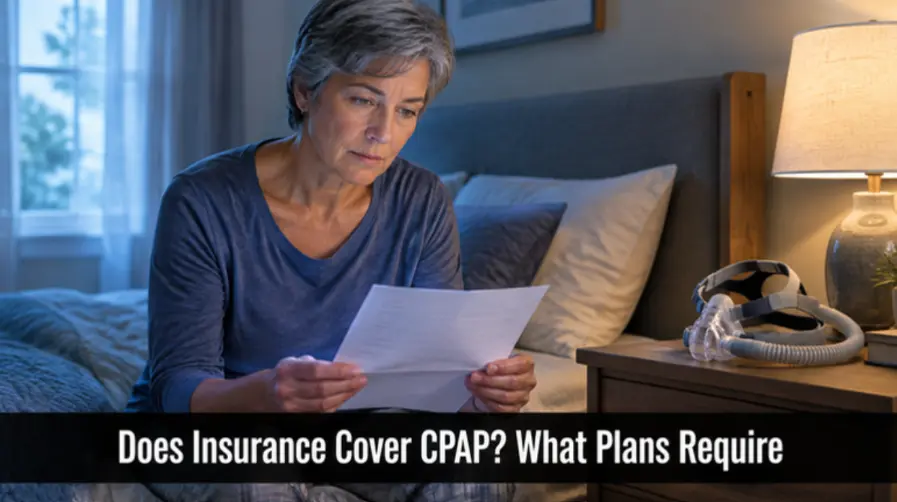
Does Insurance Cover CPAP? What Plans Require
Last updated: November 8, 2026. Medically reviewed by Dr. Avinesh Bhar, Board-Certified Sleep Physician, SLIIIP.com.
Yes, insurance covers CPAP for most people who have a documented diagnosis of obstructive sleep apnea. Dr. Avinesh Bhar, Board-Certified Sleep Physician at SLIIIP.com points to the step patients often skip. The sleep test comes first, because coverage usually rests on that result.
Most plans pay for CPAP only after a diagnosis, a prescription, and proof that you use the machine. Your share of the cost depends on your plan’s deductible, copay, or coinsurance.
SLIIIP’s board-certified sleep physicians can do sleep evaluations for sleep apnea. Virtual consultations in all 50 states. Home sleep tests shipped to your door.
Does Insurance Cover a CPAP Machine?
Most health insurance plans cover a CPAP machine when a doctor has diagnosed obstructive sleep apnea and prescribed the therapy. According to the American Academy of Sleep Medicine, most private policies cover positive airway pressure equipment, including machines and masks. The exact terms change from one policy to the next.
Coverage does not usually mean free. You may still owe a deductible, a copay, or a percentage of the cost. Some insurers rent the machine to you for several months. Others have you buy it from the start.
For a full look at prices, see our CPAP machine costs guide. This article focuses on a narrower question: what your plan is likely to ask for before it pays.
What Do Insurers Require Before They Pay for CPAP?
Insurers typically require a sleep test that shows obstructive sleep apnea, a prescription from a clinician, and a supplier your plan accepts. Many also ask for proof of regular use after the machine arrives.
Here is the usual order of steps:
- Clinical visit. A clinician records your symptoms and history.
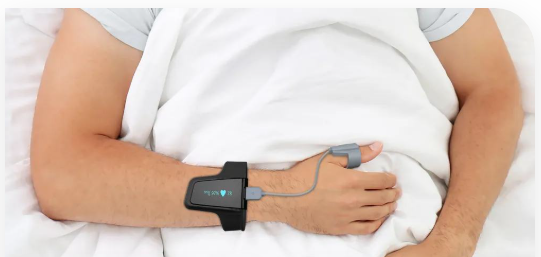
- Sleep test. This may be a home test or a night in a sleep lab.
- Diagnosis. The result must show sleep apnea at the level your plan requires.
- Prescription. A clinician orders the CPAP and the settings.
- Prior authorization, if your plan needs it. Your supplier or clinician usually submits this.
- Usage review. Your plan checks that you are using the therapy.
A snoring complaint alone rarely qualifies for coverage. Plans want a test result in your record. Our guide on at-home sleep study coverage explains how plans handle the test itself.
How Many Hours Do You Have to Use CPAP for Insurance?
Medicare and many private insurers look for at least 4 hours of use per night on 70% of nights. The American Academy of Sleep Medicine reports that this is measured over a consecutive 30-day period during the first three months.
Most modern machines send your usage data to the equipment supplier, who can share it with your insurer. If your use is too low, the insurer may stop paying. Some insurers may also ask you to return the machine.
Rules vary, so ask your plan for its exact usage standard. Write down the date your review period ends. That date matters more than most new users realize.
Does Medicare Cover CPAP?
Yes, Medicare Part B may cover a 12-week CPAP trial if you have been diagnosed with obstructive sleep apnea. The Medicare coverage page for CPAP says coverage may continue if you meet with your doctor. Your provider must document that the therapy is helping.
Here is how the costs and rental work under Original Medicare:
- Your share: After the Part B deductible, you pay 20% of the Medicare-approved amount.
- Rental period: Medicare pays the supplier to rent the machine for 13 months of continuous use.
- Ownership: After those 13 months of rental payments, you own the machine.
- Supplies: Masks and tubing are part of the same 20% cost sharing.
- Suppliers: Medicare only pays for equipment from suppliers enrolled in Medicare.
Ask any supplier whether it will accept assignment for all rental months. If it will not, you could face the full cost upfront. Medicare Advantage plans can set different rules, so check with your plan directly.
Does Medicaid Cover CPAP?
Medicaid often covers CPAP, but the rules differ by state. Many state programs ask for prior authorization and a recent clinical visit. Your state Medicaid office or your plan’s member line can confirm the current rules.
Are CPAP Masks and Supplies Covered?
Yes, most plans that cover the machine also cover core supplies on a replacement schedule. Core supplies usually include masks, cushions, tubing, filters, and water chambers.
Comfort items are often not covered. Wipes, special pillows, and cleaning machines usually fall outside the benefit. Your plan may also limit how often each part can be replaced. Our article on how often to replace a CPAP mask and tubing covers the practical timing.
What If Insurance Denies Your CPAP Claim?
A denial is often a paperwork problem that can be corrected. Start by asking your insurer for the exact reason in writing. Common reasons include a missing sleep test report, an expired prior authorization, or a supplier outside your network.
Next, ask your clinician’s office whether a corrected record or a letter of medical need would help. You also have the right to file an appeal with your plan. The denial letter should list the steps and the deadline.
Is It Cheaper to Buy CPAP Without Insurance?
Sometimes it is, especially on a high-deductible plan. The American Academy of Sleep Medicine notes that paying cash may cost less for some people on these plans. Cash buyers also avoid an insurer’s usage rules.
You still need a prescription to buy a CPAP in the United States. A cash purchase may not count toward your deductible, so compare both totals first. If you expect other medical costs this year, using your plan may work out better.
Whichever path you choose, do not change your CPAP pressure settings on your own. Talk with your clinician first.
When to See a Doctor
See a clinician if you snore loudly, wake up gasping, or feel very sleepy during the day.
TAKE THE QUIZ
Check Your Insurance Before You Book
SLIIIP works with many major insurance plans. Confirm your own benefits before your first visit.

SLIIIP’s board-certified sleep physicians can do sleep evaluations for sleep apnea. Virtual consultations in all 50 states. Home sleep tests shipped to your door.
For cash payments, price for Initial Consultation is $150
Follow up appointments cost $125
Frequently Asked Questions
Does insurance cover CPAP machines?
Most plans do when a doctor has diagnosed obstructive sleep apnea and prescribed CPAP.
Do I need a sleep study for insurance to cover CPAP?
Usually yes. Most plans require a home or lab sleep test that shows sleep apnea.
Does insurance cover a home sleep test?
Many plans cover a home sleep test when it is medically necessary. Check your plan's rules first.
How much does CPAP cost with insurance?
It depends on your deductible, copay, or coinsurance. Your plan or supplier can give you an estimate.
Does Medicare pay for CPAP?
Medicare Part B may cover a 12-week trial and continued rental if you meet its requirements.
How much does Medicare pay for CPAP?
After the Part B deductible, you pay 20% of the Medicare-approved amount.
How long does Medicare rent a CPAP machine?
Medicare pays rental for 13 months of continuous use. After that, you own the machine.
What is the CPAP usage requirement?
A common standard is at least 4 hours per night on 70% of nights in a 30-day period.
Does my insurance company know if I use my CPAP?
Often yes. Many machines send usage data to the supplier, who can share it with your insurer.
What happens if I do not use my CPAP enough?
Your insurer may stop paying and may ask you to return the machine.
Does Medicaid cover CPAP?
Medicaid often covers CPAP, but rules vary by state and may include prior authorization.
Does insurance cover CPAP masks?
Most plans cover masks and other core supplies on a set replacement schedule.
Does insurance cover CPAP cleaning machines?
Usually not. Cleaning machines are generally treated as comfort items.
Does insurance cover travel CPAP machines?
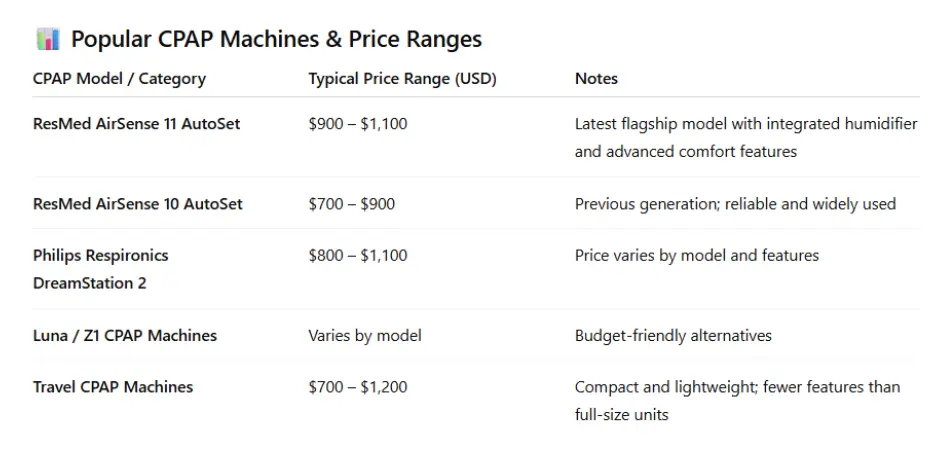
Most plans cover one primary machine. A second travel unit is often paid out of pocket.
Can I get a new CPAP through Medicare?
Medicare generally allows a new machine about every five years if you still need it.
Do I need a prescription for CPAP?
Yes. A CPAP machine requires a prescription in the United States.
Can a telehealth doctor prescribe CPAP?
Yes, a licensed clinician can prescribe CPAP by telehealth after a diagnosis. Plan rules still apply.
Is prior authorization required for CPAP?
Some plans require it. Ask your insurer before your machine ships.
Can I appeal a CPAP denial?
Yes. Your denial letter should explain the appeal steps and the deadline.
Should I pay cash for CPAP on a high-deductible plan?
It may cost less for some people. Compare the cash price with your expected plan costs first.
Latest posts
-
Can Statins Cause Insomnia? What the Research Shows
Last updated: November 17, 2026. Medically reviewed by Dr. Avinesh Bhar, Board-Certified Sleep Physician, SLIIIP.com. For most people, probably not. A meta-analysis of placebo-controlled sleep lab studies found that statins…
-
Do Beta Blockers Cause Insomnia? What to Know
Last updated: November 17, 2026. Medically reviewed by Dr. Avinesh Bhar, Board-Certified Sleep Physician, SLIIIP.com. Beta blockers are linked to insomnia in some people. Some beta blockers lower nighttime melatonin,…
-
Do I Need a Sleep Study to Get the Sleep Apnea Pill?
Last updated: November 17, 2026. Medically reviewed by Dr. Avinesh Bhar, Board-Certified Sleep Physician, SLIIIP.com. Yes, almost certainly. Any sleep apnea medicine, including the AD109 pill if it is approved,…
Get updates
Spam-free subscription, we guarantee. This is just a friendly ping when new content is out.

