👉 Register for Free. How to Diagnose Sleep Apnea Faster in Primary Care – FREE Webinar by Dr. Audrey Wells. – Friday, April 24 at 12 PM ET

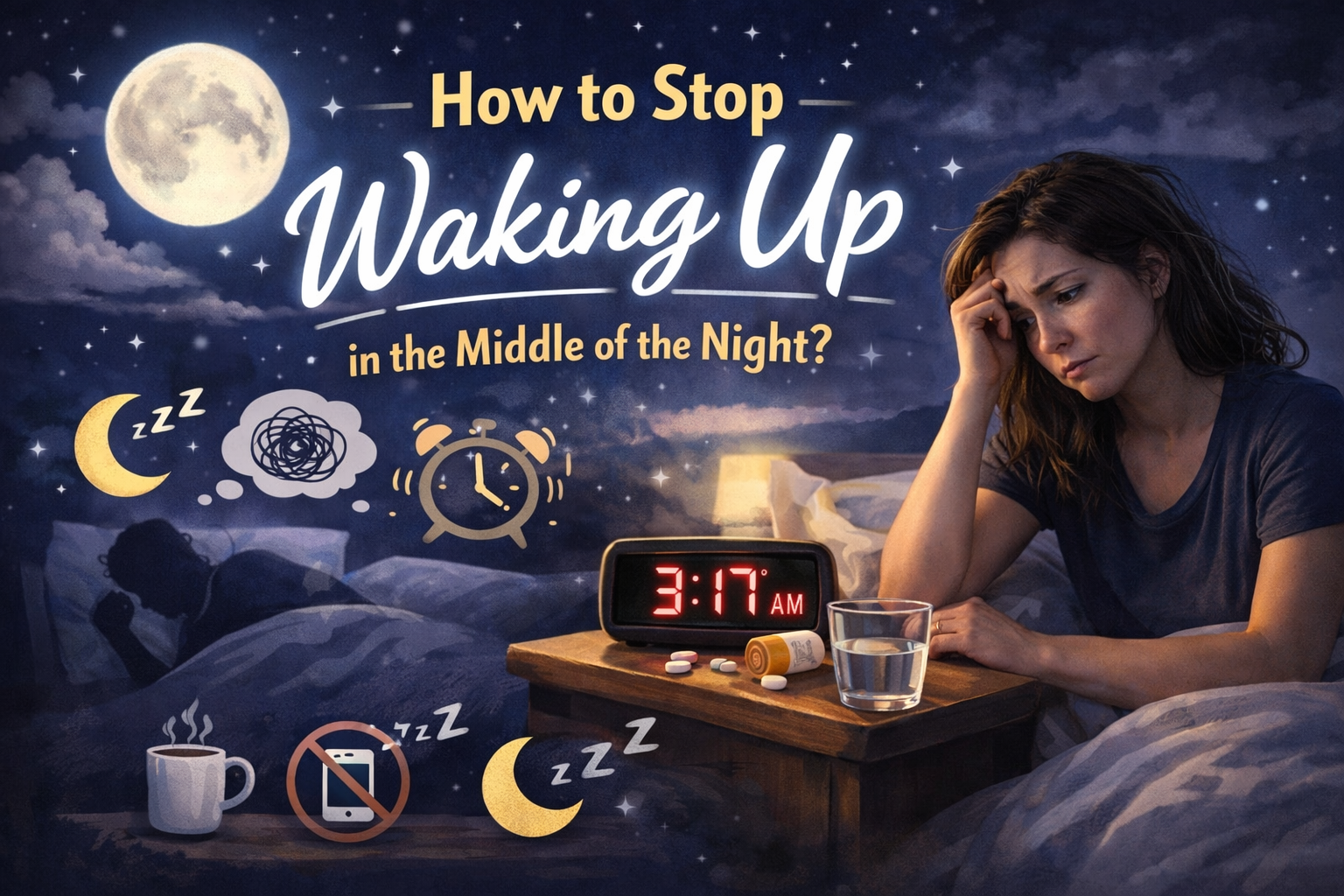
How to Stop Waking Up in the Middle of the Night?
You have tried everything. The phone goes down an hour before bed. The room is cool, dark, and quiet. You stopped drinking coffee after noon. Yet every night, somewhere between 2 AM and 4 AM, your eyes snap open, and you wonder “How to stop waking up in the middle of the night?”
If this sounds familiar, you are not alone. Research shows that more than 35% of adults wake up during the night at least three times per week. Dr. Avinesh Bhar has seen many patients with sleep issues and often they are a sign of a sleep disorder.
The most common medical reason for repeated nighttime waking is one that most people never consider: a breathing problem during sleep.
Why Sleep Hygiene Alone Is Not Enough
Sleep hygiene matters. But if you have followed every tip on the internet and still wake up multiple times per night, there is likely something more going on. Sleep maintenance insomnia, the clinical term for waking up and not being able to fall back asleep, has medical causes that no amount of lavender spray or weighted blankets will fix. If you are unsure whether your problem is insomnia or something else, understanding the difference is the first step.
The three most overlooked medical causes of nighttime waking are:
1. Obstructive sleep apnea (OSA). During sleep, the muscles in your throat relax. In people with OSA, the airway narrows or collapses entirely, cutting off airflow. Your brain detects the drop in oxygen and jolts you awake, often so briefly that you do not remember it. This can happen dozens or even hundreds of times per night.
The Sleep Apnea Connection Most People Miss
Here is what makes sleep apnea so easy to miss: you do not need to be overweight, male, or a loud snorer to have it. Women, younger adults, and people with a normal BMI can all have clinically significant sleep apnea. This is particularly true during REM sleep, which occurs predominantly in the second half of the night, exactly when most people report waking up at 2 AM.
Common signs that your nighttime waking could be caused by sleep apnea include:
- Waking up gasping, choking, or with a dry mouth
- Morning headaches that fade within an hour or two
- Needing to urinate multiple times during the night (nocturia)
- Daytime fatigue despite spending 7 to 8 hours in bed
- A bed partner who reports snoring or pauses in your breathing
- Waking with a racing heart or a sense of panic without a clear cause
Q. I don’t think I have sleep apnea.
Dr. Hans Schleicher, DDS at https://sleephouston.com/ |
Why You Keep Waking Up to Use the Bathroom
If you wake up once or twice per night to urinate, you may have assumed it is about drinking too much water before bed. But nocturia is actually one of the most common and overlooked symptoms of sleep apnea.
When the airway collapses during sleep, the pressure changes in the chest affect the heart. The heart responds by releasing a hormone called atrial natriuretic peptide (ANP), which signals the kidneys to produce more urine. The result is a full bladder that wakes you up, not because you drank too much, but because your body is responding to a breathing problem.
Studies show that treating sleep apnea often reduces or eliminates nocturia entirely, without any changes to fluid intake. Research on nocturia in patients with obstructive sleep apnea confirms this strong connection between airway obstruction and nighttime urination.
CPAP vs. Oral Appliance Therapy: Your Options
CPAP (continuous positive airway pressure) is the gold standard treatment for obstructive sleep apnea. It delivers pressurized air through a mask to keep the airway open. For many people, it is highly effective.
But CPAP adherence remains a significant challenge. Studies show that 30% to 50% of patients do not use their CPAP consistently. Common complaints include mask discomfort, dry mouth, claustrophobia, difficulty traveling, and noise. Understanding CPAP machine costs is also an important part of planning your treatment.
For patients with mild to moderate OSA, or those who cannot tolerate CPAP, oral appliance therapy (OAT) is an FDA-cleared alternative. A custom-fitted oral appliance, prescribed by a dentist trained in dental sleep medicine, gently advances the lower jaw to keep the airway open during sleep.
Q. Is it more comfortable than CPAP?
CPAP failure with patients is mostly related to their comfort during sleep and oral appliances have a 98% compliance rate and is generally recognized as a superior treatment for patients as an FDA approved alternative to CPAP for those who are intolerant or refuse CPAP treatment.” Dr. Hans Schleicher, DDS at https://sleephouston.com/ |
How to Find Out What Is Waking You Up
The first step is a proper evaluation by a board-certified sleep medicine physician. Today, telemedicine sleep consultations allow you to speak with a sleep specialist from home. If a sleep study is indicated, a home sleep test (HST) can be shipped directly to you. You wear a small device on your wrist or finger for one or two nights in your own bed.

At SLIIIP, our board-certified sleep medicine physicians are licensed in all 50 states. We use either the SleepImage ring or the WatchPAT for home sleep testing, depending on your insurance coverage. If your results indicate sleep apnea, we coordinate treatment: CPAP, oral appliance referral, or positional therapy.
Could a Breathing Problem Be Waking You Up? SLIIIP’s board-certified sleep physicians have completed 10,000+ virtual consultations. Home sleep test shipped to your door. No referral paperwork required. Medicare, Tricare, and major insurances accepted. |
Lifestyle Strategies That Help (Once Medical Causes Are Addressed)
Keep a strict sleep schedule. Go to bed and wake up at the same time every day, including weekends.
Stop alcohol at least 4 hours before bed. Alcohol fragments sleep in the second half of the night and relaxes airway muscles. It also suppresses deep sleep, which is critical for physical recovery.
Keep the room between 65 and 68°F. A cool room supports the natural temperature drop during sleep.
Limit fluids 2 to 3 hours before bed. But remember: if nocturia persists despite limiting fluids, it may be a sign of sleep apnea.
If awake for more than 20 minutes, get up. Move to another room and do something calm in dim light. Return to bed only when drowsy. This is called stimulus control. If you struggle with this regularly, explore proven techniques on how to fall asleep fast.
Avoid relying on sleeping pills as a long-term solution, as they often mask symptoms without treating the underlying cause.
Frequently Asked Questions
Q: Why do I keep waking up at 3 AM every night?
A: Waking at 3 AM often coincides with the transition into REM sleep, the lightest and most apnea-prone stage. During REM, muscles relax more, making airway collapse more likely. Other causes include alcohol metabolism (which disrupts sleep 3 to 4 hours after consumption), a natural cortisol rise between 2 and 4 AM, and nocturia. A sleep evaluation can determine the root cause.
Q: How do I stop waking up in the middle of the night to urinate?
A: Frequent nighttime urination (nocturia) is one of the most common symptoms of untreated sleep apnea. When the airway collapses, pressure changes cause the heart to release atrial natriuretic peptide (ANP), signaling the kidneys to produce more urine. Treating sleep apnea often resolves nocturia without any changes to fluid intake.
Q: Can sleep apnea cause you to wake up in the middle of the night?
A: Yes. Each time the airway collapses, oxygen drops and the brain triggers a brief arousal. These arousals can happen 5 to 60+ times per hour. Many people do not remember waking. They simply feel unrested and may attribute poor sleep to stress or insomnia.
Q: What is an oral appliance for sleep apnea?
A: A mandibular advancement device (MAD) is a custom-fitted dental device similar to a retainer. It advances the lower jaw forward during sleep, opening the airway. Oral appliances are FDA-cleared for mild to moderate OSA and for patients who cannot tolerate CPAP. They are prescribed by sleep dentists and covered by many insurance plans including Medicare.
Q: Is it normal to wake up 2 or 3 times a night?
A: Waking briefly once or twice can be normal, especially with age. However, waking more than twice, taking over 20 minutes to fall back asleep, or feeling unrefreshed in the morning suggests a problem that should be evaluated by a sleep specialist.
Q: Can I take a home sleep test instead of going to a sleep lab?
A: Yes. Home sleep tests are approved by the American Academy of Sleep Medicine for diagnosing obstructive sleep apnea. You wear a small device for one to two nights in your own bed. SLIIIP ships home sleep tests directly to patients in all 50 states. No referral required. Covered by Medicare, Tricare, and most major insurances.
Q: Why do I wake up with a dry mouth every morning?
A: Morning dry mouth is one of the most overlooked signs of sleep apnea. When the airway narrows, many people unconsciously mouth-breathe, drying out oral tissues. If dry mouth occurs with snoring, nighttime waking, or daytime fatigue, a sleep evaluation is recommended.
Q: Does anxiety cause you to wake up at night, or could it be something else?
A: Both are possible. Anxiety activates hyperarousal. But when oxygen drops during an apnea event, the body releases cortisol and adrenaline, creating symptoms identical to anxiety. A sleep study is the only way to distinguish between psychological and physiological causes.
Q: What is sleep maintenance insomnia?
A: Sleep maintenance insomnia is the inability to stay asleep through the night. It affects approximately 1 in 5 adults. Causes include untreated sleep apnea, chronic pain, medications, hormonal changes (perimenopause, menopause), depression, and circadian rhythm disruptions. Treatment depends on the underlying cause.
Q: Can a dentist help with my sleep problems?
A: Yes. Sleep dentists trained in dental sleep medicine can fit custom oral appliances for sleep apnea. They work with sleep physicians and use follow-up home sleep tests to verify treatment effectiveness.
Q: Do women get sleep apnea?
A: Yes, and it is significantly underdiagnosed. Women more often present with insomnia, fatigue, and mood changes rather than loud snoring. Risk increases during and after menopause when declining estrogen affects airway muscle tone. Women are often diagnosed years later than men.
Q: When should I see a doctor about waking up at night?
A: Seek evaluation if: you wake 3+ times per night regularly; nighttime waking persists for more than a month; you feel unrested despite enough time in bed; you or a partner notice snoring, gasping, or breathing pauses; you have morning headaches, dry mouth, or excessive daytime sleepiness; or you wake with a racing heart. Adjusting your sleeping position may offer temporary relief, but a professional evaluation is the most reliable path to lasting improvement.
“From my experience in psychology, behavioral therapy, and education, waking up gasping for air is often not a physical threat but a manifestation of anxiety. These episodes can mimic serious medical conditions, as the body’s fight-or-flight system activates during sleep, creating very real sensations of suffocation even when breathing remains intact, this response is driven by the brain’s misinterpretation of threat rather than an actual lack of oxygen. At the same time, conditions such as sleep apnea can also trigger awakenings with shortness of breath, which in turn may provoke panic responses.
In my professional experience this highlights the importance of proper diagnosis, as these symptoms may stem from either a physiological cause, a psychological response, or a combination of both.
Understanding the underlying cause of anxiety and panic attacks often is the first step toward regaining control and reducing physiological and psychological problems.“
Nathasja Plaizier
Latest posts
-
Why Are My Naps Never Refreshing?
Last updated: October 2, 2026. Medically reviewed by Dr. Avinesh Bhar, Board-Certified Sleep Physician, SLIIIP.com. Naps that leave you groggy usually come down to how long you sleep, when you…
-
Is Sleeping Too Much a Sleep Disorder?
Last updated: October 2, 2026. Medically reviewed by Dr. Avinesh Bhar, Board-Certified Sleep Physician, SLIIIP.com. Sleeping too much is not always a sleep disorder, but it can be a sign…
-
Why Does My Insomnia Get Worse After Stopping Sleep Medication?
Last updated: October 2, 2026. Medically reviewed by Dr. Avinesh Bhar, Board-Certified Sleep Physician, SLIIIP.com. Insomnia can get worse after stopping sleep medication for three main reasons. They are rebound…
Get updates
Spam-free subscription, we guarantee. This is just a friendly ping when new content is out.

