👉 Register for Free. How to Diagnose Sleep Apnea Faster in Primary Care – FREE Webinar by Dr. Audrey Wells. – Friday, April 24 at 12 PM ET

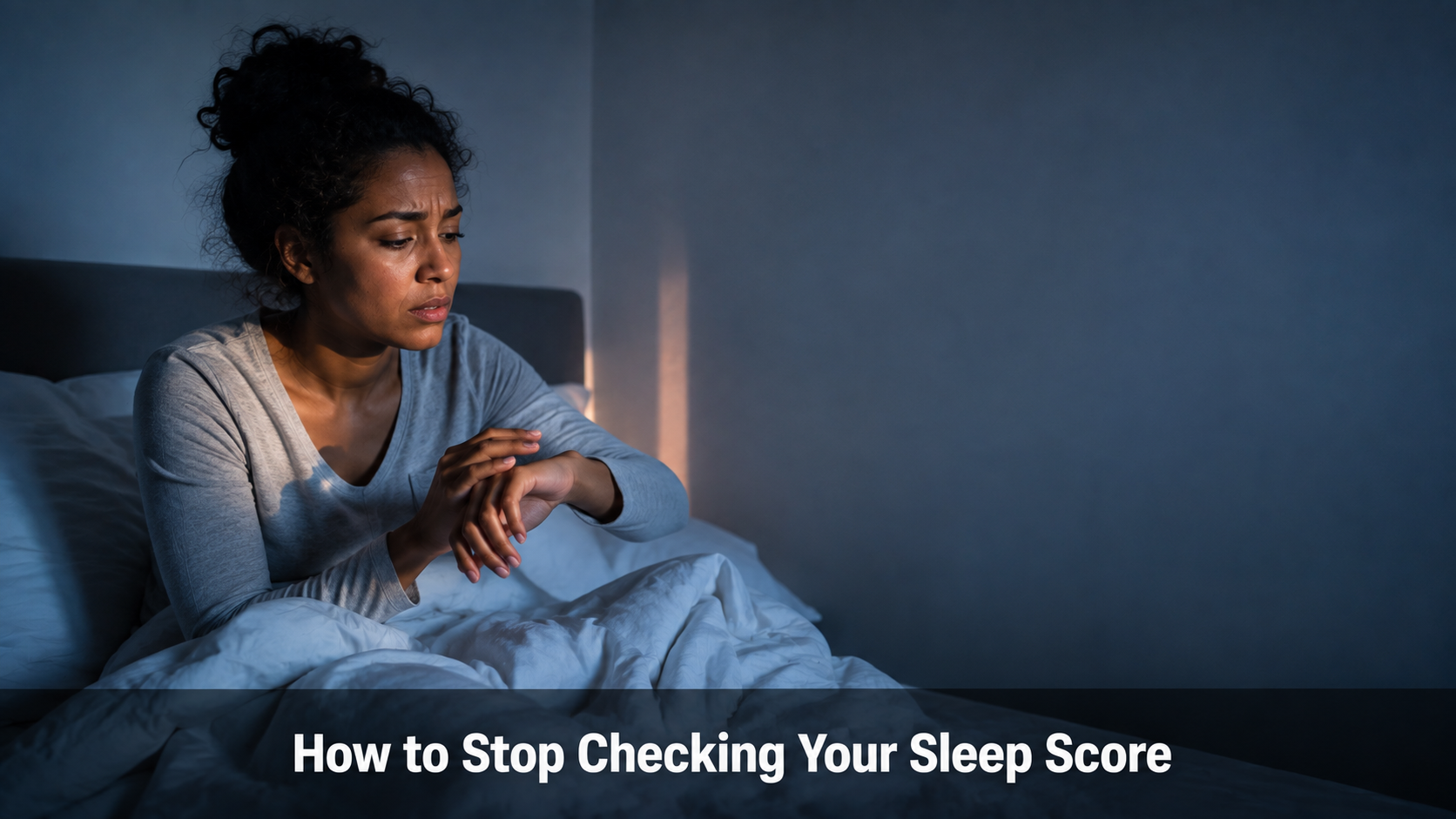
How to Stop Checking Your Sleep Score Without Giving Up on Better Sleep
Last updated: September 2, 2026. Medically reviewed by Dr. Avinesh Bhar, Board-Certified Sleep Physician, SLIIIP.com.
The way to stop obsessively checking your sleep score is to change when and how often you look at it, not to throw away a tool that can still be useful in smaller doses. Checking your score once a week instead of every morning keeps the data without letting it run your mood. Dr. Avinesh Bhar, Board-Certified Sleep Physician at SLIIIP.com, describes this pattern as one of the more common ways technology quietly makes sleep worse in people who were sleeping reasonably well before. The goal is not perfect data. It is a healthy relationship with the data you already have.
SLIIIP’s board-certified sleep physicians can do sleep evaluations for sleep apnea. Virtual consultations in all 50 states. Home sleep tests shipped to your door.
Why Is It So Hard to Stop Checking My Sleep Score?
Sleep trackers turn something you cannot normally observe, your own unconscious hours, into a number you can check the moment you wake up. Researchers first described this pattern in 2017, coining the term orthosomnia to describe patients who pursued a perfectionist quest for ideal sleep tracker data, according to a case series published in the Journal of Clinical Sleep Medicine. The daily feedback loop feels informative, but for some people it becomes a source of anxiety instead of reassurance.
A low score can create stress about sleep before your day has even started, which then makes the next night harder to sleep through. This is the paradox at the center of the problem: the tool meant to reduce sleep worry ends up creating more of it.
Can You Reduce Sleep Tracker Anxiety Without Quitting the Tracker Completely?
Yes, for most people. A few practical changes tend to help. Check your score on a set day each week instead of every morning, since weekly trends are more meaningful than any single night anyway. Turn off notifications that push your score to your lock screen as soon as you wake up. Keep the device recording in the background if you find the long-term trend genuinely useful, and simply delay when you look at it.
Some people find it easier to switch to a written sleep diary for a few weeks, noting how rested they feel without a number attached. This can help separate how you actually feel from what a screen says you should feel.
What If I Cannot Stop Checking No Matter What I Try?
If checking feels compulsive, if a low score reliably wrecks your mood or your day, or if reassurance from a good night’s sleep does not quiet the worry, that pattern is worth addressing directly rather than adjusting your settings one more time. This level of preoccupation with sleep data is a recognized pattern in sleep medicine, not a personal failing or a lack of willpower.
Cognitive behavioral therapy for insomnia, delivered by a trained clinician, is the treatment approach most closely associated with this kind of sleep-related anxiety. A sleep physician can help determine whether your relationship with tracking has crossed into this territory.
Does This Mean My Sleep Tracker Is Useless?
Not at all. Long-term trends in total sleep time, consistency of bedtime, and general patterns can be genuinely useful context for both you and a physician. The concern is not the tracker itself, it is checking it in a way that adds stress rather than insight. Our guide to what is orthosomnia covers the term itself in more depth if you want the full background.
Watch: Dr. Bhar Explains Why You Should Stop Normalizing Fatigue
When to See a Doctor
Dr. Avinesh Bhar recommends a sleep evaluation if your sleep tracker anxiety is accompanied by genuinely poor sleep at least a few nights a week, if you also notice signs of loud snoring or gasping, or if your mood, work, or relationships are affected by the checking pattern itself. A normal sleep study result that still does not ease your worry is itself a sign that the anxiety, not the sleep, may need direct treatment.

SLIIIP works with many major insurance plans, including Kaiser Permanente, Ambetter, Medicare, Humana, MultiPlan, Cigna, Aetna, Blue Cross Blue Shield, UnitedHealthcare, and Coventry Health Care.
SLIIIP’s board-certified sleep physicians can do sleep evaluations for sleep apnea. Virtual consultations in all 50 states. Home sleep tests shipped to your door.
Frequently Asked Questions
What is orthosomnia in simple terms?
It is an unhealthy preoccupation with achieving a perfect sleep tracker score, first described by sleep researchers in 2017.
Is orthosomnia a real medical diagnosis?
It is not a formal diagnosis in itself, but it is a recognized clinical pattern described in sleep medicine literature.
How often should I check my sleep score?
Many sleep physicians suggest weekly rather than daily, since a single night’s score has limited meaning on its own.
Can turning off sleep tracker notifications actually help?
Yes. Removing the automatic push to check your score first thing in the morning is one of the simplest and most effective changes.
Should I stop wearing my sleep tracker completely?
Not necessarily. Many people benefit from keeping the long-term trend data while changing how often they look at it.
Can a bad sleep score actually make my sleep worse?
Yes. Anxiety about a low score can increase arousal at bedtime, which can make it harder to fall or stay asleep the next night.
Does everyone who uses a sleep tracker develop orthosomnia?
No. Most people use trackers without issue. The pattern applies to a smaller group who become fixated on the data.
Can a written sleep diary replace a sleep tracker?
It can for people who want to reduce screen-based checking, though it will not capture the same level of continuous detail.
Is cognitive behavioral therapy for insomnia the same as therapy for anxiety?
CBT-I is a specific, structured program focused on sleep behaviors and thoughts, though it overlaps with general anxiety treatment techniques.
Can children develop sleep tracker anxiety?
This pattern has mainly been described in adults. Sleep concerns in children should be discussed with a pediatrician.
Does deleting the sleep app fix the underlying anxiety?
It can reduce the immediate trigger, but if checking behavior shifts to another source, such as a different app, the underlying pattern may still need attention.
Can my sleep tracker data help my doctor if I do get evaluated?
Yes. Bringing your long-term trend data to a sleep evaluation can give your physician useful context alongside a real diagnostic test.
Why do sleep trackers sometimes disagree with how I actually feel?
Consumer trackers estimate sleep stages from movement and heart rate rather than measuring brain activity directly, so mismatches with how you feel are common.
Is checking my sleep score compulsively the same as OCD?
Not necessarily the same condition, but the compulsive checking pattern shares some features with anxiety-driven behaviors and is worth discussing with a professional if it feels out of your control.
Can switching sleep tracker brands fix the anxiety?
Usually not. The anxiety is generally tied to the checking behavior itself rather than any specific brand’s scoring system.
Should I tell my doctor I have sleep tracker anxiety?
Yes. This is a recognized and common concern in sleep medicine, and your physician can help you address it directly.
Can setting a specific check-in day reduce sleep score anxiety?
Yes. Many people find that a fixed, infrequent check-in schedule reduces the daily emotional swing tied to the number.
Does a low sleep score always mean something is medically wrong?
No. Consumer sleep scores are estimates and are influenced by many factors, including tracker placement and normal night-to-night variation.
Can I recover from orthosomnia without professional help?
Many people improve with the practical changes described here. If checking feels compulsive or distress persists, professional support is appropriate.
How is orthosomnia different from regular insomnia?
Orthosomnia centers specifically on tracker data driving the worry, while insomnia is difficulty falling or staying asleep regardless of a device.
SLIIIP’s board-certified sleep physicians can do sleep evaluations for sleep apnea. Virtual consultations in all 50 states. Home sleep tests shipped to your door.
Latest posts
-
How Are My Hot Flashes Related to Menopause? The Mechanism Explained
Last updated: September 21, 2026. Medically reviewed by Dr. Avinesh Bhar, Board-Certified Sleep Physician, SLIIIP.com. Hot flashes are directly related to menopause through declining estrogen’s effect on the hypothalamus, the…
-
Why Did My Sleep Change So Fast in My Late 40s?
Last updated: September 21, 2026. Medically reviewed by Dr. Avinesh Bhar, Board-Certified Sleep Physician, SLIIIP.com. Sleep can change quickly in the late 40s because this is often when the perimenopause-to-menopause…
-
Why Does PMS Wreck My Sleep Even When My Symptoms Are Mild?
Last updated: September 21, 2026. Medically reviewed by Dr. Avinesh Bhar, Board-Certified Sleep Physician, SLIIIP.com. Sleep can fall apart in the days before your period even when your other PMS…
Get updates
Spam-free subscription, we guarantee. This is just a friendly ping when new content is out.

