👉 Register for Free. How to Diagnose Sleep Apnea Faster in Primary Care – FREE Webinar by Dr. Audrey Wells. – Friday, April 24 at 12 PM ET

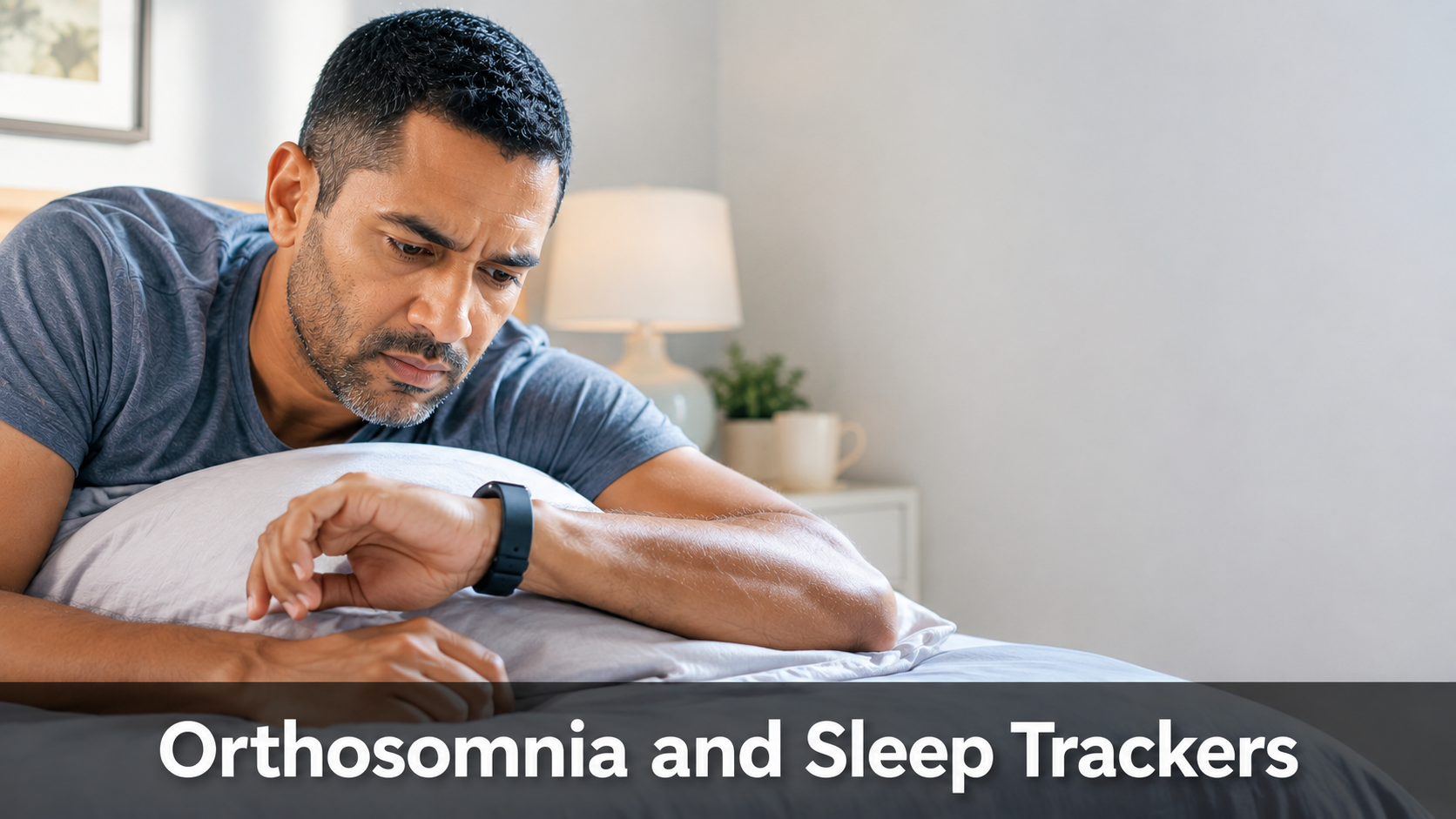
Orthosomnia: How Your Sleep Tracker Might Be Giving You Insomnia
Orthosomnia is a newer term for the stress that can build when people fixate on their sleep tracker scores, and Dr. Avinesh Bhar, Board-Certified Sleep Physician at SLIIIP.com, points out that chasing a perfect sleep number can sometimes leave you sleeping worse, not better.
When worry about your sleep data starts keeping you awake at night, the tracker meant to help may be working against you.
Sleep wearables are everywhere now, and most people love seeing their numbers each morning. But for some, those scores turn into pressure.
SLIIIP’s board-certified sleep physicians can do sleep evaluations for sleep apnea. Virtual consultations in all 50 states. Home sleep tests shipped to your door.

What Orthosomnia Means
It is the idea that trying too hard to achieve perfect sleep, often based on tracker data, can actually make sleep worse. The word combines the idea of correctness with sleep. In plain terms, it is the stress of chasing a flawless sleep score.
Orthosomnia happens when the goal of perfect sleep numbers creates anxiety that gets in the way of real rest. Instead of feeling relaxed at bedtime, you feel pressure to hit a target. That pressure can keep your mind active when it should be winding down.
The goal of this article is not to make you toss your tracker. It is to help you use it in a way that supports rest instead of stealing it. If your sleep keeps slipping, a sleep telemedicine visit can help you understand what is happening.
CHECK YOUR SLEEP SYMPTOMS: TAKE THE 2 MINUTE QUIZ
TAKE THE QUIZ
How a Sleep Tracker Can Backfire
Sleep trackers can be useful tools. They can show patterns over time and help you notice habits. The trouble starts when the number becomes the goal instead of how you actually feel.
When you wake up and check your score before you even check in with your own body, the data can shape your mood for the whole day. A low score can make you feel tired even if you feel fine. A high score can make you feel relieved even if you feel off. The number starts running the show.
Many trackers also estimate sleep stages, and those estimates are not always exact. Our article on core sleep versus deep sleep explains what these stages mean. It helps to remember that consumer trackers give estimates, not medical results.
The Anxiety Loop Behind Orthosomnia
Here is how the loop often works. You see a poor sleep score. You worry about it. That worry makes you anxious at bedtime. The anxiety makes it harder to fall asleep. The next morning, your score is low again, and the cycle repeats.
The more you stress about sleeping perfectly, the more that stress can stand between you and actual sleep. This is the heart of the problem. The effort to control sleep becomes the very thing that disturbs it.
If anxious thoughts at night sound familiar, our articles on why you feel anxious at night and why you overthink before bed share gentle strategies. Calming the mind is often more helpful than chasing a number.
When the Number Does Not Match How You Feel
One of the clearest signs of orthosomnia is when your tracker and your body disagree. You feel rested, but the app says you slept poorly, so you decide you must be tired. This is a sign the data is leading you instead of supporting you.
Your own sense of how rested you feel is one of the most important measures of good sleep. Trackers are helpful for spotting trends, but they cannot feel your energy for you. If you wake up refreshed, that matters more than a chart.
That said, if you consistently feel unrested even when you sleep enough hours, that is worth understanding. Our article on insomnia or something else can help you think it through, and a professional look can rule out other causes.
Healthy Ways to Use Your Sleep Tracker
You do not have to give up your wearable. A few simple shifts can help you keep the benefits without the stress. These are everyday wellness habits, not treatments.
Look at trends, not single nights. One low score means little. Patterns over weeks are more useful.
Check your body first. Notice how you feel before you check the app each morning.
Take a break if needed. If the data is stressing you, set the tracker aside for a while.
Avoid bedtime checking. Looking at sleep data right before bed can add pressure when you want to be calm.
Focus on habits, not numbers. Steady sleep times and a calm wind-down matter more than a perfect score.
Keep it in perspective. A tracker is a helper, not a judge of your worth or health.
For more on building rest-friendly routines, our guide on reasons for improving the quality of your sleep and our overview of the benefits of napping both share practical, low-stress ideas.
According to the Centers for Disease Control and Prevention, most adults need at least seven hours of sleep each night for good health. Aiming for enough hours matters more than chasing a flawless score.
What Trackers Can and Cannot Tell You
It helps to know the limits of a wearable. Consumer trackers can estimate how long you slept and give a rough sense of restlessness. They are not designed to diagnose sleep conditions.
A sleep tracker can hint at patterns, but it cannot replace a professional evaluation when something feels off. If you snore loudly, wake gasping, or feel exhausted no matter what, those are signs worth a closer look that a wearable cannot fully assess.
Some people wonder whether their watch can detect a breathing issue. Our article on whether an Apple Watch can detect sleep apnea gives a balanced answer. For a fuller picture, our guide on wearable sleep trackers explains what these devices do well and where they fall short.
Watch: Dr. Wells explains why sleep trackers don’t work
When to Talk With a Sleep Physician
If your sleep keeps slipping, or if your tracker keeps flagging concerns that worry you, it may help to get a professional look. Real answers can take the guesswork and anxiety out of the picture.
A sleep evaluation can tell you far more than a wearable, and it can put your mind at ease. Dr. Avinesh Bhar and the SLIIIP team can review your sleep history, talk through your symptoms, and arrange a home sleep test if needed.
The process is built around convenience. You can meet a board-certified physician through a virtual visit, and a home sleep test can be shipped right to your door. There is no need to spend a night in a lab. For more on calming a busy mind, our article on how to fix insomnia naturally and the National Heart, Lung, and Blood Institute both offer clear, supportive guidance.
At Sliiip, we accept the following insurances:

SLIIIP’s board-certified sleep physicians can do sleep evaluations for sleep apnea. Virtual consultations in all 50 states. Home sleep tests shipped to your door.
Frequently Asked Questions
- What is orthosomnia?
It is the idea that trying too hard to achieve perfect sleep, often based on tracker data, can actually make sleep worse by creating stress and anxiety. - Can a sleep tracker really cause insomnia-like problems?
For some people, worrying about their sleep scores can fuel anxiety at bedtime, which may make falling asleep harder. That is the core of the issue. - Are sleep trackers accurate?
Consumer trackers give helpful estimates of sleep time and restlessness, but they are not exact and are not designed to diagnose sleep conditions. - Should I stop using my sleep tracker?
Not necessarily. The goal is to use it for trends and habits, not to chase a perfect number. If it stresses you, a break can help. - Why do I feel tired after seeing a low sleep score?
A low score can shape your mood and make you feel tired even if you felt fine, which is one way tracker data can mislead you. - What if my tracker and my body disagree?
Your own sense of how rested you feel is one of the most important measures of good sleep. Trends matter more than any single night. - How can I use my tracker in a healthy way?
Look at patterns over weeks, check how you feel first, avoid bedtime checking, and focus on steady habits rather than a flawless score. - Does checking my sleep data at night make things worse?
It can. Looking at sleep data right before bed may add pressure when you want to feel calm and ready for rest. - What sleep stages do trackers measure?
Many estimate stages like light, deep, and rapid eye movement sleep, but these are estimates. Our article on core sleep versus deep sleep explains more. - Can my watch detect sleep apnea?
Some devices offer features related to breathing, but they cannot fully assess a sleep condition. A professional evaluation gives clear answers. - How much sleep do adults need?
Most adults benefit from at least seven hours of sleep each night, which matters more than chasing a perfect tracker score. - Why does stress about sleep keep me awake?
Worry can keep your body alert, which makes rest harder. The effort to control sleep can become the thing that disturbs it. - Is napping okay if I sleep poorly?
Short naps can help some people recover. Our article on the benefits of napping shares low-stress ideas for using them well. - What is a home sleep test?
It is a sleep study you can do in your own bed. The device is shipped to you, and the results help a physician understand your nights. - Do I have to visit a lab for a sleep evaluation?
No. SLIIIP offers virtual consultations in all 50 states, and home sleep tests can be shipped to your door. - When should I see a sleep physician instead of trusting my tracker?
If you snore loudly, wake gasping, or feel exhausted no matter what, those signs are worth a professional look a wearable cannot provide. - Can a tracker help me at all?
Yes. Used for trends and habits, a tracker can be a helpful tool. The key is keeping it in perspective as a helper, not a judge. - How do I break the anxiety loop?
Calming the mind with a steady wind-down, less bedtime data checking, and gentle nighttime routines often helps more than chasing a number. - What happens during a sleep evaluation?
A physician reviews your sleep history and symptoms and, if needed, arranges a home sleep test to better understand your nights. - How do I get started with SLIIIP?
You can schedule a virtual sleep evaluation online, and a board-certified physician will guide you, including arranging a home sleep test if needed.
Take the Next Step Toward Better Rest
Your sleep tracker can be a useful tool, but it should never become a source of stress. Focusing on how you feel, building steady habits, and getting real answers when needed all support better rest. You do not have to chase a perfect number alone.
SLIIIP’s board-certified sleep physicians can do sleep evaluations for sleep apnea. Virtual consultations in all 50 states. Home sleep tests shipped to your door.
Latest posts
-
Why Does My Body Ache and I Feel Tired With No Fever?
Last updated: October 13, 2026. Medically reviewed by Dr. Avinesh Bhar, Board-Certified Sleep Physician, SLIIIP.com. If your body aches and you feel tired with no fever, the cause is often…
-
COVID and Sleep: Why Sleep Problems Can Linger After Infection
Last updated: October 13, 2026. Medically reviewed by Dr. Avinesh Bhar, Board-Certified Sleep Physician, SLIIIP.com. The link between COVID and sleep often shows up after the test turns negative. Sleep…
-
Why Do I Feel Drunk or Confused When I Wake Up?
Last updated: October 2, 2026. Medically reviewed by Dr. Avinesh Bhar, Board-Certified Sleep Physician, SLIIIP.com. If you often feel drunk when you wake up, you may have sleep drunkenness. It…
Get updates
Spam-free subscription, we guarantee. This is just a friendly ping when new content is out.

