👉 Register for Free. How to Diagnose Sleep Apnea Faster in Primary Care – FREE Webinar by Dr. Audrey Wells. – Friday, April 24 at 12 PM ET

Is It Safe to Take Melatonin Every Single Night? A Doctor Answers
Plenty of people reach for melatonin every single night and assume it must be harmless, but Dr. Avinesh Bhar, Board-Certified Sleep Physician at SLIIIP.com, says the honest answer is more nuanced than a simple yes or no.
For most healthy adults, short-term use is generally considered low risk, but nightly use over months and years is a different question with less research behind it. The bigger issue is often why you feel you need it at all, which is something worth looking at closely.
SLIIIP’s board-certified sleep physicians can do sleep evaluations for sleep apnea. Virtual consultations in all 50 states. Home sleep tests shipped to your door.
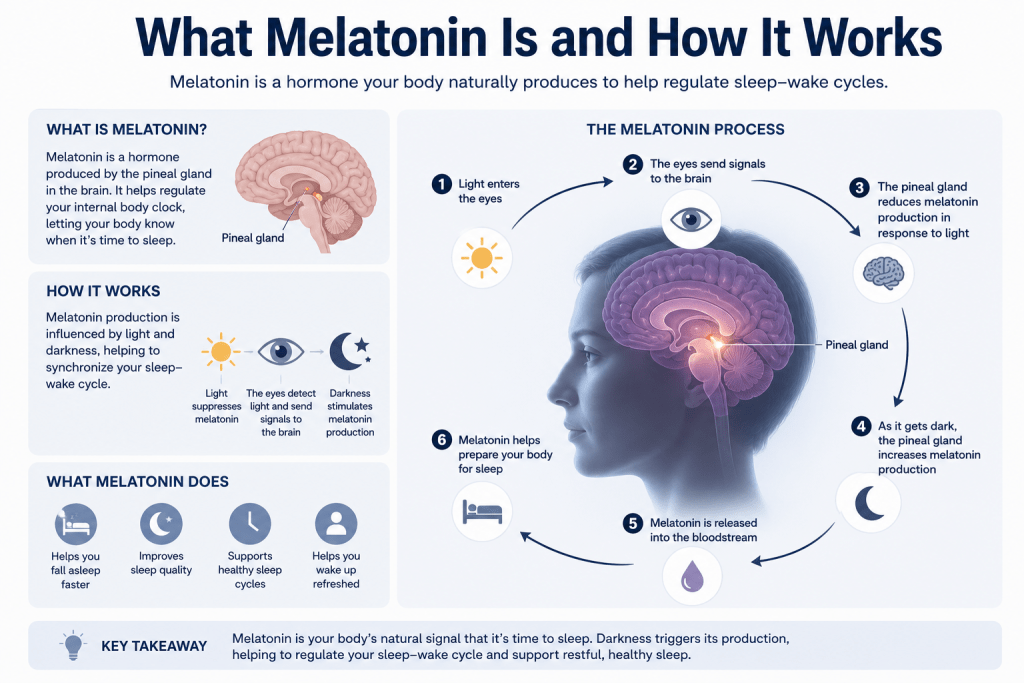
What Melatonin Is and How It Works
Melatonin is a hormone your body makes on its own. As the evening gets dark, your brain releases it to signal that bedtime is coming. It helps set your internal clock rather than knocking you out.
This is the key point most people miss: melatonin is a timing signal, not a sedative. It nudges your body toward sleep, but it does not force you under the way a sleeping pill does.
The supplements on store shelves are a lab-made version of that same hormone. In the United States, melatonin is sold as a dietary supplement, which means it is not regulated as tightly as a prescription drug. For a deeper look at how it works, see our overview of melatonin and sleep.
CHECK YOUR SLEEP SYMPTOMS: TAKE THE 2 MINUTE QUIZ
TAKE THE QUIZ
Is It Safe to Take Melatonin Every Single Night?
Here is the direct answer many people want. For most healthy adults, taking melatonin every single night for a short stretch is generally viewed as low risk by experts.
The honest caveat is that strong long-term safety data is limited, so no one can promise that taking melatonin every single night for years is perfectly fine for everyone. That uncertainty is not the same as danger, but it is a reason to be thoughtful rather than automatic.
This is general information, not medical advice for your situation. Whether melatonin every single night makes sense for you depends on your health, your other medications, and the reason you are taking it. Your physician or pharmacist is the right person to weigh that.
What Long-Term Nightly Use Might Mean
When the supplement becomes a years-long nightly habit, a few things are worth thinking about.
First, your body still makes its own melatonin, and most evidence suggests the supplement does not shut that production down. Even so, the long-term picture is not fully mapped out by research.
Second, a nightly habit can become psychological. Some people feel they cannot sleep without the supplement, even when the dose may be doing little, which is a sign worth discussing with a professional. That reliance is more about routine and anxiety than the pill itself.
Third, relying on it every night can quietly delay a real fix. If poor sleep keeps pulling you back to the bottle, the smarter move is to find out why. Our guide on how to fix insomnia naturally covers approaches that address the root cause.
Dosage, Quality, and Why Less Is Often More
A surprising fact trips up many users: more melatonin is not better. Very high doses can leave some people groggy the next morning without improving sleep.
Experts often point out that small amounts are usually enough to send the timing signal, since the goal is to mimic what your body naturally releases. A common mistake is buying a high-dose product when a much smaller amount may do the same job, so it is worth asking a pharmacist what is reasonable.
Quality is another wrinkle. Because melatonin is sold as a supplement, the actual amount in a pill can differ from the label. Looking for a third-party quality seal can help. To compare it with other options, our roundup of the best sleep aids puts melatonin in context.
Special groups need extra caution. Children, pregnant or nursing people, and anyone on other medications should not start melatonin without talking to a doctor or pharmacist first.
When Melatonin Is Not the Right Tool
Melatonin shines for certain problems and falls flat for others. Knowing the difference saves you wasted nights.
It tends to help most with timing issues, like jet lag or a body clock that runs late. If your clock is out of sync, our guide on how to fix your circadian rhythm explains how a timing signal can help.
For chronic insomnia, though, evidence points to a structured approach called CBT-I as the first-line option, not a nightly supplement. That approach retrains your sleep without a pill. You can read about it in our comparison of CBT-I versus sleep medications.
If you are not sure whether you have true insomnia or something else, our piece on whether you have insomnia or something else can help you sort it out.
Could Nightly Melatonin Be Masking a Bigger Problem
This is the question a sleep doctor really wants you to ask. If you need something every night just to function, the supplement may be covering up an issue that deserves attention.
Conditions like sleep apnea fragment your sleep without fully waking you, leaving you tired no matter what you take. A supplement cannot fix a breathing problem, so masking the fatigue with melatonin can let the real issue go unchecked. That is the part worth ruling out.
A home sleep test can show whether a treatable breathing problem is the real reason you sleep poorly. Dr. Avinesh Bhar and the SLIIIP team can review your symptoms over a virtual visit and arrange a home sleep apnea test if it makes sense for you.
Watch: Can I Just Get Sleep Meds? – SLIIIP.COM
When to Talk With a Doctor or Pharmacist
A quick conversation with a professional clears up most melatonin questions. A few situations make that conversation worth having sooner.
Reach out if you have leaned on melatonin for more than a few weeks, if you take other medications, if you are pregnant or nursing, or if you are considering it for a child. Drug interactions and special situations are exactly where professional guidance matters.
You do not need to guess about dose, timing, or safety when a pharmacist or physician can answer it in minutes. And if a sleep problem keeps you reaching for the bottle, an evaluation can find the cause. Our overview of insomnia treatment outlines the options worth discussing.
Simple Habits That Reduce the Need for a Sleep Aid
These habits support general sleep wellness. They are not a treatment and do not replace professional advice, but they can ease the pressure to rely on any nightly aid.
Keep a steady bedtime and wake time, even on weekends, so your body clock stays in rhythm.
Dim the lights and put screens away an hour before bed, since bright light at night suppresses your own melatonin.
Get bright light in the morning, which helps anchor your clock and improve nighttime sleepiness.
Watch caffeine and alcohol in the afternoon and evening, as both can fragment your sleep.
This section offers general wellness tips only. It is not a diagnosis, dosing guidance, or a treatment plan. For questions about supplements, doses, interactions, or any health condition, talk with your own physician or pharmacist.
Trusted Sources on Sleep and Sleep Apnea
To learn why healthy sleep matters for your overall health, the CDC sleep resources offer clear, reliable guidance. For a plain-language medical overview of a condition that often hides behind poor sleep, the NHLBI guide to sleep apnea is a trustworthy source.
At Sliiip, we accept the following insurances:

SLIIIP’s board-certified sleep physicians can do sleep evaluations for sleep apnea. Virtual consultations in all 50 states. Home sleep tests shipped to your door.
Frequently Asked Questions
Is it safe to take melatonin every single night?
For most healthy adults, short-term nightly use is generally viewed as low risk, but long-term safety data is limited. Whether it is right for you depends on your health and medications, so ask your physician or pharmacist.
Can I become dependent on melatonin?
Melatonin is not thought to cause physical dependence the way some sleep drugs can. Still, some people feel they cannot sleep without it, which is a psychological reliance worth discussing.
Does melatonin stop my body from making its own?
Most evidence suggests the supplement does not shut down your natural production. Even so, the long-term picture is not fully studied, which is a reason to be thoughtful.
What is the right dose of melatonin?
Experts often note that small amounts are usually enough, since the goal is to mimic your natural signal. A pharmacist or doctor can suggest what is reasonable for you.
Is more melatonin better?
No. Higher doses can leave some people groggy the next day without improving sleep. A smaller amount often does the same job.
Why does melatonin make me groggy?
A dose that is too high or taken too late can cause next-day grogginess. Adjusting the amount or timing, with professional input, can help.
When should I take melatonin?
Timing depends on your goal, such as jet lag or a late body clock. Because timing matters a lot, it is worth asking a professional how to use it.
Is melatonin a sleeping pill?
No. It is a timing signal that nudges your body toward sleep, not a sedative that forces you under like some prescription drugs.
Can melatonin help with insomnia?
It helps most with timing problems rather than chronic insomnia. For ongoing insomnia, a structured approach called CBT-I is often the first-line option.
Is melatonin safe for children?
Children are a special case. Do not give a child melatonin without first talking to a pediatrician about whether it is appropriate and at what amount.
Can I take melatonin while pregnant?
Pregnancy and nursing call for extra caution. Talk with your doctor before using melatonin in these situations.
Does melatonin interact with other medications?
It can. If you take other medications, check with a pharmacist or physician before starting, since interactions are possible.
Is store-bought melatonin reliable?
Because it is sold as a supplement, the actual amount can differ from the label. Looking for a third-party quality seal can help.
Why do I still feel tired after taking melatonin?
If you sleep but wake unrefreshed, a condition like sleep apnea may be fragmenting your sleep. A supplement cannot fix a breathing problem.
Could my poor sleep be something other than needing melatonin?
Yes. Relying on a nightly aid can mask an underlying issue. An evaluation can check whether something treatable is disrupting your sleep.
How long can I take melatonin?
Short-term use is common, but if you have leaned on it for weeks or longer, it is worth a conversation with a professional about why.
Does melatonin lose its effect over time?
Some people feel it works less well over time, which can be a sign that the real issue is something melatonin does not address.
What helps sleep besides melatonin?
Steady sleep and wake times, morning light, dim evenings, and limiting caffeine and alcohol all support better sleep without a supplement.
Will insurance cover a sleep evaluation?
Coverage varies by plan. You can check your specific benefits with SLIIIP before testing so you know what to expect.
Can SLIIIP help if I rely on melatonin every night?
Yes. SLIIIP’s board-certified sleep physicians can review your symptoms over a virtual visit and arrange a home test if needed, with care available in all 50 states.
Take the Next Step Toward Sleep You Do Not Have to Chase
Reaching for a supplement night after night is a signal worth listening to. Melatonin can have its place, but lasting rest comes from understanding why your sleep is off in the first place. That clarity is the real fix.
SLIIIP’s board-certified sleep physicians can do sleep evaluations for sleep apnea. Virtual consultations in all 50 states. Home sleep tests shipped to your door.
Latest posts
-
Why Can’t I Wake Up Even After Getting Enough Sleep?
Last updated: October 2, 2026. Medically reviewed by Dr. Avinesh Bhar, Board-Certified Sleep Physician, SLIIIP.com. If you can’t wake up after enough sleep, the cause is usually not the number…
-
Why Does My Heart Rate Drop So Low While I Sleep?
Last updated: October 2, 2026. Medically reviewed by Dr. Avinesh Bhar, Board-Certified Sleep Physician, SLIIIP.com. Your heart rate drops low while sleeping mainly because your body needs less work from…
-
Why Are My Naps Never Refreshing?
Last updated: October 2, 2026. Medically reviewed by Dr. Avinesh Bhar, Board-Certified Sleep Physician, SLIIIP.com. Naps that leave you groggy usually come down to how long you sleep, when you…
Get updates
Spam-free subscription, we guarantee. This is just a friendly ping when new content is out.

