👉 Register for Free. Peri/Menopause at Midnight: Why You Wake Up Hot, Wired, and Wide Awake at 3AM. – Friday, March 27th, 3:00 AM ET with Dr. Audrey Wells.

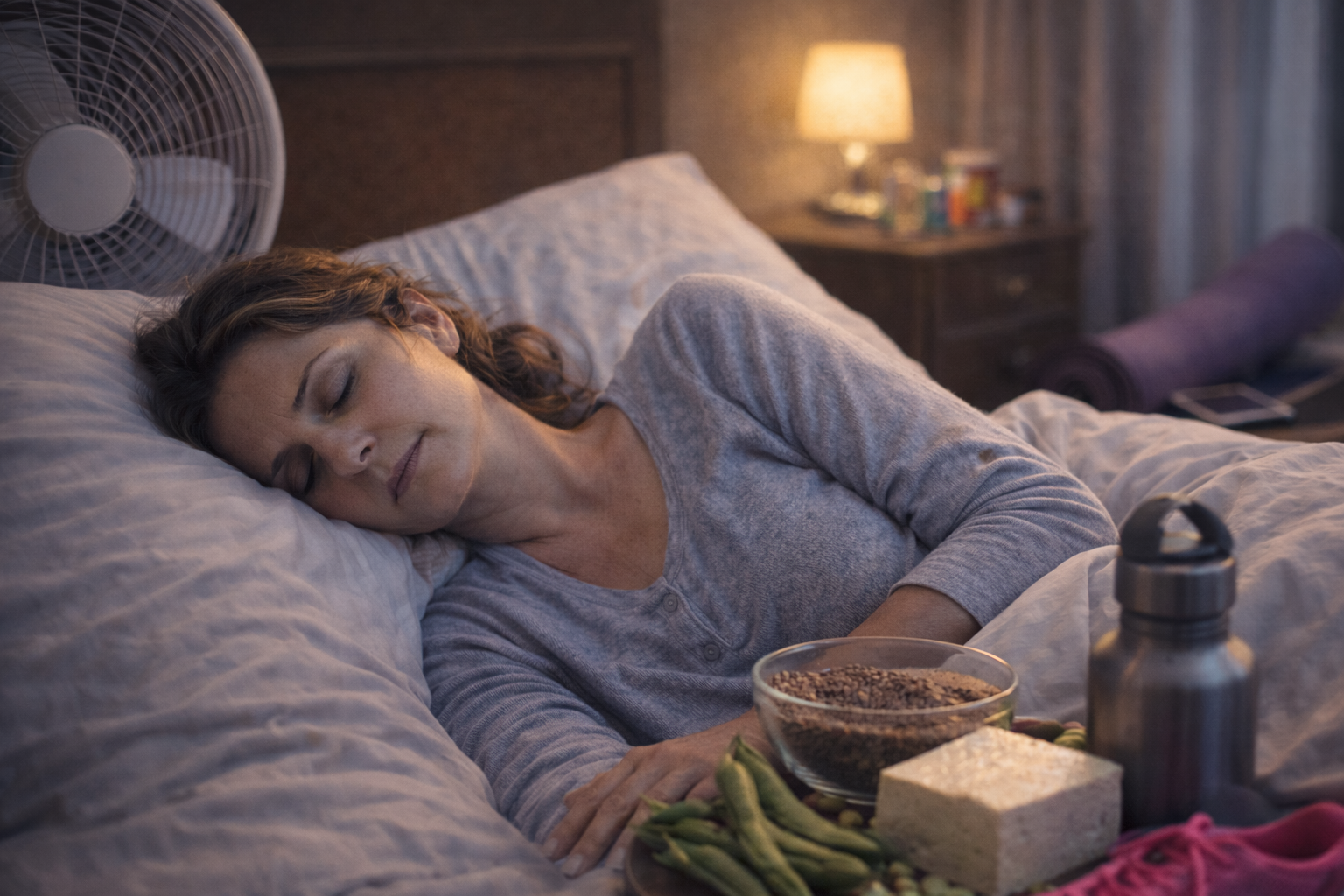
Menopause Sleep Problems Natural Remedies: Evidence-Based Strategies for Better Rest
Menopause sleep problems natural remedies include cooling your bedroom to 65 degrees Fahrenheit, practicing relaxation techniques before bed, keeping consistent sleep and wake times, exercising regularly during the day, and eating phytoestrogen-rich foods like soy and flaxseed. These strategies address the hormonal shifts that disrupt sleep during perimenopause and menopause. When menopause sleep problems natural remedies are not enough, persistent disruption may signal an underlying breathing issue that needs professional evaluation.
This article was developed with clinical insights from Dr. Avinesh Bhar, Board Certified Sleep Physician at Sliiip.com. His expertise helps women identify why sleep problems during menopause are not always solved by natural remedies alone.
If you are reading this at 3 a.m. after another night of tossing and turning, you already know that menopause changes everything about sleep. Hot flashes wake you up. Racing thoughts keep you awake. By morning, you feel like you barely slept.
You are not imagining it. The National Sleep Foundation reports that up to 61 percent of postmenopausal women experience frequent sleep difficulties.
The good news: there are targeted, evidence-based strategies that can help. And some of them work faster than you might expect.
Myth vs. Reality: Sleep Problems During Menopause Are Just About Hot Flashes
Hot flashes and night sweats are the most recognized sleep disruptors during menopause. But they are not the only ones.
Declining estrogen and progesterone affect sleep-wake cycles directly. Menopause also raises the risk of sleep-disordered breathing. Understanding this broader picture matters when choosing menopause sleep problems natural remedies that actually work.
Reality: Hot flashes are only one piece of the puzzle. Hormonal changes affect your brain, your airway, and your ability to reach deep sleep.

Why Menopause Disrupts Sleep at a Biological Level
Estrogen and progesterone do more than regulate your reproductive system. They influence serotonin and melatonin production. Both are critical for initiating and maintaining sleep.
As these hormones decline, your body produces less melatonin. This is the hormone that signals to your brain that it is time to sleep.
Progesterone has a calming, sedative-like effect on the brain. When it drops, many women report increased anxiety, racing thoughts, and difficulty winding down at night. These changes are biological, not psychological.
Declining estrogen is also associated with increased upper airway collapsibility during sleep. Research published in the American Journal of Respiratory and Critical Care Medicine documents a two to threefold increase in obstructive sleep apnea in postmenopausal women compared to premenopausal women.
Related: How to Stop Snoring
Temperature Regulation: The Foundation of Menopause Sleep Problems Natural Remedies
Hot flashes are driven by dysfunction in the hypothalamus. During menopause, even small changes in core body temperature can trigger a vasomotor response. That is the medical term for a hot flash.
Cooling your sleep environment is one of the most effective menopause sleep problems natural remedies. Set your bedroom to 65 degrees Fahrenheit or lower. Use moisture-wicking bedding made from bamboo, linen, or performance fabrics.
Keep a small fan on your nightstand. Direct it at your upper body. Some women also find that a cool, damp cloth on the back of the neck during a night sweat helps the body return to a comfortable temperature faster.
Relaxation Techniques That Support Menopausal Sleep
Cognitive behavioral therapy for sleep, known as CBT-I, is the gold standard non-pharmacological approach for persistent sleep difficulties. Research shows it is particularly effective for menopausal women.
If formal CBT-I is not accessible, several techniques work well at home. Progressive muscle relaxation involves tensing and releasing each muscle group in sequence. Deep diaphragmatic breathing, where you inhale for four counts, hold for four, and exhale for six, activates the parasympathetic nervous system.
Guided imagery and body scan meditations are available through free apps. Choose one method and practice it nightly for at least two weeks. Consistency matters more than which technique you use.
Related: Guided Meditation for Sleep Disorders
Nutrition-Based Menopause Sleep Problems Natural Remedies
What you eat and when you eat it can influence the severity of menopausal symptoms and your ability to sleep through the night.
Phytoestrogens are plant compounds that mimic estrogen at a much lower potency. Foods rich in phytoestrogens include soybeans, tofu, tempeh, flaxseed, sesame seeds, and chickpeas.
Magnesium supports muscle relaxation and nervous system calm. Good sources include dark leafy greens, almonds, pumpkin seeds, and dark chocolate. Tart cherry juice is one of the few food sources of naturally occurring melatonin.
Avoid large meals, spicy foods, alcohol, and caffeine within three to four hours of bedtime.
Exercise and Movement for Better Menopausal Sleep
Regular physical activity is one of the most consistently supported menopause sleep problems natural remedies. Moderate aerobic exercise for 30 minutes most days improves both sleep quality and hot flash frequency.
Yoga combines movement with breath work and mindfulness. It is especially well suited to the menopausal transition. Strength training supports bone density and reduces anxiety. Both are meaningful contributors to better sleep.
Exercise earlier in the day for best results. Vigorous exercise within two hours of bedtime can delay sleep onset in some women.
Q: I have tried every natural remedy and still cannot sleep. What else could be going on?
“When natural approaches are not enough, consider whether sleep-disordered breathing might be involved. Menopause significantly increases sleep apnea risk. A home sleep test can provide clarity without a lab visit.”
Dr. Avinesh Bhar | Board Certified Sleep Physician | Sliiip.com
Q: Are herbal supplements safe for menopause sleep problems?
“Some supplements like valerian root and black cohosh have modest evidence, but they are not FDA regulated. Discuss any supplement with your healthcare provider before adding it to your routine. They can also help rule out underlying sleep disorders.”
Dr. Avinesh Bhar | Board Certified Sleep Physician | Sliiip.com
When Natural Remedies Are Not Enough: The Sleep Apnea Connection
One of the most underdiagnosed contributors to poor sleep during menopause is obstructive sleep apnea. As estrogen and progesterone decline, upper airway muscles lose tone. Weight gain during menopause adds further risk.
Symptoms in women often differ from men. Women are more likely to report fatigue, morning headaches, and mood changes. Loud snoring may not be present at all.
If you have followed menopause sleep problems natural remedies consistently and still feel unrefreshed, a sleep evaluation is the logical next step.
Related: Sleep Apnea Symptoms in Women
Building a Menopause-Friendly Sleep Environment
Use blackout curtains to eliminate ambient light. Remove LED light sources from your bedroom. Use a white noise machine or fan to mask disruptive sounds.
Reserve your bed for sleep only. Avoid working, scrolling, or watching content in bed. Your brain learns to associate the bed with wakefulness when you do.
Keep a consistent sleep schedule. Go to bed and wake up at the same time every day, including weekends. This habit is one of the most powerful menopause sleep problems natural remedies available.
Related: Best Morning Routine
Watch: Home Sleep Testing for Women
Learn how a simple home sleep test can determine whether breathing disruptions are contributing to your sleep problems during menopause.
VIDEO: Home Sleep Tests for Women from Sliiip.com | Watch on YouTube
Daily Habits That Support Menopausal Sleep
Get natural sunlight exposure within 30 minutes of waking. This resets your circadian rhythm and helps regulate melatonin production for the night ahead.
Limit screen time for at least 30 minutes before bed. Blue light from screens suppresses melatonin. Dim your home lighting in the evening as a natural sleep signal.
Stay socially connected during the day. Hydrate consistently but taper fluid intake in the evening to reduce nighttime wake-ups.
Not Sleeping Through Menopause? Get Answers.
You do not have to keep guessing why sleep is broken.
Sliiip connects you with board-certified sleep physicians who specialize in exactly this. They can evaluate whether a sleep-related cause is driving your symptoms. No referral needed. No lab visit required.
Over 10,000 consultations completed. Available in all 50 states. Most major insurance accepted, including Medicare and Tricare.

Frequently Asked Questions About Menopause Sleep Problems Natural Remedies
What are the best menopause sleep problems natural remedies?
The most effective include maintaining a cool bedroom at 65 degrees, practicing relaxation techniques nightly, exercising regularly, eating phytoestrogen-rich foods, avoiding alcohol and caffeine near bedtime, and keeping a consistent sleep-wake schedule.
Why does menopause cause sleep problems?
Declining estrogen and progesterone disrupt melatonin production, serotonin regulation, and body temperature control. These changes trigger hot flashes, night sweats, anxiety, and an increased risk of sleep-disordered breathing.
Can menopause cause sleep apnea?
Yes. Postmenopausal women have a two to threefold higher risk of obstructive sleep apnea. Declining estrogen reduces upper airway muscle tone, and weight gain during menopause further increases risk.
What foods help with menopause sleep problems?
Foods rich in phytoestrogens like soy, tofu, flaxseed, and chickpeas may reduce hot flash frequency. Magnesium-rich foods support relaxation. Tart cherry juice contains natural melatonin.
Does exercise help with menopause sleep problems?
Regular moderate aerobic exercise improves both sleep quality and hot flash severity. Yoga is particularly beneficial. Exercise earlier in the day produces the best results for nighttime sleep.
Is melatonin safe for menopause sleep problems?
Melatonin is generally considered safe for short-term use. Start with a low dose of 0.5 to 1 milligram about 30 minutes before bed. Discuss long-term use with your healthcare provider.
What is CBT-I and does it work for menopause?
CBT-I is a structured program that addresses the thoughts and behaviors that perpetuate poor sleep. Research shows it is effective for menopausal women and is recommended as a first-line non-pharmacological approach.
How do I know if my sleep problems need medical attention?
If difficulties persist despite natural remedies, if you snore or gasp during sleep, if you wake with headaches, or if daytime sleepiness affects your safety, consult a board-certified sleep specialist.
Can herbal supplements help with menopause sleep?
Valerian root, black cohosh, and passionflower have modest evidence. These supplements are not FDA-regulated. Discuss with your healthcare provider before use, especially if you take other medications.
Why do I wake up at 3 a.m. during menopause?
Declining progesterone reduces deep sleep duration, cortisol shifts create early morning alertness, and subtle hot flashes can wake you without full awareness. Addressing temperature and relaxation techniques can help.
Should menopausal women get a sleep study?
If natural remedies have not helped and you show signs of sleep-disordered breathing, a home sleep test can identify whether obstructive sleep apnea is contributing to your symptoms. No referral is needed.
How long do menopause sleep problems last?
Sleep disruption can persist for several years. Symptoms tend to be most intense during perimenopause and the first few postmenopausal years. Most women improve over time with consistent strategies and professional support when needed.
Latest posts
-
Can Sleep Apnea Cause Weight Gain? The Metabolic Connection
Sleep apnea does not just disrupt your rest. It actively interferes with the hormones that regulate hunger, metabolism, and fat storage. If you have been gaining weight despite effort, or…
-
Can a No Snoring Mouthpiece Solve Your Sleep Issues?
Can a no snoring mouthpiece solve your sleep issues? For many, a dental appliance is the first line of defense against disruptive nighttime noise and fragmented sleep. While these devices…
-
ResMed AirMini vs. Transcend Micro: Which Travel CPAP Wins?
Choosing between the ResMed AirMini and the Transcend Micro comes down to three things: the mask you already own, how aggressively you travel, and whether app-based sleep tracking matters to…
Get updates
Spam-free subscription, we guarantee. This is just a friendly ping when new content is out.

