👉 Register for Free. How to Diagnose Sleep Apnea Faster in Primary Care – FREE Webinar by Dr. Audrey Wells. – Friday, April 24 at 12 PM ET

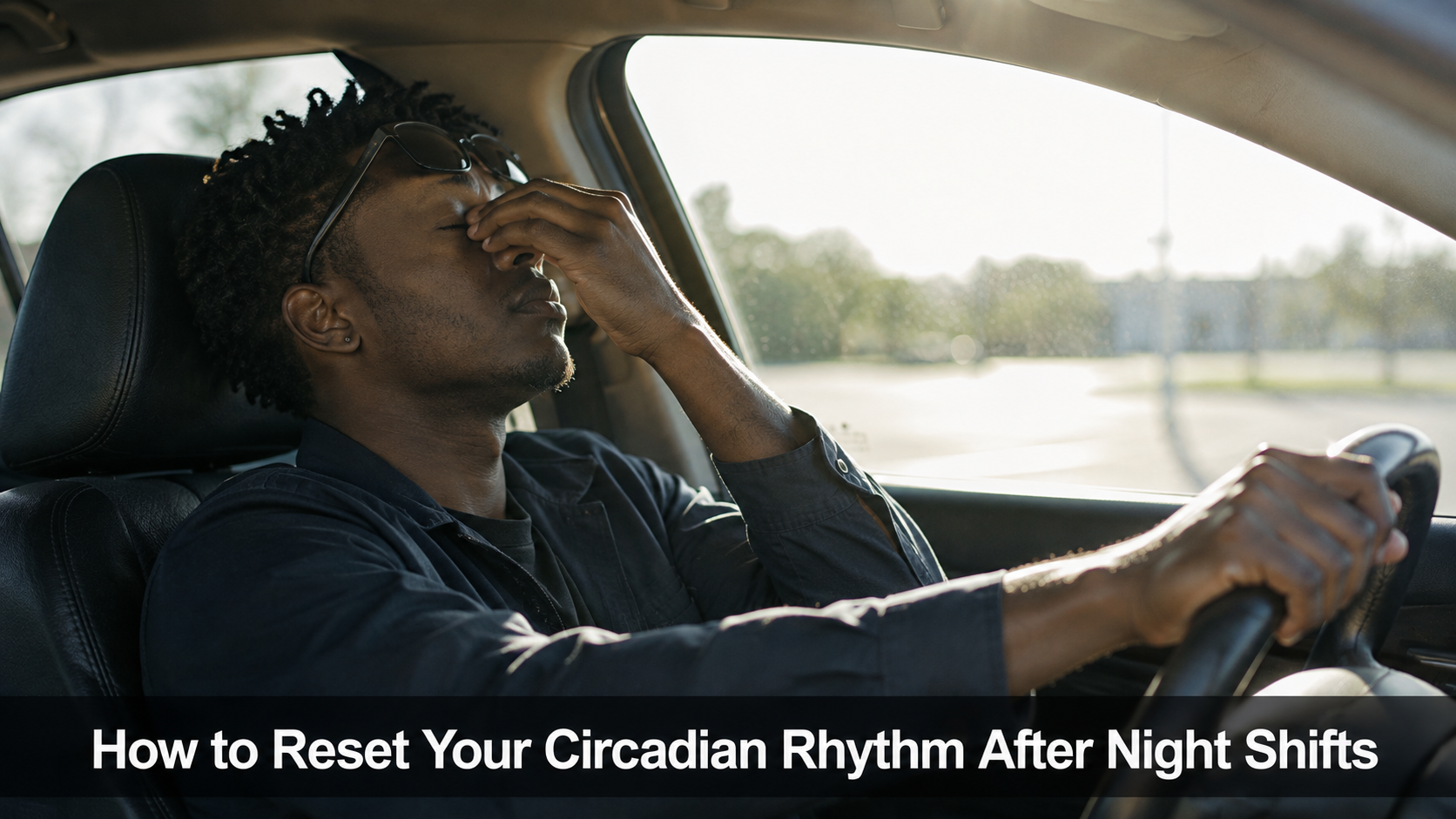
How to Reset Your Circadian Rhythm After Night Shifts
Resetting your circadian rhythm after night shifts works better when you stop treating it as one problem, says Dr. Avinesh Bhar, Board-Certified Sleep Physician at SLIIIP.com, because recovering between rotations and leaving nights for good need opposite strategies. The single most common mistake is staying awake all day after a final night shift to force yourself back onto a normal bedtime. That approach feels logical, costs you a week, and is genuinely unsafe. This guide covers both scenarios, the timing that actually shifts a body clock, and when the difficulty points to a diagnosable condition.
SLIIIP’s board-certified sleep physicians can do sleep evaluations for sleep apnea. Virtual consultations in all 50 states. Home sleep tests shipped to your door.
Resetting Your Circadian Rhythm After Night Shifts: Two Different Jobs
Before any tactic, answer this. The two situations are not the same problem.
Scenario one: you are still working nights and have a few days off. Your goal is not a full reset. A full swing back and forth is what makes people feel permanently unwell.
Scenario two: you have finished with nights and are returning to a day schedule. Here a genuine reset is the goal, and it takes several days of deliberate effort.
Most advice online blends these together, which is why so much of it fails. Our guide on the night shift and sleep covers living with the schedule itself. This article is about the transition out of it.
CHECK YOUR SLEEP SYMPTOMS: TAKE THE 2 MINUTE QUIZ
TAKE THE QUIZ

Why Your Body Resists
Two things make this harder than ordinary jet lag.
First, direction. Coming off nights means moving your sleep earlier, which is called advancing your clock. Human clocks run slightly longer than 24 hours, so they delay easily and advance reluctantly. Pushing sleep later is easy. Pulling it earlier is the uphill direction.
Second, light. Your clock is set mainly by light exposure, and a night worker gets it at exactly the wrong times. Bright light on the drive home in the morning tells your body that the day is starting, right when you need the opposite signal.
Nothing resets a body clock faster than getting light at the right hours and avoiding it at the wrong ones. Everything else is secondary. Any plan for your circadian rhythm after night shifts that does not start with light timing is working on the margins.
Scenario One: Days Off in the Middle of a Rotation
If you are back on nights in a few days, a full reset is the wrong goal.
Occupational health guidance is direct about this. The Centers for Disease Control and Prevention warns that swapping to a daytime schedule on days off and back again can leave you in a perpetual state of jet lag, and suggests a compromise schedule instead.
The compromise looks like this. On work nights, sleep as soon as you get home. On days off, stay up into the small hours and sleep into the early afternoon. The point is that some block of hours is always sleep time on every day of the week, working or not.
This is called anchor sleep, and it is the single most useful concept for rotating workers. You give up some social convenience and get back a body clock that is not being torn in half twice a week.
Scenario Two: Returning to Days for Good
Here a real reset makes sense. Plan for three to five days, and longer if you have been on nights for years.
Day one, after your final shift. Do not stay awake. Sleep, but cap it at roughly four hours, and set an alarm. Sleeping the whole day leaves you with no sleep pressure that night. Wear dark sunglasses on the way home so morning light does not anchor you further.
Day one afternoon. Get outside into real daylight after you wake. Stay up, stay busy, and accept that you will feel rough.
Day one night. Go to bed earlier than feels natural but later than your eventual target. Around midnight is realistic. Aiming for 10 PM on the first night usually just means lying awake.
Days two and three. Move your bedtime and wake time earlier by an hour or so each day. Get daylight within an hour of waking every morning. Keep the evening dim.
Days four and five. You should be close. Hold the wake time absolutely steady now, weekends included, because the wake time is what locks the whole thing in place.
Our guide on how to fix your sleep schedule covers the same mechanics for less extreme shifts, and how to fix your circadian rhythm goes into the underlying process.
The Mistake That Costs a Week
It deserves its own section because almost everyone does it.
After a last night shift, the temptation is to power through the day and collapse at a normal bedtime. The CDC guidance flags exactly this pattern, noting that it leaves you awake for far too many hours and raises the risk of accidents and injuries in the short term.
Being awake for twenty four hours produces impairment comparable to meaningful alcohol intoxication. Driving home from that final shift is statistically the most dangerous part of the whole week. If you feel sleepy behind the wheel, do not drive. Take a short nap first, or arrange a lift.
A capped morning sleep of about four hours gives you enough to function safely while leaving enough sleep pressure for that night.
Light, Timed Correctly
The mechanics are simple once you know the direction you want.
To move your clock earlier, get bright light in the morning after your target wake time, and avoid it in the evening. To hold your clock later, do the reverse.
The trap for night workers is the morning commute home, which delivers a strong signal at the worst moment. Wraparound sunglasses on the way home are the standard countermeasure while you are still working nights.
Once you are transitioning back, morning daylight becomes your main tool rather than your enemy. Fifteen to thirty minutes outdoors shortly after waking is usually enough. Cloudy days still count, and indoor lighting is far weaker than it feels.
The National Heart, Lung, and Blood Institute notes that clinicians sometimes use light therapy to help set and maintain the sleep and wake cycle in circadian rhythm problems.
Melatonin, Caffeine, and Naps
Three tools that people misuse.
Melatonin is a timing signal, not a sedative. Its usefulness for shifting a clock depends heavily on when it is taken, and taking it at the wrong hour can push your clock the wrong way. Discuss timing and dose with a clinician rather than guessing. Our article on melatonin and sleep covers the distinction.
Caffeine helps you stay awake through a transition day but will wreck the night you are trying to protect. Stop early in the day during a reset.
Naps are useful during the transition. Keep them short and early, since long or late naps spend the sleep pressure you need. The benefits of napping covers the timing.
How Long a Full Reset Takes
Expect several days, not one. Restoring a normal circadian rhythm after night shifts is a physiological process with its own pace, and it does not respond to being rushed.
Most people transitioning back after a stretch of nights need roughly three to five days to feel normal, and adjustment is slower for older workers and for anyone who has done nights for years. Individual variation is wide. Some people never fully adapt to night work in the first place, which is a recognized pattern rather than a personal failing.
Judge progress by whether you fall asleep and wake at your target times without an alarm fight, not by how you feel on day two.
Watch: Circadian Rhythm Disorders and Restless Legs Syndrome by Dr. Avinesh Bhar (SLIIIP)
When It Is More Than a Schedule Problem
Dr. Avinesh Bhar points out that shift workers often attribute every symptom to their hours, which can delay identifying something treatable.
Shift work sleep disorder is a recognized circadian rhythm sleep disorder involving insomnia during intended sleep, excessive sleepiness during work hours, or both, persisting because of the schedule. Our page on circadian rhythm sleep disorders covers the category.
Other signals point elsewhere entirely. Loud snoring, witnessed breathing pauses, gasping awake, morning headaches, or a dry mouth suggest a breathing problem, and sleep apnea can occur without snoring. Persistent exhaustion despite adequate sleep is worth investigating, as covered in why you are exhausted no matter how much you sleep.
If sleep trouble continues well after you have returned to a stable day schedule, that is no longer a rotation problem. Do I have insomnia or something else helps sort it, and chronic insomnia and when to get a sleep test covers the threshold for evaluation.
A home sleep test can settle the breathing question from your own bed. Nothing here replaces personal medical advice, and no one should stop or adjust a prescribed medication or device setting on their own.
At Sliiip, we accept the following insurances:

SLIIIP’s board-certified sleep physicians can do sleep evaluations for sleep apnea. Virtual consultations in all 50 states. Home sleep tests shipped to your door.
Frequently Asked Questions
How long does it take to reset your circadian rhythm after night shifts?
Usually three to five days of deliberate effort for a full return to days. Longer if you have worked nights for years or are older.
Should I stay awake all day after my last night shift?
No. It leaves you awake far too long and raises accident risk. Sleep about four hours in the morning, then get up and get daylight.
Why cap that first sleep at four hours?
Enough to function safely, but not so much that you have no sleep pressure left for that night. It is the compromise that makes the first night work.
What is anchor sleep?
A block of hours that is always sleep time, on both work days and days off. It keeps rotating workers from swinging fully back and forth.
Is it better to keep night hours on my days off?
If you return to nights in a few days, a compromise schedule usually beats a full swing. Staying up late and sleeping into the early afternoon preserves overlap.
Why is coming off nights harder than going onto them?
Moving sleep earlier goes against the natural tendency of the human clock, which drifts later. Delays come easily, advances do not.
Does morning sunlight really matter?
It is the strongest tool available. Fifteen to thirty minutes outdoors after waking anchors your clock more effectively than any other habit.
Should I wear sunglasses driving home from a night shift?
While you are still working nights, yes. Blocking morning light stops it from pushing your clock further in the wrong direction.
Is melatonin useful for shift changes?
It can act as a timing signal, but the effect depends heavily on when it is taken. Get timing and dose guidance from a clinician.
Can I use caffeine to get through the transition?
Sparingly and early in the day. Late caffeine undermines the night you are trying to establish.
Should I nap during the reset?
Short early naps help you get through transition days. Long or late naps reduce the sleep pressure you need at night.
Why do I feel sick after a rotation?
Rapid schedule swings produce jet lag style symptoms including nausea, digestive upset, low mood, and poor concentration.
Is night shift work bad for my health?
Research links non standard hours with higher rates of several health problems. That is an association measured across populations, not a prediction about any individual.
What is shift work sleep disorder?
A recognized circadian condition involving insomnia during intended sleep or excessive sleepiness during work hours, driven by the schedule.
Can some people never adapt to nights?
Yes. Individual tolerance varies considerably, and persistent difficulty is a recognized pattern rather than a lack of discipline.
Should I exercise during the transition?
Daytime activity helps. Keep vigorous exercise away from your new bedtime while your schedule is still settling.
What about eating times?
Meal timing supports your clock. Shifting meals toward your new schedule alongside your sleep gives a consistent signal.
How do I handle family and social pressure?
Tell people your protected sleep hours explicitly. Occupational health guidance treats this as a core coping strategy, not a courtesy.
Is drowsy driving after a night shift really that risky?
Yes. Extended wakefulness produces impairment comparable to alcohol intoxication. If you are sleepy, nap first or arrange a lift.
When should I see a sleep doctor?
If problems persist after several weeks on a stable schedule, or if you snore loudly, gasp awake, or feel dangerously sleepy while driving or working.
SLIIIP’s board-certified sleep physicians can do sleep evaluations for sleep apnea. Virtual consultations in all 50 states. Home sleep tests shipped to your door.
Latest posts
-
What to Do If Your Home Sleep Test Fails or Comes Back Inconclusive
Last updated: September 2, 2026. Medically reviewed by Dr. Avinesh Bhar, Board-Certified Sleep Physician, SLIIIP.com. If your home sleep apnea test failed or came back inconclusive, the standard next step…
-
Home Sleep Apnea Test vs. Over-the-Counter Test Kits: What Is the Difference?
Last updated: September 2, 2026. Medically reviewed by Dr. Avinesh Bhar, Board-Certified Sleep Physician, SLIIIP.com. A home sleep apnea test and an over-the-counter test kit are not the same thing,…
-
How to Stop Checking Your Sleep Score Without Giving Up on Better Sleep
Last updated: September 2, 2026. Medically reviewed by Dr. Avinesh Bhar, Board-Certified Sleep Physician, SLIIIP.com. The way to stop obsessively checking your sleep score is to change when and how…
Get updates
Spam-free subscription, we guarantee. This is just a friendly ping when new content is out.

