👉 Register for Free. How to Diagnose Sleep Apnea Faster in Primary Care – FREE Webinar by Dr. Audrey Wells. – Friday, April 24 at 12 PM ET

Revenge Bedtime Procrastination: Why We Stay Up Too Late
Revenge bedtime procrastination, the habit of putting off sleep to claw back a few hours of personal time, is something Dr. Avinesh Bhar, Board-Certified Sleep Physician at SLIIIP.com, hears about from people who are exhausted yet still scroll, watch, or read long past a sensible bedtime. They are not confused about needing sleep. They are quietly rebelling against a day that left no room for themselves. This article is for general education and does not diagnose or treat any condition. It explains the behavior, why it is so common, and gentle ways to shift it, while pointing you to your own doctor for any lasting concern. The goal is understanding without judgment, because self blame rarely fixes a late night habit.
SLIIIP’s board-certified sleep physicians can do sleep evaluations for sleep apnea. Virtual consultations in all 50 states. Home sleep tests shipped to your door.
What Is Revenge Bedtime Procrastination?
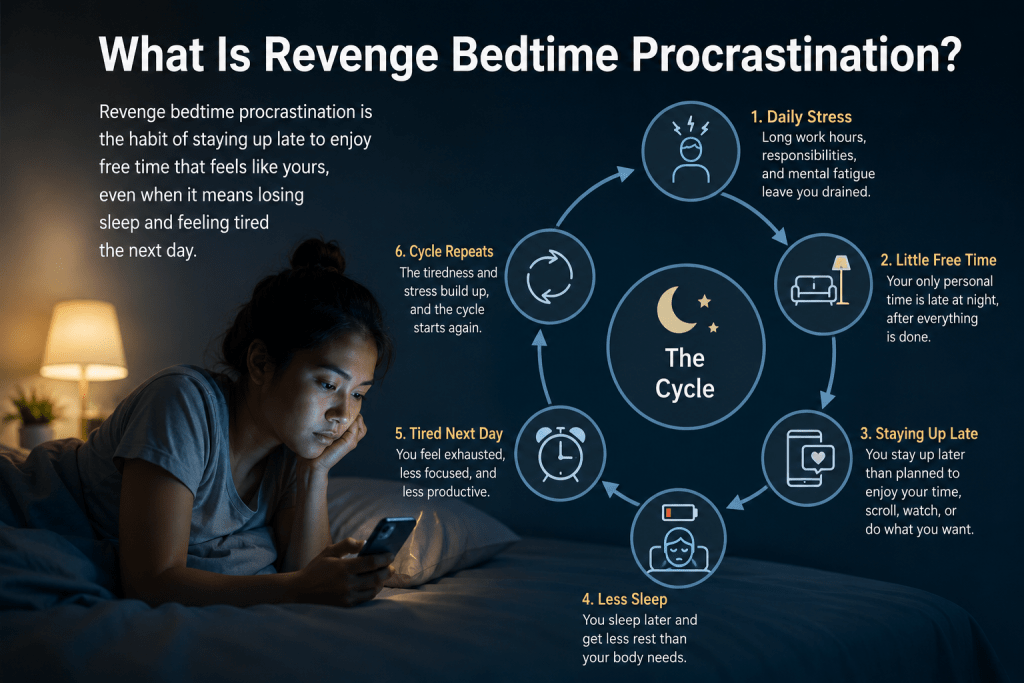
Revenge bedtime procrastination describes the choice to delay sleep in order to enjoy leisure time that the day did not allow. The word revenge captures the feeling behind it, a small act of pushback against a packed schedule. The person knows they should sleep, yet they stay up anyway to reclaim a sense of freedom.
The idea gained wide attention after a phrase describing it spread online, striking a chord with people who felt seen. It is not a medical diagnosis, but a way of naming a very common behavior. Many people recognize it the moment they hear the term. That flash of recognition is part of why the idea spread so quickly, since it gave language to a struggle that felt private and a little shameful until it had a name.
At its heart, this is not about a lack of tiredness. It is about a lack of personal time during waking hours. That distinction matters, because the fix is less about willpower and more about how your day is shaped.
CHECK YOUR SLEEP SYMPTOMS: TAKE THE 2 MINUTE QUIZ
TAKE THE QUIZ
Why We Trade Sleep for Personal Time
The psychology here is easy to relate to. When a day is filled with work, chores, and obligations, the late night can feel like the only window that truly belongs to you. Staying awake becomes a way to say the day is not over until I have had a moment for myself.
There is also a tug of war between the tired body and the restless mind. Your body may be ready to sleep while your mind resists letting go of the one quiet stretch it has. If a racing mind keeps you up, our guide on how to stop overthinking at night may help.
Screens make the pull stronger. Endless feeds and autoplay are built to hold attention, which turns a planned ten minutes into an hour. Our article on why you overthink before bed looks at a related nighttime trap. Recognizing the pattern is the first step toward changing it.
Who Is Most Affected
This habit can touch anyone, but some groups report it more often. People with long work hours, caregivers, and those with little control over their daytime schedule tend to feel the pull most strongly. When the day belongs to everyone else, the night becomes the place to reclaim.
Busy parents and shift workers often describe the same tug. After finally getting a quiet house or finishing a long shift, going straight to sleep can feel like skipping the only break available. The late hours become a small reward. For someone who spent the whole day meeting other people’s needs, that reward can feel like the fairest trade in the world, even when they know it will cost them in the morning.
The pattern is also common among people who feel their days are tightly scheduled. If you often wake up drained from these late nights, our article on why you wake up tired may resonate. Naming who is affected helps remove the shame from the experience.
The Cost of Trading Sleep for Me Time
The trade can feel worth it in the moment, but the bill arrives the next day. Skimping on sleep night after night is associated with lower focus, shakier mood, and less energy, which can make the following day even harder to enjoy. These are associations reported in research, not certainties for any single person.
There is also an irony worth noticing. The late night is meant to create relaxation, yet chronic short sleep can leave you more frazzled, feeding the very stress the habit was trying to soothe. The cycle can quietly reinforce itself.
None of this means one late night is a disaster. It means a steady pattern deserves attention, because the goal is rest that leaves you better, not more depleted. Our page on the importance of sleep explains why protecting those hours pays off.
How to Break the Cycle of Revenge Bedtime Procrastination
The most effective fix is not more discipline at 11 p.m., but more personal time earlier in the day. Building small pockets of me time into daylight hours reduces the urge to steal them from sleep. Even fifteen minutes of something you enjoy can take pressure off the night.
Set a gentle wind down routine and a soft cutoff for screens. Dimming the lights and stepping away from your phone signals that the day is closing. Our ultimate sleep routine guide shows how to build a routine you can repeat without feeling deprived.
Try to treat your bedtime with the same respect as an appointment. According to the Centers for Disease Control and Prevention, a consistent schedule is a foundation of healthy rest, and a steady bedtime protects the leisure benefit of feeling rested. Aim for progress, not perfection, and be kind to yourself along the way.
Watch: Tricks to Fall Asleep Fast – SLIIIP.COM
When Staying Up Late Signals Something More
For many people, this is a habit that responds to small changes. Sometimes, though, trouble winding down or lasting tiredness points to something beyond a simple choice to stay up. If you cannot fall asleep even when you try, or you wake unrefreshed no matter the hour, it is worth a closer look.
Conditions like insomnia or obstructive sleep apnea can hide behind what looks like procrastination. As Dr. Avinesh Bhar notes, when good habits do not bring restful sleep, a professional evaluation can uncover what is really going on. This is not something to sort out through guesswork alone.
The National Heart, Lung, and Blood Institute points out that ongoing sleep problems are worth a professional look. A sleep evaluation is one part of a broader view of your health, and any concern beyond sleep belongs with your own physician.
At Sliiip, we accept the following insurances:

SLIIIP’s board-certified sleep physicians can do sleep evaluations for sleep apnea. Virtual consultations in all 50 states. Home sleep tests shipped to your door.
Frequently Asked Questions
What is revenge bedtime procrastination?
It is the habit of delaying sleep to enjoy personal time the day did not allow. The word revenge reflects a small act of pushback against a busy schedule.
Is this a real condition?
It is not a formal medical diagnosis, but a widely recognized behavior. It names a very common experience many people share.
Why do I stay up late even when I am tired?
Often the late night is the only time that feels truly your own. The mind resists letting go of that quiet stretch even when the body is ready.
Who is most likely to do this?
People with long hours, caregivers, and those with little control over their day report it most. The night becomes a way to reclaim personal time.
Why do screens make it worse?
Feeds and autoplay are designed to hold attention, stretching minutes into hours. Setting a screen cutoff can help.
Is this habit bad for my health?
A single late night is not a crisis, but a steady pattern of short sleep can wear on mood and focus. These are associations, not certainties.
How do I stop this habit?
Adding small pockets of personal time during the day reduces the urge to steal them at night. A gentle wind down and screen cutoff also help.
Does more willpower fix it?
Willpower at bedtime is often not the answer. Reshaping your day to include me time tends to work better.
How much time do I actually need?
Even short breaks during the day can ease the pull. The goal is feeling that your time is not entirely spoken for.
Can a bedtime routine help?
Yes, a steady wind down signals that the day is closing. It makes the shift to sleep feel less like a loss.
Is it linked to stress?
Feeling stretched and stressed can fuel the urge to reclaim the night. Managing daytime stress can ease the habit.
Why do I feel guilty about it?
Many people blame themselves, but the behavior is common and understandable. Self kindness works better than harsh criticism.
Does it affect my next day?
Short sleep is associated with lower focus and energy the following day. That can make the day harder to enjoy.
Can naps make up for lost sleep?
A short nap can ease some sleep debt, but it does not fully replace night sleep. Keep naps short and earlier in the day.
Is this the same as insomnia?
No, procrastination is a choice to delay sleep, while insomnia is trouble sleeping despite trying. The two can overlap, though, and telling them apart often takes a professional eye.
How long does it take to change the habit?
Many people notice a shift within a couple of weeks of steady changes. Consistency matters more than speed.
Should I set an alarm for bedtime?
A bedtime reminder can help you honor your wind down. Treating bedtime like an appointment supports the habit.
Can this lead to a sleep disorder?
The habit itself is behavioral, but ongoing short sleep can affect how you feel. Lasting trouble deserves a professional look.
When should I talk to a doctor about it?
If you cannot sleep even when you try, or you wake tired despite good habits, a visit makes sense. A clinician can look at the full picture.
When should I seek a sleep evaluation?
If you snore heavily, gasp for air, or stay tired despite better habits, seek an evaluation. A sleep visit can clarify what is going on.
SLIIIP’s board-certified sleep physicians can do sleep evaluations for sleep apnea. Virtual consultations in all 50 states. Home sleep tests shipped to your door.
Latest posts
-
Why Can’t I Wake Up Even After Getting Enough Sleep?
Last updated: October 2, 2026. Medically reviewed by Dr. Avinesh Bhar, Board-Certified Sleep Physician, SLIIIP.com. If you can’t wake up after enough sleep, the cause is usually not the number…
-
Why Does My Heart Rate Drop So Low While I Sleep?
Last updated: October 2, 2026. Medically reviewed by Dr. Avinesh Bhar, Board-Certified Sleep Physician, SLIIIP.com. Your heart rate drops low while sleeping mainly because your body needs less work from…
-
Why Are My Naps Never Refreshing?
Last updated: October 2, 2026. Medically reviewed by Dr. Avinesh Bhar, Board-Certified Sleep Physician, SLIIIP.com. Naps that leave you groggy usually come down to how long you sleep, when you…
Get updates
Spam-free subscription, we guarantee. This is just a friendly ping when new content is out.

