👉 Register for Free. How to Diagnose Sleep Apnea Faster in Primary Care – FREE Webinar by Dr. Audrey Wells. – Friday, April 24 at 12 PM ET

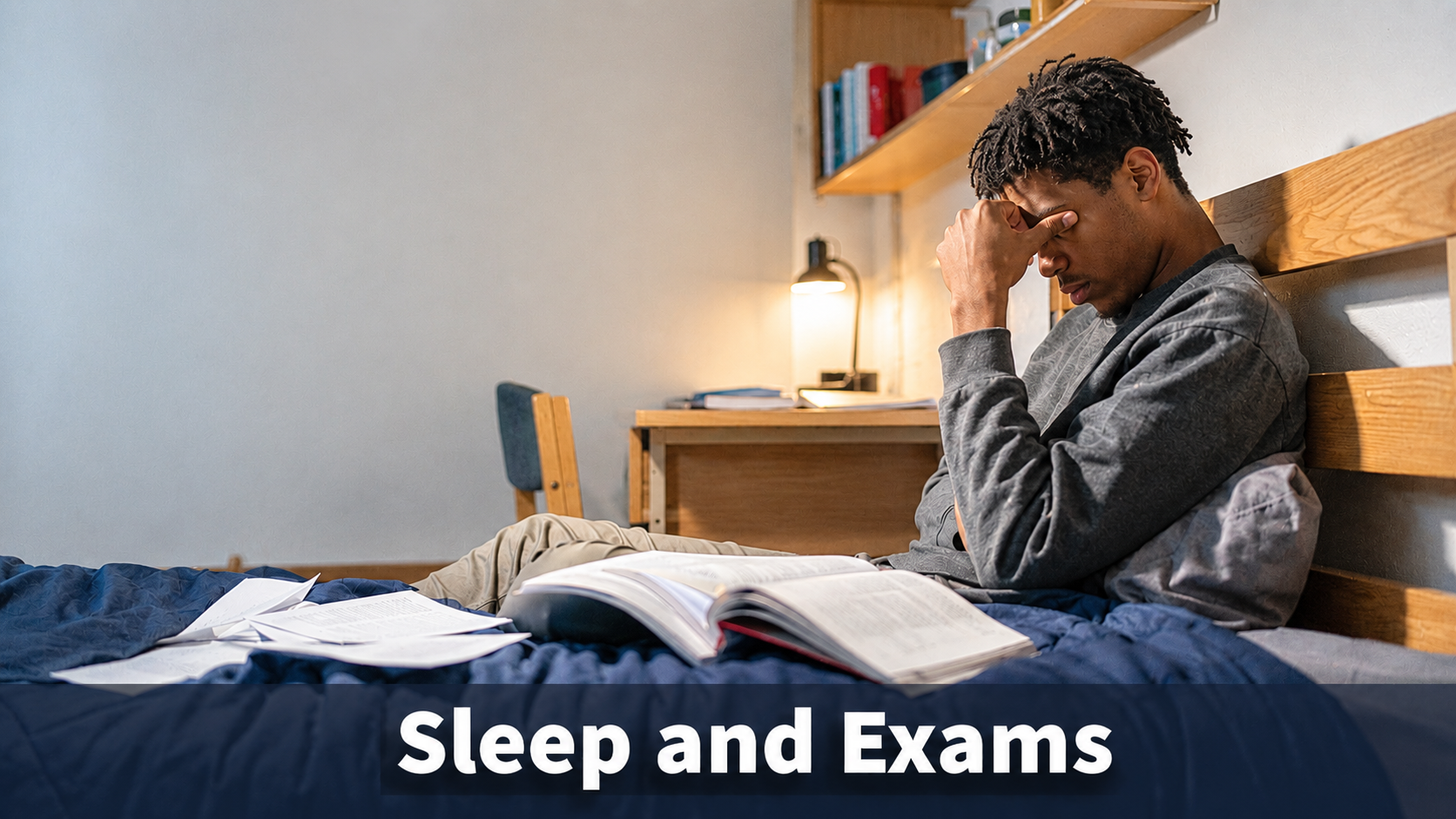
Sleep and Exams: The Winning Combo to Ace Your Semester
Sleep and exams pull against each other every semester, and according to Dr. Avinesh Bhar, Board-Certified Sleep Physician at SLIIIP.com, the students who protect their nights often walk into the test room sharper than the ones who trade rest for extra hours of review.
Most students treat sleep as the flexible part of the schedule. Classes are fixed. Work shifts are fixed. Practice, labs, and group projects are fixed. Sleep becomes the only block that can be cut, so it gets cut first. The problem is that the hours you cut are the same hours your brain uses to store what you studied. When you shorten the night, you are not just borrowing time. You are removing part of the learning process itself.
This guide covers what research says about rest and academic performance, how to plan a realistic sleep schedule around a heavy course load, and when ongoing tiredness points to something more than a busy semester.
SLIIIP’s board-certified sleep physicians can do sleep evaluations for sleep apnea. Virtual consultations in all 50 states. Home sleep tests shipped to your door.
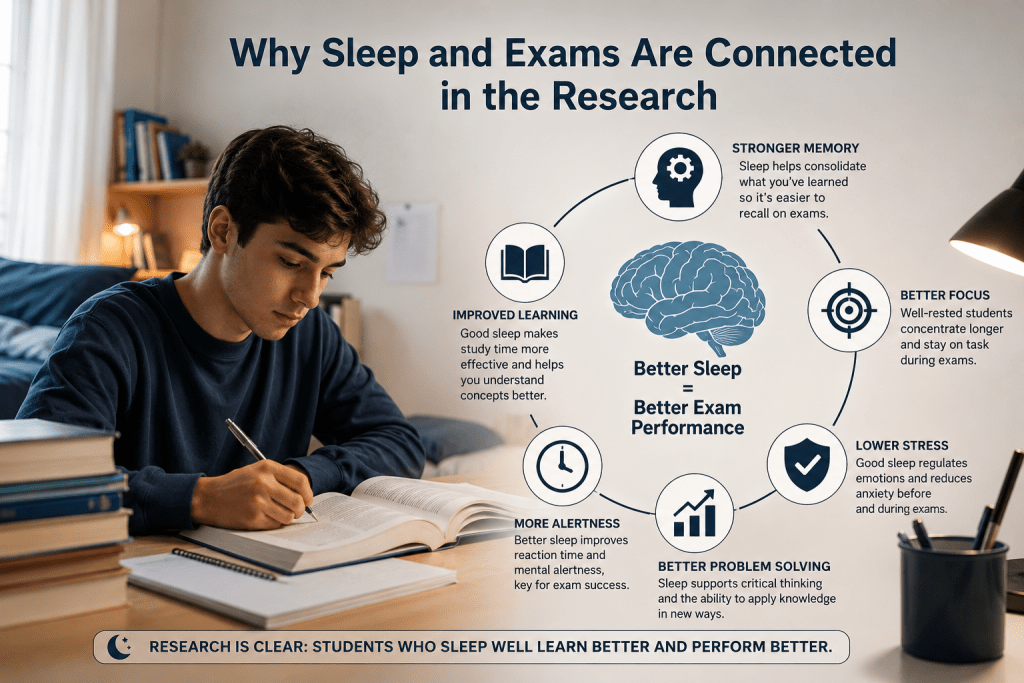
Why Sleep and Exams Are Connected in the Research
Sleep is an active period for the brain, not a shutdown. During the night your brain runs through repeated cycles, and each stage appears to serve a different purpose. Deeper stages are associated with physical recovery and with holding on to facts. Lighter dream stages are associated with pattern recognition and with linking new material to what you already know.
The National Heart, Lung, and Blood Institute notes that people who do not get enough sleep tend to have more trouble with learning, focus, and reaction time, and are generally less productive at school and at work. That is a description of study conditions, not just health conditions. Sleep deficiency is associated with problems in learning, focusing, and reacting, along with difficulty remembering things and making decisions.
None of this means sleep replaces studying. You still have to read the chapter, work the problem sets, and review your notes. What the research suggests is that the same amount of study time produces different results depending on whether the night that follows is protected or shortened.
There is also a simpler point that gets missed. A tired brain reads slower, rereads more, and drifts more. Two hours of studying at 2 a.m. rarely covers what one clear hour covers at 10 a.m. The time on the clock looks the same. The work done inside it is not.
To go deeper on why rest matters across the whole body, see our guide on the importance of sleep.
CHECK YOUR SLEEP SYMPTOMS: TAKE THE 2 MINUTE QUIZ
TAKE THE QUIZ
How Much Sleep Students Actually Need
The Centers for Disease Control and Prevention publishes general guidance on how much sleep people need at different ages. Teenagers sit at the higher end. Young adults usually need at least seven hours, and many need more.
Here is the honest part. Most students already know the number. The problem is the schedule, not the knowledge. A 9 a.m. class and a 1 a.m. bedtime do not add up to seven hours, no matter how the week is arranged.
A few things help more than willpower:
- Pick a wake time you can hold on most days, including weekends, and let the bedtime follow from it.
- Count backwards from your earliest class, not forwards from when you finish studying.
- Treat a two hour weekend shift as the limit. Sleeping until 2 p.m. on Sunday makes Monday harder.
- Protect the last thirty minutes before bed. Reading notes in bed keeps the brain in work mode.
If your current schedule is already scrambled, our walkthrough on how to fix your sleep schedule covers the step by step reset.
What Happens to Study Performance After a Short Night
Students often describe the day after a short night in the same terms. The material feels familiar but will not surface. Reading takes longer. Small mistakes creep into calculations. Focus holds for fifteen minutes instead of forty.
Short sleep is associated with slower reaction time, weaker attention, and more difficulty recalling recently learned material. These effects tend to build across a week rather than appearing all at once, which is why the fourth short night often feels worse than the first.
Mood is part of it too. Tiredness lowers the threshold for frustration and makes a hard problem set feel unmanageable rather than difficult. That shift can push students into avoidance, which costs more time than the sleep would have.
If you often finish a full night and still feel drained, that is worth a separate look. Our article on why you may feel exhausted no matter how much you sleep covers the common reasons.
Building a Sleep and Exams Plan for the Full Semester
The best time to plan sleep and exams together is week one, not the night before the midterm. A semester has a rhythm, and you can see the pressure points in advance.
Front load the reading. Material reviewed across several nights tends to stick better than material reviewed once in a long block. Spreading the work is not only kinder to your schedule, it also gives your brain more nights to consolidate.
Map the crunch weeks. Mark midterms, finals, and major deadlines on a calendar in the first week. Then decide now which nights you will protect. Deciding under pressure almost always favors the all-nighter.
Set a study cutoff. Pick a time when studying stops, even if the chapter is unfinished. An open ended session tends to expand until the night is gone.
Plan the review, not the cram. A thirty minute review of the hardest section before bed, followed by a full night, usually beats a three hour scramble at 1 a.m.
Use short naps carefully. A brief afternoon nap can restore alertness without wrecking the night. Longer or late naps tend to push bedtime back. Our overview of the benefits of napping explains the timing.
The Night Before the Test
The night before a big exam is where good plans usually fall apart. Nerves rise, the brain keeps rehearsing, and sleep gets harder exactly when it matters most.
A few practical habits help. Finish reviewing at least an hour before bed so the material has time to settle. Keep the room dark and cool. Put the phone across the room rather than on the pillow, since checking the time turns into checking everything else.
If sleep does not come, do not fight it in bed for an hour. Get up, sit in low light, read something unrelated, and return when you feel drowsy. Lying awake and worrying tends to train the brain to associate the bed with stress.
For the racing thoughts that show up on exam eve, our guide on how to stop overthinking at night has specific techniques.
And if one night goes badly, do not spiral. A single short night before a test is survivable. The pattern is what matters, not the exception.
Caffeine, Screens, and the Two Habits That Undo Good Plans
Caffeine has a long tail. It can stay active in the body for many hours, which means an afternoon energy drink may still be working at midnight. Most students who cut their last caffeine to the early afternoon notice the difference within a week.
Screens are the second habit. Bright light late at night is associated with a delayed body clock, and study material on a laptop keeps the mind in problem solving mode. The issue is not only the light. It is that your brain does not get a signal that the workday is over.
Neither habit needs to disappear. Both need a boundary. Caffeine gets a cutoff time. Screens get a shutdown point.
If your body clock has drifted so far that you cannot fall asleep before 3 a.m. regardless of how tired you are, read our overview of circadian rhythm sleep disorder to understand what may be happening.
When Tiredness Is More Than a Busy Semester
Here is the part most study guides skip. Some students are doing everything right and still feel wrecked. They are in bed for eight hours. They cut the caffeine. They still fall asleep in lectures.
That pattern deserves attention. Loud snoring, waking with a dry mouth or headache, gasping awake, and heavy daytime sleepiness despite adequate time in bed are all recognized signs of a possible sleep disorder. Sleep apnea is often assumed to affect only older adults, but it can affect younger people as well.
Persistent daytime sleepiness that does not improve with a normal amount of rest is worth a conversation with a physician rather than another cup of coffee. Dr. Avinesh Bhar and the SLIIIP team evaluate these patterns regularly, and a home sleep test can often be arranged without a lab visit.
You can review the common warning signs in our guide to sleep apnea symptoms, or read about how to get a home sleep test if you want to know what the process involves.
This article is general education and is not a diagnosis. If you already use a prescribed therapy such as CPAP or an oral appliance, do not change the settings or stop using it on your own before an exam period. Talk to your treating physician first.
Watch: How Does a Home Sleep Test Work? — SLIIIP.COM
A Realistic Weekly Rhythm for Sleep and Exams
You do not need a perfect schedule. You need a repeatable one.
- Monday to Thursday: hold a consistent wake time, finish studying at a set hour, keep the last thirty minutes screen free.
- Friday: allow a later night if you want one, but keep the wake time within about an hour of normal.
- Saturday: use the extra daytime hours for the heavy reading rather than pushing it into the night.
- Sunday: reset the wake time fully so Monday does not feel like jet lag.
- Exam week: protect the night before each test. Move review earlier in the day instead of later into the night.
The goal is not to sleep more than everyone else. It is to stop paying for study time with the hours that make studying work.
For a closer look at the deeper stages that support recovery and memory, see our guide on how to get more deep sleep.
At Sliiip, we accept the following insurances:

SLIIIP’s board-certified sleep physicians can do sleep evaluations for sleep apnea. Virtual consultations in all 50 states. Home sleep tests shipped to your door.
Frequently Asked Questions
Does sleep really affect exam performance?
Research links insufficient sleep with weaker attention, slower reaction time, and more difficulty recalling recent material, all of which affect test taking.
How many hours should a student sleep before an exam?
Most young adults need at least seven hours. The night before a test is not the time to experiment with less.
Is it better to study all night or sleep and study in the morning?
Sleeping and reviewing in the morning is usually the better trade. A rested brain reads faster and recalls more.
Can a nap replace a full night of sleep?
No. A short nap can restore alertness for a few hours, but it does not substitute for a full night.
How long should a study nap be?
Short naps of roughly twenty minutes tend to leave people alert. Longer naps often cause grogginess on waking.
What time should I stop drinking caffeine during finals?
Caffeine stays active for many hours, so an early afternoon cutoff works better for most people than an evening one.
Why can I not fall asleep the night before a big test?
Anticipation raises alertness. Finishing review earlier and keeping a calm wind down period usually helps more than trying harder to sleep.
Does reviewing notes right before bed help?
A short, calm review can help, but a long or stressful session close to bedtime tends to make falling asleep harder.
Is it bad to sleep in on weekends during the semester?
Large swings in wake time can make Monday mornings harder. Keeping the shift to about an hour is more manageable.
Can I catch up on lost sleep after finals?
Extra rest helps recovery, but the learning that happens during the nights you missed cannot be recovered later.
Why do I feel foggy even after eight hours in bed?
Time in bed is not the same as quality sleep. Fragmented sleep can leave people tired despite adequate hours.
Do all nighters ever work?
They may get an assignment submitted, but they are associated with reduced attention and recall on the following day.
How does stress during exams affect sleep?
Stress raises alertness at night for many people, which can delay sleep onset and increase night awakenings.
Should students use melatonin during exam season?
Any supplement is worth discussing with a healthcare professional first, since timing and dosing matter and results vary.
Does exercise help students sleep better?
Regular daytime activity is associated with better sleep quality. Intense exercise close to bedtime can be disruptive for some people.
Can a phone in the bedroom really affect sleep?
Late night screen use is linked with delayed sleep timing and shorter sleep, especially when the content is engaging.
Is snoring normal for a college student?
Occasional snoring is common, but loud or frequent snoring with daytime sleepiness is worth discussing with a physician.
What are the warning signs of a sleep disorder in students?
Ongoing daytime sleepiness despite enough time in bed, gasping awake, morning headaches, and loud snoring are all worth evaluating.
Can a sleep test be done without going to a lab?
Home sleep testing is widely used and can often be arranged remotely after a consultation.
When should a student see a sleep physician?
When tiredness persists for weeks despite a reasonable schedule, or when snoring, gasping, or morning headaches are present.
SLIIIP’s board-certified sleep physicians can do sleep evaluations for sleep apnea. Virtual consultations in all 50 states. Home sleep tests shipped to your door.
Latest posts
-
RingConn vs Oura: Which Smart Ring Tracks Sleep Better?
Last updated: September 10, 2026. Medically reviewed by Dr. Avinesh Bhar, Board-Certified Sleep Physician, SLIIIP.com. RingConn and Oura both track sleep through a finger-worn ring, but they differ most in…
-
Withings ScanWatch Sleep Tracking Accuracy: What It Can and Cannot Tell You
Last updated: September 10, 2026. Medically reviewed by Dr. Avinesh Bhar, Board-Certified Sleep Physician, SLIIIP.com. Withings ScanWatch is a hybrid analog watch that tracks sleep stages and can flag nighttime…
-
Are Cheap Fitness Trackers Accurate for Sleep?
September 10, 2026. Medically reviewed by Dr. Avinesh Bhar, Board-Certified Sleep Physician, SLIIIP.com. Cheap fitness trackers can be reasonably accurate at telling you when you fell asleep and woke up,…
Get updates
Spam-free subscription, we guarantee. This is just a friendly ping when new content is out.

