👉 Register for Free. How to Diagnose Sleep Apnea Faster in Primary Care – FREE Webinar by Dr. Audrey Wells. – Friday, April 24 at 12 PM ET

Top Natural Sleep Aids: What Actually Works for Better Rest
Top natural sleep aids have quietly taken over bedside tables across the country, and Dr. Avinesh Bhar, Board-Certified Sleep Physician at SLIIIP.com, sees the same pattern every week: people stack supplements for months before realizing they were treating the wrong problem. The supplement aisle is crowded, social media is louder, and the difference between a real sleep aid and a placebo can feel impossible to spot.
SLIIIP’s board-certified sleep physicians can do sleep evaluations for sleep apnea. Virtual consultations in all 50 states. Home sleep tests shipped to your door.
What Are Natural Sleep Aids?
Natural sleep aids are non-prescription products and habits that support relaxation and a steady sleep-wake cycle. They include herbs, minerals, hormones your body already makes, calming scents, sound, and physical tools like weighted blankets. Most natural sleep aids work best when they support a healthy routine, not when they try to replace one. They are not a cure for sleep disorders, and they are not meant to mask serious symptoms like loud snoring, gasping at night, or daytime exhaustion that lingers no matter what you try.
Many people start here because the options feel low risk, easy to access, and gentle. That can be true. But quality, dose, and timing matter more than the label on the bottle.
CHECK YOUR SLEEP SYMPTOMS: TAKE THE 2 MINUTE QUIZ
TAKE THE QUIZ
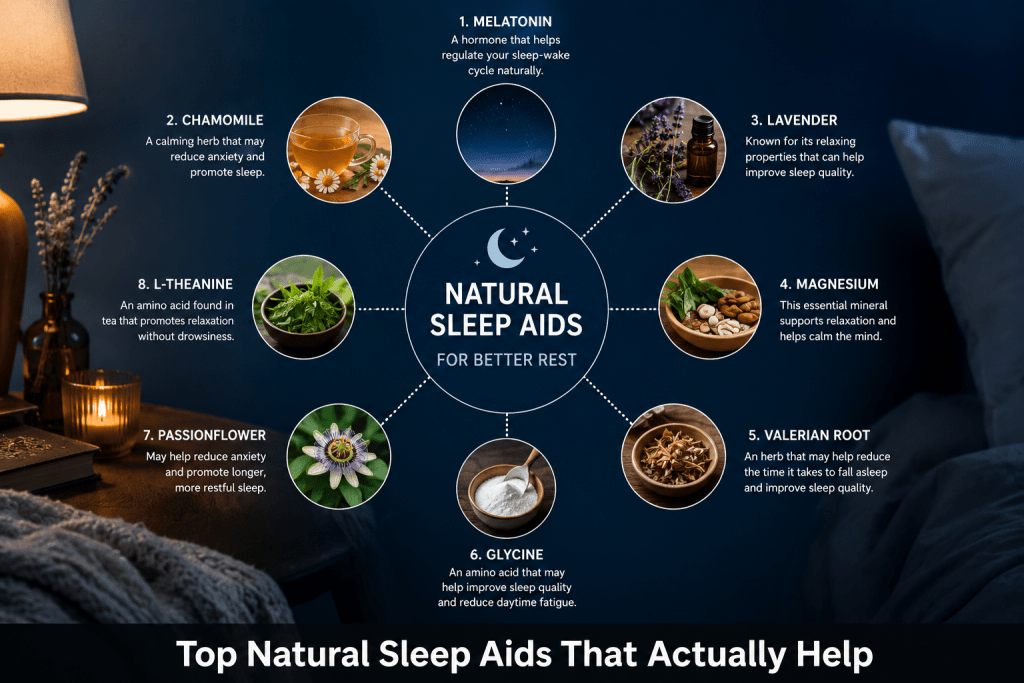
Top Natural Sleep Aids That Actually Help
Here are the most studied and most popular options people reach for at night. Each one works differently, and each one fits a different type of sleeper.
Melatonin
Melatonin is a hormone your brain releases in the evening to signal that it is time to wind down. As a supplement, it is best for short-term use, like jet lag or shift changes. Low doses, around 0.3 to 1 milligram taken 30 to 60 minutes before bed, often work better than the high-dose gummies sold at most stores. You can read more about how it works in our deep dive on melatonin and sleep and the latest research in melatonin news.
Magnesium
Magnesium is a mineral that helps relax muscles and calm the nervous system. Magnesium glycinate is the form most often suggested for sleep because it is gentle on digestion. Many adults do not get enough magnesium from food alone, so a supplement can help with muscle twitching, restless legs at night, and that wired feeling at bedtime.
Chamomile and Herbal Teas
Chamomile tea has been used for centuries as a bedtime ritual. It contains a compound called apigenin that binds to receptors in the brain linked to calm and drowsiness. Other helpful blends include lemon balm, passionflower, and the classic sleepytime mix. For a closer look at how chamomile pairs with melatonin in some products, see our breakdown on melatonin and sleepytime tea.
Valerian Root
Valerian is one of the oldest herbal sleep aids in the world. It may shorten the time it takes to fall asleep and ease mild nighttime restlessness. The smell is strong, so most people prefer capsules over tea. Results often build up over a few weeks of nightly use rather than working on the first night.
Lavender and Essential Oils
Lavender is the most studied scent for relaxation. A few drops in a diffuser, on a pillow spray, or in a warm bath before bed can lower heart rate and ease tension. Other calming scents include bergamot, cedarwood, and roman chamomile. Our article on essential oils for sleep covers safe ways to use them.
L-Theanine
L-theanine is an amino acid found in green tea. It promotes calm focus during the day and a smoother transition to sleep at night, without making you groggy. It pairs well with magnesium for people whose minds race at bedtime.
Glycine
Glycine is another amino acid that lowers core body temperature slightly, which is a key signal that helps the body fall asleep. Three grams about an hour before bed has been shown to support deeper, more refreshing sleep in small studies.
CBD
CBD is a non-intoxicating compound from the cannabis plant. Some people use it for anxiety at night, and others for general relaxation. Quality varies widely across brands, so look for third-party testing. Read more on benefits, dosing, and concerns in our guide on CBD and sleep.
Weighted Blankets
Weighted blankets use gentle, even pressure to mimic the calming feeling of being held. Many users report falling asleep faster and waking up less often after switching to a weighted blanket. A good starting weight is around 10 percent of your body weight. Learn more about how they work in our piece on weighted blanket benefits.
Tart Cherry Juice
Tart cherries are a natural source of melatonin and antioxidants. A small glass in the evening may help shift your internal clock and support longer sleep duration. It also doubles as a tasty bedtime ritual.
How Top Natural Sleep Aids Work in the Body
Most natural sleep aids fall into three buckets. The first group, including melatonin and tart cherry juice, supports your body’s natural timing. The second group, like magnesium, glycine, L-theanine, and chamomile, calms the nervous system so your brain can let go of the day. The third group, including lavender, sound, and weighted blankets, works through your senses to lower stress signals.
No single supplement can override poor sleep habits, untreated medical issues, or constant stress. The goal is to stack small wins, build a wind-down routine, and treat your bedroom like a place for rest only.
When Top Natural Sleep Aids Are Not Enough
Natural sleep aids can do a lot, but they cannot fix a medical sleep disorder. If you snore loudly, wake up gasping, or feel exhausted no matter how long you sleep, the issue is likely not melatonin or magnesium. According to the National Heart, Lung, and Blood Institute, obstructive sleep apnea affects millions of adults and often goes undiagnosed for years.
Warning signs that need professional review include:
- Loud, chronic snoring
- Waking up choking or short of breath
- Morning headaches
- Severe daytime sleepiness
- Mood changes, anxiety, or brain fog
- High blood pressure that is hard to control
If any of these sound familiar, learn more about signs of sleep apnea, or take our sleep apnea quiz. The Centers for Disease Control and Prevention notes that short or poor-quality sleep raises the risk of many long-term health problems, which is why early evaluation matters.
Habits That Make Natural Sleep Aids Work Better
Supplements work best inside a strong nightly routine. Try a few of these basics before adding more pills to your shelf:
- Keep a steady wake time, even on weekends
- Get bright morning light within 30 minutes of waking
- Cut caffeine after early afternoon
- Limit alcohol within three hours of bed
- Cool the bedroom to around 65 to 68 degrees
- Turn off screens 30 to 60 minutes before sleep
- Build a 20-minute wind-down ritual
For a full nightly framework, see our ultimate sleep routine guide and our tips on how to fall asleep fast. If insomnia is the bigger issue, take a look at how to fix insomnia naturally and cognitive behavior therapy for sleep disorders.
SLIIIP Services for Lasting Sleep Health
When over-the-counter options stop working, SLIIIP offers a clear path forward. Dr. Avinesh Bhar and the SLIIIP team focus on the root cause of poor sleep, not just the surface symptoms.
SLIIIP services include:
- Virtual sleep consultations with board-certified physicians in all 50 states
- Home sleep tests shipped right to your door for at-home testing
- Personalized treatment plans for snoring, insomnia, and sleep apnea
- Insurance verification, with most major carriers accepted
- Follow-up care and ongoing support
The goal is simple. You get expert sleep care from home, on your schedule, without long waits or hospital visits.
At Sliiip, we accept the following insurances:

SLIIIP’s board-certified sleep physicians can do sleep evaluations for sleep apnea. Virtual consultations in all 50 states. Home sleep tests shipped to your door.
Frequently Asked Questions About Top Natural Sleep Aids
- What is the best natural sleep aid for adults?
There is no single best option. Melatonin works for timing issues, magnesium glycinate works for tense nights, and chamomile or L-theanine work for racing thoughts. Many adults pair two together based on their main issue. - Are natural sleep aids safe to take every night?
Some are safer for daily use than others. Magnesium and glycine are usually fine long term in normal doses. Melatonin is best for short-term use. Always check with a clinician if you take other medications. - Do natural sleep aids really work?
They can help with mild sleep trouble, jet lag, stress, and a noisy bedtime routine. They will not fix sleep apnea, restless legs disorder, or untreated insomnia. - How long do natural sleep aids take to work?
Most kick in within 30 to 60 minutes. Some herbs like valerian and ashwagandha may need a few weeks of regular use to show full effect. - Can I mix melatonin with magnesium?
Many people do, and they often work well together. Start with the lowest effective dose of each and adjust based on how you feel in the morning. - What is the strongest natural sleep aid?
Valerian root and high-dose melatonin tend to feel the strongest, but stronger is not always better. The right product is the one that helps you wake up rested without grogginess. - Is melatonin a hormone or a supplement?
Both. Your body makes it naturally, and it is also sold as a supplement. That dual nature is why dose and timing matter so much. - Are natural sleep aids better than prescription sleep meds?
They are gentler and have fewer side effects for most people, but they are also less powerful. For chronic insomnia, cognitive behavior therapy is often the best long-term option. - Can natural sleep aids cause grogginess?
Yes, especially in high doses or if taken too late. If you wake up foggy, try a smaller dose or take it earlier. - What is the safest natural sleep aid for older adults?
Magnesium glycinate, chamomile tea, and very low-dose melatonin are often well tolerated. Older adults should always review supplements with their doctor. - Do weighted blankets count as a natural sleep aid?
Yes. They are non-drug tools that calm the nervous system and help many people fall asleep faster. - Are essential oils a real sleep aid?
Lavender has the most research behind it for relaxation. It is not a cure for sleep disorders, but it can make wind-down routines more effective. - Can kids take natural sleep aids?
Some can, but only under guidance from a pediatrician. Melatonin for kids has become common, but dose and timing should never be guessed. - Why do natural sleep aids stop working over time?
Tolerance, life stress changes, and undiagnosed sleep disorders are common reasons. If a product stops helping, it is time to look deeper. - Can natural sleep aids help with anxiety at night?
L-theanine, magnesium, chamomile, and lavender can all help take the edge off mild nighttime anxiety. Severe anxiety needs professional care. - Should I take natural sleep aids if I have sleep apnea?
Sleep apnea is a breathing issue, not a sleepiness issue. Natural sleep aids will not fix it, and some sedating products can make it worse. A sleep evaluation is the right next step. - How do I know if my sleep problem is bigger than insomnia?
Loud snoring, waking up gasping, morning headaches, and exhaustion after a full night of sleep all point to something more than insomnia. - Can diet improve sleep naturally?
Yes. Tart cherries, kiwi, almonds, oats, and turkey all contain compounds that support sleep. A balanced evening meal helps too. - Is it safe to take natural sleep aids with alcohol?
No. Alcohol disrupts deep sleep and can make sedating supplements feel stronger. Skip the combo. - When should I see a sleep doctor instead of trying more supplements?
If you have tried good sleep habits and two or three natural sleep aids without lasting results, or if you have any warning signs of sleep apnea, it is time to book a real evaluation.
Ready to Sleep Better for Good?
Top natural sleep aids can be a strong starting point, but they are not a substitute for expert care when sleep keeps slipping. If you have tried the supplement aisle and still wake up tired, the issue may be something a sleep doctor can actually solve.
SLIIIP’s board-certified sleep physicians can do sleep evaluations for sleep apnea. Virtual consultations in all 50 states. Home sleep tests shipped to your door.
Latest posts
-
Why Can’t I Wake Up Even After Getting Enough Sleep?
Last updated: October 2, 2026. Medically reviewed by Dr. Avinesh Bhar, Board-Certified Sleep Physician, SLIIIP.com. If you can’t wake up after enough sleep, the cause is usually not the number…
-
Why Does My Heart Rate Drop So Low While I Sleep?
Last updated: October 2, 2026. Medically reviewed by Dr. Avinesh Bhar, Board-Certified Sleep Physician, SLIIIP.com. Your heart rate drops low while sleeping mainly because your body needs less work from…
-
Why Are My Naps Never Refreshing?
Last updated: October 2, 2026. Medically reviewed by Dr. Avinesh Bhar, Board-Certified Sleep Physician, SLIIIP.com. Naps that leave you groggy usually come down to how long you sleep, when you…
Get updates
Spam-free subscription, we guarantee. This is just a friendly ping when new content is out.

