👉 Register for Free. How to Diagnose Sleep Apnea Faster in Primary Care – FREE Webinar by Dr. Audrey Wells. – Friday, April 24 at 12 PM ET

Best Alternatives to Sleeping Pills for Anxiety
The best alternatives to sleeping pills for anxiety are reshaping how modern sleep medicine treats restless minds, and Dr. Avinesh Bhar, Board-Certified Sleep Physician at SLIIIP.com, has watched the shift firsthand: more patients are walking away from nightly sedatives and finding real, lasting relief through evidence-based options instead. Sleeping pills can dull the brain, but they rarely teach it to rest.
SLIIIP’s board-certified sleep physicians can do sleep evaluations for sleep apnea. Virtual consultations in all 50 states. Home sleep tests shipped to your door.
Why People Look for Alternatives to Sleeping Pills
Sleeping pills can knock you out, but the cost adds up. Many users wake up groggy, build tolerance over time, or feel anxious about depending on a pill to function the next day. Long-term use of sedatives has been linked to memory issues, falls in older adults, and a rebound spike in anxiety once the pill wears off. Anxiety-driven insomnia also tends to come back stronger when the medication stops, which keeps people locked in the cycle.
For a deeper look at why so many sleep doctors are stepping back from prescriptions, see our piece on the sleeping pill scam and the head-to-head comparison in CBT-I vs sleep medications.

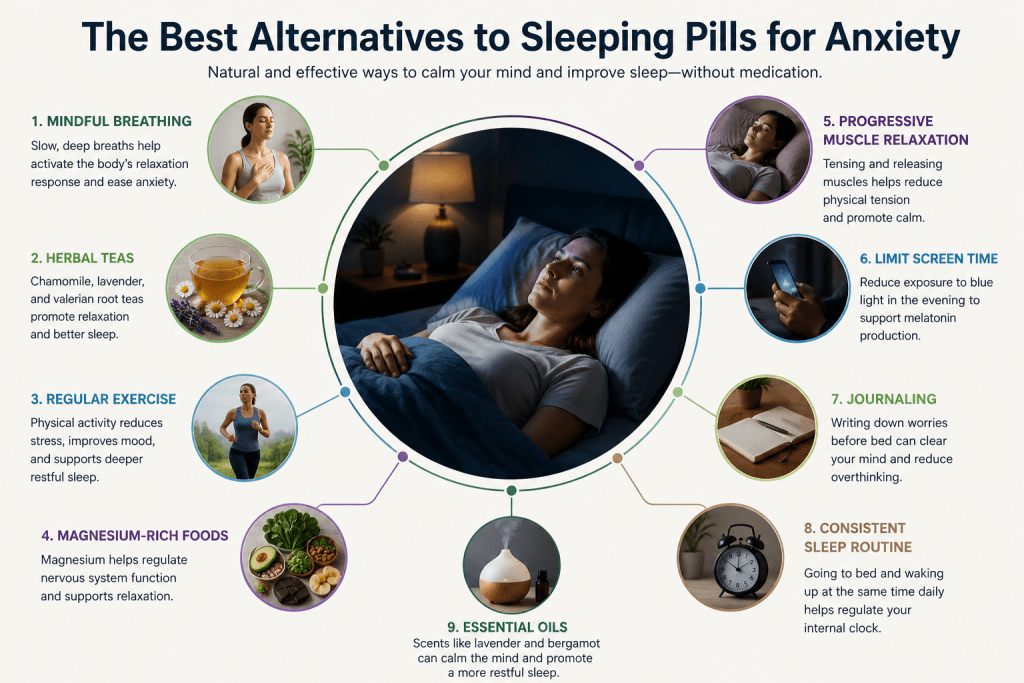
The Best Alternatives to Sleeping Pills for Anxiety
These options are not magic, and they will not erase a stressful week. But used consistently, they can do something sleeping pills cannot: train your brain and body to feel safe at bedtime again.
1. Cognitive Behavior Therapy for Insomnia (CBT-I)
CBT-I is the first-line recommendation for chronic insomnia from major medical groups, and it usually outperforms sleeping pills over the long run. It rewires the thoughts and habits that keep you wired in bed. Most people see real change in 4 to 8 weeks, with results that stick long after the program ends. Learn what to expect in what CBT-I feels like week by week and why it tends to work when meds do not and why CBT-I works when medications do not.
2. Mindfulness and Guided Meditation
Anxious sleepers tend to fight their thoughts. Mindfulness teaches the brain to notice them without engaging. Even 10 minutes of guided meditation before bed can lower heart rate, slow breathing, and quiet the mental noise that keeps you staring at the ceiling. Explore our resources on guided meditation for sleep disorders and on sleep sounds and relaxing music.
3. Breathwork
Slow, controlled breathing is one of the fastest ways to calm an anxious nervous system. Two simple techniques to try tonight:
- Box breathing: Inhale 4 seconds, hold 4, exhale 4, hold 4. Repeat for 5 cycles.
- 4-7-8 breathing: Inhale 4 seconds, hold 7, exhale 8. Repeat for 4 cycles.
These methods shift the body into rest mode within minutes, without a single pill.
4. Progressive Muscle Relaxation
Start at your feet and tense each muscle group for 5 seconds, then release. Move slowly up the body. By the time you reach your face, most people feel a noticeable drop in tension. It pairs well with breathwork and works even better when done in bed with the lights off.
5. Magnesium Glycinate
Magnesium is a mineral that supports calm muscles and a steady nervous system. The glycinate form is gentle on digestion and well tolerated. Many adults are mildly low in magnesium, which can show up as twitchy legs, racing thoughts, or shallow sleep.
6. L-Theanine
L-theanine is an amino acid found in green tea that promotes calm without making you drowsy during the day. Taken in the evening, it helps anxious minds settle without the morning fog of a sedative.
7. Lavender and Aromatherapy
Lavender has the most research behind it for relaxation and lower nighttime anxiety. A few drops in a diffuser, a pillow spray, or a warm bath before bed can signal the body to wind down. Our article on essential oils for sleep covers safe ways to use them at home.
8. Weighted Blankets
The gentle, even pressure of a weighted blanket can lower stress hormones and help anxious sleepers fall asleep faster. A good starting weight is around 10 percent of your body weight. Read more in our guide to weighted blanket benefits.
9. Sleep Restriction Therapy
This one sounds harsh, but it works. By limiting time in bed to match the hours you actually sleep, you build sleep pressure that overrides anxiety. It is part of CBT-I and should be done with guidance, not solo.
10. Worry Journaling and Scheduled Worry Time
If your brain spins as soon as your head hits the pillow, the issue is not your bed. It is unfinished mental work. Set aside 15 minutes earlier in the evening to write down worries, next steps, and anything else nagging at you. Closing the mental loop on paper makes it harder for those same thoughts to break in at 11 p.m. See our breakdown of how to stop overthinking at night and why I overthink before bed.
11. Daily Exercise
Regular movement is one of the most proven non-drug ways to reduce anxiety and improve sleep. Aim for 30 minutes most days, ideally in the morning or early afternoon. Avoid intense workouts within two hours of bed.
12. Morning Light
Bright light within the first 30 minutes of waking sets a strong circadian rhythm, which leads to easier wind-downs at night. Step outside, open the blinds, or use a light therapy lamp on dark mornings.
Watch: Can I Just Get Sleep Meds?
How Anxiety Disrupts Sleep
Anxiety puts the body on high alert. Heart rate climbs, muscles tense, and the brain scans for threats that are not there. That state is the exact opposite of what sleep requires, which is why anxious people often lie awake feeling exhausted and wired at the same time. Over time, the bed itself can become a trigger for stress, and the cycle deepens.
According to the Centers for Disease Control and Prevention, short or poor-quality sleep is tied to a wide range of mental and physical health problems. Anxiety and insomnia feed each other, so breaking even one part of the loop can shift the whole pattern.
When Anxiety Is Actually a Sleep Disorder in Disguise
Many people who feel anxious at night are not dealing with primary anxiety at all. They are dealing with a sleep disorder that mimics it. Obstructive sleep apnea, for example, can cause nighttime awakenings, racing hearts, panic-like feelings, and morning dread.
The National Heart, Lung, and Blood Institute notes that sleep apnea is often missed for years, especially in women and slim adults.
Warning signs that your anxiety may actually be a sleep disorder:
- Waking up gasping or with a racing heart
- Loud or chronic snoring
- Morning headaches
- Daytime sleepiness that no nap fixes
- Feeling on edge even when nothing stressful is happening
If any sound familiar, take a look at why do I wake up anxious and why do I feel anxious at night, and consider a real sleep evaluation.
Building a Nightly Routine That Calms Anxiety
A wind-down routine is the glue that holds these alternatives together. Try this simple framework:
- 90 minutes before bed: dim the lights, switch off bright screens
- 60 minutes before bed: worry journal or short walk
- 30 minutes before bed: breathwork, meditation, or a warm shower
- 15 minutes before bed: into bed, soft audio or book only
For a deeper framework, see our ultimate sleep routine guide, tips on how to fall asleep fast, and our resource on effective sleep solutions for mental health.
SLIIIP Services for Anxiety-Driven Sleep Issues
When anxiety keeps stealing your nights, you do not need another pill. You need a plan. Dr. Avinesh Bhar and the SLIIIP team build that plan with you, from the comfort of your home.
SLIIIP services include:
- Virtual sleep consultations with board-certified physicians in all 50 states
- Home sleep tests shipped to your door for at-home testing
- CBT-I support and structured insomnia care
- Sleep apnea screening when anxiety symptoms point to a deeper issue
- Insurance verification with most major carriers accepted
- Ongoing follow-up and care
The goal is simple: real answers, real tools, and real sleep, without trading one problem for another.
At Sliiip, we accept the following insurances:

SLIIIP’s board-certified sleep physicians can do sleep evaluations for sleep apnea. Virtual consultations in all 50 states. Home sleep tests shipped to your door.
Frequently Asked Questions About Alternatives to Sleeping Pills for Anxiety
- What is the most effective non-drug option for anxiety-driven insomnia?
CBT-I has the strongest research support. It addresses the thoughts and habits driving the problem and offers lasting results. - Can natural options really replace sleeping pills?
For many people, yes. Mild to moderate anxiety-driven insomnia often responds well to behavior changes, breathwork, and supplements like magnesium and L-theanine. - How long do alternatives take to work?
Breathwork and meditation can help the same night. CBT-I usually shows results in 4 to 8 weeks. Lifestyle changes build over a few weeks of consistency. - Is melatonin a good alternative for anxiety?
Melatonin helps with timing, not anxiety. It can be a small piece of the plan but it is rarely enough on its own. - What is the safest supplement for anxious sleepers?
Magnesium glycinate, L-theanine, and chamomile are widely tolerated. Always check with a clinician if you take other medications. - Can I stop sleeping pills cold turkey?
No. Sudden stops can cause rebound insomnia and worse anxiety. Talk to a doctor about a slow taper. - Does exercise really help anxious sleep?
Yes. Daily movement is one of the most consistent non-drug ways to lower anxiety and improve sleep quality. - Is CBD a good alternative for anxiety at bedtime?
Some people find it helpful, but quality varies a lot. Look for third-party tested products and start low. - Are weighted blankets worth it?
For anxious sleepers, often yes. The pressure can ease the nervous system and shorten the time it takes to fall asleep. - What about kava, ashwagandha, or passionflower?
These can help mild stress and sleep onset. Kava should not be combined with alcohol or liver medications, so check with a clinician first. - Can yoga help anxiety-driven insomnia?
Yes. Gentle evening yoga calms the nervous system, eases muscle tension, and supports better sleep. - Should I avoid caffeine if I have anxiety and bad sleep?
Cut it off by early afternoon. Some sensitive adults need to stop by noon. - Does alcohol help with anxious sleep?
No. It fragments sleep, lowers deep sleep, and tends to spike anxiety in the second half of the night. - What if my anxiety is actually sleep apnea?
A sleep evaluation is the only way to know. Many anxiety-like symptoms vanish once apnea is treated. - Are there any apps that help replace sleeping pills?
Digital CBT-I programs, breathing apps, and guided meditation tools all have research support. They work best alongside good sleep habits. - Can therapy alone replace sleeping pills?
For chronic insomnia, CBT-I therapy alone outperforms most sleep medications long term. - Why do sleeping pills stop working?
Tolerance builds, anxiety can outpace the dose, and untreated underlying issues stay unfixed. - Can hormones affect anxious sleep?
Yes. Perimenopause, menopause, thyroid issues, and high cortisol can all worsen anxiety at night. - How do I know if I need professional help?
If anxiety has disrupted your sleep for 3 or more weeks, or if you have any warning signs of sleep apnea, it is time to book an evaluation. - Can SLIIIP help even if I do not have sleep apnea?
Yes. SLIIIP offers virtual consultations, CBT-I support, and full sleep care for insomnia, anxiety-driven sleep issues, and more.
Ready to Sleep Without the Pill?
You do not have to choose between racing thoughts and a foggy morning. The best alternatives to sleeping pills for anxiety can give you back deep, steady sleep without the side effects.
SLIIIP’s board-certified sleep physicians can do sleep evaluations for sleep apnea. Virtual consultations in all 50 states. Home sleep tests shipped to your door.
Latest posts
-
L-Theanine for Sleep: Can It Calm Your Racing Mind?
Search interest in l-theanine for sleep has climbed fast among people who lie in bed with a busy head, and Dr. Avinesh Bhar, Board-Certified Sleep Physician at SLIIIP.com, sees the…
-
Ashwagandha for Sleep: What the Research Really Shows
Ashwagandha for sleep has moved from health food shelves to mainstream conversation in a few short years, and Dr. Avinesh Bhar, Board-Certified Sleep Physician at SLIIIP.com, now fields questions about…
-
Caffeine and Sleep: How Late Is Too Late for Coffee?
Caffeine and sleep pull against each other for far longer than most coffee drinkers assume, and Dr. Avinesh Bhar, Board-Certified Sleep Physician at SLIIIP.com, regularly meets patients who blame stress…
Get updates
Spam-free subscription, we guarantee. This is just a friendly ping when new content is out.

