
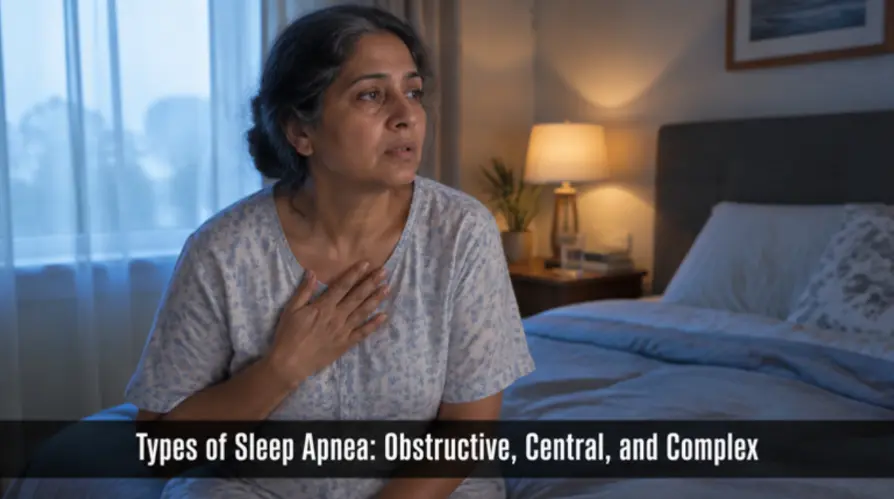
Types of Sleep Apnea: Obstructive, Central, and Complex
Last updated: November 9, 2026. Medically reviewed by Dr. Avinesh Bhar, Board-Certified Sleep Physician, SLIIIP.com.
There are three main types of sleep apnea: obstructive, central, and complex. The clinical detail that separates them is breathing effort. Dr. Avinesh Bhar, Board-Certified Sleep Physician at SLIIIP.com, looks for this when he reads a sleep study.
In obstructive sleep apnea, the chest keeps trying to breathe against a blocked airway. In central sleep apnea, the effort itself pauses because the brain’s signal to breathe drops off.
SLIIIP’s board-certified sleep physicians can do sleep evaluations for sleep apnea. Virtual consultations in all 50 states. Home sleep tests shipped to your door.
What Are the 3 Types of Sleep Apnea?
The three main types of sleep apnea are obstructive sleep apnea, central sleep apnea, and complex sleep apnea.
Each one interrupts breathing during sleep, but each happens for a different reason. Obstructive sleep apnea is by far the most common. Central sleep apnea is less common and is often linked to another health problem or a medicine. Complex sleep apnea describes a mix of the two patterns.
The word “type” is about why breathing stops. It is different from severity, which is about how often breathing stops. You can have mild obstructive sleep apnea or severe central sleep apnea. Both labels matter, and a sleep study report usually gives you both.
- Obstructive sleep apnea (OSA): the upper airway narrows or closes during sleep.
- Central sleep apnea (CSA): the brain and breathing muscles fall out of step, so effort fades or stops.
- Complex or treatment-emergent sleep apnea: central events appear or persist after airway blockage is treated.
What Is Obstructive Sleep Apnea?
Obstructive sleep apnea happens when the upper airway is blocked during sleep while the body keeps trying to breathe. According to the National Heart, Lung, and Blood Institute, it comes from conditions that block airflow through the upper airway. One example is the tongue falling backward. Muscles in the throat relax in sleep, and the space behind the tongue can become too narrow.
The body responds with a brief wake-up signal that reopens the airway. Most people do not remember these moments. They may only notice that sleep does not feel restful.
Watch: Dr. Bhar explains how sleep apnea can cause anxiety
Common signs of obstructive sleep apnea
- Loud, regular snoring
- Gasping or choking sounds at night
- A bed partner seeing pauses in breathing
- Morning headaches or a dry mouth
- Daytime sleepiness and trouble focusing
Who is more likely to have it?
NHLBI lists several risk factors for this type. They include older age, obesity, a large neck, tongue, or tonsils, family history, alcohol use, and smoking. Men are affected more often, though women are often missed because their symptoms can look different.
Snoring is common with this type, but people can have obstructive sleep apnea without loud snoring.
TAKE THE QUIZ
What Is Central Sleep Apnea?
Central sleep apnea is a breathing disorder in which the body reduces or stops its effort to breathe during sleep, without an airway blockage. The American Academy of Sleep Medicine explains that it is usually tied to a problem in the brain or heart. Some medicines, including opioid pain medicines, are also linked to it.
Central sleep apnea is less common than the obstructive type. It also tends to show up differently. People may describe broken sleep, trouble staying asleep, or waking up short of breath. Loud snoring is less typical, although it can still happen.
Conditions linked to central sleep apnea
- Heart failure
- Stroke and some conditions that affect the brain or nerves
- Kidney problems
- Long-term opioid use
- Travel to very high altitude
Some people have a pattern called Cheyne-Stokes breathing. In Cheyne-Stokes breathing, effort and airflow slowly build, then fade, and sometimes stop in a repeating cycle. The AASM links this pattern with heart failure and stroke, and it is seen mainly in men over 60.
In other people, no underlying reason is found. This is called primary central sleep apnea, and it is rare.
What Is Complex Sleep Apnea?
Complex sleep apnea, also called treatment-emergent central sleep apnea, is when central breathing pauses appear or remain after positive airway pressure treats the airway blockage.
A person starts with what looks like obstructive sleep apnea. Once therapy opens the airway, a central pattern becomes visible in the data.
In some people, these central events settle as the body adjusts to therapy over the following weeks. In others, they continue. A sleep physician can look at your therapy data and decide if a change is needed.
How Do the Types of Sleep Apnea Differ?
The main difference between the types of sleep apnea is whether the chest is still making an effort to breathe during the pause. Here is how each type usually looks:
- Why breathing stops: a blocked airway in OSA, a drop in the brain’s signal in CSA, and both patterns in complex sleep apnea.
- Breathing effort during a pause: present in OSA, reduced or absent in CSA.
- Snoring: common in OSA, less typical in CSA.
- Common links: weight, airway shape, and age for OSA. Heart failure, stroke, and opioids for CSA.
- Often found by: a home test or lab study for OSA, and usually a full lab study for CSA.
We cover the two main types head to head in our guide to central vs obstructive sleep apnea. The rest of this article focuses on how the type is found and why it changes the next step.
Can a Home Sleep Test Tell Which Type of Sleep Apnea You Have?
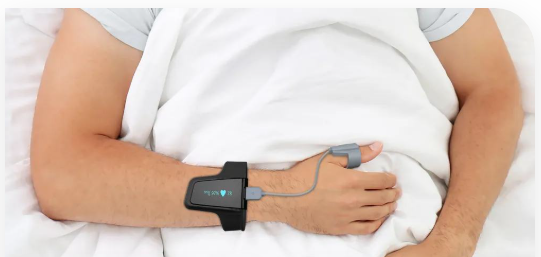
A home sleep test is designed mainly to look for obstructive sleep apnea, so it may not fully identify central sleep apnea. Many home devices track airflow, oxygen, and heart rate. Some add a belt or other sensor to estimate breathing effort.
Does the Type of Sleep Apnea Change Treatment?
Yes, the type of sleep apnea usually shapes which treatment a physician considers. Options that help one type may not suit another. That is why a clear diagnosis comes before a device choice.
- Obstructive sleep apnea: options can include CPAP, oral appliances, weight management, and positional strategies.
- Central sleep apnea: physicians look at underlying conditions and medicines first. Options the AASM lists include positive airway pressure, adaptive servo-ventilation, and other therapies in selected cases.
- Complex sleep apnea: care often starts with reviewing therapy data over time, then adjusting the plan if central events persist.
Adaptive servo-ventilation is not safe for everyone, including some people with certain forms of heart failure. That decision belongs with a sleep physician and your cardiologist. SLIIIP evaluates sleep disorders and can work alongside your existing care team, but heart, kidney, and neurological conditions stay with the specialists who manage them.
Type vs Severity: What Do the Numbers Mean?
Severity is usually measured by the apnea-hypopnea index, or AHI, which counts breathing events per hour of sleep. Adults with fewer than 5 events per hour are generally considered normal. The commonly used ranges are 5 to 14 for mild, 15 to 29 for moderate, and 30 or more for severe. You can read more in our guide to mild vs severe sleep apnea.
A lab report may also separate obstructive events from central events. If you have your results, look for a central apnea index or a count of central apneas. Bring that page to your appointment.
A high number on its own does not tell you the type. The type on its own does not show how much it affects your health.
Watch: A doctor explains why sleep apnea is often misdiagnosed
When to See a Doctor
See a doctor if you snore loudly, wake up gasping, or feel very sleepy during the day. A bed partner who notices pauses in your breathing is another strong reason to book a visit. Dr. Avinesh Bhar recommends that adults with heart failure, a past stroke, or long-term opioid use report broken sleep or waking short of breath. Central sleep apnea is more likely in these settings.
SLIIIP accepts many major insurance plans, including Medicare and TRICARE. Check your coverage below before your visit.

Check your coverage and speak with a board-certified sleep physician. Virtual consultations in all 50 states. Home sleep tests shipped to your door.
For cash payments, price for Initial Consultation is $150
Follow up appointments cost $125
Frequently Asked Questions
What are the three types of sleep apnea?
The three main types are obstructive, central, and complex sleep apnea.
Which type of sleep apnea is most common?
Obstructive sleep apnea is by far the most common type.
What is the difference between obstructive and central sleep apnea?
In obstructive sleep apnea the airway is blocked while the body keeps trying to breathe. In central sleep apnea the effort to breathe reduces or stops.
What is complex sleep apnea?
It is when central breathing pauses appear or continue after positive airway pressure treats a blocked airway.
Is complex sleep apnea the same as treatment-emergent central sleep apnea?
Yes, the two terms are generally used for the same pattern.
Is central sleep apnea more serious than obstructive sleep apnea?
Not always. Seriousness depends on severity, your other health conditions, and how each is managed.
Can you have more than one type of sleep apnea?
Yes, some people have both obstructive and central events on the same study.
Does central sleep apnea cause snoring?
Loud snoring is less typical with central sleep apnea, though it can still occur.
Can you have sleep apnea without snoring?
Yes, both obstructive and central sleep apnea can occur without loud snoring.
Can a home sleep test detect central sleep apnea?
Home tests are designed mainly for obstructive sleep apnea and may miss central events. A lab study is usually preferred if central sleep apnea is suspected.
What test shows the type of sleep apnea?
An in-lab polysomnography gives the most complete view because it records breathing effort, airflow, and brain waves.
What is mixed sleep apnea?
A mixed event starts as a central pause and ends with a blocked airway.
What is Cheyne-Stokes breathing?
It is a repeating pattern in which breathing builds, fades, and sometimes stops. It is linked with heart failure and stroke.
Is heart failure linked to central sleep apnea?
Yes, heart failure is one of the conditions most often linked to central sleep apnea.
Can opioids be linked to central sleep apnea?
Yes, long-term opioid use is linked to central sleep apnea, and risk appears to rise with dose.
Does CPAP work for every type of sleep apnea?
CPAP is a common option for obstructive sleep apnea, but other types may need a different approach chosen by a physician.
Can central sleep apnea go away?
It can improve in some people when an underlying condition or medicine is addressed, but a physician should guide this.
What AHI is considered severe sleep apnea?
An AHI of 30 or more events per hour is generally considered severe in adults.
Does the AHI tell you the type of sleep apnea?
No, the AHI shows how often events occur. The study details show whether they are obstructive or central.
Should I change my CPAP settings if central events show up?
No, do not change your settings yourself. Ask your sleep physician to review your data.
Latest posts
-
Can Statins Cause Insomnia? What the Research Shows
Last updated: November 17, 2026. Medically reviewed by Dr. Avinesh Bhar, Board-Certified Sleep Physician, SLIIIP.com. For most people, probably not. A meta-analysis of placebo-controlled sleep lab studies found that statins…
-
Do Beta Blockers Cause Insomnia? What to Know
Last updated: November 17, 2026. Medically reviewed by Dr. Avinesh Bhar, Board-Certified Sleep Physician, SLIIIP.com. Beta blockers are linked to insomnia in some people. Some beta blockers lower nighttime melatonin,…
-
Do I Need a Sleep Study to Get the Sleep Apnea Pill?
Last updated: November 17, 2026. Medically reviewed by Dr. Avinesh Bhar, Board-Certified Sleep Physician, SLIIIP.com. Yes, almost certainly. Any sleep apnea medicine, including the AD109 pill if it is approved,…
Get updates
Spam-free subscription, we guarantee. This is just a friendly ping when new content is out.

