👉 Register for Free. How to Diagnose Sleep Apnea Faster in Primary Care – FREE Webinar by Dr. Audrey Wells. – Friday, April 24 at 12 PM ET

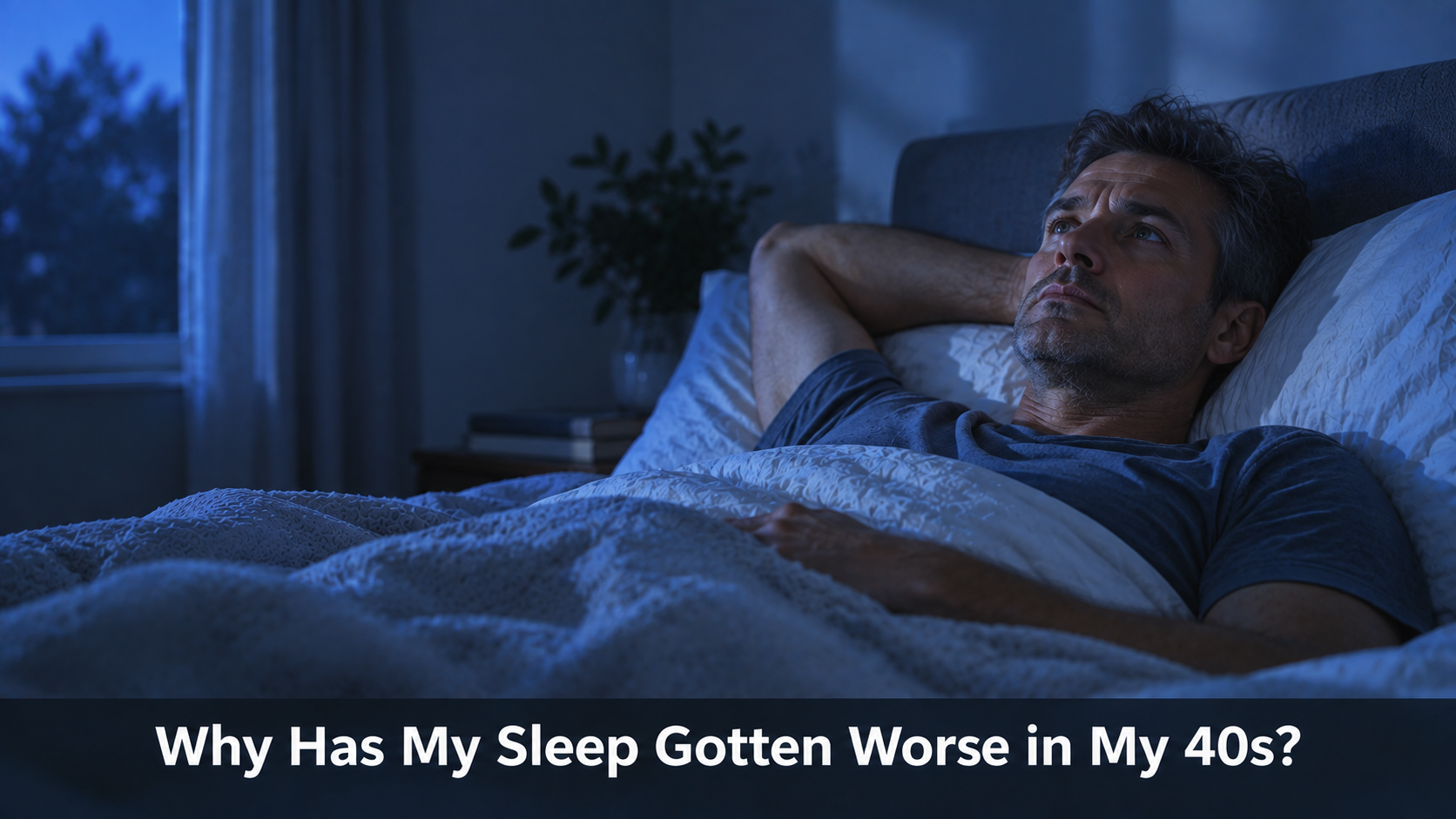
Why Has My Sleep Gotten Worse in My 40s?
Last updated: September 17, 2026. Medically reviewed by Dr. Avinesh Bhar, Board-Certified Sleep Physician, SLIIIP.com.
Sleep gets worse in your 40s because several changes happen at once. Deep sleep naturally declines with age, hormone levels shift, and the risk of sleep apnea rises sharply during this decade. Dr. Avinesh Bhar, a Board-Certified Sleep Physician at SLIIIP.com, evaluates many patients in their 40s who assume poor sleep is just stress, only to find a treatable sleep disorder driving the problem. Sleep changes in your 40s are common, but they are not something you have to just accept. Most causes fall into three groups: natural aging, hormonal shifts, and treatable sleep disorders.
SLIIIP’s board-certified sleep physicians can do sleep evaluations for sleep apnea. Virtual consultations in all 50 states. Home sleep tests shipped to your door.
What Actually Changes in Your Body During Your 40s
Sleep researchers describe sleep duration across a lifetime as a U shape. It is long in childhood, drops through adulthood, and hits its lowest point around age 40 before slowly rising again after 60. Deep sleep, the stage where the body repairs tissue and clears waste from the brain, declines steadily starting in your 20s and becomes noticeable by your 40s. REM sleep also shortens, which affects memory and emotional processing the next day. This means you may be spending the same number of hours in bed, but getting less restorative sleep from them.
None of this means poor sleep is permanent. It means the causes are often layered, and identifying which layer applies to you matters more than generic advice to sleep more.
Can Perimenopause Start Affecting Sleep in Your 40s?
Yes. For women, perimenopause often begins in the mid-40s and can last four to eight years before menopause. During this transition, estrogen and progesterone rise and fall unevenly before declining. These hormone swings are associated with lighter sleep, more frequent waking, and earlier morning waking than women experienced in their 30s. Night sweats can compound the problem by raising body temperature right when the body needs to cool down to stay asleep.
This is a different topic from menopause itself, and the two are often confused. For a closer look at how to tell hormonal sleep disruption apart from ordinary insomnia, see our articles on hormonal insomnia and is this perimenopause or insomnia.
Sleep Apnea Risk Rises Sharply After 40
Obstructive sleep apnea becomes significantly more common in your 40s and 50s, for both men and women. Weight changes, softer throat tissue, and hormonal shifts all play a role. Sleep apnea in women often looks different than the textbook male presentation, showing up as fatigue, insomnia-like waking, or mood changes rather than loud snoring. This is one reason it goes undiagnosed for years. A national health survey analyzed by researchers publishing through the National Institutes of Health found that women going through the menopausal transition were substantially more likely to report trouble falling and staying asleep than younger women, a pattern that overlaps closely with untreated sleep apnea symptoms.
Stress, Caregiving, and the Sandwich Generation Squeeze
Your 40s often bring a specific kind of stress load. Many people in this decade are raising children while also caring for aging parents, a situation sometimes called the sandwich generation. Chronic stress raises cortisol at night, which can cause the wired-but-tired feeling of lying awake with a racing mind despite being exhausted. Financial pressure, career demands, and disrupted routines add to this load. Stress alone rarely explains months of poor sleep, but it often makes an existing sleep problem feel worse.
What Actually Helps When Sleep Changes in Your 40s
Small, consistent changes tend to help more than dramatic ones.
- Keep a consistent wake time, even on weekends, since this anchors your body clock more than bedtime does.
- Cool your bedroom to around 65 degrees Fahrenheit, since a drop in body temperature helps trigger sleep.
- Limit caffeine after early afternoon, since it can stay in your system for 8 hours or longer.
- Get natural light exposure early in the day to support your circadian rhythm.
- Track your symptoms for two weeks before assuming the cause, since patterns often point to a specific driver.
These steps address the aging and lifestyle layer of the problem, but they will not resolve an undiagnosed sleep disorder. If you have tried the basics and still feel exhausted, the next step is medical evaluation rather than another sleep gadget.
Watch: Why Can’t I Sleep?
When to See a Doctor
Occasional restless nights in your 40s are normal. Dr. Bhar recommends a sleep evaluation when poor sleep happens four or more nights a week for a month or longer, or when you feel exhausted no matter how many hours you spend in bed. Loud snoring, gasping during sleep, morning headaches, or a partner noticing pauses in your breathing are also reasons to get evaluated for sleep apnea specifically, since these symptoms are easy to dismiss as normal aging when they are not.

SLIIIP’s board-certified sleep physicians can do sleep evaluations for sleep apnea. Virtual consultations in all 50 states. Home sleep tests shipped to your door.
Frequently Asked Questions
Is it normal for sleep to get worse in your 40s?
Yes, research shows sleep duration and quality both tend to decline through your 40s before improving again after 60.
What age is sleep the worst?
Studies point to around age 40 as the low point for average sleep duration across a lifetime.
Can stress alone cause months of bad sleep?
Chronic stress can worsen sleep significantly, but persistent insomnia lasting months often has an additional cause.
Does perimenopause always come with hot flashes?
No, some women experience sleep disruption from hormone shifts with mild or no hot flashes at all.
Can men experience hormonal sleep changes in their 40s too?
Yes, testosterone gradually declines starting around age 40, which is associated with lighter, more fragmented sleep in some men.
Why do I wake up at 3am for no reason?
A drop in core body temperature and cortisol timing shifts are commonly associated with early morning waking in midlife.
Is snoring in your 40s something to worry about?
New or worsening snoring, especially with pauses in breathing, is worth a sleep apnea evaluation.
Can weight gain in my 40s affect my sleep?
Yes, weight gain around the neck and throat is associated with a higher risk of obstructive sleep apnea.
Does melatonin help with age-related sleep changes?
Melatonin may help some people, but it does not address sleep apnea or hormonal causes of insomnia.
How much sleep do I actually need in my 40s?
Most adults still need 7 to 9 hours, and that requirement does not decrease with age.
Can poor sleep in my 40s affect my memory?
Reduced deep and REM sleep is associated with next-day memory and concentration problems.
Is it worth tracking my sleep with a wearable device?
Tracking can help you spot patterns, but a home sleep apnea test gives a clinical answer a wearable cannot.
Can anxiety cause the same symptoms as a sleep disorder?
Yes, anxiety and undiagnosed sleep apnea share symptoms like waking at night and daytime fatigue, which is why evaluation matters.
Does alcohol make sleep worse in your 40s?
Alcohol can fragment sleep later in the night, even if it helps you fall asleep faster at first.
Can a home sleep test really replace an in-lab study?
For many adults with suspected obstructive sleep apnea, a home sleep test provides an accurate, convenient diagnosis.
Is it normal to need a nap in the afternoon in your 40s?
Occasional tiredness is common, but a daily need to nap can signal poor nighttime sleep quality.
Does exercise help sleep in your 40s?
Regular daytime exercise is associated with better sleep quality, though exercising too close to bedtime can backfire.
Can hormone replacement therapy help with sleep?
For some women, treating hormonal symptoms can improve sleep, though this decision should be made with a doctor.
How long does the sandwich generation sleep squeeze usually last?
It varies widely, but stress-related sleep disruption often eases once caregiving demands change.
When should I stop waiting it out and get evaluated?
If poor sleep has lasted a month or more, or daytime fatigue is affecting your work or safety, it is time for an evaluation rather than more waiting.
SLIIIP’s board-certified sleep physicians can do sleep evaluations for sleep apnea. Virtual consultations in all 50 states. Home sleep tests shipped to your door.
Latest posts
-
How Are My Hot Flashes Related to Menopause? The Mechanism Explained
Last updated: September 21, 2026. Medically reviewed by Dr. Avinesh Bhar, Board-Certified Sleep Physician, SLIIIP.com. Hot flashes are directly related to menopause through declining estrogen’s effect on the hypothalamus, the…
-
Why Did My Sleep Change So Fast in My Late 40s?
Last updated: September 21, 2026. Medically reviewed by Dr. Avinesh Bhar, Board-Certified Sleep Physician, SLIIIP.com. Sleep can change quickly in the late 40s because this is often when the perimenopause-to-menopause…
-
Why Does PMS Wreck My Sleep Even When My Symptoms Are Mild?
Last updated: September 21, 2026. Medically reviewed by Dr. Avinesh Bhar, Board-Certified Sleep Physician, SLIIIP.com. Sleep can fall apart in the days before your period even when your other PMS…
Get updates
Spam-free subscription, we guarantee. This is just a friendly ping when new content is out.

