👉 Register for Free. How to Diagnose Sleep Apnea Faster in Primary Care – FREE Webinar by Dr. Audrey Wells. – Friday, April 24 at 12 PM ET

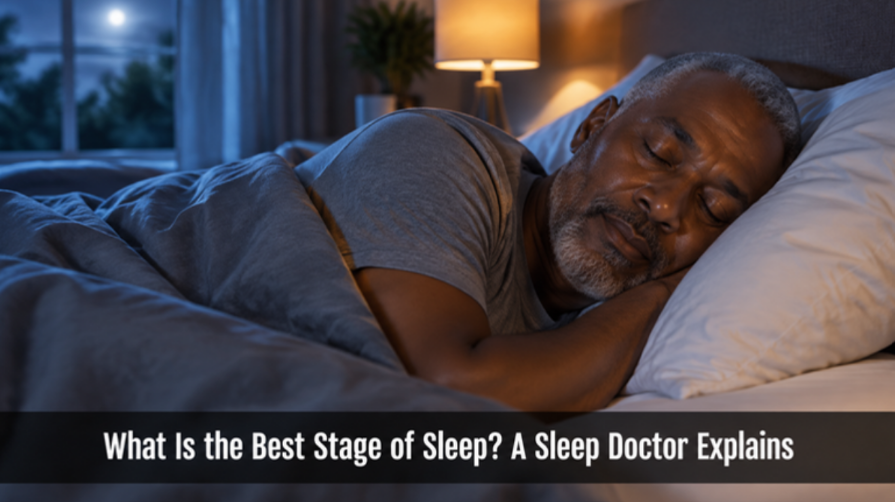
What Is the Best Stage of Sleep? A Sleep Doctor Explains
Last updated: October 20, 2026. Medically reviewed by Dr. Avinesh Bhar, Board-Certified Sleep Physician, SLIIIP.com.
There is no single best stage of sleep, because each stage does a different job. Deep sleep is the most physically restorative stage, and REM sleep supports memory and mood. Dr. Avinesh Bhar, Board-Certified Sleep Physician at SLIIIP.com, tells patients to watch how they feel during the day rather than chase one number on a tracker. In his practice, people with low deep or REM sleep on a tracker are often having breathing pauses that keep breaking up those stages. The healthiest night is a full night with several complete sleep cycles, not a night with the most deep sleep. If you sleep long enough and still wake up tired, the problem may be how often your sleep is interrupted.
SLIIIP’s board-certified sleep physicians can do sleep evaluations for sleep apnea. Virtual consultations in all 50 states. Home sleep tests shipped to your door.
What Are the Stages of Sleep?
Sleep has four stages: three stages of non-REM sleep and one stage of REM sleep. Your brain moves through them in a repeating loop called a sleep cycle.
According to the National Heart, Lung, and Blood Institute, a sleep cycle restarts every 80 to 100 minutes. Most people have four to six cycles per night. Each cycle passes through light sleep, deep sleep, and REM sleep in turn.
- Stage 1 (N1): The short shift from being awake to being asleep. It lasts only a few minutes.
- Stage 2 (N2): Light sleep. Your heart rate slows and your body temperature drops. This is the stage where you spend the most time.
- Stage 3 (N3): Deep sleep, also called slow-wave sleep. It is the hardest stage to wake up from.
- REM sleep: Your brain becomes very active, your eyes move quickly, and most vivid dreams happen here.
A review of sleep physiology from NIH’s StatPearls lists typical shares of the night. Stage 1 takes about 5 percent of sleep, stage 2 about 45 percent, deep sleep about 25 percent, and REM sleep about 25 percent. These are averages, and your own numbers can shift from night to night.
Apple Watch and some other trackers call light sleep “core sleep.” Core sleep is mostly stage 2, with some stage 1 mixed in. You can read more in our guide to core sleep vs deep sleep.
Which Sleep Stage Is the Most Restorative?
Deep sleep (stage 3) is the most physically restorative stage of sleep. REM sleep is the most mentally restorative, so the two work as a team.
The StatPearls review notes that during deep sleep, the body repairs and regrows tissue, builds bone and muscle, and strengthens the immune system. That is why deep sleep often gets called the “best” stage. Your brain waves slow down, your breathing evens out, and your muscles relax fully.
REM sleep has a different role. The brain is very active, and the hippocampus, a key memory region, is busy during dreaming. REM sleep is linked to memory, learning, and emotional balance. People who lose REM sleep often report feeling foggy, short-tempered, or low.
So the honest answer to “what is the best sleep stage” depends on what you need. For the body, deep sleep matters most. For the mind, REM sleep matters most. For feeling rested, you need both, plus the light sleep that links them.
Why Light Sleep Still Matters
Light sleep can look like wasted time on a sleep tracker, but it is not. Stage 2 makes up close to half of a normal night.
Stage 2 sleep is linked to memory processing and is the gateway into both deep sleep and REM sleep. Your brain cannot jump straight from being awake into a long stretch of deep sleep. It needs light sleep first, every cycle.
This is why a night with a lot of light sleep is not a bad night on its own. If you wake up refreshed and stay alert during the day, your stage mix is probably working for you.
How Sleep Stages Change Through the Night
Your sleep stages are not spread evenly across the night. The order and length of each stage change from early cycles to late cycles.
Most deep sleep happens in the first half of the night, and most REM sleep happens in the second half. The NHLBI notes that REM sleep becomes more common later in the night. Early cycles lean heavy on deep sleep, while the last cycles before morning hold long REM periods.
This pattern has a practical side. If you go to bed very late, you may still get some deep sleep. If you wake up too early, you tend to lose REM sleep from the end of the night. Cutting your sleep short at either end costs you a different kind of rest.
A steady bedtime and wake time helps your body move through the cycles in a normal rhythm. Our guide on sleep regularity explains why a consistent schedule matters.
Does the Best Sleep Stage Change With Age?
Yes, the balance of sleep stages shifts as you get older, especially for deep sleep. The need for both deep and REM sleep stays the same, but the amount you get changes.
The NHLBI explains that slow-wave sleep peaks in early childhood, drops in the teen years, and keeps decreasing through adulthood. Some older adults may have very little deep sleep at all. Sleep also tends to become lighter, with more brief awakenings during the night.
This means a 65-year-old should not compare their deep sleep to a 25-year-old’s. Less deep sleep with age is common. A sudden drop, or new daytime sleepiness, is a different story and is worth checking.
Can Sleep Apnea Steal Your Deep and REM Sleep?
Yes, sleep apnea is linked to less deep sleep and less REM sleep. Repeated breathing pauses pull the brain out of these stages before they can finish.
The StatPearls review explains that people with sleep apnea have airway collapse in deeper sleep states. This is linked to less time in stage 3 and REM sleep. During REM sleep, the muscles that hold the airway open relax the most. That makes REM a common time for breathing events.
Each breathing pause often ends with a brief arousal. You may not remember it, but your brain shifts back into lighter sleep. A person can spend eight hours in bed and still get little deep or REM sleep if breathing pauses keep breaking up their cycles.
Other conditions can break up sleep stages too. These include insomnia, restless legs syndrome, chronic pain, nighttime reflux, and alcohol close to bedtime. Our article on what causes fragmented sleep covers these in more detail.
Can a Sleep Tracker Tell You Which Stage You Are In?
A sleep tracker can estimate your sleep stages, but it cannot measure them directly. Only a lab sleep study with brain wave sensors measures sleep stages exactly.
Rings and watches guess your stage from heart rate, movement, and sometimes breathing rate or skin temperature. Consumer trackers tend to be better at telling sleep from wake than at telling deep sleep from REM sleep. Their stage numbers can vary a lot between brands and between nights.
Use your tracker to spot trends over weeks, not to judge a single night. If your numbers look poor but you feel great, trust how you feel. If your numbers look fine but you feel exhausted, take that seriously too. Our guide on how accurate sleep scores are explains the limits.
How Can You Support Healthy Sleep Stages?
The best way to support every sleep stage is to get enough total sleep on a regular schedule. Most adults need at least seven hours a night.
- Keep the same wake time every day, including weekends. This anchors your body clock.
- Give yourself a full sleep window. Cutting sleep short at the end of the night costs you REM sleep.
- Limit alcohol near bedtime. Alcohol is linked to less REM sleep and more awakenings later in the night.
- Watch late caffeine. Caffeine in the afternoon or evening is linked to lighter, shorter deep sleep.
- Keep your bedroom cool, dark, and quiet. A cooler room is linked to easier, deeper sleep.
- Get daylight in the morning and move your body during the day.
For more practical steps, read our guide on how to get more deep sleep and our article on how much REM sleep you should get.
Habits help most when your sleep is healthy to begin with. If a sleep disorder keeps breaking up your sleep, better habits alone may not bring back your deep and REM sleep.
Watch: Dr. Wells answers why mild sleep apnea happens during REM sleep
When to See a Doctor
Low deep sleep on a tracker is not a reason to worry by itself. How you feel and what others notice at night matter much more.
Dr. Avinesh Bhar recommends a sleep evaluation when poor daytime energy lasts more than a few weeks despite seven or more hours in bed. He also advises testing when a bed partner reports loud snoring, gasping, or pauses in breathing. These signs point to sleep apnea, which can quietly cut into deep and REM sleep every night.
Talk to a sleep doctor if you notice any of these signs.
- You wake up tired most mornings, even after a full night in bed.
- You doze off while reading, watching TV, or sitting in meetings.
- Someone has heard you snore loudly, choke, or stop breathing in your sleep.
- You wake up with headaches, a dry mouth, or a racing heart.
- You act out dreams, kick, or shout during sleep.
- Your memory, focus, or mood has gotten worse with no clear reason.
Feeling drowsy while driving is a safety warning, so pull over and get help soon. A home sleep test can check for sleep apnea, and a sleep physician can decide if a lab study is needed to measure your stages.
SLIIIP works with many major insurance plans. Check your coverage before your visit.

SLIIIP’s board-certified sleep physicians can do sleep evaluations for sleep apnea. Virtual consultations in all 50 states. Home sleep tests shipped to your door.
For cash payments, price for Initial Consultation is $150
Follow up appointments cost $125
Frequently Asked Questions
What is the best stage of sleep?
No single stage is best, because each one does a different job. Deep sleep restores the body, and REM sleep supports memory and mood.
Which sleep stage is the most restorative?
Deep sleep (stage 3) is the most physically restorative stage. REM sleep is the most mentally restorative.
How many stages of sleep are there?
There are four stages: three non-REM stages and one REM stage. They repeat in cycles through the night.
How long is one sleep cycle?
A sleep cycle lasts about 80 to 100 minutes. Most people have four to six cycles per night.
How much deep sleep do adults need?
Deep sleep often makes up around a quarter of the night in healthy adults. The amount tends to drop with age.
How much REM sleep is normal?
REM sleep often makes up around a quarter of the night. Most of it happens in the second half of the night.
Is core sleep the same as light sleep?
Yes, core sleep is the term some trackers use for light sleep. It is mostly stage 2 sleep.
Is light sleep bad?
No, light sleep is a normal and needed part of every sleep cycle. It makes up close to half of a typical night.
When does deep sleep happen?
Most deep sleep happens in the first half of the night. Early sleep cycles hold the longest deep sleep periods.
When does REM sleep happen?
REM sleep becomes longer and more common in the second half of the night. Waking up too early tends to cut it short.
Is deep sleep better than REM sleep?
Neither is better, because they do different jobs. Losing either one is linked to feeling unrested.
Why do I get so little deep sleep?
Age, alcohol, caffeine, stress, and sleep disorders are all linked to less deep sleep. Sleep apnea is a common hidden cause.
Can sleep apnea reduce REM sleep?
Yes, sleep apnea is linked to less REM sleep. Airway muscles relax most in REM, which makes breathing pauses more likely.
Are sleep tracker stage numbers accurate?
Trackers only estimate sleep stages. A lab sleep study with brain wave sensors is the only way to measure them exactly.
Does deep sleep decrease with age?
Yes, deep sleep tends to drop through adulthood. Some older adults have very little deep sleep.
Does alcohol affect sleep stages?
Alcohol near bedtime is linked to less REM sleep and more awakenings. Its effects show up most in the second half of the night.
Can I get more deep sleep by sleeping longer?
Sleeping long enough helps you complete more cycles. Most deep sleep comes early, so a regular bedtime also matters.
What happens if I skip REM sleep?
Short REM sleep is linked to foggy thinking, poor memory, and low mood. Cutting sleep short in the morning often cuts REM first.
Can a home sleep test measure my sleep stages?
Most home sleep tests check breathing and oxygen, not full sleep stages. A sleep physician decides if a lab study is needed.
When should I see a doctor about my sleep stages?
See a doctor if you feel tired most days despite enough sleep. Snoring, gasping, or breathing pauses are also reasons to get checked.
SLIIIP's board-certified sleep physicians can do sleep evaluations for sleep apnea. Virtual consultations in all 50 states. Home sleep tests shipped to your door.
Latest posts
-
Sleepwalking in Adults: Causes, Risks, and When to Get Help
Last updated: October 23, 2026. Medically reviewed by Dr. Avinesh Bhar, Board-Certified Sleep Physician, SLIIIP.com. Sleepwalking in adults is a sleep disorder where a person gets up and moves around…
-
Nocturia and Sleep Apnea: Why You Wake Up to Pee at Night
Last updated: October 23, 2026. Medically reviewed by Dr. Avinesh Bhar, Board-Certified Sleep Physician, SLIIIP.com. Nocturia means waking up more than once a night to urinate. It is often blamed…
-
CPAP Side Effects: What’s Common and When to Call a Doctor
Last updated: October 21, 2026. Medically reviewed by Dr. Avinesh Bhar, Board-Certified Sleep Physician, SLIIIP.com. The most common CPAP side effects are dry mouth, a dry or stuffy nose, air…
·
Get updates
Spam-free subscription, we guarantee. This is just a friendly ping when new content is out.

