👉 Register for Free. How to Diagnose Sleep Apnea Faster in Primary Care – FREE Webinar by Dr. Audrey Wells. – Friday, April 24 at 12 PM ET

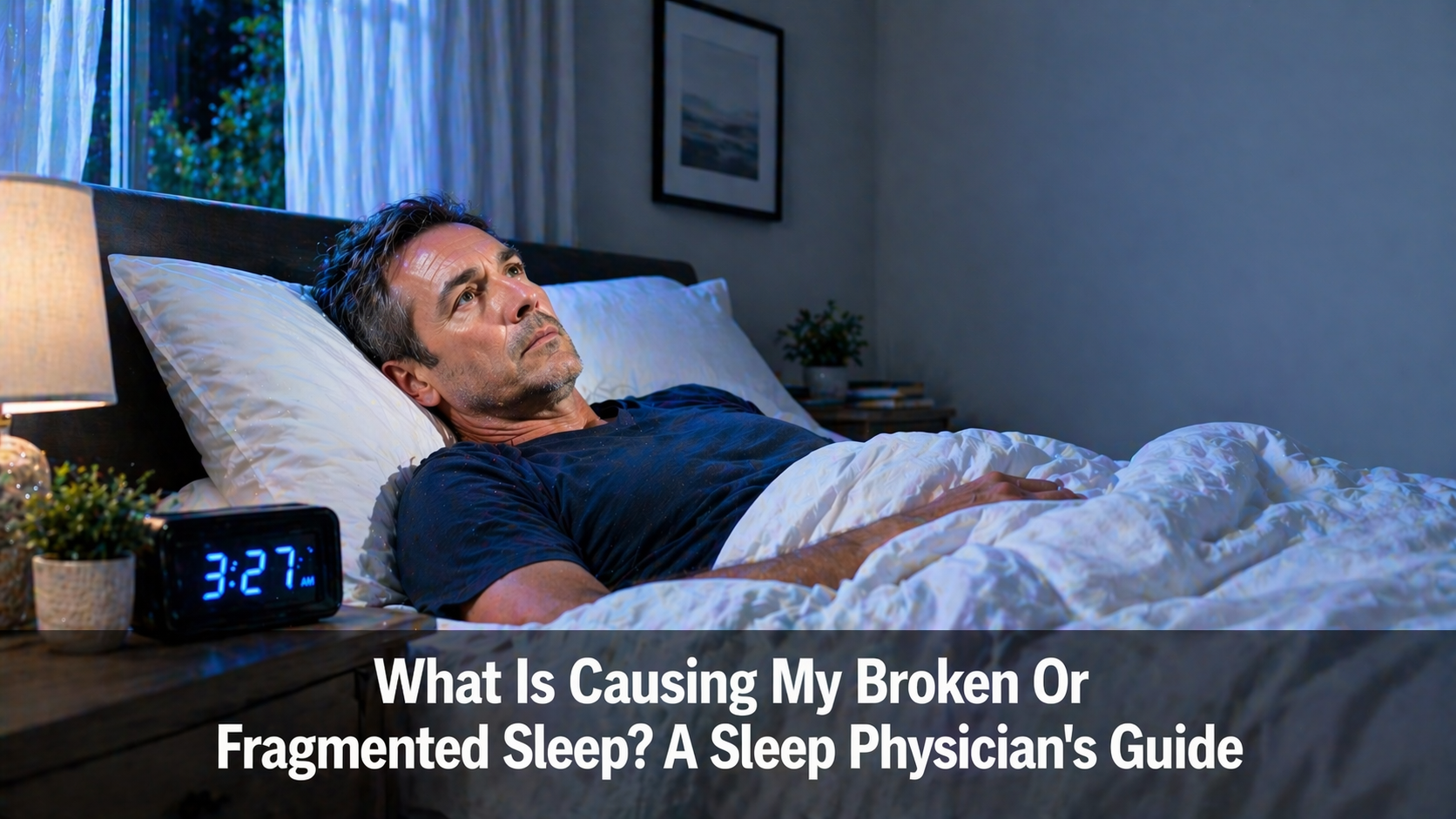
What Is Causing My Broken Or Fragmented Sleep? A Sleep Physician’s Guide
Fragmented sleep often hides in plain sight, according to Dr. Avinesh Bhar, Board-Certified Sleep Physician at SLIIIP.com, many individuals experience symptoms without clear awareness. You fall asleep just fine, then wake up two, three, or four times during the night. You might check the clock at 1 a.m., then 3 a.m., then 4:30 a.m. Even when you stay in bed the full eight hours, you wake up feeling flat, foggy, and unrested. This is called fragmented sleep, and it is one of the most common reasons people feel tired even when they think they slept enough. SLIIIP.com was built for this exact problem, with virtual consultations in all 50 states, home sleep tests shipped to your door, and nationwide coverage, so you can talk with a real sleep physician from home and find out what is breaking your sleep.
SLIIIP.com was built to make that answer easy to find, with virtual consultations in all 50 states, home sleep tests shipped to your door, and nationwide coverage.
SLIIIP’s board-certified sleep physicians can do sleep evaluations for sleep apnea. Virtual consultations in all 50 states. Home sleep tests shipped to your door.
What Fragmented Sleep Actually Is
Fragmented sleep is sleep that is broken up by multiple awakenings or near awakenings during the night. Some of these wake ups are obvious. You see the clock, you remember being awake. Many others are invisible. Your brain wakes for a few seconds, pulls you out of deep sleep, and then drops you back in, and you have no memory of it.
Either way, the result is the same. You do not get long, unbroken stretches of deep and REM sleep. That is why you feel drained the next day, even if your time in bed looks fine. For more on the stages your body needs, see what is core sleep and core sleep vs deep sleep.
CHECK YOUR SLEEP SYMPTOMS: TAKE THE 2 MINUTE QUIZ
TAKE THE QUIZ
Why Fragmented Sleep Feels So Bad
Broken sleep is worse than short sleep for many people. Sleep works in cycles of about 90 minutes. Each cycle includes light sleep, deep sleep, and REM sleep. Deep sleep restores the body. REM sleep restores the brain. If you wake up every 60 to 90 minutes, you keep restarting the cycle instead of finishing it.
That is why people with fragmented sleep often say things like “I was in bed for 8 hours but I feel like I slept 4.” The total time looks okay. The quality does not. If this sounds familiar, read why am I exhausted no matter how much I sleep and i wake up exhausted no matter what.
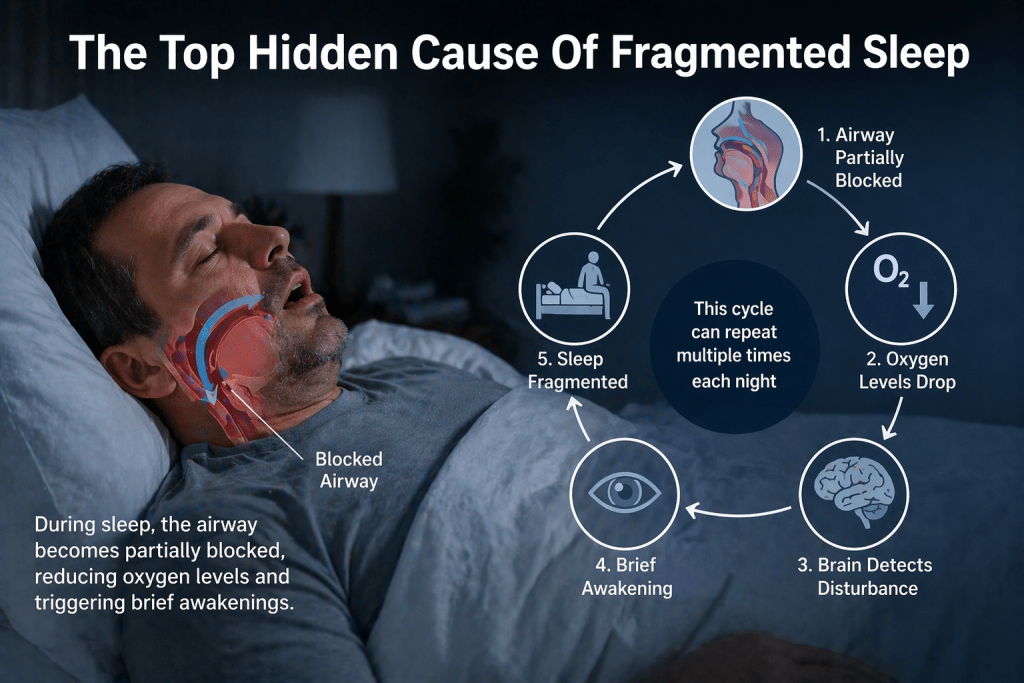
The Top Hidden Cause Of Fragmented Sleep
If you take only one thing from this article, take this. The single most common hidden cause of fragmented sleep in adults is undiagnosed sleep apnea.
Sleep apnea does not always look like loud snoring and gasping. In many people it looks like:
- Waking up 2, 3, or 4 times a night
- Frequent bathroom trips at night
- Waking with a racing heart or anxiety
- Waking up at the same time every night
- Morning headaches
- Feeling tired after 7 or 8 hours in bed
Dr. Avinesh Bhar often sees patients who were told they “just have insomnia” when the real driver is mild obstructive sleep apnea. The brief pauses in breathing wake the brain dozens of times per hour, even if the person has no memory of it. Learn more in signs of sleep apnea and why do I wake up gasping for air.
Stress, Anxiety, And A Mind That Will Not Settle
Stress is a top driver of fragmented sleep, even when you do not feel stressed during the day. Your nervous system can stay quietly switched on at night, and that is enough to pull you out of deep sleep.
Common patterns:
- Falling asleep fine, then waking at 2 or 3 a.m. with a busy mind
- Waking up already thinking about work
- Light, jumpy sleep where any small noise wakes you
- Waking up anxious or tense
According to the National Heart, Lung, and Blood Institute, stress and anxiety are leading triggers of short term and long term sleep problems. If this sounds like you, see why do I wake up anxious and can’t shut brain off at night.
Hormones Can Quietly Break Up Your Night
Hormones shape sleep in a direct way. When they shift, sleep shifts. Perimenopause, menopause, and thyroid changes are some of the most common reasons women develop fragmented sleep in their 40s and 50s.
Hormone related triggers include:
- Perimenopause and menopause drops in estrogen and progesterone
- Hot flashes and night sweats
- Thyroid changes, either high or low
- Cycle related dips before a period
- Postpartum shifts
- Age related drops in melatonin
- Cortisol rhythm changes from chronic stress
Men can also have hormone related fragmented sleep, often tied to testosterone and cortisol rhythm. Read more in hormonal insomnia, is this perimenopause or insomnia, and menopause sleep problems natural remedies.
Alcohol, Caffeine, And Late Meals
Small habits can add up and fragment your sleep without you knowing.
Alcohol is one of the biggest culprits. It helps you fall asleep, then wakes you up in the second half of the night as it wears off. Even one or two drinks can cause multiple awakenings after 2 a.m.
Caffeine has a half life of about five hours. A 3 p.m. coffee is still active at 8 p.m. For slow caffeine metabolizers, it is active even later.
Late meals and heavy meals can trigger reflux, blood sugar swings, and body heat that pull you out of deep sleep. Big sugar spikes often cause wake ups a few hours later.
For a reset plan, see how to stop waking up multiple times at night and your ultimate sleep routine guide.
Your Bedroom Environment
Your bedroom can fragment your sleep without you realizing it. Small changes in light, temperature, or noise can cause brief awakenings that add up over the night.
Common environment triggers:
- Bedroom warmer than 68 to 70 degrees
- Light leaking in from a window, TV, or phone
- A partner moving, snoring, or getting up
- A pet on or around the bed
- Outside noise like traffic or a neighbor
- A mattress or pillow that no longer supports you
Fix the environment first, because it is the easiest to control. Cooler, darker, and quieter is almost always better.
Frequent Bathroom Trips At Night
Getting up to pee once or more every night is called nocturia. Many people think they wake up because they have to go. Very often, the truth is the opposite. A breathing event or micro awakening wakes the brain, and then the bladder follows.
If you get up more than once a night to use the bathroom, especially if you also snore or feel tired, sleep apnea should be on the list. Cutting fluids in the evening helps. Fixing the underlying sleep problem helps more.
Restless Legs And Limb Movements
Restless Legs Syndrome and Periodic Limb Movement Disorder are common and often missed causes of fragmented sleep. Your legs can kick or twitch every 20 to 40 seconds all night and pull you out of deep sleep, even if you never fully wake up.
Clues to watch for:
- An urge to move your legs at rest, especially in the evening
- Crawling or tingling feelings in the legs
- Sheets or covers tossed around in the morning
- A partner who says you kick in your sleep
- Low ferritin or iron issues
Learn more in treatment for restless leg syndrome.
Body Clock Drift And Age Related Changes
Your body runs on a 24 hour clock. As you age, the clock often shifts earlier and becomes less flexible. That is why older adults often sleep lightly, wake up multiple times, and feel like their sleep is more fragmented than it used to be.
Common drivers:
- Less daylight exposure, especially in the morning
- Long naps during the day
- Very different weekend sleep times
- Late night screen use
- Shift work or travel
For a full reset, see how do I fix my circadian rhythm and circadian rhythm sleep disorder.
Watch: Sleep Apnea, Explained.
SLIIIP’s board-certified sleep physicians can do sleep evaluations for sleep apnea. Virtual consultations in all 50 states. Home sleep tests shipped to your door.
Other Medical Causes Of Fragmented Sleep
Sometimes fragmented sleep points to a medical issue that needs a closer look. Common examples:
- Acid reflux at night
- Chronic pain or arthritis
- Asthma or COPD
- Heart failure
- Atrial fibrillation and other rhythm issues
- REM sleep behavior disorder
- Side effects of medications
If your sleep is fragmented and you have any of these conditions, it is worth a full sleep evaluation. See REM sleep behavior disorder for one example.
Simple Steps You Can Try Tonight
Before your next appointment, you can try these high yield habits.
- Pick a consistent wake time, even on weekends
- Get 10 to 15 minutes of daylight in the first hour of the morning
- Cut caffeine after noon
- Skip or limit alcohol, especially close to bedtime
- Keep your bedroom cool, dark, and quiet
- Stop screens 30 to 60 minutes before bed
- Get out of bed if you are awake for more than 20 minutes
- Avoid long daytime naps
None of these alone will fix true fragmented sleep, but they set the stage for any real change. For more, see how do I get more deep sleep.
When To See A Sleep Physician
Consider a sleep evaluation if any of these apply:
- You wake up 2 or more times most nights
- You feel tired even after 7 or 8 hours in bed
- You snore, gasp, or wake with a racing heart
- You get up more than once to use the bathroom at night
- Your partner says you stop breathing or kick in your sleep
- Daytime fatigue affects work, mood, or driving
If you are not sure where you fit, start with why do I wake up tired and why am I waking up tired even after 8 hours.

How SLIIIP Helps With Fragmented Sleep
SLIIIP.com was built so you can get real answers from home. You can book a virtual consultation in all 50 states with a board-certified sleep physician. If a breathing issue is possible, a home sleep test is shipped to your door and done in one night in your own bed. Nationwide coverage means you do not need to wait months for a local sleep lab.
Dr. Avinesh Bhar and the SLIIIP team look at the full picture: breathing, hormones, stress, habits, body clock, and medical conditions. Most people with fragmented sleep do not need a stronger sleep aid. They need someone to find the real trigger and build a plan that matches it.
At Sliiip, we accept the following insurances:

SLIIIP’s board-certified sleep physicians can do sleep evaluations for sleep apnea. Virtual consultations in all 50 states. Home sleep tests shipped to your door.
Frequently Asked Questions
- What is fragmented sleep? Fragmented sleep is sleep broken up by many brief or full awakenings, which stops you from finishing full sleep cycles.
- What is the difference between broken sleep and fragmented sleep? The terms are used interchangeably. Both describe sleep that is interrupted multiple times during the night.
- Why do I keep waking up even though I am tired? Common causes include sleep apnea, stress, hormones, alcohol, reflux, pain, or a noisy or warm bedroom.
- Is fragmented sleep as bad as not sleeping? For many people, yes. Broken sleep blocks deep and REM sleep, so you feel as tired as someone who slept far less.
- Can sleep apnea cause fragmented sleep? Yes. Sleep apnea is one of the top hidden causes and can wake the brain dozens of times an hour.
- Why do I wake up at the same time every night? It is often a sign of a breathing event, a stress pattern, a reflux pattern, or a blood sugar dip at that hour.
- Can alcohol cause fragmented sleep? Yes. Alcohol helps you fall asleep but causes multiple wake ups in the second half of the night.
- Can caffeine cause fragmented sleep? Yes. Afternoon or evening caffeine can keep your nervous system too activated to stay in deep sleep.
- Can perimenopause cause fragmented sleep? Yes. Changes in estrogen and progesterone, plus hot flashes, often fragment sleep in women over 35.
- Why do I wake up with a racing heart? It can point to stress, anxiety, alcohol, reflux, thyroid changes, or sleep apnea. It should not be ignored if it is frequent.
- Why do I wake up to use the bathroom every night? Frequent nighttime bathroom trips often point to sleep apnea, fluid timing, prostate issues, or medication effects.
- Can restless legs cause fragmented sleep? Yes. Leg movements can pull you out of deep sleep many times per hour, even if you do not fully wake up.
- Can anxiety cause fragmented sleep? Yes. Anxiety keeps the nervous system in a light, watchful state that leads to frequent wake ups.
- Does getting older mean fragmented sleep is normal? Sleep does get lighter with age, but waking up exhausted is not normal. A sleep physician can help.
- Can melatonin help fragmented sleep? Melatonin helps more with sleep timing than with staying asleep. It rarely fixes fragmented sleep on its own.
- Should I try a sleeping pill? Short term, sometimes. Long term, most experts prefer behavioral approaches like CBTI, which address the root cause.
- What is CBTI? CBTI is a structured program that retrains the brain and body to sleep. It is the first line wellness approach for chronic insomnia.
- Can a home sleep test help if I have fragmented sleep? Yes, if there is any chance breathing is involved. A home sleep test can be done in one night in your own bed.
- Do I need a referral to see a sleep doctor? With SLIIIP, you can book a virtual consultation directly, no referral required.
- What is the first thing I should do tonight? Set a steady wake time, cut caffeine after noon, skip alcohol, keep the bedroom cool and dark, and book a sleep evaluation if this keeps happening.
Take The Next Step
If your nights are broken up and your days are exhausting, you do not have to keep guessing. A short virtual visit with a board-certified sleep physician can find what is fragmenting your sleep and what to do about it. SLIIIP makes it simple, with virtual consultations in all 50 states, home sleep tests shipped to your door, and nationwide coverage.
SLIIIP’s board-certified sleep physicians can do sleep evaluations for sleep apnea. Virtual consultations in all 50 states. Home sleep tests shipped to your door.
Thank you for reading this article.
Latest posts
-
Why Can’t I Wake Up Even After Getting Enough Sleep?
Last updated: October 2, 2026. Medically reviewed by Dr. Avinesh Bhar, Board-Certified Sleep Physician, SLIIIP.com. If you can’t wake up after enough sleep, the cause is usually not the number…
-
Why Does My Heart Rate Drop So Low While I Sleep?
Last updated: October 2, 2026. Medically reviewed by Dr. Avinesh Bhar, Board-Certified Sleep Physician, SLIIIP.com. Your heart rate drops low while sleeping mainly because your body needs less work from…
-
Why Are My Naps Never Refreshing?
Last updated: October 2, 2026. Medically reviewed by Dr. Avinesh Bhar, Board-Certified Sleep Physician, SLIIIP.com. Naps that leave you groggy usually come down to how long you sleep, when you…
Get updates
Spam-free subscription, we guarantee. This is just a friendly ping when new content is out.

