👉 Register for Free. How to Diagnose Sleep Apnea Faster in Primary Care – FREE Webinar by Dr. Audrey Wells. – Friday, April 24 at 12 PM ET


Burnout and Insomnia: 3 Warning Signs of Work-Related Sleep Loss
Burnout and insomnia often show up together, and Dr. Avinesh Bhar, Board-Certified Sleep Physician at SLIIIP.com, points out that long work stress can change the way many people fall asleep and stay asleep.
When your job drains your energy all day, your nights can turn restless, and that mix of exhaustion and poor sleep is worth paying attention to.
Work pressure builds slowly. You may notice you feel wired at bedtime, wake up too early, or lie awake replaying the day. These patterns are common, and they can be addressed with the right support.
SLIIIP’s board-certified sleep physicians can do sleep evaluations for sleep apnea. Virtual consultations in all 50 states. Home sleep tests shipped to your door.
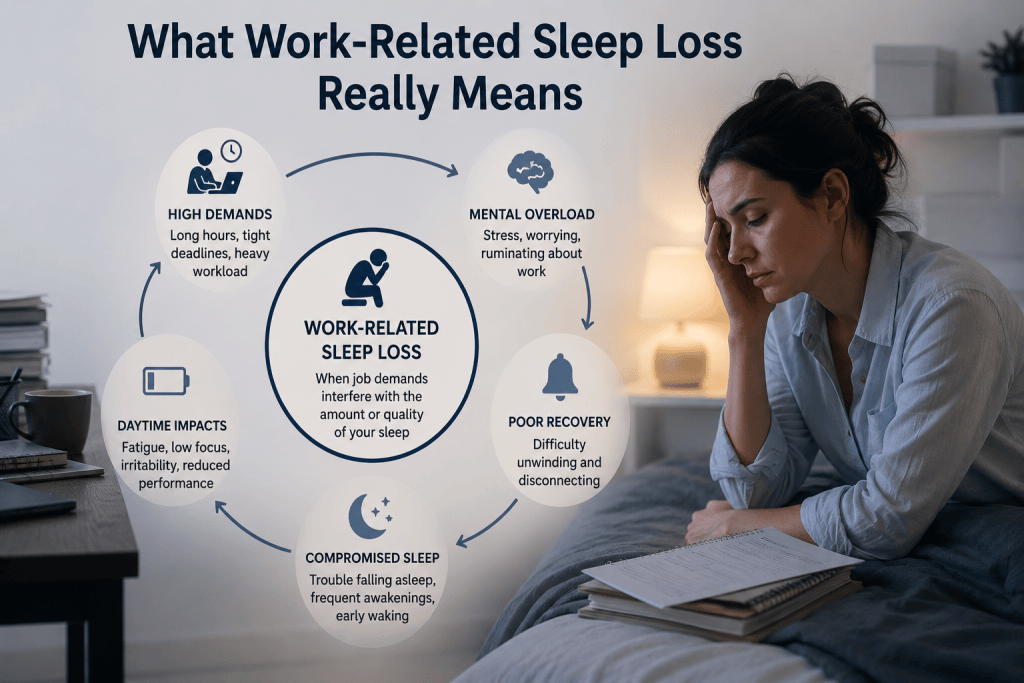
What Work-Related Sleep Loss Really Means
Burnout is more than a busy week. It is a state of deep, ongoing exhaustion that builds up from steady job stress over time. When that stress follows you home, it can spill into your nights and make sleep feel out of reach.
Sleep and stress are closely linked, and one often shapes the other. A hard day can make it harder to wind down, and a poor night can make the next workday feel heavier. Over weeks and months, this back and forth can settle into a pattern.
The goal here is not to label anything or to make a medical judgment. The goal is to help you spot the early signs so you can take simple steps toward better rest. If your sleep keeps slipping, a sleep telemedicine visit can help you understand what is going on.
CHECK YOUR SLEEP SYMPTOMS: TAKE THE 2 MINUTE QUIZ
TAKE THE QUIZ
Warning Sign 1: You Feel Wired but Tired at Bedtime
One of the clearest signs of work-related sleep loss is the “wired but tired” feeling. Your body is worn out, yet your mind will not slow down. You crawl into bed ready to rest, and then your thoughts race through tomorrow’s tasks, unsent emails, and unfinished projects.
This racing-mind feeling at night is a common signal that work stress is following you to bed. When your day is packed with pressure, your body can stay in a high-alert state long after you clock out. That alert state makes it hard to drift off.
You might notice you lie awake for 30 minutes or longer. You might check the clock and feel frustration build. Some people give up and reach for their phone, which can keep the mind active even longer.
Simple Habits That May Help
A calm wind-down routine can give your brain a clear signal that the workday is over. Try setting a firm stop time for work tasks. Dim the lights an hour before bed. Keep screens out of the bedroom when you can.
If overthinking at night feels like a regular struggle, you may find ideas in our guide on how to stop overthinking at night. Many people also benefit from learning what helps when you cannot shut your brain off at night.
Warning Sign 2: You Wake Up Tired No Matter How Long You Sleep
The second warning sign is morning exhaustion that does not match your time in bed. You sleep what should be enough hours, yet you wake up feeling like you never rested. The alarm goes off and your body feels heavy, foggy, and slow.
Waking up tired after a full night in bed is a key sign that the quality of your sleep may be suffering, not just the quantity. Work stress can break up your sleep into shorter, lighter pieces. You may wake briefly through the night without fully remembering it, and these small interruptions add up.
This kind of fatigue can show up in many ways during the day. You may rely on extra coffee. You may feel foggy in meetings. You may struggle to focus on tasks that once felt easy.
When Tiredness Lingers
Sometimes ongoing tiredness points to more than stress alone. Sleep-disordered breathing, for example, can leave people feeling unrested even after a long night. If you often wake up worn out, our article on why you feel exhausted no matter how much you sleep can help you think through possible reasons.
This is also a good moment to consider a professional check. A home sleep test can be done in your own bed, and the results help a sleep physician understand your nights more clearly.
Warning Sign 3: Your Mood and Focus Slip During the Day
The third warning sign shows up in how you feel and function while awake. Burnout and insomnia can make you more irritable, more anxious, and less able to focus. Small frustrations feel bigger. Patience runs short. Motivation fades.
A clear drop in mood, patience, and focus during the day can be a sign that poor sleep and work stress are feeding each other. When you do not rest well, your brain has a harder time managing emotions and staying sharp. That makes work feel even more stressful, which can then disturb sleep again.
You might catch yourself snapping at coworkers or loved ones. You might feel flat or unmotivated. You might notice that tasks take longer because your attention keeps drifting.
Caring for Your Mind and Your Sleep
Mood and sleep are deeply connected. Tending to one often helps the other. Gentle daytime movement, short breaks, time outdoors, and a steady wake-up time can all support better rest.
If low mood and tiredness show up often, you may find our piece on why you feel sad and unmotivated when you do not sleep helpful. For broader support, our guide to sleep solutions for mental health covers habits that may make a difference.
How Burnout and Insomnia Reinforce Each Other
It helps to picture burnout and insomnia as a loop. Job stress builds up. That stress makes sleep harder. Poor sleep then lowers your energy and patience the next day. With less in the tank, work feels heavier, and the stress grows again.
Breaking this loop usually starts with small, steady changes rather than one big fix. You do not have to overhaul your whole life at once. A few consistent habits can shift the cycle in a better direction over time.
This is where wellness routines come in. Regular sleep and wake times, a screen-free hour before bed, and a clear line between work hours and rest hours all help your body know when it is time to power down. Even a short walk after work can act as a signal that the job is done for the day.
According to the Centers for Disease Control and Prevention, most adults need at least seven hours of sleep each night for good health. Protecting that window matters, especially during high-stress seasons at work.
Healthy Habits That Support Better Sleep During Stressful Times
Below are simple, lifestyle-based habits that many people find useful when work stress is high. None of these are treatments. They are everyday wellness steps you can try.
Keep a steady schedule. Going to bed and waking at the same time, even on weekends, helps your body settle into a rhythm.
Build a wind-down hour. Use the last hour before bed for calm activities like reading, stretching, or a warm shower.
Set a work boundary. Pick a time each evening when work stops. Close the laptop and put work notifications away.
Watch caffeine timing. Coffee and energy drinks late in the day can keep you alert when you want to rest.
Move your body. Light daytime activity can ease stress and support deeper rest at night.
Use your bed for sleep. Try to keep work, email, and stressful scrolling out of the bedroom.
If your schedule includes overnight or rotating shifts, the challenge can be even greater. Our article on the night shift and sleep offers ideas built for non-standard hours.
For deeper support with sleeplessness, a structured approach called cognitive behavioral therapy for insomnia has helped many people retrain their sleep. You can learn more in our overview of CBT-I for sleep disorders. The National Heart, Lung, and Blood Institute also shares useful, plain-language guidance on healthy sleep.
When to Talk With a Sleep Physician
Sometimes habits alone are not enough, and that is okay. If your sleep stays poor for several weeks, if your daytime tiredness is hard to shake, or if you wake up gasping or with a racing heart, it may be time to get a professional look.
A sleep evaluation can help you understand whether something beyond stress is affecting your nights. Dr. Avinesh Bhar and the SLIIIP team can review your sleep history, talk through your symptoms, and arrange a home sleep test if needed. The whole process is built around convenience, with virtual visits and testing you can do from your own bed.
You do not have to keep pushing through exhaustion. Getting clear answers is a step toward feeling more like yourself again, both at work and at home. If you have wondered whether your symptoms point to insomnia or something else, our guide on insomnia or something else is a helpful place to start.
At Sliiip, we accept the following insurances:

SLIIIP’s board-certified sleep physicians can do sleep evaluations for sleep apnea. Virtual consultations in all 50 states. Home sleep tests shipped to your door.
Frequently Asked Questions
- What is the link between burnout and insomnia?
Burnout is deep exhaustion from ongoing job stress, and that stress can make it harder to fall asleep and stay asleep. Over time the two can feed each other in a cycle. - Can work stress really cause sleep problems?
Yes. High work stress can keep your body in an alert state, which can make winding down at night more difficult for many people. - What are the main warning signs of work-related sleep loss?
Common signs include feeling wired but tired at bedtime, waking up exhausted after a full night, and noticing your mood and focus slip during the day. - Why do I feel tired even after sleeping eight hours?
Stress can break sleep into lighter, broken pieces, so you may spend enough time in bed but still wake up feeling unrested. - Is it normal to lie awake replaying my workday?
Many people experience this. A busy, stressed mind can stay active at night, which makes it harder to drift off. - How can I calm my mind before bed?
A steady wind-down routine, dim lighting, and screen-free time before bed can help signal to your brain that the workday is over. - Does caffeine affect work-related sleep loss?
Caffeine late in the day can keep you alert when you want to rest. Watching your timing may help you sleep more easily. - Can burnout affect my mood as well as my sleep?
Yes. Poor sleep and job stress together can lead to irritability, low motivation, and trouble focusing during the day. - What is a home sleep test?
It is a sleep study you can do in your own bed. The device is shipped to you, and the results help a sleep physician understand your nights. - Do I need to leave home for a sleep evaluation with SLIIIP?
No. SLIIIP offers virtual consultations in all 50 states, and home sleep tests can be shipped to your door. - How much sleep do most adults need?
According to the CDC, most adults need at least seven hours of sleep each night to support good health. - Can a regular schedule really help my sleep?
A steady bedtime and wake time can help your body settle into a natural rhythm, which often supports better rest. - What is CBT-I?
CBT-I stands for cognitive behavioral therapy for insomnia. It is a structured approach that helps many people retrain their sleep habits. - Should I worry if I wake up gasping or with a racing heart?
These symptoms are worth discussing with a sleep physician, since they can point to issues beyond stress alone. - How does night shift work affect sleep?
Overnight and rotating shifts can disrupt your body’s natural rhythm, which can make restful sleep harder to reach. - Can poor sleep make work stress feel worse?
Yes. Less rest can lower your patience and focus, which can make daily work pressure feel heavier. - Are these warning signs a sign of a serious problem?
Not always. They are simply signals worth paying attention to. A professional evaluation can help you understand what is going on. - What habits help break the burnout and insomnia cycle?
Steady sleep times, a screen-free wind-down hour, clear work boundaries, and light daytime movement can all help over time. - When should I talk with a sleep doctor?
Consider reaching out if your sleep stays poor for several weeks, your fatigue is hard to shake, or you have concerning nighttime symptoms. - How do I get started with SLIIIP?
You can schedule a virtual sleep evaluation online, and a board-certified physician will guide you from there, including arranging a home sleep test if needed.
Take the Next Step Toward Better Rest
Work-related sleep loss can wear you down slowly, but you do not have to face it alone. With simple habits and the right support, better nights are within reach.
SLIIIP’s board-certified sleep physicians can do sleep evaluations for sleep apnea. Virtual consultations in all 50 states. Home sleep tests shipped to your door.
Latest posts
-
Why Can’t I Wake Up Even After Getting Enough Sleep?
Last updated: October 2, 2026. Medically reviewed by Dr. Avinesh Bhar, Board-Certified Sleep Physician, SLIIIP.com. If you can’t wake up after enough sleep, the cause is usually not the number…
-
Why Does My Heart Rate Drop So Low While I Sleep?
Last updated: October 2, 2026. Medically reviewed by Dr. Avinesh Bhar, Board-Certified Sleep Physician, SLIIIP.com. Your heart rate drops low while sleeping mainly because your body needs less work from…
-
Why Are My Naps Never Refreshing?
Last updated: October 2, 2026. Medically reviewed by Dr. Avinesh Bhar, Board-Certified Sleep Physician, SLIIIP.com. Naps that leave you groggy usually come down to how long you sleep, when you…
Get updates
Spam-free subscription, we guarantee. This is just a friendly ping when new content is out.

