👉 Register for Free. How to Diagnose Sleep Apnea Faster in Primary Care – FREE Webinar by Dr. Audrey Wells. – Friday, April 24 at 12 PM ET

Caffeine Metabolism: Fast vs Slow Metabolizers and Why the Same Cup Hits Differently
Caffeine metabolism is highly variable, according to Dr. Avinesh Bhar, Board-Certified Sleep Physician at SLIIIP.com, many individuals experience symptoms without clear awareness. Two people can drink the exact same coffee and walk away with completely different experiences. One feels alert and clear. The other feels jittery, anxious, and cannot sleep that night. This is not in your head. It is in your DNA. SLIIIP.com offers virtual consultations in all 50 states with nationwide coverage, plus home sleep tests shipped to your door, so you can finally understand how your body handles caffeine and what that means for your sleep.
SLIIIP.com was built to make that answer easy to find, with virtual consultations in all 50 states, home sleep tests shipped to your door, and nationwide coverage.
SLIIIP’s board-certified sleep physicians can do sleep evaluations for sleep apnea. Virtual consultations in all 50 states. Home sleep tests shipped to your door.
What Caffeine Metabolism Actually Is
Caffeine metabolism is the process your liver uses to break caffeine down into smaller pieces your body can flush out. The main worker on this job is a liver enzyme called CYP1A2. It handles roughly 95 percent of all caffeine your body takes in. The faster this enzyme works, the faster caffeine clears. The slower it works, the longer caffeine stays active.
Your speed is mostly set by genetics. The CYP1A2 gene comes in different versions. Some make a fast acting enzyme. Others make a slow one. You inherit one copy from each parent, which gives you three rough categories: fast, intermediate, and slow.
For more on how lingering caffeine affects rest, see our piece on why I am waking up tired even after 8 hours.
CHECK YOUR SLEEP SYMPTOMS: TAKE THE 2 MINUTE QUIZ
TAKE THE QUIZ
Fast Metabolizers: The Lucky Few
Fast metabolizers break caffeine down quickly. For these people, the half life of caffeine can be 3 hours or even less. A 3 p.m. coffee is mostly gone by bedtime. They tend to:
- Feel a clear lift from coffee, then a clean drop off
- Sleep well even after late afternoon caffeine
- Tolerate higher daily doses without obvious side effects
- Use coffee as a tool, not a crutch
If you can drink an espresso after dinner and still fall asleep at 11 p.m., you are likely a fast metabolizer. Roughly 40 to 50 percent of people fall into this group, depending on the population studied.
That said, fast metabolizers are not invincible. Late, large doses can still trim deep sleep. Energy crashes still happen. The advantage is real but not unlimited.
Slow Metabolizers: The Sensitive Group
Slow metabolizers have a CYP1A2 enzyme that works at half speed or less. For these people, the half life of caffeine can stretch to 8 hours or more, and a single morning cup can still affect bedtime. They tend to:
- Feel jittery, anxious, or shaky after one normal cup
- Notice a racing heart or pressure in the chest
- Struggle to fall asleep or stay asleep when caffeine is in their system
- Wake at 2 or 3 a.m. with a busy mind
- Feel “wired but tired” in the evening
About 10 to 15 percent of adults are clear slow metabolizers. Another 30 to 40 percent fall into the intermediate range, with sensitivity that sits between the two groups.
If this list sounds familiar, our pieces on why I feel anxious at night and can’t shut my brain off at night are worth a read.
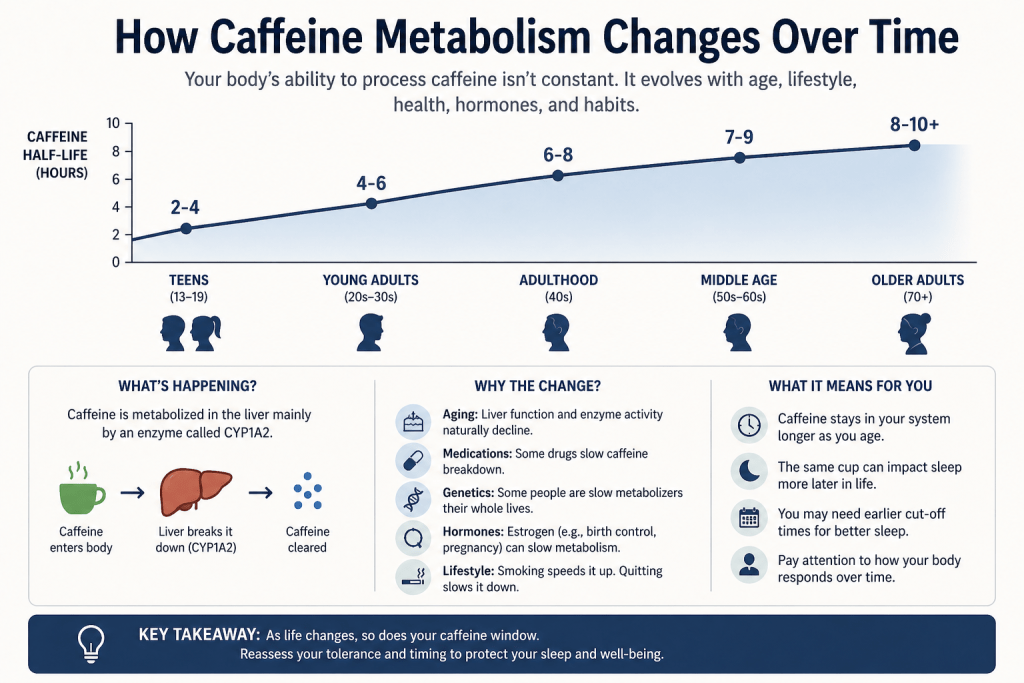
How Caffeine Metabolism Changes Over Time
Genetics set the baseline, but several factors shift how fast or slow your body handles caffeine. What worked for you at 25 may not work at 45. Common modifiers include:
- Age. Liver enzyme activity often slows with each decade after 30.
- Pregnancy. Half life can stretch to 10 hours or more, especially in the third trimester.
- Birth control pills. Many oral contraceptives roughly double the time caffeine stays active.
- Smoking. Smoking speeds up caffeine clearance. Quitting slows it back down.
- Liver health. Anything that strains the liver, including alcohol use and certain medications, slows metabolism.
- Other medications. Some antibiotics, antidepressants, antifungals, and heart medicines slow caffeine clearance.
- Hormonal shifts. Perimenopause and menopause can lower tolerance, even in former fast metabolizers.
A person who was a fast metabolizer in their twenties may quietly become an intermediate or slow metabolizer through any of these changes. Our guide on hormonal insomnia explores this overlap.
According to MedlinePlus from the National Library of Medicine, the CYP1A2 gene shapes how the body breaks down caffeine and many medications, which is why drug responses can vary so much from person to person.
How Caffeine Metabolism Affects Your Sleep
The same cup of coffee can lead to very different nights depending on your category. Slow metabolizers carry caffeine into their sleep, blocking the brain’s natural tired signal long after they want to be resting. This often shows up as:
- Long delays before falling asleep
- Light, broken sleep with frequent awakenings
- Less deep sleep, even when total time in bed is normal
- Morning grogginess that does not lift until midday
- A pull toward more coffee just to feel awake again
Fast metabolizers usually escape these issues unless they push the dose or push the timing. To learn more about deep sleep, read how do I get more deep sleep.
Signs You May Be a Slow Caffeine Metabolizer
Genetic testing can confirm your status, but most people can spot the pattern from daily life. You may be a slow metabolizer if several of these sound familiar:
- One cup of coffee feels like three for most of your friends
- You feel anxious, jittery, or shaky within an hour of caffeine
- You notice a racing heart or chest tightness
- Coffee with breakfast still affects your sleep at night
- Tea, soda, or chocolate in the evening keeps you up
- You sleep better on days you skip caffeine entirely
- Your blood pressure rises noticeably after a cup
- You handle stress worse on caffeine heavy days
You do not need to score every item. Two or three strong matches are enough to suggest your CYP1A2 enzyme is on the slow side.
Signs You May Be a Fast Caffeine Metabolizer
On the other end, the fast metabolizer pattern often looks like:
- Coffee gives a small, clean boost without jitters
- You can drink coffee in late afternoon and still sleep
- Energy drinks feel fairly mild
- You rarely get a crash from caffeine
- You tolerate 3 or 4 cups across the day with no issue
- Caffeine has little effect on your heart rate or anxiety
Fast metabolizers can still benefit from healthy habits. Better sleep does not depend on getting away with more caffeine. It depends on giving the brain quality rest.
Smart Caffeine Habits for Slow Metabolizers
If you suspect you are a slow metabolizer, simple changes can make a big difference. The goal is to lower the total caffeine load and end it earlier in the day.
- Cap your dose. One small cup of coffee, or a switch to green tea, often works better than two larger cups.
- End caffeine by late morning. A 10 a.m. cutoff protects most slow metabolizers.
- Watch hidden sources. Tea, soda, dark chocolate, pre workout, and some pain relievers all add up.
- Consider half caf or decaf. A blend lowers the dose without giving up the routine.
- Hydrate well. Water reduces caffeine related jitters and headaches.
- Stack with food. Coffee with a meal hits gentler than coffee on an empty stomach.
- Rebuild your morning. Sunlight, movement, and protein can boost alertness without a big cup.
For more on building a steady wake up, see our best morning routine guide.
Smart Habits for Fast Metabolizers
Fast metabolizers have more room, but smarter habits still help.
- Watch the late drift. Even fast metabolizers lose deep sleep with very late caffeine.
- Track tolerance. When the same cup stops giving any lift, it may be time for a short reset.
- Avoid stacking with stress. Coffee plus a tense morning can spike anxiety even in fast metabolizers.
- Stay aware of doses. Specialty drinks can carry 300 mg or more, which pushes anyone toward jitters.
A fast metabolizer with poor sleep is often dealing with something other than caffeine. That is worth a closer look.
When Slow Metabolism Hides a Sleep Disorder
For many slow metabolizers, the discomfort feels like it is “just” the caffeine. In some cases, though, the sensitivity points to a deeper issue. Conditions like sleep apnea, insomnia, anxiety disorders, restless legs, and circadian rhythm problems can all amplify caffeine effects. Caffeine sensitivity is a useful clue, not a final answer.
Warning signs that something more is going on include:
- Loud snoring or pauses in breathing at night
- Waking up with headaches, dry mouth, or a racing heart
- Feeling exhausted no matter how long you sleep
- Falling asleep during meetings, while reading, or in traffic
- Anxiety or racing thoughts every night
Dr. Avinesh Bhar emphasizes that these symptoms deserve a real evaluation, not just another caffeine adjustment. Our guide on is it worth getting tested for sleep apnea walks through what to expect.
Should You Get Genetic Testing for CYP1A2
Direct to consumer DNA tests can flag your CYP1A2 variant, and clinical labs can do the same with a doctor’s order. For most people, testing is not necessary because the daily pattern is clear enough on its own. A simple two week experiment, where you cut back caffeine and watch how you feel, gives a similar answer at no cost.
Testing can be useful when:
- You take medications broken down by CYP1A2 and want detailed info
- You have unexplained heart symptoms tied to caffeine
- You have tried strict cutoffs and still feel unwell
- You are curious about your wider drug metabolism profile
Even with a test result in hand, the everyday answer stays the same. Match your caffeine to your biology, not to your friends.
When to Talk to a Sleep Specialist
If your sleep stays poor even after dialing in caffeine, it is worth getting professional input. Persistent fatigue, snoring, night waking, and morning headaches are not normal parts of life. A board-certified sleep physician can help you find the real cause and a real fix.
SLIIIP.com makes this easier through virtual consultations in all 50 states, board-certified sleep physicians, and home sleep tests shipped to your door. There are no waiting rooms and no long drives.
According to the National Heart, Lung, and Blood Institute, poor sleep affects nearly every system in the body, from heart health to memory and mood.
At Sliiip, we accept the following insurances:

SLIIIP’s board-certified sleep physicians can do sleep evaluations for sleep apnea. Virtual consultations in all 50 states. Home sleep tests shipped to your door.
Frequently Asked Questions
- What is caffeine metabolism?
It is the process your liver uses to break caffeine down. The CYP1A2 enzyme handles most of the work, and how fast it acts depends on your genes.
- What is a fast caffeine metabolizer?
A person whose CYP1A2 enzyme breaks caffeine down quickly. They tend to feel a clear lift from coffee with few side effects and can usually sleep even with later cups.
- What is a slow caffeine metabolizer?
A person whose CYP1A2 enzyme works at half speed or less. They feel stronger and longer effects from the same dose and often struggle with sleep, anxiety, or jitters.
- How can I tell which one I am?
Most people can tell from daily patterns. If small doses make you anxious, raise your heart rate, or affect your sleep hours later, you are likely on the slow end.
- Can I change my metabolizer status?
You cannot change your genes, but smoking, medications, pregnancy, hormones, and liver health can speed up or slow down caffeine clearance. The category you live in can shift over time.
- Do women metabolize caffeine differently than men?
On average, women clear caffeine slightly slower, especially while pregnant or on hormonal birth control. Hormone shifts at perimenopause can also slow clearance.
- Does caffeine affect children differently?
Yes. Children and teens are more sensitive in general and have less margin for error. Most pediatric experts suggest very limited intake or none at all.
- Why does coffee make me anxious?
Slow metabolizers often experience anxiety because caffeine stays high in the system longer, which can trigger stress hormones like adrenaline. See why I wake up anxious.
- Why does my heart race after coffee?
A fast heart rate after caffeine is more common in slow metabolizers and people who are sensitive to stimulants. If it happens often, talk to a clinician. Our piece on why I wake up with my heart racing covers related patterns.
- Can I drink coffee if I am a slow metabolizer?
Yes, but smaller doses early in the day usually work best. Many slow metabolizers do well with one cup before 10 a.m. and water for the rest of the day.
- Does decaf still bother slow metabolizers?
Sometimes. Decaf has 2 to 15 mg per cup, which can still trigger sensitivity in very slow metabolizers. Switching to herbal tea may help.
- Will switching to tea help?
Tea has less caffeine per cup and contains L theanine, which can blunt some side effects. Many slow metabolizers tolerate tea better than coffee.
- Do energy drinks count?
Yes. Energy drinks often carry 150 to 300 mg per serving, sometimes more, and follow the same metabolism rules as coffee.
- Why did I tolerate coffee fine in my twenties but not now?
Liver enzyme activity slows with age, hormones shift, and sleep itself becomes lighter. All three changes lower tolerance over time.
- Can pregnancy change my caffeine response?
Yes, sharply. Half life can stretch to 10 hours or more during pregnancy, especially in the third trimester. Most experts advise lower limits during pregnancy.
- What should I do if coffee triggers my insomnia?
Cut the dose, end caffeine earlier in the day, and rebuild your wind down routine. If insomnia continues, see our insomnia treatment methods guide.
- Are slow metabolizers at higher health risk?
Some research links slow caffeine metabolism with higher blood pressure responses to coffee. Talk to your clinician if you have heart concerns.
- Can a nap help if coffee makes me jittery?
A short, early nap can boost alertness without the jitter cost. See our benefits of napping guide.
- Will quitting caffeine fix my sleep?
For many slow metabolizers, yes. Many people sleep deeper within one to two weeks of cutting back, after a brief withdrawal phase.
- When should I see a sleep doctor?
If sleep stays poor even with smarter caffeine timing, or you notice signs of a sleep disorder, a board-certified sleep physician can help you find the cause.
Match Your Caffeine to Your Biology
Caffeine metabolism is one of the most personal parts of daily life, and yet most people use a one size fits all approach. The same cup that fuels one person can quietly steal sleep from another for hours. When you respect how your body actually handles caffeine, you protect your sleep, your mood, and your long term wellness.
If poor sleep keeps showing up no matter what you try, do not assume it is just a coffee issue. SLIIIP.com offers virtual consultations in all 50 states, home sleep tests shipped to your door, and nationwide coverage with board-certified sleep physicians.
SLIIIP’s board-certified sleep physicians can do sleep evaluations for sleep apnea. Virtual consultations in all 50 states. Home sleep tests shipped to your door.
Latest posts
-
Why Can’t I Wake Up Even After Getting Enough Sleep?
Last updated: October 2, 2026. Medically reviewed by Dr. Avinesh Bhar, Board-Certified Sleep Physician, SLIIIP.com. If you can’t wake up after enough sleep, the cause is usually not the number…
-
Why Does My Heart Rate Drop So Low While I Sleep?
Last updated: October 2, 2026. Medically reviewed by Dr. Avinesh Bhar, Board-Certified Sleep Physician, SLIIIP.com. Your heart rate drops low while sleeping mainly because your body needs less work from…
-
Why Are My Naps Never Refreshing?
Last updated: October 2, 2026. Medically reviewed by Dr. Avinesh Bhar, Board-Certified Sleep Physician, SLIIIP.com. Naps that leave you groggy usually come down to how long you sleep, when you…
Get updates
Spam-free subscription, we guarantee. This is just a friendly ping when new content is out.

