👉 Register for Free. How to Diagnose Sleep Apnea Faster in Primary Care – FREE Webinar by Dr. Audrey Wells. – Friday, April 24 at 12 PM ET

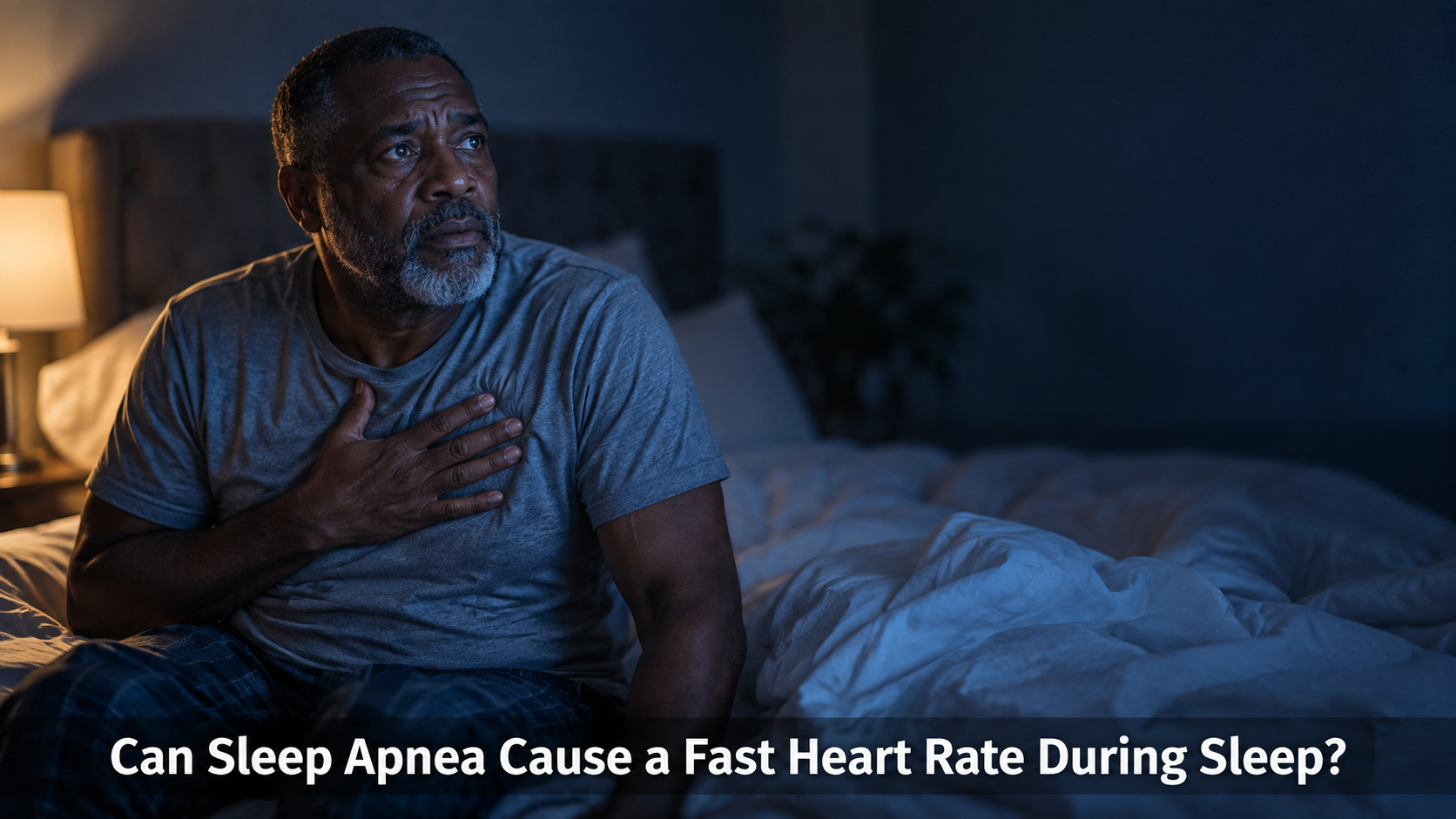
Can Sleep Apnea Cause a Fast Heart Rate During Sleep?
Last updated: October 2, 2026. Medically reviewed by Dr. Avinesh Bhar, Board-Certified Sleep Physician, SLIIIP.com.
Yes, sleep apnea is linked to bursts of fast heart rate during sleep. Each breathing pause can slow the heart, and the brief wake-up that ends the pause can make it speed up fast. Sleep apnea fast heart rate during sleep often shows up as a repeating up-and-down pattern, not one steady high number. Dr. Avinesh Bhar, Board-Certified Sleep Physician at SLIIIP.com, looks for that repeating rise and fall in overnight heart-rate data. He pays close attention when it lines up with snoring or gasping.
A heart rate that jumps again and again through the night can be a clue to a breathing problem during sleep. A smartwatch can spot the pattern, but only a sleep test can show whether sleep apnea is behind it.
SLIIIP’s board-certified sleep physicians can do sleep evaluations for sleep apnea. Virtual consultations in all 50 states. Home sleep tests shipped to your door.
What Happens to Your Heart Rate During a Sleep Apnea Event?
During an obstructive sleep apnea event, the airway narrows or closes while you keep trying to breathe. Oxygen in the blood starts to fall. The body reacts by slowing the heart a little during the pause.
The pause ends when the brain partly wakes you up. You may not remember it. That brief arousal releases a surge of stress signals that can push the heart rate up within seconds. Blood pressure can rise at the same time.
Then you fall back asleep, and the cycle can start again. In moderate or severe sleep apnea, this can happen many times an hour. The result is a heart-rate line that looks jagged instead of smooth.
According to the National Heart, Lung, and Blood Institute, sleep apnea can stress your heart by keeping it from getting enough oxygen. NHLBI lists sleep apnea among the conditions that raise the risk of heart rhythm problems, called arrhythmias.
What Is a Normal Heart Rate Pattern During Sleep?
In healthy sleep, the heart rate tends to slow during deep non-REM sleep. It then rises and becomes more variable during REM sleep, when dreaming happens. These shifts are gradual and follow the sleep cycle.
So a few higher stretches during the night are not unusual. What stands out is a fast, repeating pattern. Sharp spikes every minute or two, night after night, deserve a closer look.
Do you often wake up with a pounding pulse? Our article on why you wake up with your heart racing covers that morning problem.
Can a Smartwatch Show Sleep Apnea Heart Rate Spikes?
A smartwatch or fitness ring can show heart-rate spikes during sleep, but it cannot confirm sleep apnea. Wearable heart-rate data is a clue to bring to a doctor, not a diagnosis.
Many people first notice a problem in their sleep app. They see a sawtooth line, or a heart-rate graph that never settles. Some devices also flag low oxygen or “breathing disturbances” during the night.
Here is how to use that data well:
- Look at several nights, not just one. A single odd night can come from alcohol, a late meal, or a cold.
- Note the time of the spikes. Spikes that cluster when you lie on your back may point to a breathing cause.
- Write down how you felt the next day. Morning headaches and daytime sleepiness add useful context.
- Bring screenshots to your visit. A doctor can compare them with your symptoms.
Wearables differ in accuracy. Our guide on whether a smartwatch sleep tracker is accurate enough for sleep apnea explains what these devices can and cannot do.
Is Sleep Apnea Linked to Atrial Fibrillation at Night?
Yes, sleep apnea is associated with a higher risk of atrial fibrillation, also called AFib. The National Heart, Lung, and Blood Institute lists sleep apnea and other sleep problems as risk factors for AFib.
AFib is an irregular and often fast heartbeat that starts in the upper chambers of the heart. It is different from the up-and-down pattern of an apnea event. An apnea spike usually settles within seconds, while AFib can stay fast and irregular for minutes or hours.
Some smartwatches send an alert for a possible irregular rhythm. Any AFib alert should go to your primary care doctor or cardiologist. If sleep apnea is also suspected, a sleep evaluation can run alongside that heart workup. You can read more in our article on sleep apnea and atrial fibrillation.
What Else Can Cause a Fast Heart Rate While You Sleep?
Sleep apnea is only one possible cause. Many everyday factors can raise your heart rate at night. NHLBI lists several of them as possible triggers for heart rhythm changes.
- Alcohol. Drinking in the evening can raise your heart rate during the night. NHLBI notes that even modest amounts can trigger AFib in some people.
- Fever or infection. A body fighting an illness often runs a faster pulse. NHLBI lists viral infections among AFib risk factors.
- Anxiety and stress. Strong emotional stress, anxiety, or a sudden fright can speed up the heart, per NHLBI.
- Thyroid problems. NHLBI lists too much or too little thyroid hormone as an arrhythmia risk factor.
- Medicines and stimulants. Some cold medicines, stimulants, and caffeine late in the day can raise heart rate.
- Low blood sugar or dehydration. Both appear on NHLBI’s list of arrhythmia triggers.
A fast heart rate at night has many possible causes, so the full picture matters more than one number. Your doctor can help sort out which factors apply to you.
How Does SLIIIP Help With Nighttime Heart Rate Concerns?
SLIIIP focuses on the sleep side of the question. SLIIIP does not treat heart rhythm disorders. Instead, SLIIIP’s sleep physicians check whether a sleep disorder like obstructive sleep apnea may be part of the picture.
The process starts with a virtual visit. If it makes sense, a home sleep test is shipped to your door. The test records breathing, oxygen levels, and heart rate overnight in your own bed.
Results are shared with you and can be shared with your cardiologist or primary care doctor. This lets the sleep findings and the heart findings fit together. For a broader view, see how sleep apnea affects the heart.
Watch: Dr. Bhar explains how sleep apnea can cause anxiety
When to See a Doctor
Some symptoms need emergency care right away. Call 911 if you have chest pain, fainting, severe shortness of breath, or a racing heart with confusion. Do not wait to book a sleep visit in these cases.
See your primary care doctor or cardiologist soon if you notice:
- A heart rate that stays fast at rest for long stretches
- A pounding, fluttering, or skipping heartbeat that keeps coming back
- A smartwatch alert for a possible irregular rhythm
- Dizziness or lightheadedness when you wake up at night
A sleep evaluation may help if the heart spikes come with sleep apnea signs. These include loud snoring, gasping, pauses in breathing that a partner notices, morning headaches, or heavy daytime sleepiness. Dr. Avinesh Bhar, Board-Certified Sleep Physician at SLIIIP.com, recommends bringing your wearable heart-rate graphs and a partner’s notes to your first visit. That combination helps him decide whether a home sleep test is the right next step.
Insurance Accepted at SLIIIP
SLIIIP works with most major insurance plans, including Medicare, TRICARE (Humana Military), Aetna, Cigna, Humana, UnitedHealthcare, Blue Cross Blue Shield, Kaiser Permanente, Ambetter, MultiPlan, Beech Street, Allied, Alliant, NovaNet, Secure Health, Coventry Health Care, and Clover Health.

SLIIIP’s board-certified sleep physicians can do sleep evaluations for sleep apnea. Virtual consultations in all 50 states. Home sleep tests shipped to your door.
Frequently Asked Questions
Can sleep apnea make my heart race at night?
Yes, sleep apnea is linked to heart-rate spikes at night. The spike usually happens when the brain briefly wakes you to restart breathing.
Why does my heart rate go down and then up during sleep apnea?
The heart tends to slow during the breathing pause. It then speeds up when a brief arousal ends the pause.
What does sleep apnea look like on a heart-rate graph?
It often looks like a jagged, sawtooth line with repeating rises and falls. A smooth line with slow shifts is more typical of normal sleep.
Is a fast heart rate during sleep always sleep apnea?
No. Alcohol, fever, anxiety, thyroid problems, and some medicines can also raise your heart rate at night.
Can my smartwatch diagnose sleep apnea?
No. A smartwatch can show patterns worth discussing, but a sleep test is needed to confirm sleep apnea.
Should I trust my smartwatch heart-rate alerts?
Treat them as a reason to talk to a doctor. Wearables vary in accuracy, so a medical test is needed to confirm what they show.
Is sleep apnea linked to atrial fibrillation?
Yes. The NHLBI lists sleep apnea and other sleep problems as risk factors for atrial fibrillation.
How is an apnea heart spike different from AFib?
An apnea spike usually settles within seconds. AFib is an irregular rhythm that can last minutes, hours, or longer.
Does heart rate normally slow down during sleep?
Yes. Heart rate tends to slow during deep non-REM sleep and rise during REM sleep.
Does REM sleep raise heart rate?
Yes. Heart rate tends to rise and vary more during REM sleep, which is a normal part of the sleep cycle.
Can drinking alcohol cause a fast heart rate during sleep?
Yes, alcohol can raise heart rate at night. The NHLBI notes that even modest amounts can trigger atrial fibrillation in some people.
Can anxiety cause my heart to race while I sleep?
Yes. Emotional stress and anxiety can raise heart rate and can also make it harder to stay asleep.
Does SLIIIP treat heart rhythm problems?
No. SLIIIP evaluates sleep disorders and works alongside your cardiologist or primary care doctor for heart concerns.
What does a home sleep test measure?
A home sleep test records breathing, oxygen levels, and heart rate while you sleep in your own bed.
Should I bring my smartwatch data to a sleep visit?
Yes. Screenshots of several nights can help your sleep doctor understand your pattern.
When should I call 911 for a fast heart rate at night?
Call 911 for chest pain, fainting, severe shortness of breath, or a racing heart with confusion.
Can a fever raise my heart rate while I sleep?
Yes. A body fighting an infection often runs a faster pulse, including at night.
Can thyroid problems cause a fast heart rate at night?
Yes, they can play a role. The NHLBI lists an overactive thyroid as a risk factor for atrial fibrillation.
Does sleeping on my back affect heart-rate spikes?
It can if sleep apnea is involved. Back sleeping often makes airway collapse worse in people with obstructive sleep apnea.
Who should I see first for a racing heart at night?
Start with your primary care doctor or cardiologist. If you also snore or feel very sleepy by day, ask about a sleep evaluation too.
SLIIIP’s board-certified sleep physicians can do sleep evaluations for sleep apnea. Virtual consultations in all 50 states. Home sleep tests shipped to your door.
Latest posts
-
Why Can’t I Wake Up Even After Getting Enough Sleep?
Last updated: October 2, 2026. Medically reviewed by Dr. Avinesh Bhar, Board-Certified Sleep Physician, SLIIIP.com. If you can’t wake up after enough sleep, the cause is usually not the number…
-
Why Does My Heart Rate Drop So Low While I Sleep?
Last updated: October 2, 2026. Medically reviewed by Dr. Avinesh Bhar, Board-Certified Sleep Physician, SLIIIP.com. Your heart rate drops low while sleeping mainly because your body needs less work from…
-
Why Are My Naps Never Refreshing?
Last updated: October 2, 2026. Medically reviewed by Dr. Avinesh Bhar, Board-Certified Sleep Physician, SLIIIP.com. Naps that leave you groggy usually come down to how long you sleep, when you…
Get updates
Spam-free subscription, we guarantee. This is just a friendly ping when new content is out.

