👉 Register for Free. How to Diagnose Sleep Apnea Faster in Primary Care – FREE Webinar by Dr. Audrey Wells. – Friday, April 24 at 12 PM ET

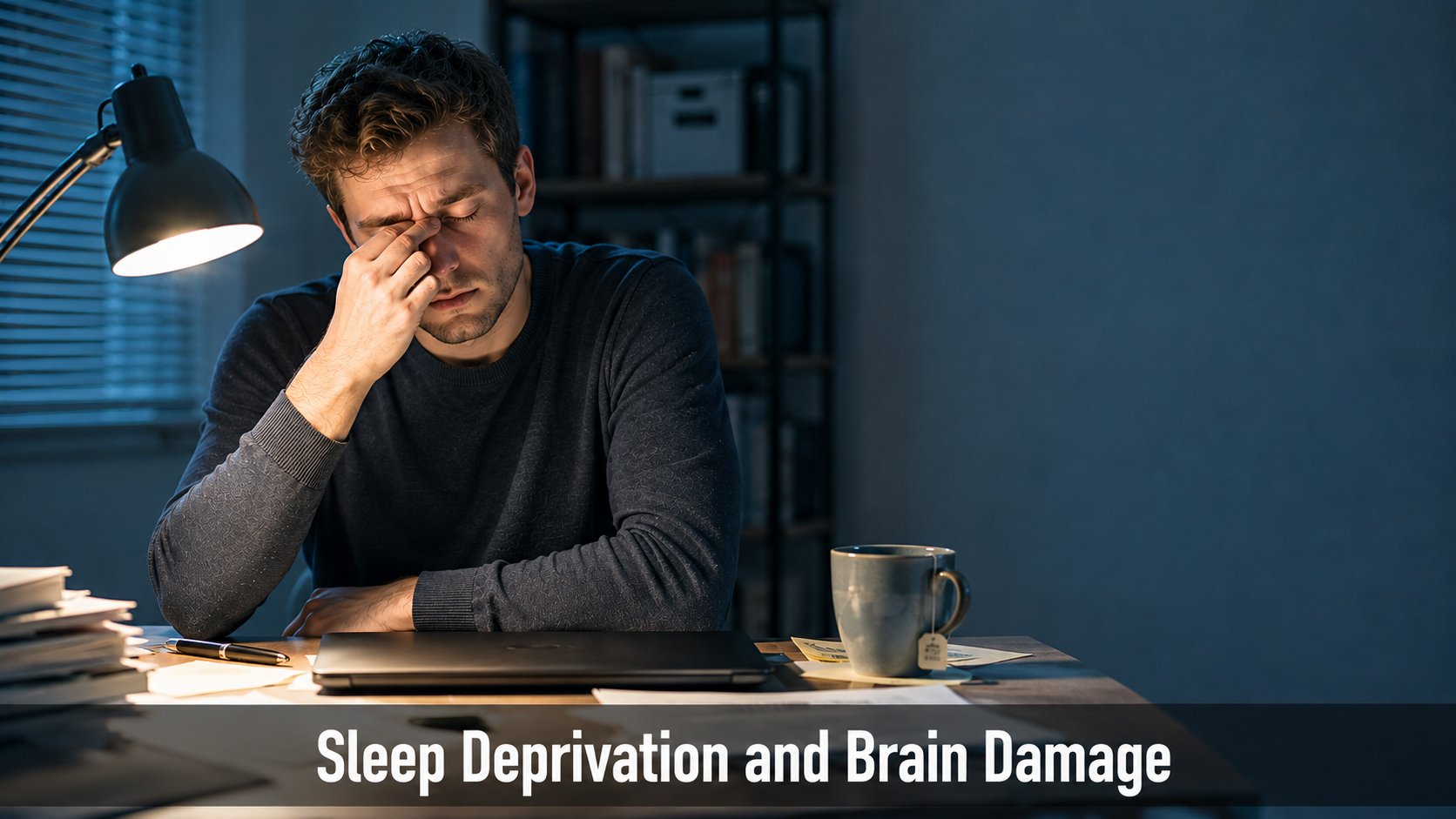
Can Sleep Deprivation Cause Brain Damage? A Doctor Explains the Science
Sleep deprivation chips away at the brain in ways you cannot see from the outside, and as Dr. Avinesh Bhar, Board-Certified Sleep Physician at SLIIIP.com, explains, the science here is both fascinating and easy to misread.
Most short term effects of missed sleep are real but reversible, while researchers are still studying what years of poor sleep may mean for the brain over a lifetime. The honest answer sits between scary headlines and false comfort, and it is worth understanding clearly.
SLIIIP’s board-certified sleep physicians can do sleep evaluations for sleep apnea. Virtual consultations in all 50 states. Home sleep tests shipped to your door.

What Sleep Deprivation Does to the Brain
Sleep is not downtime for your brain. While you rest, your brain is busy sorting memories, balancing chemicals, and clearing out waste. When you cut sleep short, that work does not get finished.
Even one rough night can slow your thinking, dull your focus, and shorten your patience the next day. You have likely felt this after a late night. Words come slower. Small problems feel bigger. Your reactions lag.
These daily effects are your brain running low on rest, not proof of lasting harm. They are signals. They tell you the brain needs the night work it missed. To see why sleep matters so much, our overview on the importance of sleep lays out the basics in plain terms.
CHECK YOUR SLEEP SYMPTOMS: TAKE THE 2 MINUTE QUIZ
TAKE THE QUIZ
Can Sleep Deprivation Cause Brain Damage? What the Science Says
Here is the question on most people’s minds. The careful answer is that short term sleep loss causes changes that usually bounce back, while ongoing, severe sleep loss is an area scientists are still studying.
No single bad night will give you permanent brain damage, but a long pattern of poor sleep is worth taking seriously. Let us walk through what research actually points to.
The Brain’s Nightly Cleaning System
During deep sleep, the brain runs a kind of rinse cycle that helps clear out waste products that build up while you are awake. Scientists are studying how this process works and what happens when it is cut short night after night.
The current thinking is that good sleep supports this clean up, and that chronic short sleep may interfere with it. This is one reason researchers connect long term sleep habits with brain health, though the full picture is still being mapped.
Memory and Learning
Sleep helps move what you learn into longer storage. When you skip sleep, new memories do not lock in as well. Students who pull all-nighters often remember less, not more.
Short term, this is reversible with recovery sleep. The concern researchers raise is about years of cutting sleep, which may affect how well memory works over time.
Mood and Emotional Control
Sleep loss hits the emotional brain hard. The part that handles fear and stress becomes more reactive, while the part that calms it down works less well. That is why everything feels heavier when you are exhausted. Our article on whether lack of sleep can cause depression explores this link in more depth.
Short Term Effects Versus Long Term Concerns
It helps to split this topic into two buckets. The short term effects of sleep deprivation are common, frustrating, and almost always reversible with rest.
In the short term you may notice slower thinking and poor focus. You may feel forgetful or foggy. Your mood may swing. Your reaction time may drop, which is one reason drowsy driving is so risky. Headaches can show up too, as covered in our piece on lack of sleep and headaches.
The long term concerns are different, and they are about patterns, not single nights. Researchers study how years of short or broken sleep relate to memory, focus, and brain aging. Science is still developing, so the responsible message is not to panic. It is that steady, healthy sleep is one of the best things you can do for your brain over a lifetime.
If your foggy thinking feels constant, our article on extreme brain fog and sleep apnea is worth a read, since a hidden breathing problem can keep you from ever reaching deep sleep.
Signs Your Brain Needs More Rest
Your brain sends signals when it is running on empty. Watch for these everyday clues.
You forget small things more than usual, like names or where you set your keys.
You struggle to focus or finish tasks that used to feel easy.
You feel irritable, low, or quick to frustrate.
You catch yourself nodding off during the day.
You feel foggy even after what should have been enough hours in bed.
Your reaction time feels slow, especially while driving.
The last clue matters most. Feeling foggy even after a full night in bed can mean your sleep is not as restful as it looks, which is a reason to get evaluated. A condition like sleep apnea can break up deep sleep without you knowing. Our guide on why you feel exhausted no matter how much you sleep covers this pattern.
Why Deep Sleep Is the Part That Protects You
Not all sleep is equal for the brain. Deep sleep is when much of the memory sorting and waste clearing happens. If you spend enough hours in bed but rarely reach deep sleep, your brain misses that repair time.
This is why quality matters as much as quantity. You can be in bed for eight hours and still wake up unrefreshed if your deep sleep keeps getting interrupted. Our articles on how to get more deep sleep and the difference between core sleep and deep sleep break this down.
Things that steal deep sleep include alcohol late at night, an irregular schedule, stress, and untreated breathing problems. The good news is that most of these can be improved.
Watch: Your Brain with Sleep Apnea
When to Talk With Dr. Avinesh Bhar and the SLIIIP Team
If poor sleep has become your normal, or if you feel foggy no matter what you do, it is worth a professional look. You do not have to wait until things feel severe to get evaluated.
Dr. Avinesh Bhar and the SLIIIP care team can review your sleep history during a virtual visit and decide if testing makes sense. Because SLIIIP runs on telemedicine, much of this happens from your own home.
A common next step is a home sleep apnea test, which records your breathing and oxygen overnight in your own bed. If a hidden problem like apnea is breaking up your sleep, finding it is the first step toward better rest. You can also learn the basics in our guide on what sleep apnea is.
Habits That Protect Your Brain Through Better Sleep
Working with a physician helps most when something deeper is going on. For everyday brain health, your habits do a lot of the work. Small, steady routines add up.
Keep a regular sleep and wake time, even on weekends.
Give yourself enough time in bed for your age and needs.
Wind down with calm activities and dim light before bed.
Go easy on caffeine in the afternoon and alcohol at night.
Get daylight and some movement during the day.
Keep your bedroom cool, dark, and quiet.
These habits do not cure or treat any condition, and they are not a substitute for medical care. They simply give your brain the steady rest it relies on. For more, see our reasons for improving sleep quality and our sleep routine guide.
For trusted background, the Centers for Disease Control and Prevention and the National Heart, Lung, and Blood Institute both publish clear public guides on sleep and health.
At Sliiip, we accept the following insurances:

SLIIIP’s board-certified sleep physicians can do sleep evaluations for sleep apnea. Virtual consultations in all 50 states. Home sleep tests shipped to your door.
Frequently Asked Questions
Can sleep deprivation cause brain damage?
A single bad night will not cause permanent damage. Short term sleep loss causes changes that usually reverse with rest. Researchers are still studying what years of severe, ongoing sleep loss may mean for the brain, which is why steady, healthy sleep matters.
Is brain fog from lack of sleep permanent?
For most people, brain fog from missed sleep lifts after recovery sleep. If fog sticks around even after enough hours in bed, it is worth getting evaluated for a hidden sleep problem.
How many hours of sleep does the brain need?
Most adults do best with seven to nine hours, though needs vary by person. Quality matters as much as the number, since deep sleep is when much of the brain’s repair happens.
Does sleep clean the brain?
During deep sleep, the brain runs a process that helps clear waste that builds up while you are awake. Scientists are still studying how this works and what happens when sleep is cut short.
Can you recover from sleep deprivation?
Yes, most short term effects of sleep loss bounce back with steady recovery sleep. A long pattern of poor sleep is harder on the body and is worth addressing with better habits or a medical evaluation.
Why do I feel foggy even after eight hours of sleep?
You may be spending time in bed without getting enough deep sleep. A condition like sleep apnea can interrupt deep sleep without waking you fully. This is a common reason to get checked.
Does sleep affect memory?
Yes. Sleep helps move new learning into longer storage. Skipping sleep makes it harder for memories to lock in, which is why all nighters often backfire.
Can lack of sleep cause anxiety or low mood?
Sleep loss makes the emotional brain more reactive and the calming part less effective. This can leave you feeling anxious, low, or quick to frustrate.
Is drowsy driving really dangerous?
Yes. Sleep loss slows your reaction time and focus, which raises crash risk. Never drive when you are fighting to stay awake.
Does deep sleep matter more than total hours?
Both matter. You can spend enough hours in bed and still feel unrefreshed if your deep sleep keeps getting broken up.
Can sleep apnea cause brain fog?
Yes, it can. Apnea interrupts deep sleep again and again, which can leave you foggy and tired even after a full night. Testing can reveal whether this is the cause.
Will one all nighter hurt my brain?
One all nighter will leave you foggy, slow, and moody, but those effects fade with recovery sleep. The bigger concern is a long pattern of cutting sleep.
Can poor sleep affect long term brain health?
Researchers study how years of short or broken sleep relate to brain aging and memory. The science is still developing, so the practical takeaway is to protect healthy sleep over time.
Does alcohol hurt deep sleep?
Alcohol near bedtime can reduce deep sleep and break up your night, even if it helps you fall asleep faster. Going easy in the evening helps.
What is the fastest way to recover from sleep loss?
Steady, regular sleep over several nights works better than one long catch up sleep. A consistent schedule helps your brain reset.
Can naps help with sleep deprivation?
A short nap can ease sleepiness and sharpen focus for a while. It does not fully replace a good night, but it can help in the short term.
Why does stress keep me from deep sleep?
Stress keeps the brain alert and can pull you out of deeper stages. Calming routines before bed can help your brain settle.
Should I worry if I forget things when tired?
Forgetfulness when tired is common and usually improves with rest. If memory problems persist even when rested, talk with a professional.
Can fixing my sleep improve my focus?
For many people, steadier and deeper sleep brings back sharper focus and a clearer head. If sleep stays poor despite good habits, an evaluation can help find why.
How can SLIIIP help with poor sleep?
Through virtual consultations, the SLIIIP team can review your sleep history, arrange a home sleep test if needed, and explain your options without an in person visit.
SLIIIP’s board-certified sleep physicians can do sleep evaluations for sleep apnea. Virtual consultations in all 50 states. Home sleep tests shipped to your door.
Latest posts
-
Why Can’t I Wake Up Even After Getting Enough Sleep?
Last updated: October 2, 2026. Medically reviewed by Dr. Avinesh Bhar, Board-Certified Sleep Physician, SLIIIP.com. If you can’t wake up after enough sleep, the cause is usually not the number…
-
Why Does My Heart Rate Drop So Low While I Sleep?
Last updated: October 2, 2026. Medically reviewed by Dr. Avinesh Bhar, Board-Certified Sleep Physician, SLIIIP.com. Your heart rate drops low while sleeping mainly because your body needs less work from…
-
Why Are My Naps Never Refreshing?
Last updated: October 2, 2026. Medically reviewed by Dr. Avinesh Bhar, Board-Certified Sleep Physician, SLIIIP.com. Naps that leave you groggy usually come down to how long you sleep, when you…
Get updates
Spam-free subscription, we guarantee. This is just a friendly ping when new content is out.

