👉 Register for Free. How to Diagnose Sleep Apnea Faster in Primary Care – FREE Webinar by Dr. Audrey Wells. – Friday, April 24 at 12 PM ET

Why Your CPAP AHI Score Flares Up When You Have a Cold
If your CPAP AHI score suddenly climbs the same week a cold hits, that jump is no coincidence, and Dr. Avinesh Bhar, a board-certified sleep physician at SLIIIP.com, sees this exact pattern every cold and flu season. A stuffy nose changes how air moves through your mask, and your machine reports the difference as a higher number. The good news is that this kind of spike is usually temporary and makes sense once you understand what your machine is measuring.
SLIIIP’s board-certified sleep physicians can do sleep evaluations for sleep apnea. Virtual consultations in all 50 states. Home sleep tests shipped to your door.
First, What Your AHI Number Actually Means
AHI stands for apnea-hypopnea index, and it counts the breathing events your machine detects each hour. A lower number means fewer interruptions, and most people on well-fitted therapy see a low, steady reading night after night. When that number jumps, something about the airflow has changed.
It helps to know that the AHI your machine reports is an estimate. Your CPAP watches airflow and pressure and flags likely events, but it is not the same as a full lab measurement. For a deeper look at what counts as a healthy range, this guide on a good AHI score on CPAP is a useful reference.
So a single higher night is rarely cause for alarm. What matters is the pattern and the reason behind it, and a cold gives a very clear reason.
CHECK YOUR SLEEP SYMPTOMS: TAKE THE 2 MINUTE QUIZ
TAKE THE QUIZ
What Happens to Your CPAP AHI Score During a Cold
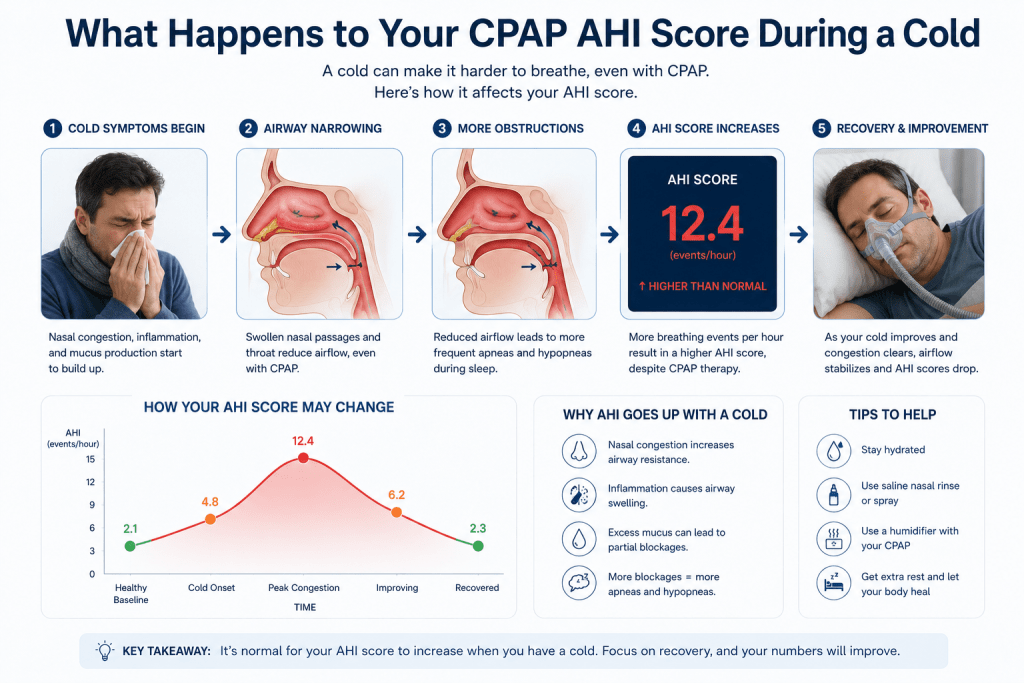
A cold swells the tissues lining your nose and throat, which narrows the very passages your therapy relies on. When those passages tighten, more breathing events slip through, and your CPAP AHI score rises to reflect them. Your machine is doing its job by reporting the change.
Congestion also forces your body to work harder for each breath, which can create the kind of shallow, effortful breathing your machine reads as a hypopnea. Add a cough and frequent waking, and the count climbs further.
This is why your CPAP AHI score can look worse for a few nights even though your underlying sleep apnea has not changed at all. The therapy is the same, but the head cold is stacking obstacles in front of it.
Congestion, Mouth Breathing, and Mask Leaks
The biggest culprit is often the switch to breathing through your mouth. When your nose is blocked, you naturally open your mouth to breathe, and with a nasal mask that lets pressurized air escape, which weakens the therapy and raises your numbers. A big leak means less support reaching your airway.
Mouth breathing also dries you out, leaving you with a parched throat by morning. If that sounds familiar, this piece on dry mouth on CPAP covers why it happens and what can ease it.
Your mask matters here too. A cold can change how your mask seals, especially if you are congested and shifting positions all night. This guide to choosing the best CPAP mask can help you understand your options for different needs.
Why Auto-Adjusting Machines Ramp Up the Pressure
If you use an auto-adjusting machine, a cold can make it behave differently. These machines sense resistance and raise the pressure to push through it, so a congested night can send the pressure climbing as the device fights your stuffy nose. You may wake up feeling like the air is stronger than usual.
That higher pressure can bring its own side effects, like swallowed air, bloating, or a sore feeling. This article on managing bloating and gas on CPAP explains that connection and offers relief ideas.
None of this means the machine is broken. It is reacting to a temporary obstacle, and it should settle back down once your cold clears. If it does not, that is worth a conversation with your provider. You can learn more about how these devices work in this overview of auto-adjusting CPAP.
Comfort Steps That Can Help While You Are Sick
A few simple, gentle habits can smooth out the rough nights. These are comfort measures, not medical advice, so keep using your therapy as your clinician directed and check with your provider or pharmacist before adding anything new. The goal is to breathe a little easier, not to change your prescription on your own.
Use your humidifier or turn it up a notch if your machine has one, since added moisture can soothe irritated passages. Warm, humid air is often easier to tolerate when you are congested.
A saline rinse or spray before bed can clear some of the stuffiness that fuels mouth breathing. Elevating your head slightly and sleeping on your side may also help air move more freely.
Keep your equipment clean during a cold so you are not re-breathing anything unpleasant. This overview of CPAP cleaning walks through simple upkeep that matters even more when you are under the weather.
When a High AHI Is More Than a Cold
Most cold-related spikes fade as you recover, but not every rise is a passing bug. According to Dr. Avinesh Bhar, if your CPAP AHI score stays high for weeks after you feel better, or climbs without any illness, it is worth having a clinician review your therapy rather than waiting it out. A number is one piece of a bigger picture, not the whole story.
A lasting jump can point to a mask that no longer fits, a pressure setting that needs review, weight or health changes, or a therapy that simply needs a tune-up. These are all fixable, but they call for a professional look rather than guesswork. Never change your own pressure settings without guidance.
If your therapy has started to feel like a struggle in general, this honest read on not loving CPAP covers common reasons and fixes. A quick check-in can turn a frustrating number back into a reassuring one.
Should You Keep Using CPAP When You Have a Cold?
It is tempting to skip therapy when your nose is stuffed, but that is usually the wrong move. For most people, staying on CPAP through a cold is better than stopping, though your provider is the right person to confirm what is safe for you. Your untreated sleep apnea does not take a break just because you caught a bug.
If the mask feels unbearable while congested, talk with your provider about options rather than quitting on your own. This guide on using CPAP while sick covers practical ways to get through it, and this piece on taking a break from CPAP explains why stopping cold turkey can backfire.
The Centers for Disease Control and Prevention has a plain guide to the common cold, and the National Heart, Lung, and Blood Institute offers a clear overview of sleep apnea if you want to read more from government health sources.
Watch: CPAP Tips
Getting Help With Your Numbers
You do not have to interpret a confusing reading alone. A virtual visit lets a clinician look at your therapy, your symptoms, and your numbers together, then tell you whether a spike is just a cold or something to adjust. That context turns a scary chart into a clear plan.
If you are newer to therapy or just want a refresher on the basics, this overview of what sleep apnea is and this look at sleep apnea treatment can ground you. From there, a clinician can meet you where you are.
The bottom line is that a cold-driven bump is common and usually temporary. When in doubt, a quick conversation beats weeks of worry.
At Sliiip, we accept the following insurances:

SLIIIP’s board-certified sleep physicians can do sleep evaluations for sleep apnea. Virtual consultations in all 50 states. Home sleep tests shipped to your door.
Frequently Asked Questions
Why does my CPAP AHI score go up when I have a cold?
Congestion swells the passages your therapy relies on, so more breathing events slip through and your machine reports a higher number. It usually settles once the cold clears.
Is a high AHI during a cold dangerous?
A short-term rise during a cold is common and usually temporary. It becomes worth checking if the number stays high for weeks after you feel better.
What is a normal AHI on CPAP?
Most people on well-fitted therapy see a low, steady reading. This guide on a good AHI score on CPAP explains the typical range.
Should I stop using CPAP when I am sick?
For most people, staying on therapy is better than stopping, but your provider should confirm what is safe for you. Your sleep apnea does not pause for a cold.
Does mouth breathing raise my AHI?
It can. A blocked nose pushes you to breathe through your mouth, which lets pressurized air escape a nasal mask and weakens the therapy.
Why does my machine feel like it is blowing harder during a cold?
Auto-adjusting machines sense resistance and raise the pressure to push through congestion. That extra pressure can feel stronger until your cold clears.
Can a cold cause CPAP mask leaks?
Yes. Congestion, mouth breathing, and restless shifting can all break the seal, and a big leak means less support reaches your airway.
Will my AHI go back to normal after the cold?
For most people, yes. The number typically settles once congestion fades and airflow returns to normal. A lasting rise is worth a clinician review.
Can I change my CPAP pressure to fix a cold spike?
No. You should never change your own pressure settings without guidance. A clinician can review your therapy and adjust it safely if needed.
Does a humidifier help when I have a cold?
Added moisture can soothe irritated passages and make the air easier to tolerate. If your machine has a humidifier, turning it up a notch may help.
Why is my throat so dry after a congested night?
Mouth breathing dries you out overnight. This piece on dry mouth on CPAP explains why and offers relief ideas.
Can a saline rinse improve my numbers?
Clearing congestion before bed can reduce mouth breathing, which may help your therapy work better. Ask your provider or pharmacist about what fits you.
Is my CPAP broken if the AHI jumps?
Usually not. The machine is reacting to a temporary obstacle like congestion and should settle once you recover. Persistent jumps deserve a professional look.
Should I clean my equipment more during a cold?
Keeping your mask and tubing clean matters even more when you are sick. This overview of CPAP cleaning covers simple upkeep.
Can congestion cause more hypopneas?
Yes. Congestion makes each breath more effortful, which your machine can read as a shallow event, or hypopnea, nudging the count higher.
Does bloating during a cold relate to my CPAP?
Higher pressure from a congested night can lead to swallowed air and bloating. This guide on bloating and gas on CPAP can help.
How long should I wait before worrying about a high AHI?
If the spike lines up with a cold and fades as you recover, it is usually fine. A number that stays high for weeks is worth a clinician review.
Would a different mask help when I am congested?
Possibly. Mask fit affects how leaks behave, and this guide to the best CPAP mask can help you weigh options with your provider.
Can I get my CPAP numbers reviewed online?
Yes. A virtual visit lets a clinician look at your therapy and readings together and explain what a spike means for you.
How do I get help from SLIIIP with my therapy?
Book a virtual consultation with a board-certified sleep physician to review your symptoms and numbers. If further testing fits, a home sleep test ships to your door.
Take the Next Step
A CPAP AHI score that flares during a cold is one of the most common and least worrying blips in therapy, and it almost always settles as you heal. Still, if the number lingers or leaves you unsure, a clinician can look at the full picture and tell you whether anything needs adjusting.
SLIIIP’s board-certified sleep physicians can do sleep evaluations for sleep apnea. Virtual consultations in all 50 states. Home sleep tests shipped to your door.
Latest posts
-
Why Can’t I Wake Up Even After Getting Enough Sleep?
Last updated: October 2, 2026. Medically reviewed by Dr. Avinesh Bhar, Board-Certified Sleep Physician, SLIIIP.com. If you can’t wake up after enough sleep, the cause is usually not the number…
-
Why Does My Heart Rate Drop So Low While I Sleep?
Last updated: October 2, 2026. Medically reviewed by Dr. Avinesh Bhar, Board-Certified Sleep Physician, SLIIIP.com. Your heart rate drops low while sleeping mainly because your body needs less work from…
-
Why Are My Naps Never Refreshing?
Last updated: October 2, 2026. Medically reviewed by Dr. Avinesh Bhar, Board-Certified Sleep Physician, SLIIIP.com. Naps that leave you groggy usually come down to how long you sleep, when you…
Get updates
Spam-free subscription, we guarantee. This is just a friendly ping when new content is out.

